
Candle Packaging Ideas for Brands: Jars, Lids, Labels, and Boxes
Search “candle packaging ideas” and you’ll mostly find boxes: rigid, magnetic, drawer, kraft with windows. Boxes photograph well, so they dominate every gallery. But for a container candle (wax poured into a vessel and burned in it), the box is the most passive layer you’ll buy: an empty cavity waiting for a jar’s measurements. The vessel’s mouth dictates the lid, its dimensions dictate the box, and its glass dictates where your brand can live and how hard shipping must protect it. This guide walks that chain in the order you should actually decide it: container first, boxes last.
Why Candle Packaging Ideas Have to Start With the Container
First, scope: this guide covers jar candles (wax poured into a vessel and burned in it). Votives, tealights, pillars, and tapers run on different logic (pillars need sleeves that survive handling; tealights ship as multi-packs on carded trays), so don’t transplant their rules onto a jar.
A jar candle’s packaging is a five-layer chain, and every layer after the first is derived:
Container Lid Brand surface Box Shipping protection. Each layer inherits its constraints from the one before it, never the reverse.
- The jar’s mouth decides which lid can fit; its diameter and height decide the box interior and insert; its glass body decides where branding can live (tint, frost, printing, labels) and how durable it must be; its fragility decides how much shipping protection you need.
Go in the reverse order and you’ll pay twice: design a gorgeous box, source a jar that almost fits, then re-specify the lid, insert, and wick. Once a jar is poured and sold, switching it means new wick tests, new lids, inserts, a new box, and a relabeled compliance file. That’s a “small tweak” that behaves like a product redesign. So the rule: fall in love with a jar first, design the box last.
Candle Containers Compared: Glass, Metal, Ceramic — and When Each One Lets You Down
Container candles are made in four main vessel families, and the trade-off you can’t see in a photo is the one that fails first.
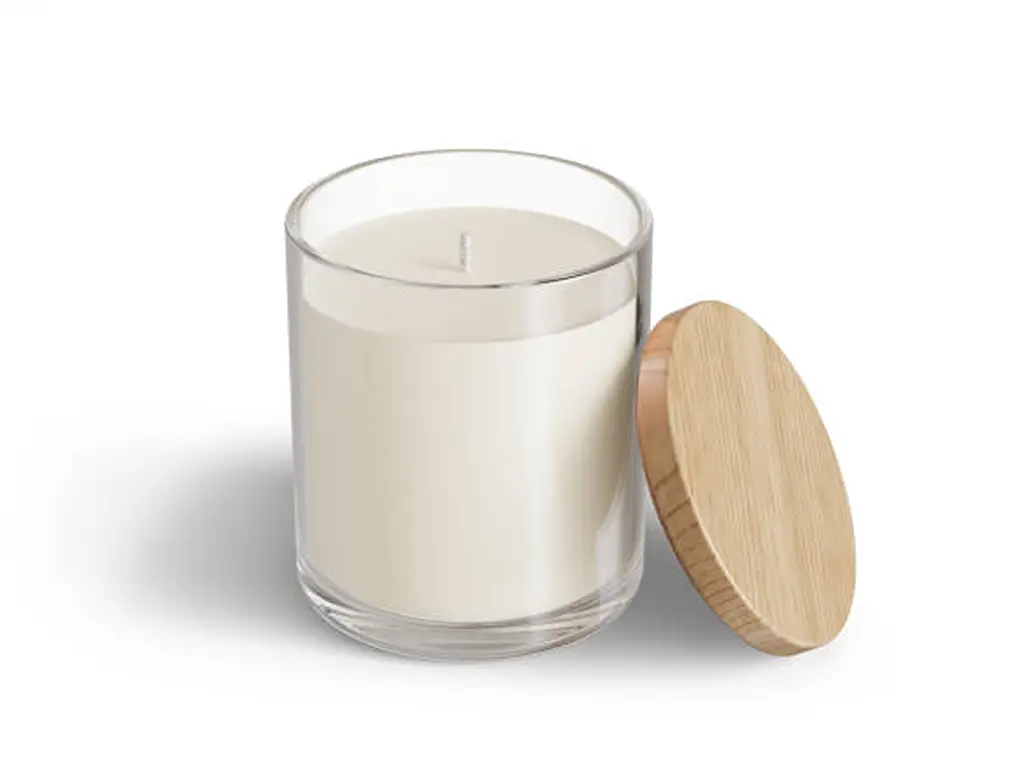
Glass jars are the default for a structural reason: you can see the wax. Buyers watch the melt pool, and makers verify burn behavior without unwrapping anything. Glass is inert against hot wax and oils, survives repeated use when properly annealed, and carries the strongest reuse-and-recycle story: the jar outlives the candle as a storage piece or vase. Its weaknesses: it costs more than tin at the low end and can break in transit and in use.
Metal tins win on price, transit durability, and outdoor contexts: nothing shatters in a backpack or a sortation center. The flip side: no visible wax, and metal conducts heat aggressively, so the wall gets hot and the pool runs hotter, changing wick and fragrance behavior. Reading “premium” from a tin takes real design work.
Ceramic and concrete are objects first, containers second. Buyers keep them for years, which is powerful for high-end positioning and punishing for e-commerce, where weight plus fragility doubles shipping risk. Paper-based vessels are cheap and light but poorly suited to open-flame use over time.
| Container | Where it works | Where it fails you |
|---|---|---|
| Glass jar | Daily home use, gifting, mid-to-premium lines; reuse/refill and recycling stories | Rock-bottom price points (cost); camping/outdoor carry (breakage) |
| Metal tin | Outdoor, high-volume value lines, low-risk shipping | Premium shelf perception; no visible wax; hot vessel walls |
| Ceramic / concrete | High-end decor positioning, in-store retail | E-commerce (weight + breakage double-hit); tight budgets |
| Paper / pulp | One-off low-heat formats, samples | Reuse narratives, long-term refills, open-flame heat |
The honest conclusion: glass is the container-candle default because it verifies and outlives the product. But default is not universal. If you sell camping candles at a value price, tin is right, and no glass maker should talk you out of it.
Choose the vessel by your channel, not by the photo
Glass jar: the default
You see the wax pool, verify the burn, and the vessel outlives the candle as a reuse piece.
Metal tin: when glass is wrong
Outdoor carry, rock-bottom value pricing, or a channel where breakage risk rules the math.
What Your Candle Jar Decides for You — and What 2026 Buyers Notice
Once you pick a jar, much of your packaging is already decided. This table is the real idea list: every idea in the galleries has to conform to one of these rows:
| Jar property | What it decides downstream | Cost of getting it wrong |
|---|---|---|
| Capacidad | Wax fill weight, burn-time claims, price point | Claims that don’t match testing = compliance and review risk |
| Jar diameter | Wax pool size, wick sizing, scent throw | Pool never reaches the edge: tunneling, soot, bad reviews |
| Mouth finish | Which lids can fit; lid-source freedom | Locked into one lid vendor, or a lid that wobbles or leaks |
| Glass body | Where branding can live and its durability needs | Brand budget spent on a surface that won’t survive wax and wiping |
| Wall thickness & weight | Shipping protection level, breakage rate | Broken-jar returns eat what “cheap glass” saved |
Two 2026 trends matter when read through this table rather than through box-marketing copy. First, buyers increasingly buy what the jar becomes after the wax: storage jars, planters, drinking glasses. That story only works if the vessel is genuinely nice empty and takes an everyday lid. Second, “premium” is shifting from shiny clear glass toward colored and frosted glass: intentional where plain clear reads commodity, and better at hiding wax residue. The sustainability conversation is migrating to the glass itself: recyclability and refill claims can only be made truthfully at the vessel level.
The boundary: trends only count at your price point. A $16 candle in a magnetic-lid rigid gift box carries packaging that costs more than the container inside.
“A $16 candle in a magnetic-lid rigid gift box carries packaging that costs more than the container inside.”
Choosing the Candle Jar: Size, Glass Quality, and the Lid That Fits
Most guides stop being useful exactly here, so we’ll go deep on the three decisions that separate a good jar from a regret.
Size: the number that writes your label
Capacity sets your wax fill, and the fill sets what you can honestly print about burn time. Most commercial jar candles land between roughly 4 oz and 15 oz, but the number that matters more is the diameter, because it decides the wax pool. A pool that never reaches the jar’s edge is the classic failure: tunneling, soot, and “your candle doesn’t burn right” reviews. That geometry is why standard care practice exists: trim the wick to ¼ inch, let the first burn melt a full pool, cap burns around four hours. Between two jars that look alike, the wider one constrains your wick, fragrance loading, and burn testing.

Glass quality: why some jars crack mid-burn
The first invisible difference is recocido. Glass is formed hot and must be cooled through a controlled annealing process that relieves internal stress. A stressed jar can pass a visual check and fail later, cracking from the repeated heat of the melt pool or shattering when moved while warm. It’s why the same-looking jar costs different amounts from different factories. Ask any supplier what annealing profile they run, whether fired ware is checked for internal stress, and whether they test thermal-shock resistance. A factory that can’t answer concretely is selling glass you’ll be shipping back.
The second difference is tint. Standard soda-lime glass carries a faint green cast that shows when pale wax sits in a thin-walled transparent jar; low-iron “high-transparency” glass reads colorless and photographs cleanly. Ask for a physical sample paired with the wax color you’ll pour.
The mouth finish that decides your lid
The jar’s opening is the most underrated spec in candle packaging, because it silently controls your lid freedom. Stock jars with standard mouths mate with off-the-shelf lids from many suppliers: you can switch lid vendors, change materials (wood, metal, glass, bamboo), or run seasonal lids without re-tooling the jar. A custom mouth locks your lid supply to whoever made the jar.
Two checks before committing. Mouth precision: the rim should be ground and polished as a standard step. A rough rim scratches lids, drags on filling lines, and eventually meets customers’ fingertips. Sample-fit: test your actual lid for torque, seal, and repeated open-close. A mouth problem at the sample stage costs pennies; after a production run it costs a whole batch.
Here is the sentence to remember from this entire guide:
One jar, three questions: does a lid I can source tomorrow fit its mouth? Does a stock box fit its dimensions? Does its diameter burn a full, even pool with the wick my wax needs?
Supplier acceptance checklist
Before you commit to a glass order:
- Is mouth grinding/rim polishing a standard step, with no burrs?
- What annealing profile does the factory run, and is fired ware checked for internal stress?
- How is batch-to-batch color consistency controlled?
- Can you sample-fit your actual lid for torque, seal, and repeated open-close?
- Has the glass been tested for thermal-shock / temperature-difference tolerance?
Where the Brand Lives: Glass Finishing, Labels, and the Box You Don’t Lead With
You have three surfaces for your brand: the glass, the label, and the box. The box is where most guides start, and it’s what customers interact with least. A box exists until it’s opened; a labeled jar sits on the shelf, in the hand, and in use for weeks. Spend your packaging budget in that order.
On the glass: decoration that survives the candle
Glass-body decoration is the most durable brand surface available. The main options, roughly in order of cost:
- Mold embossing forms a raised or recessed logo in the glass itself. It never wears off, but it’s single-color and baked into your tooling decision.
- Frosting or acid etching gives a soft matte texture that diffuses light and reads instantly as premium.
- Silk-screen printing puts graphics on the glass, cured by heat. Cured matters more than dried: heat-cured ink bonds to glass and survives wax, wiping, and a lit candle’s warmth, where self-dried inks lift.
- Hot stamping (foil) adds metallic accents for the gift tier.
- Body tinting mixes color into the batch so it runs through the wall: a batch-scale decision, not a decoration, with the highest minimums of the group.
The honest cost guide: labels carry the lowest minimums, standard decoration sits mid, body color sits at the top. If you change fragrances seasonally or sell low-price e-commerce, start with labels and a good jar.
Labels: the low-cost default with a job to do
Labels aren’t the cheap option that looks cheap. Good paper stock and restrained typography carry most premium lines. Their real job is the information split: the front carries brand, fragrance, and identity; the back carries everything regulatory and practical. Two candle-specific notes: adhesive and face stock must survive wax drips, warmth, and repeated wiping. Some beautiful papers curl at the first melt-over, so test on a burning candle. And the back label is where your compliance content lives.
The lid as your second brand face — and the box you order last
The lid is the surface touched every time someone lights the candle. Wood, metal, glass, and bamboo each carry a different material language, and matching the lid to the jar body is the cheapest series-coherence trick in the category: same jar, same lid style, and the whole line reads as one family. When you finally reach the box, design it around the jar’s exact dimensions and channel. A retail display box and a DTC shipping box are different products. The formula: same jar across scents = change the lid, decoration, and label; never change the jar to change the scent.
Candle Packaging Pitfalls: Breakage, Compliance, and the Hidden Cost of Switching Jars
The mistakes that actually cost money are quieter than design mistakes. Three account for most of the pain in candle communities and review sections.
Pitfall 1: shipping a display box
A beautiful shelf box is not a shipping box. Single-wall gifting cartons without inserts are how glass arrives shattered, and damaged glass is among the most common reasons for e-commerce returns. The protective stack has three layers: a snug insert (molded pulp or foam-style) locking the jar in place, a corrugated outer box sized so the insert can’t shift, and a handling spec for the carrier. Retail and DTC each need their own box. And measure your real breakage rate: if you don’t know it, you don’t know whether packaging protects your margin or drains it.
Pitfall 2: treating compliance as a design afterthought
Candle labels carry legal content, and requirements differ by market. In the US, federal rules require product identity, manufacturer or distributor name and place of business, and net weight in both units. Metal-cored wicks above a trace lead content are banned. All of it is summarized in the CPSC’s guidance for candle makers (CPSC Candles Business Guidance). The fire-safety warnings most US retailers require (“burn within sight; keep away from things that catch fire; keep away from children and pets”) come from ASTM F2058, a voluntary standard that has effectively become mandatory at retail. In the EU, candles are chemical mixtures under CLP: if your fragrance contains certain allergens, the label must state “Contains (name). May produce an allergic reaction” (ECHA, Complying with CLP when making or importing candles), and EN 15494 governs safety pictograms for indoor candles. The pattern: verify the requirement for every market you sell into before you print. The front label sells; the back label protects you.
Pitfall 3: the hidden cost of switching jars
The jar switch is the most underestimated cost in candle packaging, and it follows directly from the derivation chain: change the diameter and the wick must be re-tested; change the mouth and the lids are gone; change the dimensions and inserts and boxes are scrapped. A line that “just wants a nicer jar” can absorb weeks of re-testing and a full packaging re-order. The counter-move is process discipline with one supplier: confirm samples, lock the specification and decoration, then replicate in production. And audit batch consistency, because a jar that drifts between batches is a jar switch happening silently.
Packaging Economics for Candle Lines: One Jar Family, Many Scents
Everything above compresses into a business rule: the jar is the leverage point of a candle line. One or two jar families (sizes that cover your fill range, mouths that accept everyday lids) can carry an entire fragrance library. The scent lives in the label, lid color, and decoration, not in the vessel. Every additional jar adds a full adaptation chain: wick, lid, insert, box, compliance file. The cheapest SKU you’ll ever add is the one poured into an existing jar.
Buying logic follows your stage, and suppliers price in three tiers:
| Your stage | What you need | Por qué |
|---|---|---|
| Validating scents and channels | Stock jars at low volumes, labels or light decoration | No tooling cost, fast resupply, easy scent changes |
| Scaling a proven line | Custom decoration on the same stock jar | Brand consistency without new tooling |
| Building a signature vessel | Private mold, dedicated sizes and finish | Exclusive silhouette, at the cost of a one-time tooling charge and higher minimums |
One honest caveat: a single jar family isn’t universal. If your line spans an everyday band and a true gift tier, sharing one vessel pulls both down. Two families with different decoration systems usually serve the split better.
That whole chain is what we do end to end at Daxin Glass Bottles. We make the vessel side of candle packaging: stock and custom candle jars from 70 ml formats up to 15 oz jars, in clear, colored, and frosted glass, with glass, bamboo, wood, or metal lids that match the jar (our candle jar line). When you’re ready to move the brand onto the glass instead of leaving it on the box, our glass decorating and finishing covers frosting, silk-screen printing, hot stamping, mold embossing, and acid etching, applied and cured so they survive wax, heat, and wiping. The tiers above map onto how we work: stock glass with MOQs from 1,000 pieces while you validate scents, design drafts within 3 days, tooling in as fast as 10 days when you’re ready for a signature vessel, and 30–35 day production once your sample is approved. Send us your target fill weight and price point, and we’ll shortlist jar options against your wax and your channel before you commit to anything.
If a jar-first packaging system sounds like your next step, ask for samples of any shortlisted jar with a lid fitted. The mouth-to-lid check shouldn’t be theoretical. One email, and we’ll walk the three checks with you.
Plan your candle jar family with the people who make the jars
Stock jars from 1,000 pieces, decorating applied and cured on the glass, design drafts in 3 days. Start with a sample that passes your three checks.
Request candle jar samplesReferencias
- U.S. Consumer Product Safety Commission. “Candles Business Guidance.” CPSC.gov.
- European Chemicals Agency. “Complying with CLP when making or importing candles.” ECHA.
- Daxin Glass Bottles. “Tarros para velas.” daxinglassbottles.com.
- Daxin Glass Bottles. “Decorating & Finishing.” daxinglassbottles.com.
- Daxin Glass Bottles. “In-Stock Glass.” daxinglassbottles.com.
- Daxin Glass Bottles. “Inicio.” daxinglassbottles.com.
 English
  Spanish
  French
  German
  Arabic
  Italian
  Dutch
Dutch