
Cómo medir la longitud del tubo de inmersión: la guía completa para botellas, bombas y pulverizadores
Cada frasco con dosificador tiene una pieza en la que nadie piensa hasta que deja de funcionar: el tubo de succión. Se trata de la pajita de plástico que hay dentro del frasco, cuya longitud determina si el producto se vacía hasta la última gota o si se queda con una pulgada aún dentro del frasco. Tanto si vas a sustituir un pulverizador, como si vas a acoplar un dosificador a un frasco estándar o a pedir frascos con dosificador a un proveedor, medir correctamente la longitud del tubo de succión marca la diferencia entre un lanzamiento exitoso y un sinfín de quejas del tipo “¿por qué no sale el producto?”.
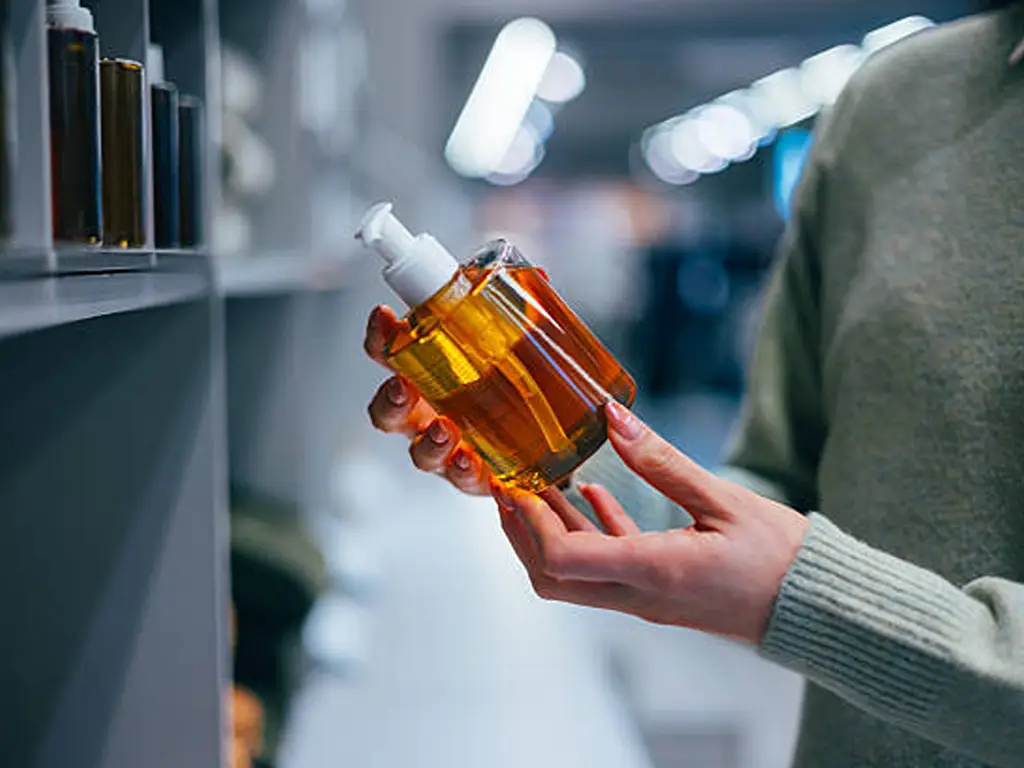
¿Qué es un tubo de inmersión y por qué su longitud supone un problema?
Un tubo de inmersión es el tubo de succión situado en la parte inferior de una bomba o un pulverizador. Al enroscar el tapón en una botella, el tubo queda colgando en su interior. Al pulsar el accionador, la bomba aspira el líquido a través del tubo y lo expulsa por la boquilla. Si el tubo no alcanza el líquido, no sale nada, por muy bien que funcione la bomba.
Ese sencillo mecanismo explica las dos direcciones de fallo:
- Un tubo demasiado corto hace que el punto de aspiración quede suspendido por encima del fondo. La bomba deja de aspirar mientras aún queda producto en la botella. Normalmente, el resto de producto es visible, ya que la entrada del tubo se encuentra físicamente por encima del producto.
- Un tubo demasiado largo Falla sin dar aviso. Al quedar presionada contra el fondo del envase, bloquea su propia entrada. Durante el taponado y el transporte, también puede retorcerse o romperse debido a los golpes. La bomba sigue “funcionando”, pero no dispensa el líquido.
Por eso, a veces, un frasco con dosificador nuevo se envía con el tubo suspendido por encima del fondo. No se trata de un descuido en la fabricación. Los fabricantes de dosificadores dejan un espacio a propósito para que el tubo nunca toque la base, donde podría agrietarse durante el taponado automático o romperse durante el transporte. Las marcas lo compensan llenando el envase ligeramente por encima del volumen indicado en la etiqueta: los dosificadores están diseñados para dispensar la cantidad impresa, no necesariamente hasta la última gota, tal y como lo expresó sin rodeos un antiguo ingeniero de envasado en un hilo de debate entre consumidores que se difundió ampliamente. Entender esa compensación es el primer paso. No se trata de reparar un defecto, sino de ajustar una tolerancia.
Una aclaración sobre la terminología antes de continuar: el término “tubo de inmersión” también se refiere al tubo de entrada de agua fría que hay en el interior de los calentadores de agua y al tubo de vapor de los depósitos de propano. Se trata de piezas diferentes con una lógica de longitud totalmente distinta. Esta guía trata sobre el tubo de succión de las bombas y pulverizadores para frascos, es decir, el que dosifica la loción, el sérum, el perfume y el limpiador.
No todos los dispensadores tratan su tubo de inmersión de la misma manera
Antes de medir nada, comprueba qué tipo de dispensador tienes. Es el tipo de bomba el que determina las características del tubo, no el frasco:
| Tipo de dispensador | Comportamiento del tubo | Cómo se gestiona la longitud |
|---|---|---|
| Pulverizador de niebla fina | Tubo fino y flexible | Se adapta a la pared de la botella, por lo que su longitud es ligeramente superior a la altura interior de la botella. |
| Pulverizador con gatillo | Tubo más rígido, tamaños para uso doméstico | Su tamaño se adapta al de la botella; los tubos que se venden al por menor suelen medir entre 6¾ y 9½ pulgadas. |
| Dispensador de loción | Tubo grueso y rígido | Queda recto, con un pequeño espacio por encima de la parte inferior |
| Bomba de tratamiento | Tubo corto y rígido para botellas pequeñas | Habitual en botellas de alta gama de 30 a 60 ml; tubos para venta al por menor de unas 2¾ pulgadas. |
| Bomba de espuma | Tubo rígido, mecanismo de bomba para loción | La misma norma del pequeño espacio que se aplica a los dosificadores de loción |
| Botella sin aire | Normalmente no hay ningún tubo de inmersión | Un pistón situado en la base se eleva y empuja el producto hacia arriba; más información en la sección «Decisión» que figura a continuación. |
Hay dos categorías habituales en las que la longitud del tubo no influye en absoluto: los frascos con dosificador y los difusores de varillas (en los que no hay ningún mecanismo de bombeo). Si ese es tu tipo de envase, los pasos de medición que se indican a continuación no son aplicables.
Regla práctica: los tubos finos del pulverizador se doblan contra la pared; los tubos gruesos de la bomba quedan rectos, dejando un hueco.
Cómo medir la longitud del tubo de inmersión, paso a paso
Este es el proceso que se utiliza en todo el sector del envasado. Tarda unos cinco minutos, y la idea es analizar la situación una sola vez, con una muestra, en lugar de arriesgarse con una tirada de producción.
Paso 1: Empieza por la junta, no por la tapa
Todas las guías coinciden en un punto clave: el junta, la pequeña junta de goma situada debajo de la bomba o del cabezal pulverizador, visible al dar la vuelta al dosificador. Mide desde su cara de apoyo (la superficie plana que entra en contacto con el borde de la botella) hasta el extremo más alejado del tubo. Esa distancia total es la longitud del tubo de inmersión. No midas solo el tubo que queda al descubierto por debajo del faldón del tapón, ni midas hasta el borde de la botella. En ambos casos se subestima la altura del cierre, que es precisamente el error que hace que el tubo quede suspendido por encima del producto.
Paso 2: Mide la altura interior de la botella
Ahora mide el recipiente sobre el que se colocará el dosificador. Introduce una regla verticalmente hasta la base interior y lee la altura en el borde superior. Si la regla no cabe (cuellos estrechos, hombros altos), introduce un palito fino o una pajita, marca el punto en el borde y mide después el palito. Dos indicaciones sobre la precisión:
- Interior, no exterior. El grosor de la pared y una base empotrada pueden suponer, cada uno de ellos, varios milímetros de error.
- Fíjate en la forma de la parte inferior. Las bases cónicas o abombadas hacia dentro (habituales en el cristal) hacen que la profundidad útil del líquido sea menor que la altura exterior de la botella. Mide el espacio que realmente puede ocupar el líquido.
En los listados de los catálogos a veces se indica la altura “desde el hombro hasta la base” en lugar de la profundidad interior total. SKS Bottle & Packaging, for example, pairs its bottles and tubes on that basis. Shoulder-to-base is fine when you buy both bottle and pump from the same catalog. When mixing suppliers, measure interior depth yourself.
Step 3: Work Out the Target Tube Length
Here is where the guides stop agreeing, so here is the resolution. Take the bottle’s interior height and subtract a clearance that keeps the tube’s inlet off the base. How much?
3/32 in. ≈ 2.4 mm
The assembly clearance used by O.Berk when calculating dip tube length: measure from the bottle’s sealing surface (land) to the base, subtract 3/32 in. to compensate for the pump’s push-up, and the remainder is your target tube length.
The 3/32 in. (2.4 mm) figure is the only published numeric answer to “how much gap should I leave?” It is the number that turns dip tube fitting from a feel into a specification. Most consumer guides say “leave a small gap” or “don’t cut it flush.” 3/32 in. is simply that advice with a number attached.
Thin sprayer tubes bend instead of hanging straight, so The Cary Company recommends starting about 1 in. longer than the bottle and letting the bend take up the slack. The tube rides the wall while its inlet still reaches the base corner, where thin liquids pool last.
Formula to carry into the next step: target length ≈ bottle interior height − 3/32 in. (straight rigid tubes), or ≈ bottle height + about 1 in. (thin tubes that bend).
Step 4: Measure the Existing Tube and Trim
Lay the dispenser flat and measure the tube you actually have, from the gasket seating face to the end, using the same reference as Step 1. (Most pumps ship with one standard long tube, designed to be trimmed.) Subtract your target from this as-produced length. The difference is how much to remove.
Cut with a sharp blade or tube cutter; scissors crush soft polypropylene. Industry practice favors an angled cut (about 45°): a beveled inlet cannot seal itself against the base the way a flat cut can, and it stays clear if the tube settles deeper over time. Some pump makers offer a V-cut instead. Ask your supplier which cuts their pumps accept before standardizing. After trimming, check the cut edge for burrs and knock off any shavings that could clog the inlet.
Step 5: Test One Before You Commit
Assemble the trimmed tube into the bottle, prime the pump, and verify three things: it draws from the bottom (test with the bottle nearly empty), it does not suck air or “spit” after the first strokes, and nothing leaks when the bottle is inverted. Then use that sample as your template. Production tubes get compared against it rather than re-measured.
Measure twice, cut once — a tube cut too short cannot be uncut. When in doubt, trim less than your calculation says, test, and take a second tiny cut. A too-long tube is fixed in thirty seconds; a too-short one means a replacement part and a new wait.
How Long Should the Dip Tube Be? Matching Tube Length to Your Bottle and Product
If the last section answered the arithmetic, this one answers the decision behind it: which dispensing route your product should take in the first place. Read across your scenario in the matrix. It is the standard industry pattern for matching viscosity and value to a dispensing system.
The Decision Matrix: Match the Dispensing Route to Your Product
| Escenario del producto | Typical route | Dip tube handling | When this route breaks down |
|---|---|---|---|
| Low-viscosity mist (fragrance, body spray, toner) in a slim glass bottle | Pulverizador de niebla fina | Thin tube bent to the wall; target ≈ bottle height + bend allowance | Thick or sedimented formulas clog fine-mist actuators |
| Medium-viscosity lotion or serum in a pump bottle | Lotion or treatment pump | Rigid tube standing straight; target ≈ interior height − 3/32 in. | A bottoming tube snaps in transit or kinks in the bottle |
| Thick cream or balm | Thick-tube pump, or skip pumps for jars | Same small-gap rule; some formulas need a wider tube bore | High-viscosity products will not climb a thin sprayer tube |
| Household cleaners, automotive, garden (large volume) | Pulverizador con gatillo | Longer tube sized to the bottle; check the cap’s venting too | A curled or mis-sized tube is the classic “sprayer stopped working” failure |
| Premium skincare where leftover product causes complaints | Airless pump bottle | No dip tube to measure — see below | Higher unit cost and a different filling method |
| Samples, travel sizes, 30–60 ml | Bomba de tratamiento | Short rigid tube | Not offered on every neck finish |
When You Can Skip Dip Tube Length Altogether
If your product is expensive per milliliter and customers will notice a leftover inch, remove the tube question entirely. Airless pump bottles have no conventional dip tube. Instead, a piston at the base rises as product is dispensed and pushes the contents toward the valve. That is why airless is the standard for formulas that must be fully evacuated and kept air-free. (The “empty space” at the bottom of a partly used airless bottle is the piston, not lost product.) The tradeoff is structural: higher unit cost and a different filling method (bottom-fill or special valve, not a standard top-fill line). Confirm your contract filler can handle it before switching.
The rule of thumb is cost-honest: choose airless when the leftover complaint or the oxidation risk justifies the higher unit price. Premium serums and actives, yes. Mass-market body lotion, usually not. And if you are evaluating glass airless or pump bottles, remember that the dispenser and the glass body often come from different specialists.
When bottle and pump arrive from different hands, the fit is on nobody.
Whoever assembles the pair is the supplier worth holding to that fit.
How to Specify Dip Tube Length When You Order from a Supplier
If you are ordering bottles and pumps in production quantities, you should not be cutting tubes by hand at all. You should be specifying them. Most pump manufacturers produce one standard long tube per pump and trim to order; distributors and suppliers offer pre-cut options as well. The failure mode is not the cutting; it is the spec. Make these four points explicit on your purchase order or quotation request:
The four-point spec
Reference point — state “gasket seating face to tube end,” or give the bottle’s interior height and the clearance you want and let the supplier calculate.
Unit system — say inches or millimeters out loud; US catalogs quote inches, Asian and European suppliers usually work in millimeters, and nobody converts for you.
Cut style — confirm the pump accepts an angled cut (or V-cut) before ordering; not all do.
Compatibilidad — include the neck finish (e.g., 24/410) and, if replacing a tube, the pump stem’s inner diameter, not just the length.
Two supplier realities are worth knowing before you negotiate. First, testing is routinely pushed back onto the buyer. SKS Bottle & Packaging states plainly that it helps match components but does not perform product testing. So put “sample assembled and draw-tested” on your own incoming-inspection checklist. Second, pre-cut tubes are a real but commercial service. Nieve de cristal sells pre-cut dispensers to growing businesses that prefer not to trim in-house. Neither is a flaw; they are terms of trade. The trap is split sourcing: bottle from one supplier, pump from another, tube mismatch with no owner, and the rejection lands on your desk. That is how dip tube length becomes a purchasing problem instead of a five-minute measurement.
Why Getting the Dip Tube Right Pays Off
Run the failure chain backward and the economics become clear. A tube that is too short strands product in the bottle. Consumers notice, complain, and review (“I still have an inch of lotion left that I have to beat against my palm”). A tube that is too long kinks, snaps in transit, or blocks its own inlet, and the pump fails out of the box. Either way the complaint lands on the brand and travels back to whoever assembled the bottle-and-pump pair. With split sourcing, that chain dead-ends at your desk.
The fix is almost free: one ten-minute draw test on a sample (fill, pump dry, invert, check) before committing to a production quantity. Against the cost of returns and a launch with a pump that visibly “doesn’t work,” it is the cheapest insurance in packaging. And when you source glass and dispenser together, the question to ask a supplier is not “what pumps do you sell” but “will you own the fit”: will they match the tube to the bottle and verify it before samples ship?
At Daxin Glass Bottles, owning the fit is how we work with pump-bottle launches. We manufacture the glass body and source and assemble the pump head through our lid and pump supply chain, so tube matching happens against our own bottles. Tell us the bottle you have chosen from our glass pump bottles range and the viscosity of your formula, and we handle the matching before your sample ships. That is part of the standard development flow, not an extra: our design team returns first drafts within three working days, and a concept reaches a physical sample in roughly 15–20 days, with the assembled draw test done before anything leaves the factory. It is the same reason we keep 5,000+ existing molds and a stock program with a 1,000-piece entry point: the fit question never has to wait for a custom mold.
If you are planning a pump-bottle launch and want the dip tube question settled before samples ship, talk to Daxin Glass Bottles. Our team responds within 24 hours and stands behind every order.
Get the dip tube length settled in your sample round
Send us your bottle drawing or stock choice and we’ll reply with the pump match, tube length, MOQ, and a sample schedule that includes the fitted draw test.
Envía las especificaciones de tu botellaReferencias
- O.Berk. “Quick Question Monday: How Do You Measure Dip Tube Lengths?” 2015. https://www.oberk.com/packaging-crash-course/quick-question-how-do-you-measure-dip-tube-lengths
- The Cary Company. “How to Measure Dip Tube Length.” https://www.thecarycompany.com/insights/articles/how-to-measure-dip-tube-length
- SKS Bottle & Packaging. “How to Measure Dip Tubes.” https://www.sks-bottle.com/info/HowToMeasureDipTubes.html
- Glassnow. “How to Measure and Trim Your Dip Tube for Optimal Performance.” 2025. https://www.glassnow.com/blog/how-to-measure-and-trim-your-dip-tube-for-optimal-performance/
- Daxin Glass Bottles. “Lotion & Serum Bottles.” https://www.daxinglassbottles.com/lotion-serum-bottle/
- Daxin Glass Bottles. “Custom Lid & Pump.” https://www.daxinglassbottles.com/custom-lid-pump/
- Botellas de vidrio Daxin. Página de inicio. https://www.daxinglassbottles.com/

 English
  Spanish
  French
  German
  Arabic
  Italian
  Dutch
Dutch  Portuguese
  Russian
  Korean
  Japanese