
Tapones para botellas de cristal: todos los tipos de tapones, cuál es el adecuado para tu botella y cómo elegirlo
Si le preguntas a diez personas qué es una "tapa de botella", la mitad se imaginará una botella de cerveza. Si estás desarrollando un producto en una botella de cristal, el cierre es más importante que la propia botella. Un perfume, un aceite para la barba, un sérum, una mezcla de aceites esenciales: el tapón determina cómo se siente el producto al tacto, si aguanta el transporte, si los clientes pueden rellenarlo y si tu fórmula va deteriorando poco a poco el propio material que lo sella. Esta guía aborda los tipos de tapones que realmente importan en las botellas de cristal, para qué sirve cada uno y los parámetros que debes comprobar antes de comprometerte a comprar 10 000 unidades de cualquier producto.
Tapones para botellas de cristal: qué significa realmente "tapón"
Un cierre no es una sola pieza. En la jerga del sector del envasado, se refiere al conjunto completo que sella la botella. Normalmente se trata de dos o tres piezas que funcionan conjuntamente: una tapa exterior, un inserto interior (un cuentagotas, un reductor de orificio, una junta o un revestimiento) y, en ocasiones, un collarín. Gorra y tapa son palabras de uso cotidiano para referirse a partes de ello. Cierre es el término técnico que se utiliza para referirse al sistema (Cierre (recipiente), Fundación Wikimedia, 2026).
Una aclaración antes de pasar al mapa. La "tapa de botella" más famosa de todas, la tapa corona de metal ondulado de las latas de cerveza, es tema de otra conversación, al igual que los coleccionistas que intercambian esas tapas. Esta guía trata sobre los cierres para botellas de vidrio para perfumes, cosméticos, aceites y productos de lotes reducidos: conjuntos que sellan un producto que la gente abre, utiliza y vuelve a cerrar cientos de veces.
Cada tapón se acopla a la botella de una de estas cinco formas:
| Mecanismo de fijación | Cómo funciona | Dónde lo encontrarás |
|---|---|---|
| Roscado (CT / con orejetas / ROPP) | Se enrosca en un cuello de cristal roscado | La mayoría de los tapones de rosca, tapones cuentagotas, dosificadores y pulverizadores |
| Rizado | Collar metálico apretado alrededor del cuello | Atomizadores de perfume, tapones de corona |
| A presión / por fricción | Inserado a presión; fijado mediante ajuste con interferencia | Tapones de cristal, corcho y tapones de recambio de silicona |
| De encaje a presión (plástico) | Se me ha salido una cuenta del cuello | Productos de higiene personal para el gran público |
| Con bisagra / con asa | El brazo de palanca sujeta un tope hacia abajo | Botellas con tapón abatible |
Esa división en cinco categorías explica la mayoría de los fallos de cierre que se mencionan en este artículo. La rosca puede aflojarse durante el transporte. El engarzado es permanente. La fricción depende totalmente de las tolerancias. El mecanismo es la primera decisión que hay que tomar, y conviene conocer los términos mencionados anteriormente antes de continuar.
Las 7 familias de tapones más importantes para las botellas de vidrio
Si buscas "tipos de cierres para botellas", aparecerán listas de corchos de vino, tapones de corona para cerveza y tapones de refrescos. La mayor parte de esta información no tiene nada que ver con los productos cosméticos o de perfumería. En el caso de las botellas de cristal para productos de cuidado personal y perfumería, hay siete familias que abarcan prácticamente todo lo que se encuentra en las estanterías. Hay dos aspectos que las diferencian: cómo queda el producto (o si es que sale) y qué textura de líquido tolera cada uno.
| Familia de cierres | Para qué sirve | Partido típico |
|---|---|---|
| Tapa de rosca lisa | Solo con tapón hermético; se vierte o se aplica con toques | Aceites, enjuagues, tónicos, recambios para difusores |
| Reductor de orificio | Tapón con inserto limitador; gota a gota | Aceites para la barba, mezclas de aceites esenciales, sérums |
| Gorro de béisbol | Tapón de rosca con pipeta de cristal | Sueros y tinturas que requieren una dosificación precisa |
| Dispensador de loción | Bomba atornillable con tubo de inmersión | Lociones, aceites corporales |
| Pulverizador / atomizador | Pulverizador de niebla fina; roscado o de rosca | Perfumes, colonias, brumas faciales |
| Roll-on | Aplicador de bolas con cuello roscado | Desodorantes, aceites en roll-on |
| Boca de vertido / tapa abatible | Vertido controlado o apertura con una sola mano | Aceites culinarios, siropes y geles de baño en envases de cristal |
La regla sobre la textura es clara. Los líquidos finos a base de alcohol se aplican con pulverizador. Los aceites viscosos, con bomba o gotero. Todo lo que se encuentre entre ambos casos es una cuestión de reductor de orificio. La mayoría de los errores de elección, y la mayoría de las quejas del tipo "se me ha atascado el pulverizador", empiezan aquí. Si estás elaborando un aceite para la barba, la elección entre cuentagotas y reductor de orificio no es una cuestión meramente estética. Los cuentagotas dosifican con precisión y llegan hasta el fondo, pero se vuelcan fácilmente y requieren más cuidados de esterilización. Los reductores de orificio tienen un aspecto más limpio y se derraman menos, pero un orificio pequeño convierte un aceite portador espeso en una prueba de paciencia (¿Qué tipo de tapón te gusta? (¿Orificio o gotero?), r/beardoil). Un fabricante probó cuatro generaciones de tapones antes de decidirse por un gotero a prueba de niños. El envoltorio retráctil de cada tapón para los pedidos al por mayor mermaba su margen de beneficio. Su primer tapón a prueba de niños era tan difícil de abrir que tuvieron que enviarle a un cliente un frasco de recambio.
| Si tu producto es… | Familia de cierre que sobrevive a ello | Dónde suele fallar |
|---|---|---|
| Perfume de alta gama a base de alcohol | Atomizador de engaste o de rosca | Fugas más allá de la junta durante el transporte |
| Aceite base denso (jojoba, argán) | Reductor de orificio, de orificio ancho | El reductor es demasiado pequeño; el vertido es lento y desordenado |
| Suero / tintura (viscoso, precioso) | Gorro de béisbol | El tubo del gotero no llega hasta el fondo |
| Loción / aceite corporal (gran volumen) | Dispensador de loción | Desajuste entre la longitud del tubo de la bomba y la altura del biberón |
| Aceite esencial puro | Cuentagotas de cristal, componentes internos aptos para el cristal | La pera de goma se ha deteriorado por la propia acción del aceite |
| Producto que no debe confundirse con una bebida | Opciones a prueba de niños | La usabilidad se ve afectada; realiza pruebas con usuarios reales |
Una nota sobre la química de los materiales, ya que provoca la destrucción de más productos que las fugas. Los aceites esenciales puros atacan el caucho natural. Los terpenos hacen que la pera de un cuentagotas clásico de goma se hinche y se degrade. Los vapores provocan este efecto incluso cuando el líquido no entra en contacto con la goma (Frascos y cuentagotas, r/essentialoils). Si tu fórmula es agresiva, cada pieza de cierre "estándar" plantea un problema de compatibilidad, no es algo que se pueda dar por sentado.
Atomizadores de engaste frente a atomizadores de rosca: el tamaño del lote es lo que marca la diferencia
Los perfumes de alta gama ofrecen la opción de cierre más interesante de esta categoría. Los pulverizadores de perfume se acoplan al frasco de dos formas diferentes. Rizado significa que se comprime mecánicamente un collarín metálico alrededor del cuello, de forma permanente. Atornillable significa que el pulverizador se enrosca y se puede quitar. Los perfumistas independientes llevan años debatiendo precisamente esta cuestión, a menudo pensando en un tamaño de lote muy concreto (¿Con engarzado o sin él? La batalla definitiva por los tapones de 5.000 botellas, r/DIYfragrance, 2025).
Los cinco puntos clave para la toma de decisiones
1. Equipamiento. Para el engarzado se necesita una engarzadora. Una herramienta manual de banco sirve para tiradas pequeñas; para grandes volúmenes se necesita una máquina. La pinza debe ajustarse exactamente al tamaño del cuello. El sistema de rosca no requiere nada especial. 2. Rotura. Los fabricantes independientes que engarzan a mano botellas frágiles afirman que pierden aproximadamente una de cada tres botellas cuando utilizan herramientas manuales. El engarzado a máquina cambia las cuentas. 3. Posibilidad de recarga. A crimped sprayer cannot be removed without destroying it. The bottle is single-life. Screw-on sprayers come off, which is the foundation of every refill program. 4. Transit. Screw caps can work loose in shipping. Crimped seals cannot loosen. But a sloppy crimp lets fragrance evaporate silently, which is worse. 5. Perception. Crimped reads "professional, permanent." Screw-on is sometimes read as cheaper. Even so, prestige houses use screw-on for refillable lines, and the same community that praises crimp's look admits that a screw cap good enough for a luxury refillable is good enough for anyone.
Crimp vs Screw-On Atomizer: Five Decision Points
Pros
Contras
Where your volume sits: stock, light customization, or custom mold
Before choosing a sprayer, know which of three lanes you are in. Custom bottle designs carry the highest floor. The lowest custom-mold minimums reported by independent brands sit around 10,000 pieces, with tooling lead time in weeks (Custom fragrance packaging from Alibaba, r/DIYfragrance, 2026). Below that line sit two cheaper lanes. Stock bottles and closures are off-the-shelf: no tooling, ordered by the case. Light customization uses stock shapes with your print, label or color, at minimums far below a mold program. A 5,000-bottle launch is not a custom-mold project. It is a stock-plus-light-customization project, and the supplier conversation is completely different.
| Lane | Herramientas | Typical minimum | Lead time feel |
|---|---|---|---|
| Stock (off-the-shelf) | Ninguno | Case / pallet level | Short — existing inventory |
| Light customization | None (print/décor only) | Mid-hundreds to low thousands | Print and cure time |
| Custom mold | New glass or closure mold | ~10,000 reported floor | Mold tooling + production |
The refill trend is changing the math
The structural case for screw-on keeps strengthening. Refillable formats are the fastest-growing corner of fragrance packaging. Analysts value mini refillable perfume bottles at about USD 18.6 billion in 2025, heading toward USD 23.7 billion by 2031 (Mini Refillable Perfume Bottles Market, Research and Markets, 2025). A 2025 FEBEA consumer survey found that 59% of surveyed consumers had bought refillable beauty products. Independent makers already report choosing screw-on specifically to "offer refills and less waste." If your brand story includes refills, and the economics increasingly say it should, a permanent crimp is the wrong closure. It gives the product one life.
Either way, choose on your refill model, not on habit. The closure locks in your business model as firmly as your fragrance formula does.
Settled on crimp or screw-on? Send us the batch size and we will spec the neck finish and closure pairing around it.
Send your volume and get a specHow to Spec a Closure: Neck Finish, Seal, Materials, Compliance
This is where glass bottle closures stop being a shopping question and become an engineering one. The industry standardized the vocabulary. The bottle's mouth is called the finish, and closures are specified against it with a two-part code you can read at a glance.
Start with the finish: the two-number code
A neck finish code such as 20-400 (also written 20/400) is not a fraction. Under Glass Packaging Institute (GPI) conventions, the first number is the nominal outer diameter in millimeters, measured across the threads. The second is the standardized thread style: 400 means a single thread turn, 410 means one-and-a-half turns, 415 means two (Understanding Bottle Neck Finishes: The Difference Between 400, 410, and 415, Regent Plast). Both numbers must match. A 24-410 closure will not fit a 24-400 bottle: same diameter, different thread geometry, guaranteed leak or cross-thread.
3
Finish codes. Three different bottles.
20-400, 20-410 and 24-400 share nothing but a family name. Match both numbers — diameter and thread style — or the closure deal is lost before it starts.
Here is how the code maps to the bottles you are most likely to meet:
| Code | Meaning | Where it typically appears |
|---|---|---|
| 20-400 | 20 mm, single thread turn | Simple screw caps, small stock bottles |
| 20-410 | 20 mm, 1.5 turns | Serums, small dropper and spray bottles |
| 24-410 | 24 mm, 1.5 turns | The cosmetic workhorse — lotion pumps, flip-tops, mist sprayers |
| 28-400 / 28-410 | 28 mm | Larger shoulders and jars |
| 415 family | 2 turns, taller neck | Essential oils, maximum leak protection |
Perfume sprayers use their own code. Crimp necks are specified by FEA sizes (FEA 15, FEA 18, FEA 20, millimeters across the collar), with FEA 15 the most common fine-fragrance size (FEA15 vs FEA18: Perfume Bottle Neck Sizes Explained, Packamor). Neck size is not a function of bottle volume. Some 100 ml bottles are FEA 15; some 50 ml bottles are FEA 18. The only reliable move is to ask the supplier for the spec sheet and test a physical sample before ordering pumps.
Leaks are designed, not discovered
Here is the uncomfortable truth beneath every "it leaked in shipping" story. Screw caps can back off in transit: vibration and temperature cycles work the threads. A crimped closure cannot loosen, but it can be crimped badly (To Crimp or not to Crimp, r/DIYfragrance, 2025). Neither failure is the glass's fault, and neither is visible to the naked eye. What actually seals a glass bottle is a hierarchy of small parts: the liner (foam, pulp or induction foil inside the cap), the junta or inner plug, and, for dispensing closures, the sealing geometry of the pump or dropper itself. Two questions separate brands that ship clean from brands that eat chargebacks:
- What is the sealing element, and what is it made of? A linerless cap seals via a deformable rim. A lined cap depends on the liner's compression set over time and its chemical resistance to your formula.
- What is the torque specification? Application torque, measured in inch-pounds, is the most under-specified parameter in small-brand packaging. Too low, and caps arrive loose. Too high, and customers cannot open them. Ask for your supplier's target range, then verify it on your own filling line. Your capping machine, not their cap, sets the real number.
The practical test that catches most of it needs no lab. Fill a batch with the actual formulation, cap it, and store it inverted for 24–48 hours at room temperature. Repeat with a simulated-shipping shake if you can. Products that survive inverted storage rarely leak in boxes.
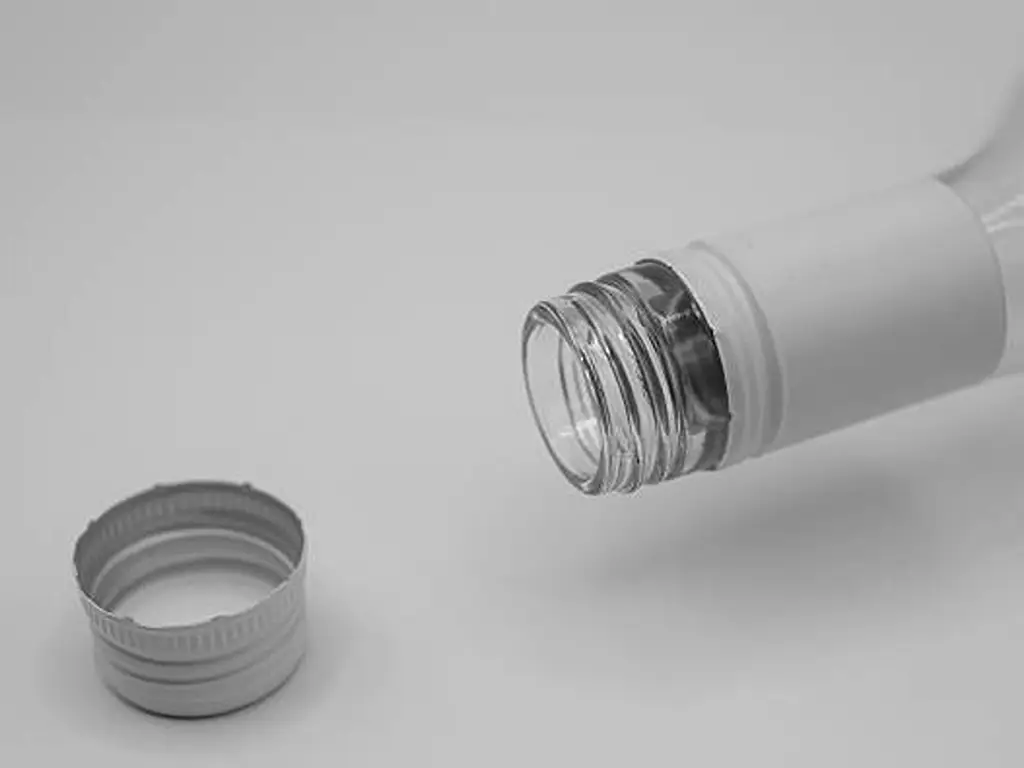
Materials vs. your formula — and when child-resistant packaging is legally required
Closure materials form a short list with long consequences. Polypropylene tolerates most cosmetics but not all. Acrílico (PMMA) looks premium and glass-clear but can craze under aggressive solvents. Aluminio is light and recyclable. Zinc alloy (zamac) carries heavy, metallic prestige. Wood and bamboo give a natural profile but need careful lacquer selection, because alcohol and oils lift finishes. Two rules of thumb. First, never assume a material is inert against su formula. Seventy-percent ethanol, citrus oils and pure essential oils can degrade parts that were fine in someone else's bottle. Second, always test the finished assembly (formula plus cap, liner and gasket together), because failures live in the combination.
On regulation, one myth needs correcting. Child-resistant (CR) packaging is not required for perfumes or cosmetics as a category in the United States. Under the Poison Prevention Packaging Act (16 CFR Part 1700), CR packaging is triggered by specific hazardous contents at regulated concentrations. Examples include products with 10% or more hydrocarbons by weight, or 4% or more methyl alcohol (Poison Prevention Packaging Act Business Guidance, U.S. CPSC). Enforcement is real. A luxury cosmetics brand recalled an essential-oil blend for exactly this gap. If your formula contains flagged ingredients, or could be mistaken for a drink by a child, plan for CR and its usability trade-offs from day one. CR closures that frustrate adults generate their own customer-service disasters.
Closure Spec Self-Check Before You Order
Who Should Supply Your Glass, Closure, and Finishing?
Once you know the finish, the seal and the material, the last structural question is sourcing. Three paths exist, and they differ in where the risk lands.
Path one: self-assemble. Buy bottles from a bottle maker, closures from a closure specialist, and decorating from a third shop. Each piece can be best-in-class. You pay for it in coordination: three suppliers, three minimums, three lead times, and the classic failure where cap finish and bottle finish were never validated together until the first carton arrives. Path two: a glass manufacturer that supplies closures and finishing in the same order. Bottle and finish are specified together. Closures are matched to that finish. Décor color-matching happens inside one quality system instead of across three. Path three: local wholesale stock. Fast and risk-free for prototypes and first runs. But the catalog owns the decisions, and scaling means switching paths anyway.
For fragrance and cosmetic runs, the decisive question is usually décor consistency. Glass decorating (spray coating, hot stamping, screen printing) and closure finishing (electroplating, anodizing, lacquer) are different process worlds. Color-matching across two factories is where "the cap is a slightly different gold than the bottle" gets born. At Daxin Glass Bottles, that entire chain runs as one single-order custom glass program: the glass bottle, the custom lids and pumps range (Zamac, plastic, acrylic and wooden caps plus perfume sprayers), and the decorating and finishing. There is a library of thousands of existing molds to pull from before you ever pay for a new one. Color samples and closure fit are locked in the same approval round. That is precisely the coordination that breaks down when bottle and cap come from different continents. Self-assembly is still right if you already trust a specialist closure house and need a very unusual cap design. Integration saves coordination; it does not automatically beat a supplier you have worked with for years.
Closure Failures in Real Life: What to Test Before You Fill 10,000
Every failure mode below has a name attached somewhere in the maker community. These are not hypotheticals. They are the ledger of people who shipped before testing.
| Real-world failure | The prevention move |
|---|---|
| Hand-crimping broke roughly one in three fragile bottles | Machine-crimp at volume, or switch to screw-on |
| Crimp applied too loose → fragrance evaporated in storage | Verify crimp tightness on samples before filling |
| Screw caps arrived loose / leaked after transit | Set torque spec; invert-test a batch before shipping |
| Rubber dropper bulb degraded and clouded the oil | Use glass or compatible polymer internals |
| Dropper tube didn't reach the bottom → last 15% wasted | Specify tube length against bottle interior height |
| Child-resistant cap too hard for adults → customer replacements | Prototype CR with real users; check the adult-open rate |
| Thick oil clogged a fine-mist sprayer | Match orifice size to formulation viscosity |
| Silk-screen décor peeled after alcohol wipe-downs | Verify décor cure and alcohol resistance with your formula |
The five-step release check below costs a day of work. It has caught every failure in the table above at least once in someone's production history:
Five-Step Release Check Before a Big Batch
The "sample was perfect, bulk was different" story is almost always a supplier change or a spec drift between sample and production. That is why the last step matters more than it sounds.
The Business View: Stock Bottles Without a Closure Plan Are Half a Product
The inquiries changed: the closure is the first question
Everything in this article compresses into one commercial observation. Customers no longer ask for a bottle. They ask for a bottle that dispenses and seals correctly. The small brands launching 5,000 units on stock bottles have absorbed the failure ledger above. Their first question to a supplier is not "what shapes do you have?" It is "will the cap fit, will it leak, and can I put my logo on it without opening a mold?" A catalog that answers bottle shapes but stays silent on closures forces that buyer to assemble the answer themselves across three suppliers. Most of them, at that stage, move on to whoever answers the whole question. If you stock glass, the closure is not an accessory line. It is the other half of every product you sell.
Assemble stock by the pair, not by the piece
The economics favor pairs. The demand that matters sits in the lane below the custom-mold line. That is the lane where buyers need stock bottles, matched closures and light customization (print, color, label) without a 10,000-piece tooling commitment. The demand clusters into a few high-volume combinations: narrow-neck bottles paired with crimped or screw-on atomizers for fragrance; Boston rounds paired with droppers or orifice reducers for oils; pump bottles paired with lotion pumps. Stocking these as assembled pairs rather than independent bottle and cap SKUs does three things. It answers the buyer's first question before it is asked. It moves the conversation from comparing bottle prices to comparing complete solutions. And it turns the closure margin, historically the forgotten line item, into part of every quote. The boundary to respect is real. Pairing everything with everything is how SKU counts explode and dead stock accumulates. Focus the pairs on the three or four product categories your buyers actually fill, and keep exotic closure requests on special order. That is the difference between a catalog that sells and a warehouse that collects dust.
If you are speccing closures for a new glass bottle run, or restocking a catalog that should have been paired years ago, send your neck finish and target volumes to our team. Get the closure math done before you commit to a mold or a container of anything.
Make the finish the first decision, not the last
Get a glass bottle and closure pairing built around your finish code — sample validation, décor color-matching, and QC documents on request.
Request closure samples and specsReferencias
- Regent Plast. “Understanding Bottle Neck Finishes: The Difference Between 400, 410, and 415.” 2024. https://regentplast.com/understanding-bottle-neck-finishes-the-difference-between-400-410-and-415/
- Packamor. “FEA15 vs FEA18: Perfume Bottle Neck Sizes Explained.” https://www.packamor.com/blogs/knowledge-hub/fea15-vs-fea18-understanding-perfume-bottle-neck-sizes-before-you-order
- U.S. Consumer Product Safety Commission. “Poison Prevention Packaging Act Business Guidance (16 CFR Part 1700).” https://www.cpsc.gov/Business--Manufacturing/Business-Education/Business-Guidance/PPPA
- Research and Markets. “Mini Refillable Perfume Bottles Market, 2025–2031.” 2025. https://www.researchandmarkets.com/reports/6075200/mini-refillable-perfume-bottles-market-global
- Wikimedia Foundation. “Closure (Container).” 2026. https://en.wikipedia.org/wiki/Closure_(container)
- Reddit — r/DIYfragrance. “To Crimp or Not to Crimp? The Ultimate Cap Battle for 5,000 Bottles.” 2025. https://www.reddit.com/r/DIYfragrance/comments/1hydixf/to_crimp_or_not_to_crimp_the_ultimate_cap_battle/
- Reddit — r/DIYfragrance. “Custom Fragrance Packaging from Alibaba.” 2026. https://www.reddit.com/r/DIYfragrance/comments/1snynt7/custom_fragrance_packaging_from_alibaba/
- Reddit — r/beardoil. “What Type of Bottle Cap Do You Like? (Orifice/Dropper?)” https://www.reddit.com/r/beardoil/comments/5otcin/what_type_of_bottle_cap_do_you_like_orificedropper/
- Reddit — r/essentialoils. “Bottles and Droppers.” https://www.reddit.com/r/essentialoils/comments/bongwo/bottles_and_droppers/
- Daxin Glass Bottles. “Custom Glass Bottles & Jars.” https://www.daxinglassbottles.com/custom-glass-bottles-jars/
- Daxin Glass Bottles. “Custom Lid & Pump.” https://www.daxinglassbottles.com/custom-lid-pump/
- Daxin Glass Bottles. “Contact.” https://www.daxinglassbottles.com/contact/
- Botellas de vidrio Daxin. Página de inicio. https://www.daxinglassbottles.com/



 English
  Spanish
  French
  German
  Arabic
  Italian
  Dutch
Dutch  Portuguese
  Russian
  Korean
  Japanese