
La serigrafia su bottiglie di vetro è il metodo utilizzato per la maggior parte delle confezioni di profumi, cosmetici e candele da cui non è possibile staccare l’etichetta. Uno stencil, un telaio a maglia e una spatola spingono l’inchiostro direttamente sul vetro. Poi c’è un fattore che determina se quel logo resisterà un anno sugli scaffali o si sfalderà non appena verrà a contatto con il contenuto della prima bottiglia. Quel “fattore” è l’aspetto che quasi nessuno, quando scrive di serigrafia, spiega: l’inchiostro, l’essiccazione e in quale fase della filiera avviene effettivamente la stampa.
Questa guida illustra l'intero percorso, dal funzionamento del processo ai dati che dovresti richiedere a un fornitore prima di firmare un ordine.
Che cos’è la serigrafia su bottiglie di vetro e come funziona?
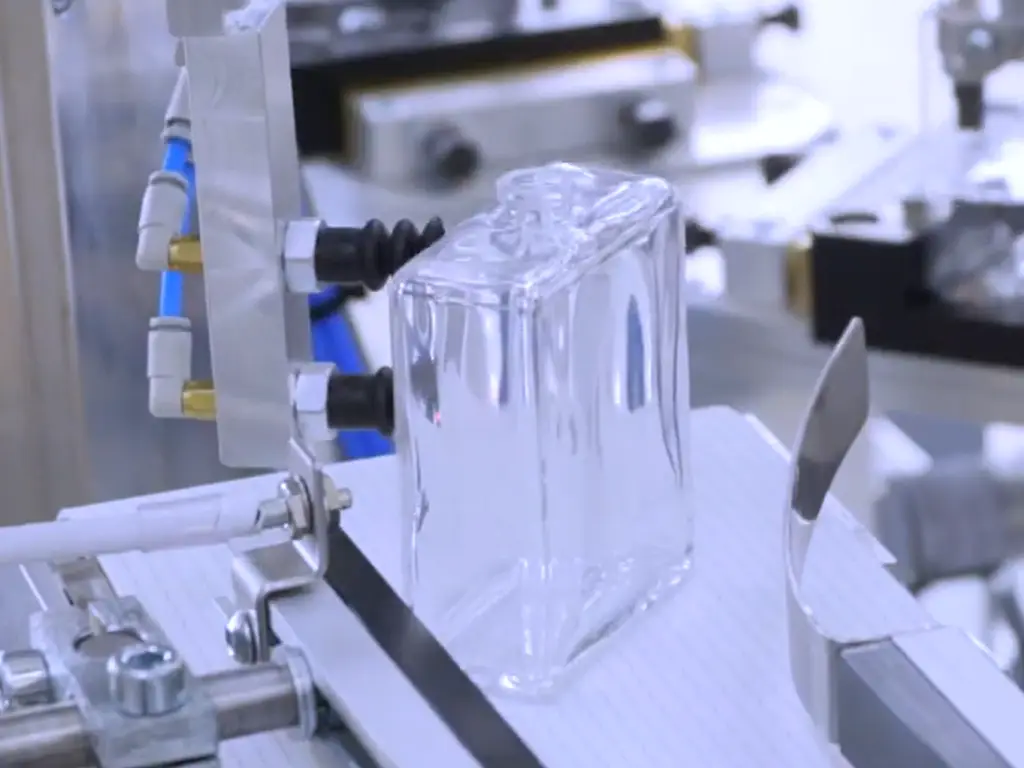
La serigrafia su bottiglie di vetro funziona come qualsiasi altra serigrafia, con una differenza: è la bottiglia a ruotare, invece che il telaio serigrafico ad essere premuto in piano. L’inchiostro viene spinto attraverso una maglia fine che è stata rivestita con un’emulsione fotosensibile ed esposta alla luce per formare uno stencil. Le aree aperte del disegno lasciano passare l’inchiostro; tutto il resto lo blocca. Una racla passa sulla rete, spingendo l’inchiostro sulla superficie della bottiglia mentre questa ruota, e il risultato è un’immagine nitida e opaca che aderisce su sul vetro stesso, anziché su un foglio di carta attaccato ad esso.
Il processo si svolge in quattro fasi:
- Produzione di schermi. La rete viene rivestita, il disegno viene esposto su di essa e l’emulsione non esposta viene rimossa per ottenere lo stencil aperto.
- Configurazione. La bottiglia viene caricata su un dispositivo rotante e posizionata sotto lo schermo.
- Stampa. La spatola trascina l’inchiostro lungo la rete mentre la bottiglia ruota al di sotto di essa, trasferendo l’immagine lungo la curvatura.
- Stagionatura. L'inchiostro viene fatto asciugare, cotto al forno o sottoposto a cottura in modo da aderire al vetro. Questa fase, più di ogni altra, determina la durata della stampa.
Ci sono due dettagli che vale la pena conoscere fin dall’inizio. Innanzitutto, per ogni colore serve uno schermo. Un logo a due colori comporta l’uso di due schermi e due passaggi, motivo per cui la decorazione multicolore ha un costo unitario più elevato. In secondo luogo, la forma cilindrica è il motivo per cui la stampa sulle bottiglie di vetro è un’operazione che richiede l’uso di macchinari. Una macchina da stampa piana non è in grado di seguire una curva, pertanto le stampatrici serigrafiche rotative fanno ruotare la bottiglia sotto una racla fissa o mobile. I loghi semplici sulle bottiglie cilindriche sono all’ordine del giorno; è quando si tratta di grafiche complesse e multicolori su forme sagomate che il processo richiede l’impiego di attrezzature specifiche.
Questo chiarisce anche un malinteso comune nelle ricerche: la serigrafia su bottiglie di vetro non ha nulla a che vedere con la serigrafia su magliette o circuiti stampati. Si tratta della stessa famiglia di tecniche, ma con inchiostri completamente diversi e processi chimici del tutto differenti. La versione per il vetro appartiene al mondo della decorazione industriale.
Inchiostri per serigrafia e polimerizzazione: cosa determina la durata?
Ecco la contraddizione che si nasconde in ogni articolo su questo argomento. Un tipografo vi dirà che la serigrafia è “permanente”. Un altro vi dirà che i suoi inchiostri vengono cotti in forno per un’ora. Un terzo cuoce i suoi flaconi a 600 °C. Tutti e tre stanno descrivendo diverse famiglie di inchiostri, ed è la famiglia che scegliete, non la tecnica in sé, a determinare se la stampa durerà per tutta la vita utile del vostro prodotto.
Inchiostri ad essiccazione all'aria e termoplastici: le opzioni più affidabili
L'inchiostro più comunemente utilizzato per la serigrafia su bottiglie di vetro è un inchiostro termoplastico (a base di solvente) che polimerizza mediante cottura in forno. La bottiglia stampata passa attraverso un forno di polimerizzazione. Nelle vetrerie industriali, ciò comporta in genere circa un’ora di cottura a temperatura moderata, che elimina i solventi e induce la reticolazione della resina, trasformandola in una pellicola resistente. Si tratta del prodotto di punta del settore: buona adesione, buona resa cromatica, costo ragionevole e resistenza alle sollecitazioni, all’umidità e agli sbalzi di temperatura a cui una bottiglia è sottoposta durante la distribuzione.
Inchiostri ad essiccazione all'aria sono la versione “rapida”: induriscono a temperatura ambiente man mano che il solvente evapora. Sono più veloci da produrre e vanno bene per oggetti di breve durata o decorativi, ma il film rimane più morbido e più permeabile. Questo rappresenta un vero problema se il contenuto della bottiglia è aggressivo, perché ciò che si trova all’interno finisce per corrodere ciò che si trova all’esterno.
⭐ Se si sta scegliendo un flacone per cosmetici, profumi o alimenti, il processo di termoformatura a caldo è la scelta predefinita. L'essiccazione all'aria è l'eccezione, non la regola.
Inchiostri ceramici e inchiostri UV: le eccezioni
Altre due famiglie rappresentano gli estremi dello spettro.
Inchiostri ceramici (ad alta temperatura di cottura) vengono stampati, quindi cotti a una temperatura compresa tra circa 500 e 600 °C, in modo che il pigmento si fonda con la superficie stessa del vetro. Si tratta della decorazione più resistente che si possa realizzare sul vetro. È la scelta classica per le bottiglie di vino e distillati e per le linee di liquori di alta gamma, ed è proprio questa la ragione delle affermazioni sulla “permanenza” che si leggono online. I compromessi: l’alta temperatura limita la gamma di colori ed effetti realizzabili, e la cottura avviene solitamente come parte del flusso di produzione del vetro, il che limita i luoghi in cui può essere eseguita.
Inchiostri a polimerizzazione UV polimerizzano in pochi secondi sotto la luce ultravioletta. Sono veloci e rendono bene i dettagli più fini. Tuttavia, in generale, presentano una resistenza ai solventi inferiore rispetto agli inchiostri termoplastici cotti al forno. Per una bottiglia destinata a contenere un profumo a base alcolica, non rappresentano la scelta migliore.
Resistenza all’alcol e adesione: i numeri che contano
Per i flaconi di profumi e cosmetici, la resistenza non è solo uno slogan. È un aspetto verificabile. Due cifre dominano le discussioni con i fornitori:
- Test con salviettine imbevute di alcol. I flaconi di profumo vengono puliti con alcol durante il riempimento, sugli scaffali e dai clienti, e la decorazione del flacone deve resistere a tali operazioni. Nella produzione di profumi, il parametro di riferimento è un Prova di resistenza all'alcol con 500 salviettine sulla superficie decorata. Un rivestimento a base di olio che soddisfi questo requisito può resistere per tutta la durata di vita di un flacone di profumo senza perdere la propria impronta.
- Prova di adesione con nastro a reticolo. I fornitori verificano l'aderenza dell'inchiostro o della vernice sul vetro utilizzando il metodo del nastro a taglio incrociato, standardizzato come ASTM D3359. Si incide una griglia sulla pellicola, si rimuove il nastro adesivo e la pellicola rimanente viene classificata da 0B a 5B. Una classificazione di Nella maggior parte delle specifiche relative ai rivestimenti, il valore minimo accettato per il superamento del test è pari a 4B o superiore (KTA-Tator, “Misurazione dell’adesione mediante prova con nastro secondo la norma ASTM D3359”). Questo è lo standard a cui deve attenersi qualsiasi fornitore di decorazioni.
C'è anche un aspetto legato alla conformità. Le norme europee fissano un limite massimo al contenuto di COV (composti organici volatili) nei rivestimenti (Direttiva UE 2004/42/CE), con le categorie a base di solvente che raggiungono centinaia di grammi per litro, mentre i sistemi a base acquosa si attestano su valori nettamente inferiori. Per gli imballaggi di profumi destinati all’UE e agli Stati Uniti, gli inchiostri a base acquosa rappresentano la soluzione più sicura in termini di conformità. Superano lo stesso test con 500 passate di alcol se formulati con una resina poliuretanica di qualità profumiera, a costo di richiedere uno strato aggiuntivo di finitura trasparente.
| Famiglia di inchiostri | Stesura | Resistenza all'alcol | Adesione (ASTM D3359) | Costo | Il migliore per |
|---|---|---|---|---|---|
| Asciugatura all'aria | Temperatura ambiente | Debole — pellicola morbida | Variabile, spesso inferiore a 4B | Il più basso | Oggetti decorativi in piccole tirature |
| Termoplastico (cotto) | circa 1 ora di cottura in forno | Resistente — supera il test del profumo con 500 passate | ≥4B | Basso-moderato | Flaconi standard per profumi e cosmetici |
| Ceramica (a cottura ad alta temperatura) | Cotto a circa 500–600 °C | Eccellente — si fonde con il vetro | Eccellente | Da moderato a elevato | Vino, liquori, confezioni premium a lunga conservazione |
| polimerizzazione UV | Secondi sotto la luce UV | Più fragile del termoplastico cotto | Ottimo su superfici lisce | Moderato | Lavori di precisione con tempi di consegna rapidi |
Serigrafia vs. etichette, stampa a caldo e stampa UV: quale soluzione è più adatta alla tua bottiglia?
La serigrafia non è l’unico modo per apporre il proprio marchio su una bottiglia, e non è sempre quello giusto. Ecco un confronto imparziale, perché scegliere il metodo sbagliato comporta un costo che si scopre solo dopo il primo ciclo di produzione.
| Metodo | Durata | Gamma di colori | Costo per piccoli lotti | Costo per grandi lotti | Qualità percepita | Limiti relativi alla forma della bottiglia | Tempi di consegna |
|---|---|---|---|---|---|---|---|
| Serigrafia | Da elevata (cottura in forno) a moderata (essiccazione all’aria) | Colori a tinta unita, corrispondenti ai codici Pantone; nessun dettaglio fotografico | Moderato: costo di installazione dello schermo | Prezzo unitario più basso in caso di acquisti in grandi quantità | Alto: tattile, integrato | Sono necessarie forme che consentano la rotazione (principalmente cilindriche/coniche) | 2–4 settimane di produzione |
| Etichette adesive | Basso-moderato; pelabile, può formare bolle | A colori, fotografico | Il più basso: senza attrezzature | Moderato | In basso: applicato in modo visibile | Quasi nessuno | Il più veloce |
| Stampa a caldo (lamina) | Alto | Colori metallizzati, oro/argento | Alto: sono necessari stampi | Prezzo unitario basso in caso di acquisti in grandi quantità | Il più alto: finitura di lusso | I pannelli più o meno piatti sono i più semplici | Moderato |
| Stampa digitale UV | Moderata; resistenza ai solventi più scarsa | Colori vivaci, sfumature, dettagli precisi | Basso: senza schermi | Prezzo unitario più alto rispetto a quello dello schermo | Moderato | Opere su superfici curve | Veloce |
Il modello da non perdere: La serigrafia è superiore in termini di volumi grazie ai colori a tinta unita che rispecchiano esattamente la gamma Pantone, mentre è inferiore rispetto alle etichette in termini di flessibilità e rispetto alla stampa UV per quanto riguarda i dettagli fotografici. L'etichetta rimane la scelta giusta per i testi normativi da modificare a seconda del mercato e per le tirature di prova inferiori a qualche centinaio di bottiglie. La stampa digitale UV è la soluzione ideale per le grafiche a colori in tirature limitate. La stampa a caldo offre un valore percepito superiore a qualsiasi altra tecnica, motivo per cui i marchi di profumi di fascia alta spesso la combinano con la serigrafia anziché sostituirla.
Due aspetti che le tabelle comparative presenti sulla maggior parte dei blog tralasciano. Innanzitutto, il colore sul vetro non è lo stesso di quello sullo schermo. Il vetro riflette la luce anziché fungere da retroilluminazione, quindi l’unico riferimento affidabile è un campionario Pantone osservato alla luce riflessa. Richiedete e insistete per ottenere un campione fisico prima della produzione. In secondo luogo, la tendenza dei profumi di alta gamma si è orientata verso decorazione mista: serigrafia per il logo, verniciatura a spruzzo per un corpo opaco o sfumato, stampa a caldo o decorazioni dorate per i dettagli, il tutto su un’unica bottiglia. Questo è il look che caratterizza gli scaffali del lusso moderno, e la serigrafia è lo strato di base su cui si fonda questo tipo di packaging.
L'arredamento combinato è lo standard del lusso. La serigrafia riproduce il logo, la verniciatura a spruzzo crea la finitura opaca o sfumata del corpo della bottiglia, mentre la stampa a caldo o la decorazione in oro aggiungono un tocco di stile: una sola bottiglia, diverse linee di decorazione in un unico stabilimento.
Come scegliere un fornitore di serigrafia: negozi locali o integrazione con la produzione
Una volta stabilito che la serigrafia è il metodo giusto, sorge la vera domanda: Chi stampa le vostre bottiglie? La risposta modifica il costo per bottiglia in misura tale che non potresti immaginare basandoti su un singolo preventivo, poiché quattro canali molto diversi tra loro forniscono cifre molto diverse.
I quattro canali a confronto
Canale 1: Stampalo da solo. Esistono impianti manuali di serigrafia per bottiglie, che gli hobbisti utilizzano per realizzare campioni e piccole tirature. La registrazione multicolore su una superficie curva con attrezzature manuali è davvero difficile da allineare, e gli inchiostri ad asciugatura all’aria ne limitano la durata. Questo canale è dedicato all’apprendimento e alla prototipazione, non alla produzione.
Canale 2: Negozi locali specializzati in decorazioni per piccole quantità. Si acquistano le bottiglie, le si spediscono a un negozio, che provvede a stamparle e a restituirle. Questo è il canale a cui si riferiscono i risultati della ricerca: tipografie con sede negli Stati Uniti che applicano una tariffa minima di poche centinaia. Un negozio affermato propone un preventivo di Minimo $275 per ordine per la stampa su bottiglie, più $50 per ogni colore di inchiostro non standard (Tipografia Norman). Punti di forza: nessun quantitativo minimo d’ordine, rapidità, comunicazione in lingua inglese. Limiti: la maggior parte accetta solo bottiglie cilindriche o a pareti piatte, le forme ovali e dai contorni marcati sono disponibili in diverse varianti, e il vetro smerigliato è rischioso perché un errore di stampa non può essere cancellato e ristampato, quindi è necessario prevedere nel budget dei contenitori aggiuntivi. Il costo unitario rimane invariato poiché l’attività dell’officina è caratterizzata da un elevato impiego di manodopera.
Canale 3: La fabbrica di vetro di origine, con stampa interna. La bottiglia viene formata, stampata, tappata e imballata nello stesso flusso produttivo. Si tratta di una struttura dei costi completamente diversa. Il prezzo unitario diminuisce all’aumentare dei volumi, poiché la decorazione avviene sulla linea di produzione del vetro e la capacità di stampa fa parte delle attrezzature dello stabilimento. In un tipico impianto di produzione di vetro decorato, si tratta di stampanti serigrafiche automatizzate affiancate da una serie di macchine semiautomatiche. La struttura dei quantitativi minimi d’ordine (MOQ) di questo canale è articolata su più livelli: all’incirca 1.000 pezzi per i modelli di serie, 5.000 per le decorazioni personalizzate, come la serigrafia, e 10.000 quando è necessario realizzare uno stampo nuovo. I tempi di consegna sono più lunghi: la produzione richiede 30–35 giorni, più il trasporto via mare. Tuttavia, il flacone, la stampa e il tappo vengono consegnati in un unico ordine.
Channel 4: Operatori del Marketplace (in stile Alibaba). I venditori propongono bottiglie stampate con quantità minime d’ordine (MOQ) a partire da circa 500 unità e prezzi di listino bassi. Il rischio non è il prezzo, ma la verifica: la maggior parte delle inserzioni indica una quantità e un prezzo, ma non specifica il metodo di polimerizzazione, né il test di adesione, né il valore relativo alla resistenza alla pulizia con salviette imbevute di alcol. Ciò significa che non è possibile confrontarle con nulla. L’approvvigionamento tramite marketplace funziona quando si sa già esattamente di cosa si ha bisogno e si può verificare il prodotto tramite campioni.
Una lista di controllo delle prestazioni da far rispettare ai fornitori
Qualunque sia il canale scelto, sono sempre le stesse cinque domande a distinguere un fornitore in grado di realizzare prodotti di qualità profumiera da uno che non ne è in grado:
- Che tipo di inchiostro e che tipo di polimerizzazione? La cottura in forno (ci vuole circa un’ora) è preferibile all’essiccazione all’aria per qualsiasi prodotto a base alcolica. Se la risposta è “essiccazione all’aria”, chiedi perché.
- Supera il test con 500 salviette imbevute di alcol? Per quanto riguarda i componenti dei profumi e dei cosmetici, questo è il punto di riferimento. L'affermazione “permanente” senza un metodo di prova è solo uno slogan pubblicitario, non una specifica tecnica.
- Qual è il grado di adesione? Chiedi il risultato del tratteggio incrociato. 4B o superiore secondo la norma ASTM D3359 è la barra di passaggio.
- Come avviene l’approvazione del colore? Insistete per ottenere un campione fisico confrontato con il campionario Pantone, non una prova su schermo.
- Cosa succede ai prodotti scartati? Informatevi sulla politica di ispezione. Una linea di base di produzione giustificabile è una Controllo a campione 10% con controllo completo attivato quando il tasso di difetti supera i 2% e tasso di accettazione delle consegne ≥98%. Un fornitore che non è in grado di illustrare la propria politica in materia di resi non può quantificare il rischio che corri.
| Canale | Livello MOQ | Costo unitario | Tempi di consegna | Verifica della resistenza all'alcol | A chi è adatto |
|---|---|---|---|---|---|
| Fai da te / manuale | Nessuna — bottiglie singole | Elevato impiego di manodopera per ogni pezzo | Giorni | No — inchiostri ad essiccazione all’aria | Prototipazione, apprendimento |
| Negozio di articoli per la decorazione locale | Basso (~$275 min. di carica) | Piatto, ad alta intensità di manodopera | 1–2 settimane | Spesso non detto | Piccoli lotti, tempi di produzione rapidi, forme cilindriche |
| Fabbrica di vetro Source (stampa interna) | 1.000 pezzi di serie / 5.000 con decorazione personalizzata / 10.000 con nuovo stampo | Gocce con volume | 30–35 giorni di produzione + trasporto | Verificabile — Test prestazionale con 500 passate | Marchi di profumi e cosmetici su larga scala |
| Assemblatore di marketplace | circa 500 unità | Prezzo di listino contenuto | Variabile | Raramente documentato | Approvvigionamento basato sul prezzo con verifica dei campioni |
I punti deboli di ciascuna opzione
- Il fai da te va a rotoli nel momento in cui ti servono due colori o un flacone che non sia perfettamente cilindrico.
- I negozi locali chiudono i battenti in termini di forma (gli ovali sono in calo), di volume (prezzo unitario fisso) e di resistenza all’alcol (le specifiche tecniche vengono pubblicate raramente).
- L'integrazione in fabbrica fallisce Per tirature promozionali una tantum inferiori a circa 500 unità senza ordini successivi: i costi di attrezzaggio e i tempi di attesa non ne valgono la pena. Lo stesso vale per le bottiglie che richiedono un nuovo design per ogni lotto, dove i costi di attrezzaggio per la serigrafia sarebbero ricorrenti.
- I distributori del marketplace falliscono proprio dove è più difficile valutare la qualità: non ci sono specifiche di stagionatura, né dati di prova, e il confronto tra diversi fornitori è impossibile.
Il numero che riassume l'intera sezione: 500. Il test di resistenza all’alcol con 500 passate è l’unico elemento che distingue le decorazioni di qualità profumeria da tutte le altre. Richiedetelo, osservate come risponde il fornitore e capirete con quale canale avete realmente a che fare.
Punto di riferimento per le decorazioni di qualità da profumo
500 test con salviettine imbevute di alcolL'unico test che distingue le decorazioni di qualità da profumeria da tutte le altre. Chiedetelo a ogni fornitore.
Collaborare con un produttore di vetro che esegue la stampa internamente
Se i vostri volumi giustificano l’integrazione in fabbrica, come si configura concretamente il rapporto di collaborazione? La stampa interna significa che la decorazione fa parte dello stesso ordine della bottiglia stessa. Un unico ordine di acquisto copre il vetro, la serigrafia, il tappo o l’erogatore e l’imballaggio per l’esportazione. È proprio questa struttura a ordine unico il punto fondamentale: la responsabilità non passa da un fornitore all’altro. Un difetto di stampa è un problema della fabbrica di vetro e viene risolto con le persone che hanno realizzato la bottiglia, non tramite una catena di e-mail tra un venditore di bottiglie, uno stampatore e uno spedizioniere.
Il flusso tipico si svolge in questo modo:
- Design. Il team di progettazione del fornitore trasforma la vostra idea in un progetto pronto per la produzione. In questo modello, la progettazione concettuale e i campioni stampati in 3D sono forniti gratuitamente, con bozze pronte in circa 3 giorni lavorativi.
- Campionamento. Un campione fisico consente di verificare il colore, il posizionamento e l'adesione prima di qualsiasi impegno quantitativo. Il processo dalla fase concettuale alla realizzazione del campione richiede circa 15-20 giorni.
- Produzione. La produzione standard richiede 30–35 giorni, con aggiornamenti sullo stato di avanzamento durante la fase di produzione.
- Spedizioni. Le bottiglie vengono spedite in imballaggi da esportazione studiati per la protezione degli articoli fragili: singoli scomparti in un vassoio interno ammortizzante, all’interno di un cartone ondulato da esportazione a 5 strati.
Un avvertimento sincero su chi non dovrebbe utilizzare questo canale. Se avete bisogno di meno di circa 500 bottiglie per un ordine una tantum senza riordini, oppure se avete intenzione di ridisegnare l’etichetta a ogni singolo lotto, l’integrazione in fabbrica costa più di quanto renda. Gli stampi per la serigrafia e la pianificazione della produzione sono pensati per volumi ricorrenti. E se il vostro volume è reale ma il vostro concetto non è ancora collaudato, la scelta più intelligente è quella che il settore adotta di fatto: iniziate con bottiglie di serie con una leggera personalizzazione (serigrafia o etichettatura su modelli pronti per la spedizione), verificate il mercato, poi passate alla decorazione personalizzata e agli stampi su misura una volta che il prodotto si sarà guadagnato il suo posto sugli scaffali.
Applica l'etichetta "500 salviette" sulla tua bottiglia
Inviateci il vostro progetto per la bottiglia e vi confermeremo i valori relativi all'inchiostro, all'essiccazione e all'adesione prima che vi impegniate.
Richiedi un test di decorazioneErrori nella serigrafia: cosa può andare storto e come evitarlo
La serigrafia sulle bottiglie di vetro presenta difetti prevedibili. Conoscerli ti trasforma da un acquirente che spera in un acquirente che verifica.
Errore n. 1: l’errore di stampa che non si può correggere. Sul vetro smerigliato, una bottiglia con una stampa difettosa non può essere pulita e ristampata. L’inchiostro penetra nella superficie smerigliata e la bottiglia viene scartata. Gli stampatori lo sanno e dovrebbero includere nel preventivo un numero maggiore di contenitori per coprire questo rischio. Se il termine “smerigliato” compare nelle vostre specifiche e nel preventivo non sono previsti contenitori aggiuntivi, chiedete il motivo.
Errore 2: Scostamento nella registrazione multicolore. Ogni colore aggiuntivo comporta un altro schermo e un altro passaggio, e la precisione dell’allineamento tra i passaggi (“registrazione”) dipende esclusivamente dalla capacità della macchina di mantenere ferma la bottiglia. Le configurazioni manuali e semiautomatiche sono soggette a scostamenti; le macchine rotative automatiche mantengono l’allineamento perché la bottiglia rimane fissata nella stessa maschera. Se il vostro logo ha due o più colori, la questione della registrazione è una questione di capacità della macchina.
Errore 3: Il contenuto è in contrasto con la stampa. Questo è l’errore più grave nel settore dei profumi: l’applicazione di una fragranza a base alcolica su una decorazione non formulata per resistervi. Gli inchiostri ad asciugatura all’aria e gli inchiostri UV standard si ammorbidiscono a contatto con l’alcol, e il logo sbiadisce, forma bolle o si stacca nel giro di poche settimane. La soluzione va cercata a monte: l’inchiostro e il tavolo di polimerizzazione nella prima sezione di questa guida. Non si tratta di una riparazione a posteriori.
Come verificare lo stato della spedizione: Per eseguire un test del nastro a tratteggio incrociato secondo la norma ASTM D3359 occorrono un coltello, un pezzo di nastro adesivo e dieci minuti. È possibile eseguirlo su un campione proveniente dal proprio lotto. Confrontate la bottiglia finita con il campione fisico approvato sotto la stessa luce, poiché la variazione di colore è il difetto nascosto più comune. Inoltre, leggete attentamente la politica di ispezione del fornitore inclusa nel contratto: lo standard di produzione prevede un’ispezione casuale al 10%, un’ispezione completa quando il tasso di difetti supera il 2% e un tasso di accettazione alla consegna ≥98%. Questi sono i valori che potete richiedere per iscritto al fornitore.
Tre aspetti da verificare prima della produzione
(1) vetro smerigliato — prevedere un budget aggiuntivo per eventuali errori di stampa; (2) grafica multicolore — chiedere quale macchina garantisce la registrazione; (3) contenuti a base alcolica — richiedere inchiostro termoplastico cotto al forno che superi il test delle 500 passate. Tutti e tre sono domande da porre per iscritto, non semplici impressioni.
Il business delle bottiglie decorate: quantità minima ordinabile (MOQ), costi e analisi dei canali di distribuzione
La decorazione incide sull'aspetto economico di un ordine di bottiglie, e i calcoli si suddividono chiaramente in fasce. Ecco come funzionano effettivamente i numeri.
Cosa significano i tre livelli di MOQ per la tua liquidità
- ~1.000 unità: modelli di serie, personalizzazione minima. Scegliete da un catalogo di prodotti già disponibili e stampate o applicate un'etichetta sulla superficie. L'esposizione finanziaria è bassa, non dovete sostenere costi per gli stampi e la spedizione richiede solo pochi giorni. Questo livello è pensato per testare nuove idee senza mettere a rischio l'azienda.
- circa 5.000 pezzi: decorazione personalizzata. Serigrafia personalizzata, verniciatura a spruzzo, stampa a caldo. A questi livelli di produzione, i costi degli stampi e di allestimento si ammortizzano e i prezzi unitari iniziano a diminuire in modo evidente. Questo è il livello di lancio per una linea di profumi di alto livello.
- ~10.000 unità: stampi su misura. Una bottiglia dal design su misura per il tuo marchio. Vengono addebitati i costi per gli stampi (circa $1.000–$1.100 per uno stampo per bottiglie) una volta. Nel modello integrato in fabbrica, il rimborso avviene al raggiungimento delle 100.000 bottiglie. È a livello dello stampo che il packaging diventa proprietario, ed è proprio lì che smette di essere replicabile.
La cascata da non dimenticare: "stock → decorato → modellato" è l'ordine effettivamente utilizzato nel settore, poiché ogni fase riduce i rischi per quella successiva. I marchi che passano direttamente agli stampi personalizzati prima che il prodotto abbia dato prova di sé immobilizzano liquidità nell’attrezzatura per una bottiglia che il mercato non ha ancora convalidato.
Livelli di quantità minima ordinabile (MOQ) per il vetro decorato
Struttura dei canali e profitti
La logica alla base di questo canale è semplice, una volta compresa. I negozi locali applicano prezzi fissi per pezzo perché la loro base di costo è la manodopera; le fabbriche fissano prezzi per pezzo che diminuiscono all’aumentare dei volumi perché la loro base di costo è rappresentata dalle attrezzature. Per un marchio che vende migliaia di unità all’anno, questa differenza determina se la decorazione è un centro di costo o parte del margine lordo. La fascia premium aggrava ulteriormente la situazione: la decorazione combinata (serigrafia più verniciatura a spruzzo, stampa a caldo o sabbiatura opaca su un unico contenitore) è ciò che determina i prezzi di lusso, ed è disponibile solo laddove diverse linee di decorazione coesistano in un unico stabilimento.
Ecco perché il criterio di selezione illustrato nelle sezioni precedenti è anche uno standard aziendale. Un fornitore in grado di documentare il test delle 500 passate, il grado di adesione e la propria politica di scarto ti permette di quantificare il rischio effettivo. Pagare per un sistema di ispezione documentato costa meno di una rilavorazione completa di un intero lotto. I conti tornano sempre così.
Questo è l’approccio che abbiamo adottato alla Daxin Glass Bottles: un unico ordine comprende la bottiglia, la serigrafia, il tappo o l’erogatore e l’imballaggio per l’esportazione, quindi la responsabilità relativa alla decorazione, agli stampi e alla consegna ricade su un unico soggetto. Le nostre fasce di quantità minima ordinabile (MOQ) seguono il calcolo sopra indicato: 1.000 unità per i modelli in stock, 5.000 per le decorazioni personalizzate come la serigrafia, 10.000 quando è necessario un nuovo stampo. Il costo dello stampo viene addebitato una sola volta e rimborsato al raggiungimento di 100.000 bottiglie. Il tempo necessario per passare dall’ideazione al campione è di 15–20 giorni, mentre la produzione standard richiede 30–35 giorni; oltre 2.000 modelli in stock sono pronti per la spedizione in 7–10 giorni. Vedi il nostro programma di bottiglie e barattoli in vetro personalizzati per visualizzare l’elenco completo delle decorazioni, oppure la nostra linea di flaconi per profumi per le forme su cui si basa.
La serigrafia sulle bottiglie di vetro premia i marchi che la considerano una specifica tecnica, non uno slogan. Scegliete la famiglia di inchiostri in base al contenuto, verificate con il test dello strofinamento e quello del nastro adesivo, e scegliete il processo in base al volume: prima le bottiglie grezze, poi quelle decorate, e infine quelle stampate a caldo quando il prodotto lo merita. Alla Daxin Glass Bottles cuociamo le bottiglie serigrafate per circa un’ora dopo la stampa, mentre gran parte del settore le lascia asciugare all’aria. È questa la differenza tra un logo che resiste un anno su uno scaffale e uno che resiste a una vita intera di salviettine imbevute di alcol. Se volete apporre quei numeri sulla vostra bottiglia, richiedi un preventivo o inviaci la tua bottiglia e lo sottoporremo agli stessi test.
Configura il tuo flacone da profumo in un unico ordine
Flacone, serigrafia, tappo e imballaggio per l’esportazione da un unico stabilimento. Modelli standard a partire da 1.000 unità; decorazioni personalizzate a partire da 5.000.
Inviaci le specifiche della tua bottiglia
 English
  Spanish
  French
  German
  Arabic
  Italian
  Dutch
Dutch  Portuguese
  Russian
  Korean
  Japanese