Il principio fondamentale dell'ingegneria del valore

L’azienda di profumi, di cui non viene rivelato il nome, all’origine di questo progetto si è presentata con un’ambizione ben nota: un flacone che risultasse imponente sugli scaffali dei negozi, che rendesse bene nelle foto, che trasmettesse sicurezza al primo tocco e che giustificasse un prezzo di lusso credibile. Le specifiche iniziali sembravano quasi un catalogo di personalizzazioni: una nuova geometria del vetro, un tappo in metallo, un erogatore e un collare su misura, decorazioni a strati, una confezione rigida e un inserto su misura. Ogni elemento, considerato singolarmente, sembrava di alta qualità.
Le specifiche commerciali erano meno flessibili. Il primo ordine doveva rispettare una quantità target non confermata e una fascia di prezzo, il calendario di lancio non poteva prevedere un numero illimitato di cicli di sviluppo e il marchio aveva bisogno di una soluzione che potesse essere riordinata man mano che la domanda cresceva. Ogni componente esclusivo avrebbe comportato la creazione di una propria attrezzatura, un ordine minimo, un ciclo di campionatura, una dipendenza dal fornitore e un profilo di scorte residue. La domanda, quindi, è passata da “È possibile personalizzare ogni singolo componente?” a “Quali scelte personalizzate saranno effettivamente apprezzate dal consumatore?”
Il ruolo di DAXIN in questo tipo di revisione non è quello di ridimensionare le ambizioni del progetto, bensì di tutelare l’idea del marchio mettendo in luce le implicazioni commerciali nascoste nel rendering. Ciò significa confrontare una bottiglia esistente con un nuovo stampo, verificare se la decorazione sia in grado di trasmettere l’identità del marchio, decidere se la sensazione tattile del tappo meriti una quota maggiore del budget, standardizzare le interfacce funzionali ove opportuno e valutare il prezzo considerando l’intero percorso piuttosto che il preventivo di un singolo componente.
La descrizione che segue rappresenta un modello decisionale in attesa di conferma interna da parte del progetto. Esso evita intenzionalmente di fornire dettagli precisi sui clienti, sui risparmi, sui quantitativi minimi d’ordine (MOQ), sui tempi di consegna e sulle dichiarazioni relative alle prestazioni. Il suo valore risiede nel metodo: richiesta del cliente → implicazioni in termini di costi, MOQ e rischi → alternative realistiche → decisione progettuale → impatto sui consumatori → impatto commerciale.
Il principio fondamentale dell'ingegneria del valore
La confezione desiderata richiedeva la rigore visivo tipico del lancio di una fragranza di alta gamma: una silhouette decisa, la limpidezza controllata del vetro, un tappo che trasmettesse un senso di intenzionalità, dettagli metallici precisi e una confezione esterna che non sminuisse il flacone all’ultimo momento. Il mercato di riferimento, il canale di distribuzione e il contesto di vendita al dettaglio rimangono invariati, ma la tensione di fondo è comune a fondatori, sviluppatori di prodotto e team di approvvigionamento: il design viene giudicato dai consumatori, mentre il percorso che porta alla sua realizzazione è vincolato da volumi, budget, tempi e disponibilità di forniture.
Il packaging premium è quindi una decisione aziendale prima ancora che un esercizio di stile. Un flacone esclusivo può garantire un forte riconoscimento a scaffale, ma concentra anche il budget in un contenitore di vetro e richiede che le previsioni di vendita sostengano tale scelta. Un tappo in zama può creare un’immediata sensazione tattile, ma modifica il costo dei componenti, il peso della spedizione e l’entità dell’impegno di magazzino. Una scatola rigida può garantire una presentazione d’effetto, ma può anche aumentare il peso volumetrico e occupare spazio di stoccaggio. Nessuna di queste scelte è sbagliata. Ciascuna deve avere una motivazione legata al posizionamento del marchio.
La revisione è iniziata con la suddivisione dei requisiti in tre gruppi. Elementi distintivi del marchio non negoziabili erano gli aspetti che dovevano avere un aspetto o dare una sensazione distintivi. Requisiti funzionali prestazioni di spruzzatura con copertura, tenuta della chiusura, assemblaggio e protezione. vincoli commerciali budget del progetto previsto, requisiti minimi a livello di componente, tempistiche di lancio, coordinamento con i fornitori e fattibilità degli ordini ripetuti. Una proposta verrebbe valutata in base a tutti e tre questi aspetti, non solo in base alla sua bellezza in sé.
Una confezione di profumo sembra semplice una volta assemblata. Sotto il tappo, tuttavia, si nasconde una serie di scelte: corpo e collo in vetro, pompa, tubo di aspirazione, collare, guscio e inserto del tappo, decorazione superficiale, scatola di cartone e allestimento interno. Se ogni elemento diventa proprietario, il numero di relazioni cresce più rapidamente del numero visibile di componenti. Il tappo personalizzato deve adattarsi al collare selezionato. Il collare deve rispettare l’altezza della pompa installata. La pompa deve adattarsi al collo del flacone e all’erogazione della fragranza. Il flacone decorato deve resistere all’inserto e all’imballaggio di trasporto senza subire abrasioni.
La personalizzazione comporta anche la creazione di interfacce amministrative. Un nuovo componente può significare un altro disegno tecnico, una decisione sulla titolarità degli strumenti, un campione fisico di riferimento, l’approvazione dei colori, un ordine di acquisto, uno standard di ispezione e un tempo di rifornimento. Un componente che sembra economico in un preventivo può rivelarsi costoso da coordinare se proviene da un fornitore diverso, ha una dimensione di lotto rigida o comporta un’operazione di assemblaggio di cui nessuno si fa carico.
La prima correzione è stata quindi di natura concettuale: smettere di equiparare il numero di componenti su misura al lusso. I consumatori non esaminano la distinta dei materiali. Ciò che percepiscono sono le proporzioni, l’equilibrio, le finiture, la sensazione al tatto, l’effetto spruzzato e la sequenza di apertura. Il progetto dovrebbe essere complesso solo laddove la complessità modifichi tale esperienza o ne garantisca le prestazioni.
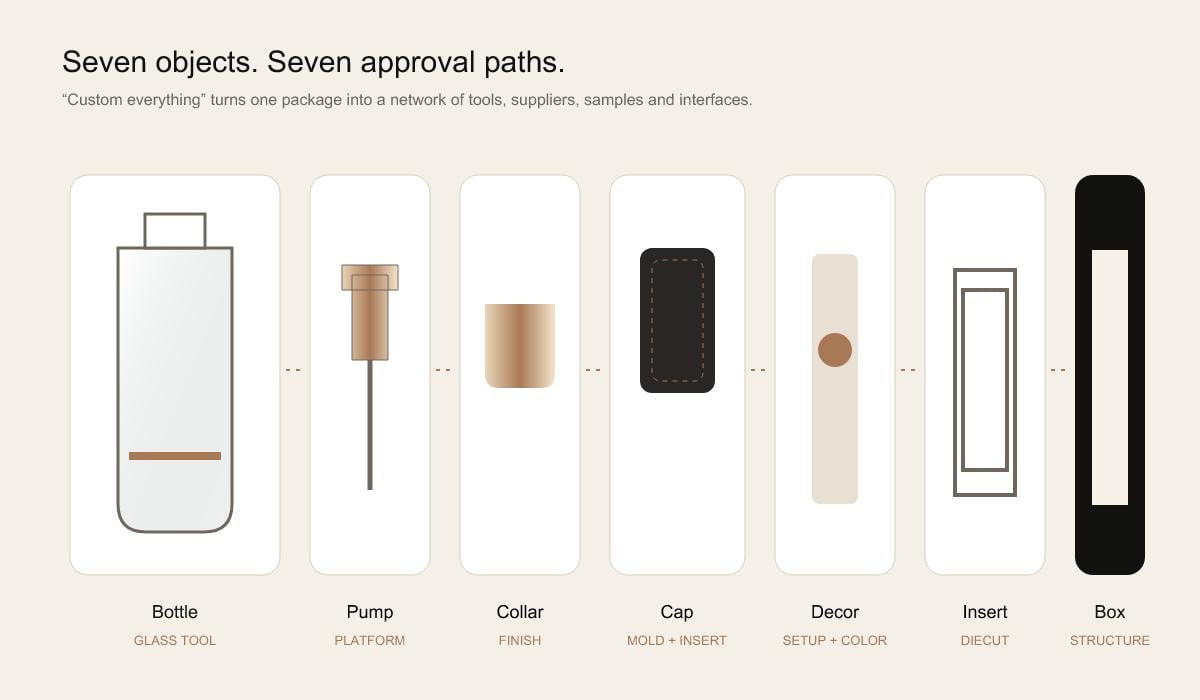
Tutto su misura: ecco come funziona. Sette oggetti visibili possono generare sette percorsi relativi a attrezzature, campioni, quantità minima ordinabile (MOQ) e approvazione prima che venga valutata la compatibilità tra di essi. Schema tecnico in formato SVG.
Nel settore del packaging per profumi di alta gamma, l’ingegneria del valore significa preservare le caratteristiche che i clienti possono vedere, toccare e associare al marchio, semplificando o standardizzando al contempo gli elementi il cui costo aggiuntivo non genera un valore proporzionale per il consumatore. Non si tratta di una corsa verso le specifiche più basse. Un flacone sottile e instabile o un erogatore poco resistente ridurrebbero il valore anche se consentissero di abbassare il prezzo. Lo stesso vale per una finitura che non rende bene nelle fotografie, un tappo che tintinna o una confezione che si deforma nei punti vendita.
Il metodo pone due domande correlate. Innanzitutto, Cosa determina il valore percepito? Tra questi possono figurare la sagoma, la distribuzione del vetro, la sensazione al tatto del tappo, la finitura, la precisione del logo e l’esperienza di apertura. In secondo luogo, Cosa tutela il valore fornito? Tra questi figurano il collo, il dosaggio della pompa, l’interfaccia di tenuta, l’adesione delle decorazioni, il supporto dell’inserto e la qualità ripetibile. Alcuni elementi rientrano in entrambi i gruppi; altri sono importanti dal punto di vista commerciale proprio perché il consumatore non se ne accorge mai quando funzionano correttamente.
Un componente supera la valutazione di value engineering quando i vantaggi progettuali, l’utilità futura e il valore per il marchio ne giustificano i costi di attrezzaggio, i quantitativi minimi, la produzione di campioni, i tempi di realizzazione e i rischi. Se i vantaggi sono incerti, la soluzione corretta potrebbe essere quella di realizzare un prototipo o di suddividere l’investimento in fasi, anziché approvarlo o respingerlo immediatamente. Ciò consente di definire un brief più realistico per un gestione dei progetti di imballaggio conversazione.
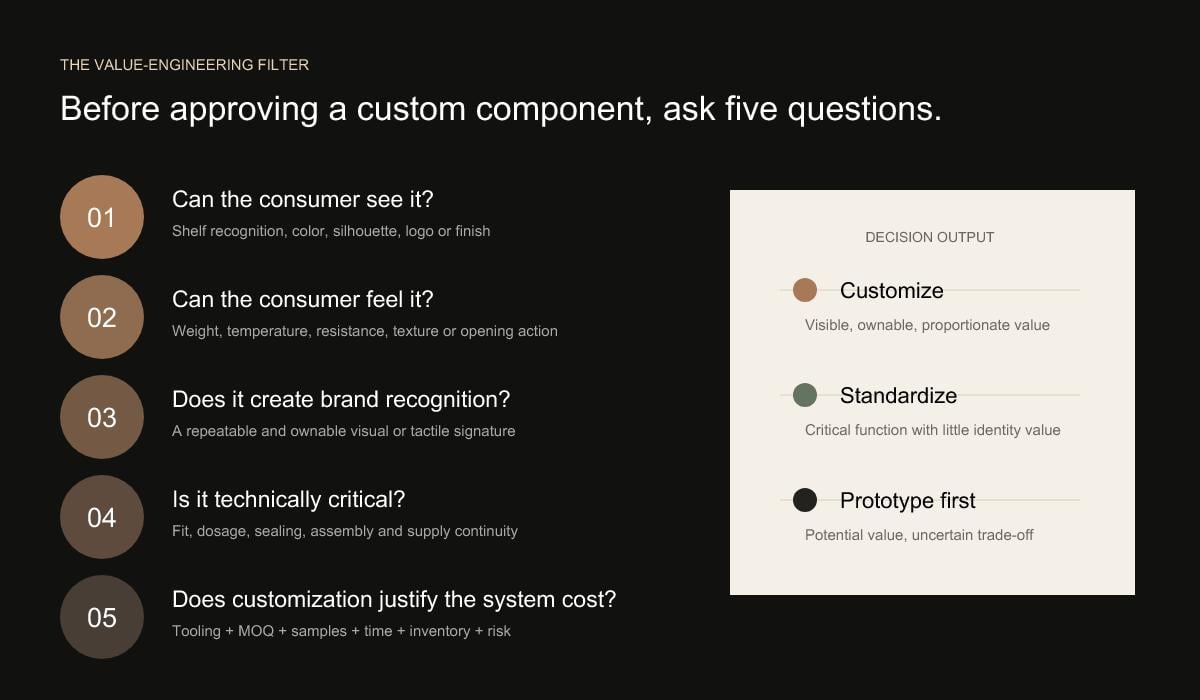
Il filtro decisionale per eccellenza. Vengono esaminati congiuntamente la visibilità per il consumatore, la sensazione al tatto, il riconoscimento del marchio, l’importanza tecnica e il costo totale del sistema. Schema tecnico in formato SVG.
Quando un acquirente si trova di fronte alla confezione di un profumo, segue una sequenza ben definita. Da lontano, la silhouette, le proporzioni, il colore e il rapporto tra flacone e tappo ne determinano il riconoscimento. Una volta in mano, la distribuzione del peso, la comodità dei bordi, la temperatura del tappo e la resistenza allo sbloccaggio ne definiscono la qualità. Durante l’uso, la sensazione al tatto dell’erogatore e le prestazioni di spruzzatura confermano o smentiscono la promessa. Quando la confezione viene aperta o riposta sullo scaffale, la struttura del cartone e la sua vestibilità ne rafforzano il ricordo.
Questi esempi spiegano perché la priorità data alla personalizzazione non dovrebbe dipendere dal prezzo dei componenti. Un piccolo cappuccio può attirare maggiormente l’attenzione del consumatore rispetto a un inserto nascosto di dimensioni molto maggiori. Un marchio serigrafato con precisione può garantire una maggiore riconoscibilità rispetto a un componente personalizzato della pompa che rimane invisibile. Al contrario, la pompa può meritare una priorità ingegneristica maggiore di quanto la sua visibilità lasci intendere, poiché uno spruzzo inadeguato compromette immediatamente l’esperienza d’uso del prodotto.
La distinzione pratica è la seguente: identità visibile rispetto a ingegneria nascosta. L’identità visibile favorisce una differenziazione selettiva. L’ingegneria nascosta richiede piattaforme collaudate, interfacce controllate e processi di convalida. Si tratta di un quadro di riferimento, non di una regola universale: un’esperienza di erogazione brevettata, un sistema di ricarica o un dettaglio meccanico a vista potrebbero rendere centrale per il marchio una parte che normalmente rimarrebbe nascosta. Ma l’eccezione va dichiarata esplicitamente, non data per scontata.
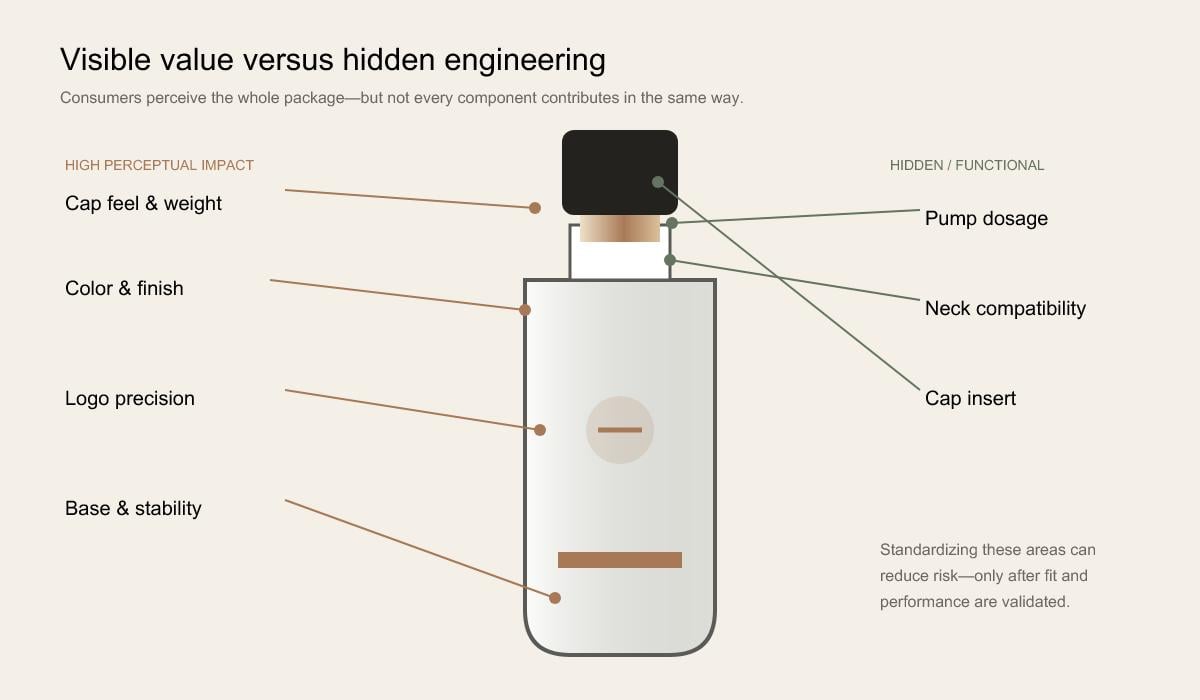
Mappa percettiva. Il tappo, la finitura, il logo e la base contribuiscono a trasmettere l’identità del prodotto; il collo, la pompa e l’inserto ne garantiscono il funzionamento anche quando sono in gran parte nascosti alla vista. Schema tecnico in formato SVG.
La scelta della bottiglia ha un’influenza sproporzionata perché la geometria del vetro incide sul riconoscimento del marchio, sull’area di decorazione, sul volume di riempimento, sul peso, sulle dimensioni del cartone, sul processo di stampaggio e sulle interfacce dei componenti. Una bottiglia completamente personalizzata è una scelta razionale quando la silhouette esclusiva costituisce un asset duraturo per il marchio — qualcosa che il cliente riconosce attraverso le campagne e le future fragranze. Consente un controllo preciso su spalla, base, ingombro e proporzioni, ma richiede che il progetto copra i costi di stampaggio, progettazione, campionatura di prova e convalida della produzione.
Un esistente piattaforma per flaconi di profumo offre una geometria ben definita e un percorso più rapido verso la realizzazione di campioni fisici. Può ridurre l’impegno iniziale e aiutare un marchio a verificare la domanda. Il suo limite non sta nel fatto che debba apparire ordinario, bensì nel fatto che la silhouette strutturale possa essere disponibile anche per altri acquirenti. Il marchio deve quindi creare un elemento distintivo in altri ambiti.
La soluzione di fascia media, particolarmente efficace dal punto di vista commerciale, consiste in una bottiglia di serie modificata: la struttura in vetro esistente è abbinata a una finitura personalizzata coordinata, a un tappo, a una decorazione e a una confezione in cartone. Poiché la silhouette iniziale proposta dal cliente non era ancora stata confermata come elemento principale di riconoscimento del prodotto, questa soluzione meritava un’attenta valutazione prima di approvare un nuovo stampo per il vetro. Ciò ha consentito di reindirizzare il budget dalle complessità di sviluppo non visibili verso gli aspetti che le persone avrebbero potuto vedere e toccare.
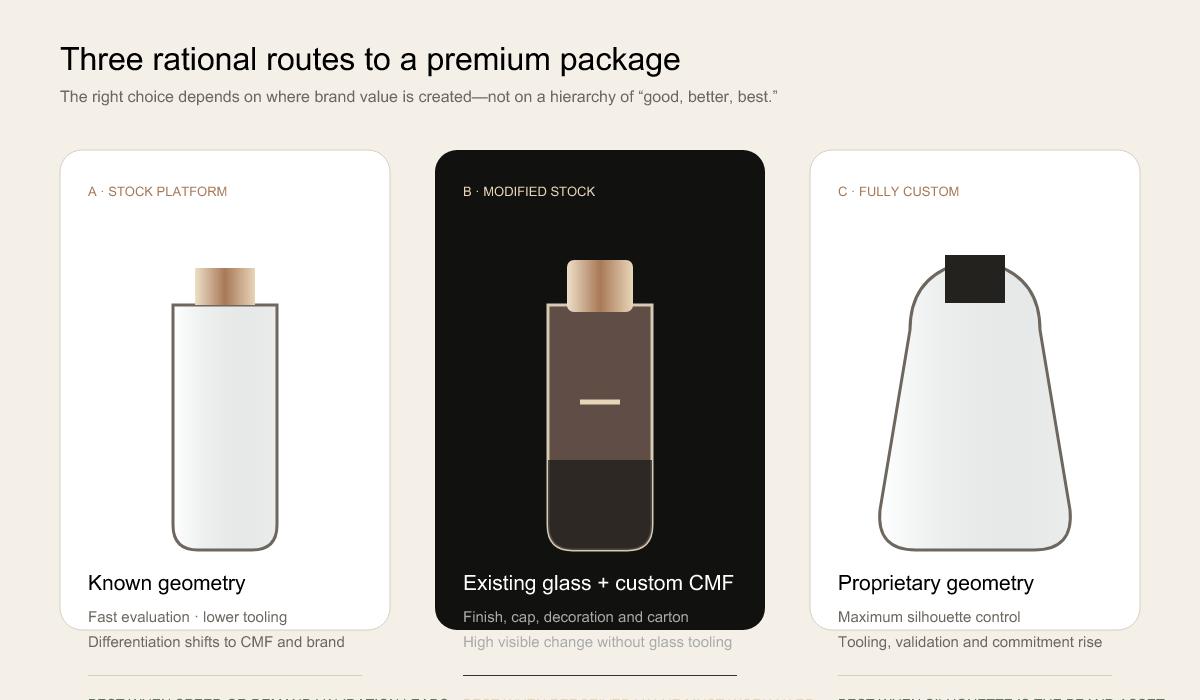
Tre percorsi razionali. Il modello di serie non è da considerarsi di qualità inferiore; un modello di serie modificato può concentrare il valore nel CMF, mentre il modello completamente personalizzato dà il meglio di sé quando la silhouette giustifica l’impegno richiesto. Schema tecnico in formato SVG.
Fattore | Flacone di riserva | Flacone di serie modificato | Bottiglia completamente personalizzata |
Attrezzature | Strumento strutturale esistente; gli strumenti di decorazione specifici per il progetto possono rimanere | Nessuno stampo per vetro nuovo; eventuale configurazione del tappo, della grafica o della finitura | Nuove attrezzature per la lavorazione del vetro e relative attività di progettazione o validazione |
Velocità | Di norma, il percorso di valutazione strutturale più breve quando la merce è disponibile | Aggiunge i cicli di campionamento CMF e dei componenti | Comprende la geometria, gli utensili, le prove e i requisiti di approvazione |
Logica MOQ | In base alla disponibilità e alla decorazione scelta | Spesso determinato dalla finitura personalizzata o dal componente meno flessibile | È necessario sostenere la produzione del vetro e di tutti i componenti a valle |
Esclusività | Limitato a livello della geometria del vetro | L'identità visiva può essere forte; la struttura rimane non esclusiva | Proprietario strutturale potenzialmente più forte, previa stipula di accordi |
Libertà di progettazione | La proporzione e l’area di decorazione sono fisse | Ampia libertà di scelta per quanto riguarda colori, finiture, tappi, grafica e confezione | Massimo controllo della silhouette e delle proporzioni nel rispetto della realizzabilità |
Rischio di sviluppo | Incertezza strutturale ridotta; occorre comunque verificare la compatibilità | Concentrati su CMF, assemblaggio e adattamento dei componenti | Più costosa perché la geometria, gli utensili e la ripetibilità della produzione sono nuovi |
Scalabilità | Dipende dalla continuità della piattaforma e dalla pianificazione dei fornitori | È in grado di adattarsi bene con file controllati e master di finitura | Forte coinvolgimento quando il volume futuro giustifica l'uso dello strumento |
La soluzione commerciale più adatta | Test di carico, velocità o un design incentrato sulla grafica e sulla capacità | Elevata differenziazione percepita senza una nuova geometria del vetro | Una silhouette riconoscibile, elemento fondamentale per il valore del marchio nel lungo periodo |
Il CMF — colore, materiale e finitura — viene talvolta considerato come un elemento decorativo applicato solo dopo che il “vero” design è stato completato. Nel packaging dei profumi, invece, può costituire il design stesso. Una sfumatura fumé traslucida modifica la percezione del volume e delle ombre. Un rivestimento opaco dai toni caldi trasforma la stessa geometria in un oggetto dalle linee più morbide. Un piccolo dettaglio metallico può creare un punto focale intenzionale. Un tappo con una temperatura al tatto o un peso diversi modifica la prima sensazione al tatto.
L’approccio orientato al valore ha considerato la piattaforma in vetro esistente come una base affidabile piuttosto che come un compromesso. La differenziazione poteva essere ottenuta attraverso la verniciatura controllata, la traslucenza, la serigrafia o la stampa a caldo, per poi essere rafforzata da un tappo e da un cartone progettati come un unico insieme. DAXIN’s decorazione e rifinitura La pagina fornisce il contesto di riferimento; i processi specifici, i codici colore e i requisiti di adesione relativi al progetto anonimizzato devono ancora essere confermati.
Questo percorso presenta dei limiti. Le spalle, i bordi laterali e le basi esistenti possono limitare la mascheratura e la grafica. Le rientranze profonde, gli angoli acuti o le aree incassate possono risultare difficili da rifinire in modo uniforme. Un rivestimento non può creare la silhouette distintiva o immediatamente riconoscibile del vetro nuovo. Anche il CMF (Colour, Material, Finish) comporta propri requisiti minimi di lotto, tolleranze cromatiche e obblighi relativi ai campioni. L’ingegneria del valore non consiste nel fingere che la decorazione sia gratuita, ma nel confrontare in quali casi il suo costo produca un cambiamento più visibile rispetto all’attrezzatura strutturale.
I trattamenti trasparenti, fumé, opachi e satinati modificano il modo in cui la luce e il liquido interagiscono con una bottiglia già esistente.
Il vetro, il metallo, la plastica e la carta dovrebbero condividere un intento visivo anche quando le loro superfici fisiche non possono corrispondere esattamente.
La lucentezza, la consistenza, l'opacità e la riflettività metallica richiedono campioni reali osservati in condizioni controllate, non solo immagini sullo schermo.
I marchi di profumi utilizzano spesso il peso come indicatore di qualità. Una base più spessa può migliorare la stabilità, creare una rifrazione più ricca e conferire al flacone una sensazione di solidità quando viene sollevato. Il peso può rivelarsi particolarmente utile quando la geometria esterna è sobria e il marchio necessita di una presenza fisica piuttosto che di complessità decorativa.
Tuttavia, “più pesante” non è un obiettivo senza limiti. Una maggiore quantità di vetro influisce sulla massa unitaria, sui requisiti del cartone, sul supporto degli inserti, sul peso del master-case, sul carico dei pallet e sul trasporto. Una base molto spessa può inoltre complicare la distribuzione del vetro e la qualità visiva se la geometria viene modificata senza tenere conto del comportamento durante lo stampaggio. Gli obiettivi di sostenibilità potrebbero modificare ulteriormente l’equilibrio accettabile tra la percezione di solidità e l’intensità del materiale.
L'obiettivo ingegneristico dovrebbe quindi essere peso percepito, non il peso massimo. Le proporzioni, il baricentro basso, l’impronta stabile, la densità del tappo e il modo in cui la bottiglia si adagia nella mano influenzano tutti questa percezione. Una bottiglia equilibrata, con una base ben calibrata e un tappo solido, può dare una sensazione di maggiore solidità rispetto a una bottiglia più pesante, la cui massa sembra arbitraria. Il peso scelto e la distribuzione del vetro per il caso specifico richiedono la conferma da parte di DAXIN.
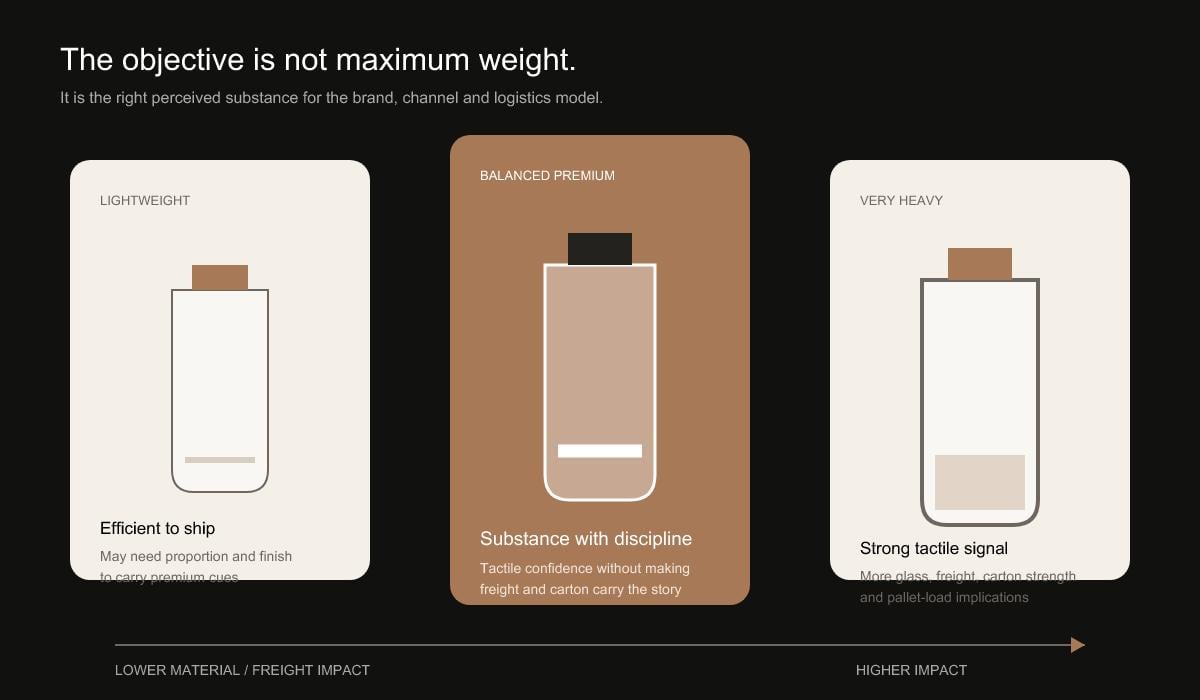
Compromesso in termini di peso. Un maggiore utilizzo del vetro può migliorare la sensazione tattile, ma comporta anche maggiori implicazioni in termini di imballaggio e logistica; la soluzione ottimale dipende dalla posizione specifica. Schema tecnico in formato SVG.
Il tappo occupa meno spazio visivo rispetto alla bottiglia, ma i consumatori lo toccano ripetutamente. Il suo peso, la temperatura, l’allineamento, la forza necessaria per rimuoverlo e il suono che produce possono sia accentuare la qualità percepita sia mettere in evidenza un’incongruenza. Inoltre, si trova nella parte superiore della silhouette, dove una proporzione distintiva può essere riconosciuta nelle fotografie e sugli scaffali.
Ciò offre una valida alternativa: combinare una piattaforma in vetro collaudata con un tappo dal design più distintivo. Una struttura in ABS zavorrata, un guscio in alluminio dalle linee pulite o una forma scultorea in zama possono conferire un’identità tattile e visiva, evitando al contempo di ricorrere a una nuova geometria del vetro. Un inserto personalizzato può adattare il tappo esterno a un involucro di chiusura standardizzato, a condizione che siano stati verificati il fissaggio, la posizione verticale, l’allineamento rotazionale e il comportamento del materiale.
Il compromesso sta nel fatto che il tappo non è un elemento isolato. Un tappo molto pesante può rendere la confezione sbilanciata verso l’alto. Un tappo largo può entrare in conflitto con la geometria della spalla o con lo spazio disponibile nel cartone. Una finitura metallica che appare lussuosa in un rendering può non armonizzarsi con la stampa a caldo o con il collare una volta che ciascuno di questi elementi viene realizzato su un substrato diverso. Per questo motivo, il budget destinato al tappo dovrebbe includere la verifica dell’adattabilità fisica e l’approvazione CMF, non solo il preventivo relativo al guscio.
Un’opzione strategica, non una regola universale
L'ABS offre un'ampia flessibilità in termini di forma e decorazione, pur mantenendo un peso relativamente contenuto. Può essere colorato, rivestito o metallizzato, e un peso interno può regolare la sensazione al tatto senza modificare l'aspetto esterno. Il suo valore percepito dipende dal design delle pareti, dal controllo delle giunture, dalla finitura della superficie, dalla qualità degli inserti e dal modo in cui si integra con la bottiglia.
L’alluminio conferisce una finitura naturalmente metallica e una sensazione di freschezza al primo contatto. Consente di realizzare un linguaggio stilistico pulito e preciso, senza l’ingombro dello zamac. Il processo di produzione, lo spessore delle pareti, i limiti di formatura, le scelte relative all’anodizzazione o alla finitura e il rapporto con una struttura interna in plastica influenzano tutti il risultato finale. Non si tratta semplicemente di “metallo, quindi di alta qualità”.”
Lo zamac consente di ottenere un peso consistente, una densità compatta e forme più scultoree. Ciò lo rende uno strumento potente per i marchi il cui tappo è un oggetto da collezione o un elemento distintivo. Può tuttavia richiedere attrezzature adeguate, un controllo accurato delle finiture e particolari accorgimenti per la spedizione. La scelta giusta deriva dal posizionamento del marchio, dalla sensazione tattile desiderata, dalla geometria, dalla quantità e dal budget, non da una classifica universale dei materiali. Le pagine di DAXIN dedicate a Coperchi in zamac e coperchi di plastica fornire un contesto di approvvigionamento correlato.
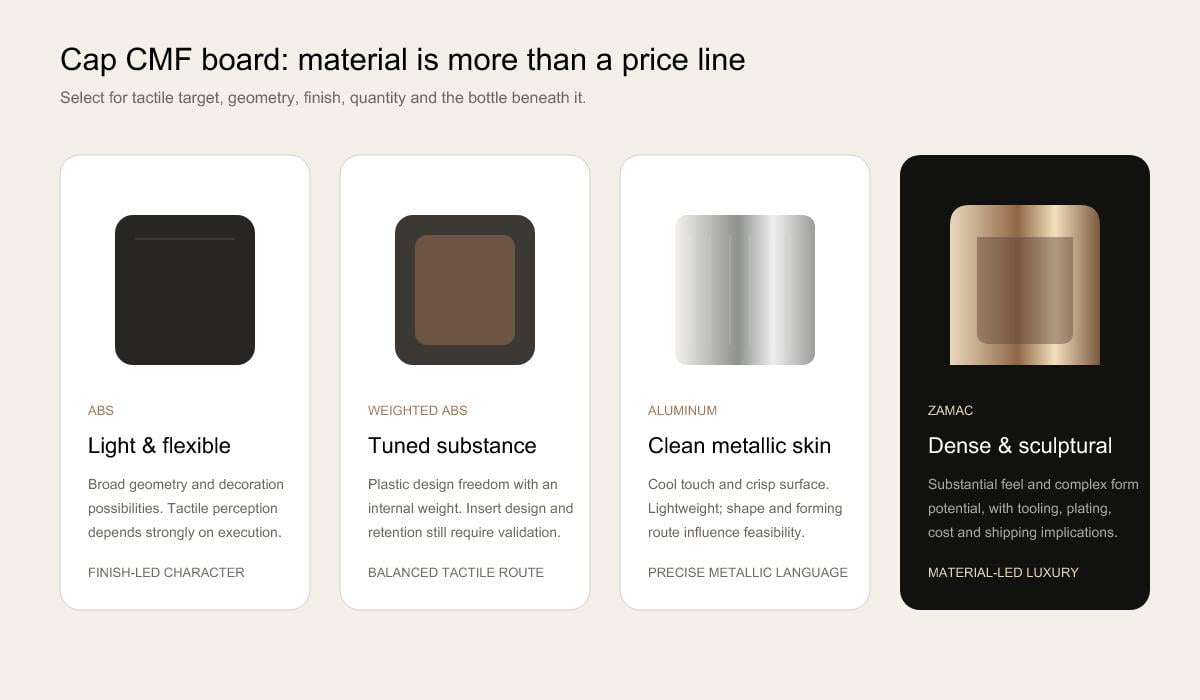
Scheda Cap CMF. Le caratteristiche del materiale, la geometria, la struttura interna e la finitura superficiale devono essere valutate nel loro insieme. Schema tecnico in formato SVG.
Componente | Visibilità per i consumatori | Importanza funzionale | Costo della personalizzazione / Rischio | Valore del marchio | Strategia consigliata |
|---|---|---|---|---|---|
Bottiglia di vetro | Alto | Alto | Da medio ad alto quando la geometria è nuova | Alta quando la sagoma o la distribuzione della luce sono riconoscibili | Personalizzare quando la struttura detiene l'identità; in caso contrario, valutare stock + CMF |
Collo | Basso dopo il montaggio | Alto | Elevato se viene introdotta un’interfaccia non standard | Di solito è basso, a meno che non venga esposto intenzionalmente | Preferisco un'interfaccia collaudata che garantisca la disponibilità di pompe e tappi |
Pompa | Da basso a medio | Alto | Da medio ad alto per una nuova piattaforma | Medio, quando lo spray o l’erogatore fanno parte dell’esperienza | Standardizzare la piattaforma, a meno che una funzione distintiva non giustifichi lo sviluppo |
Collare | Medio | Medio | Medio, perché la vestibilità e le finiture si influenzano a vicenda | Il corpo centrale come elemento di transizione tra il vetro e il tappo | Utilizza una piattaforma compatibile e personalizza in modo selettivo la superficie o le proporzioni |
Cappello | Alto | Da medio ad alto | Da medio ad alto, a seconda del materiale e dell'utensile | Alto perché i consumatori lo vedono e lo toccano con mano | Un candidato ideale per investimenti mirati in attrezzature o materiali |
Decorazione | Alto | Medio | Medio; l'impostazione e la ripetibilità sono importanti | Ottimo per colori, logo e riconoscibilità | Utilizzarlo come elemento di differenziazione ad alto impatto in combinazione con i master fisici |
Riquadro | Livello elevato prima dell'apertura | Da media ad alta in termini di protezione | Medio; la struttura e la stampa producono effetti distinti | Notizie e anticipazioni sul lancio al dettaglio | Personalizza l'esperienza gestendo al contempo le dimensioni e la protezione |
Inserisci | Da basso a medio | Ottimo per la ritenzione e la protezione | Da bassa a media, a seconda del materiale e della struttura | Di solito è più basso, a meno che non sia visibile durante l'apertura | Privilegiare l'adattabilità, la protezione e l'efficienza dello zaino rispetto all'estetica |
Una volta montata, la pompa risulta per lo più nascosta, ma è uno dei punti in cui un intervento di personalizzazione simbolica può rivelarsi più rischioso. Il dosaggio dello spruzzo, il getto, la resistenza dell’attuatore, la compatibilità delle guarnizioni, la qualità della crimpatura, l’altezza di installazione, la lunghezza del tubo di immersione e la continuità dell’alimentazione influiscono sull’uso e sul montaggio. Un attuatore esterno innovativo o una finitura a vista possono giustificare lo sviluppo; una piattaforma interna personalizzata che non apporti alcuna differenza significativa per l’utente può invece solo aumentare il rischio.
Il quadro di riferimento predefinito è il seguente: Standardizzare l'ingegneria invisibile, personalizzare l'identità visibile. In questo contesto, “standardizzare” non significa scegliere una pompa qualsiasi disponibile in commercio. Significa invece selezionare una famiglia di pompe collaudata e disponibile, compatibile con il collo della bottiglia, la formula, il metodo di riempimento, il dosaggio previsto e il sistema di tappatura, per poi definire il risultato finale dell’installazione. DAXIN’s Opzioni per i diffusori di profumo costituiscono un punto di partenza, non un’approvazione automatica per un prodotto specifico.
Una piattaforma standardizzata può semplificare la sostituzione, la pianificazione dei riordini e la continuità dei fornitori. Può inoltre facilitare la progettazione del tappo e del collare, poiché le dimensioni dell’involucro installato sono note. Il progetto dovrebbe personalizzare la pompa solo se l’esperienza di spruzzatura, l’attuatore a vista, il concetto di ricarica o un’altra caratteristica intenzionale creano un valore funzionale o per il consumatore sufficiente. La compatibilità delle formule e i requisiti prestazionali per il caso anonimizzato restano da confermare.
Richiedere le specifiche tecniche del componente e un campione assemblato, quindi verificare la qualità dello spruzzo, il dosaggio, l’azionamento, il rischio di perdite, l’interfaccia a crimpatura o a vite, il comportamento del tubo di immersione, l’altezza di installazione e la finitura estetica. Il flacone, la pompa, il collare e il tappo devono essere valutati come un unico insieme.
La decorazione è spesso uno degli impieghi del budget con il maggiore effetto leva, poiché modifica direttamente la superficie a contatto con il consumatore. La verniciatura a spruzzo può conferire un colore opaco, traslucenza o profondità sfumata. La finitura satinata o opaca altera la percezione della luce e la sensazione al tatto. La serigrafia può creare un ritmo grafico nitido. La stampa a caldo o un piccolo elemento metallico possono attirare l’attenzione senza coprire il vetro.
Il valore deriva dalla sobrietà e dal coordinamento. Cinque effetti non correlati tra loro possono risultare meno pregiati rispetto a un'unica finitura curata, con un posizionamento preciso del logo. La finitura dovrebbe valorizzare la geometria della bottiglia e il materiale del tappo, anziché entrare in contrasto con essi. La grafica deve rispettare le aree stampabili, i raggi degli angoli e i limiti del processo di stampa. I dettagli metallici su vetro, tappo, collare e confezione in cartone dovrebbero condividere un intento visivo comune, anche quando le differenze tra i substrati rendono impossibile una perfetta corrispondenza fisica.
La decorazione comporta inoltre lotti minimi, operazioni di messa a punto, abbinamento dei colori, mascheratura, test di adesione, polimerizzazione e cicli di campionatura. Un progetto che opti per l’utilizzo di vetro già esistente per evitare la realizzazione di stampi non deve trascurare tali requisiti. Il vantaggio è che il rischio legato allo sviluppo si concentra sulla superficie visibile, anziché essere ripartito contemporaneamente tra una nuova struttura e una nuova superficie.
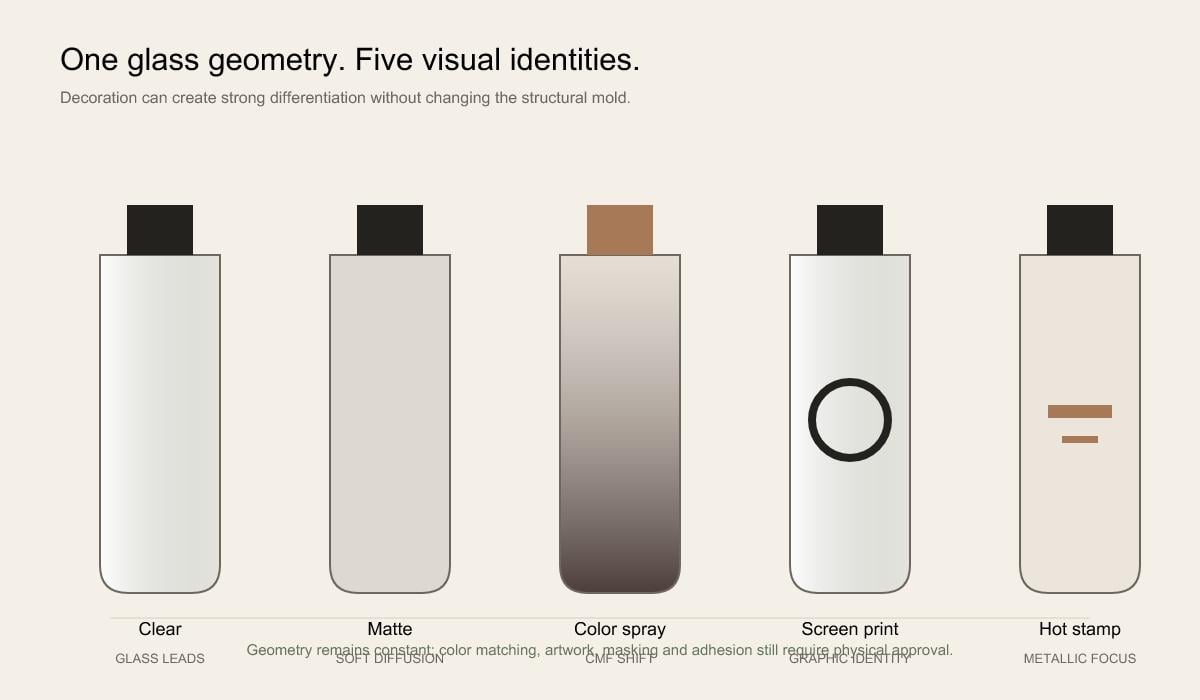
Trasformazione dell'arredamento. La struttura rimane invariata mentre la luce, il colore e l’identità grafica cambiano; il colore fisico e l’approvazione dell’adesione rimangono fondamentali. Schema tecnico in formato SVG.
Il principio “80/20” è uno strumento decisionale, non una legge oggettiva. Obbliga un team a classificare gli elementi in base al loro impatto, anziché attribuire a ogni singolo elemento lo stesso peso emotivo. In molti progetti di profumeria, la silhouette, la base, il tappo, il colore, la finitura, la precisione del logo e l’esperienza di apertura incidono in larga misura sulla qualità percepita. Le parti interne nascoste dell’erogatore e i dettagli relativi alla tenuta del tappo possono essere fondamentali per il funzionamento, ma non richiedono automaticamente una geometria proprietaria.
La classifica varia a seconda del concetto. Nel caso di una fragranza ricaricabile, il meccanismo di chiusura può diventare parte integrante del racconto. Un flacone trasparente e minimalista può basarsi quasi interamente sulla forma del vetro e su una minuscola stampa. Un concetto regionale riccamente decorato può attribuire maggiore identità al tappo e alla confezione in cartone piuttosto che al flacone stesso. La matrice di valutazione si avvale quindi di giudizi qualitativi e spiegazioni, piuttosto che di punteggi universali fittizi.
La matrice distingue inoltre visibilità per i consumatori da importanza funzionale. Una scarsa visibilità non deve mai essere interpretata come una bassa priorità. La pompa e il collo possono essere componenti di grande importanza ma a bassa visibilità, per i quali la strategia migliore è una standardizzazione solida. Al contrario, la decorazione può avere un’elevata visibilità ma una minore importanza strutturale, il che la rende un ottimo elemento di branding ma non un sostituto della progettazione tecnica.
Area | Requisiti estetici | Requisito funzionale | Perché entrambi sono importanti |
Cappuccio e colletto | Centrata, transizione fluida, finitura approvata | Fissaggio, spazio libero e assemblaggio ripetibile | La confezione viene toccata e osservata prima ancora di utilizzare il profumo |
Bottiglia | Simmetria, qualità ottica, stabilità del colore e della superficie | Capacità, integrità strutturale, compatibilità con il collo e base stabile | Il vetro è al tempo stesso la struttura portante e l’elemento visivo distintivo del marchio |
Pompa | Allineamento dell’attuatore e del collare, uniformità della finitura | Corretto montaggio, azionamento e prestazioni di erogazione del prodotto | Un problema di installazione non evidente può alterare la posizione visibile del tappo |
Decorazione | Scala, posizione, densità, contorni e lucentezza | Adesione e idoneità alla movimentazione e all’imballaggio | Una prima impressione perfetta deve resistere lungo tutta la catena di distribuzione |
Pacchetto di trasporto | Presentazione ordinata all’arrivo | Controllo del movimento, della compressione e del contatto | La garanzia tutela ogni scelta estetica già pagata |
Un pacchetto completo di profumi non segue un unico processo produttivo. Un flacone di vetro già esistente può avere una determinata condizione di disponibilità, una finitura a spruzzo un altro requisito di lotto, un tappo personalizzato un’altra soglia di produzione, un erogatore un’altra regola di approvvigionamento e una scatola stampata un’altra quantità ottimale. La produzione degli stampi può comportare un impegno prima ancora che vengano ordinati i prodotti finiti. Le varianti di colore possono suddividere un volume altrimenti utilizzabile in lotti più piccoli.
La domanda giusta da porsi è: Quale componente determina il vincolo di quantità minima ordinabile (MOQ) più elevato o meno flessibile in questo sistema di imballaggio? Questa domanda permette di capire se il pacchetto richiesto è in linea con le previsioni di primo ordine. Inoltre, indica la giusta direzione da seguire per la riprogettazione. Se il tappo personalizzato rappresenta il collo di bottiglia, il marchio può prendere in considerazione un tappo già esistente con una finitura specifica per il progetto, riutilizzare lo stesso tappo per le future fragranze, eliminare gradualmente l’attrezzatura personalizzata oppure accettare un eccesso di scorte, poiché il tappo trasmette un valore di marca sufficiente.
Il MOQ deve essere definito a livello di componenti e processi prima che il progetto definitivo venga fissato. La definizione deve includere il vetro, ogni operazione di decorazione, il guscio del tappo e l’inserto, la pompa e il collare, la scatola, l’inserto e qualsiasi assemblaggio o accessorio. Le quantità esatte relative a DAXIN devono essere ricavate da un preventivo aggiornato; questo caso di studio evita deliberatamente di pubblicare dati generici non verificati.
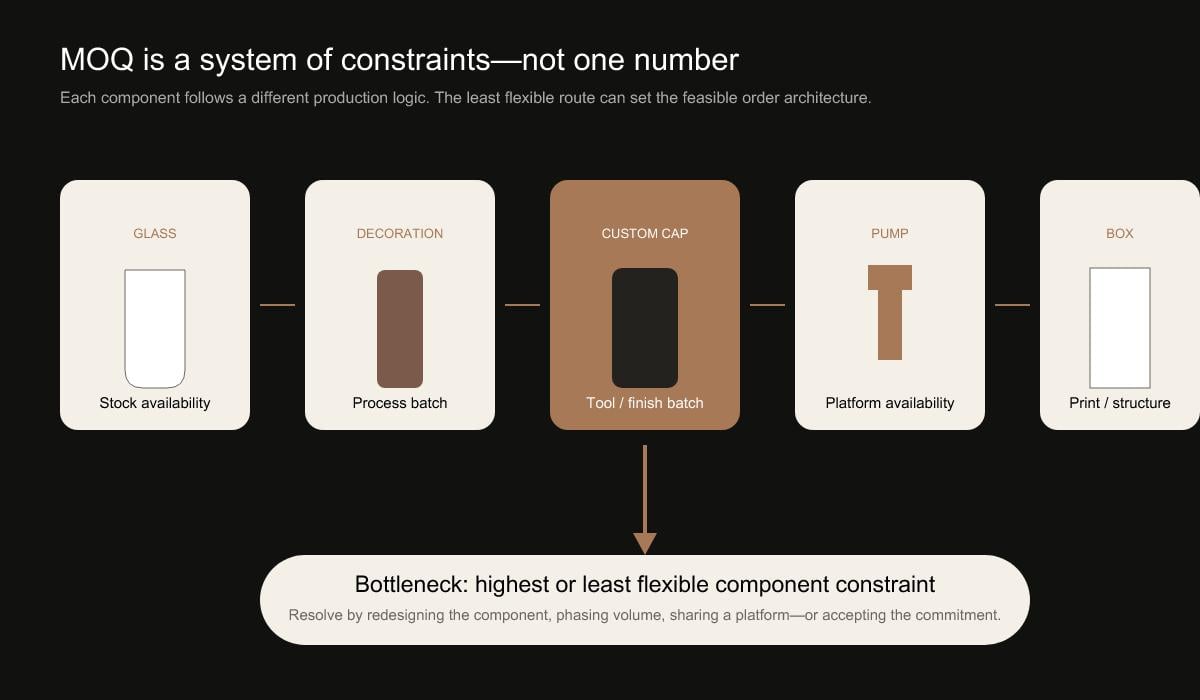
Logica del collo di bottiglia del MOQ. Il limite evidenziato è un esempio illustrativo, non una dichiarazione quantitativa da parte di DAXIN; un progetto reale può essere regolato da qualsiasi componente o processo. Schema tecnico in formato SVG.
Si consideri un progetto in cui una bottiglia esistente sia disponibile in una quantità compatibile con il lancio, il rivestimento previsto possa essere realizzato con lotti di dimensioni diverse, il tappo personalizzato richieda un impegno maggiore, la pompa venga ordinata in un altro formato e il fornitore di cartoni abbia costi di stampa distinti. Nessun numero singolo descrive tale sistema. Il marchio potrebbe ricevere più tappi rispetto alle bottiglie decorate, più pompe rispetto alle scatole o inserti avanzati che non possono essere riutilizzati.
La prima reazione non dovrebbe essere quella di negoziare al ribasso ogni singola cifra separatamente. Una piccola tiratura che interrompe un processo efficiente può aumentare il costo unitario o ridurre la stabilità della produzione. Il team dovrebbe invece identificare quale discrepanza crei un rischio per il capitale circolante e se l’architettura sia in grado di assorbirlo. Una pompa standard potrebbe essere riutilizzata in progetti futuri. Un guscio di tappo non decorato potrebbe essere rifinito in un secondo momento. Un inserto neutro potrebbe essere riutilizzato per due diverse grafiche di confezione. Queste opzioni richiedono la conferma del fornitore, ma dimostrano perché la standardizzazione dei componenti abbia un valore finanziario.
Il collo di bottiglia può anche essere rappresentato dal tempo piuttosto che dalla quantità. Un componente potrebbe avere un MOQ accettabile ma una finestra di produzione non disponibile. Un altro potrebbe richiedere un campione di colore che si colloca sul percorso critico. Il reparto acquisti dovrebbe quindi mappare insieme il quantitativo minimo, i tempi di consegna, la durata di conservazione (ove pertinente), il volume di stoccaggio e il potenziale di riutilizzo. In questo modo, il MOQ si trasforma da una domanda commerciale frustrante a un input per la progettazione.
Indicare il componente o il processo che presenta la combinazione meno flessibile in termini di quantità, tempistiche e specifiche.
Chiediti se quella funzionalità personalizzata garantisca una visibilità o prestazioni sufficienti da giustificare l'impegno richiesto.
Standardizzare, condividere, suddividere in fasi, completare in un secondo momento o accettare l’inventario in modo mirato — compatibilmente con la fattibilità da parte del fornitore.
Il budget destinato al packaging può coprire i costi di uno stampo personalizzato per il vetro, uno stampo per tappi, un ornamento in metallo, uno stampo per inserti o non prevedere affatto l’acquisto di nuovi utensili strutturali. La scelta giusta non è quella che risalta maggiormente nella proposta di un fornitore, bensì quella dell’utensile il cui risultato mantenga il proprio valore nel corso di un numero sufficiente di interazioni con i consumatori e di ordini futuri.
Uno stampo personalizzato per bottiglie può rivelarsi molto efficace quando ne protegge la silhouette e garantisce la ripetibilità in tutta la gamma. Uno stampo per tappi permette di concentrare l’investimento sull’elemento con cui i consumatori entrano in contatto. Un piccolo ornamento in metallo può creare un punto focale riconoscibile, consentendo al contempo alla struttura della bottiglia e del tappo di rimanere standard. Un inserto personalizzato può essere giustificato quando protegge una bottiglia dal design insolito o crea un effetto di rivelazione controllato, ma la complessità decorativa nascosta sotto il prodotto potrebbe non giustificarne il costo.
Ogni proposta relativa agli stampi deve essere valutata in base alla visibilità per il consumatore, alla distintività del marchio, al volume previsto, alla riutilizzabilità tra i vari SKU, ai termini di proprietà o esclusività, ai tempi di consegna, alla convalida della produzione e al rischio tecnico. DAXIN’s stampaggio interno Le informazioni sono relative al percorso personalizzato, ma il tipo effettivo di stampo, i termini di proprietà e la tempistica devono essere confermati per un progetto specifico.
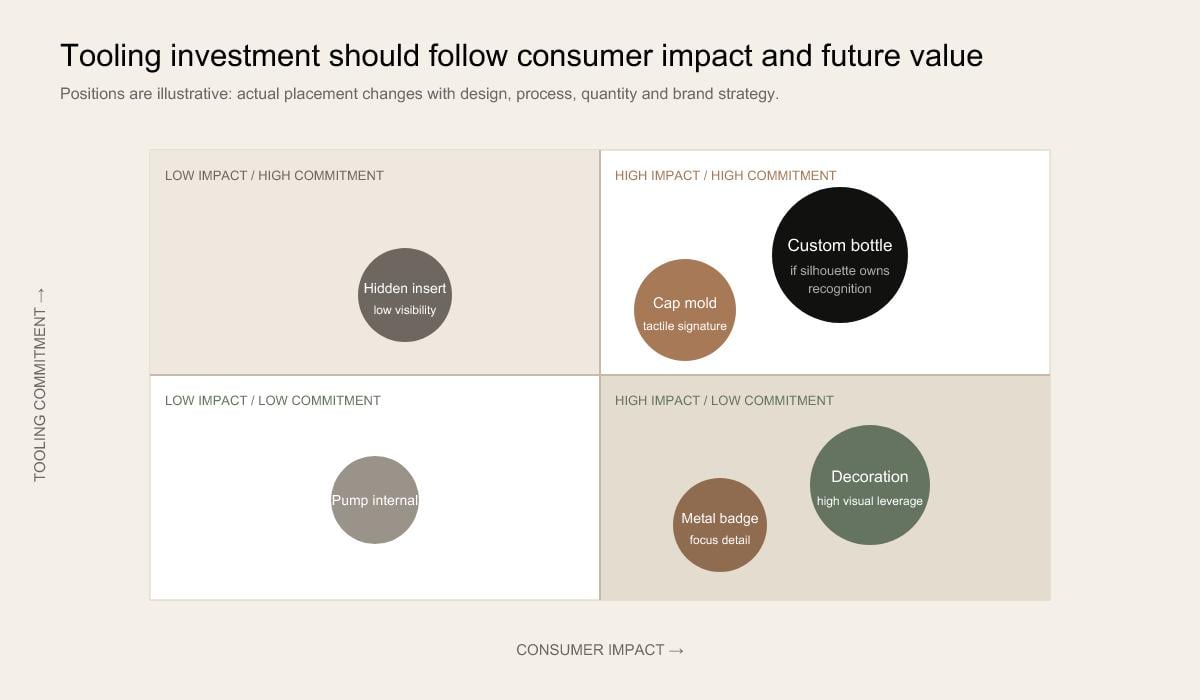
Matrice degli utensili. Il posizionamento è concettuale e deve evolversi di pari passo con la progettazione; impedisce ai team di finanziare per abitudine funzionalità che richiedono un impegno elevato ma hanno un impatto limitato. Schema tecnico in formato SVG.
Percorso di investimento | Impatto sui consumatori | Valore a lungo termine | Rischio principale | Quando utilizzarlo |
Stampo personalizzato per bottiglie | Potenzialmente elevato grazie alla sagoma e alla distribuzione del vetro | Elevato, se riutilizzato come piattaforma di marchio riconoscibile | Attrezzature, iterazioni di prova e impegno produttivo | La forma della bottiglia è fondamentale per l’identità del marchio e le previsioni lo confermano |
Stampo personalizzato per cappellini | Si distingue per la sensazione al tatto, il peso e la linea del profilo | Elevato se la chiusura potrà proseguire anche nei lanci futuri | Adattamento, inserimento, finitura, quantità minima ordinabile (MOQ) e design sbilanciato verso l'alto | Il tappo può diventare un elemento distintivo senza complicare eccessivamente il design del bicchiere |
Ornamento in metallo personalizzato | Da medio ad alto, come dettaglio ben definito | Medio, quando il disegno o la finitura possono variare a seconda di una singola parte | Fissaggio, abrasione, uniformità del rivestimento e assemblaggio aggiuntivo | Un piccolo dettaglio distintivo è sufficiente a garantire la riconoscibilità |
Inserto personalizzato | Di solito basso dopo l’apertura | Medio, quando garantisce un formato di confezionamento stabile | Volumi in eccesso, materiale, taglie e scorte specifiche per codice articolo | Una coreografia incentrata sulla protezione o sull’apertura ne ha davvero bisogno |
Nessuna nuova attrezzatura strutturale | Elevato quando il CMF e la composizione sono elevati | Da medio ad alto, con master e file sotto controllo | Minore esclusività strutturale | Prevale la velocità, il rischio di primo ordine o l’identità determinata dalla superficie |
Un prezzo basso della bottiglia può essere reale e comportare comunque un progetto costoso. Se la bottiglia richiede un fornitore separato per i tappi, un’ulteriore spedizione, due cicli di campionatura aggiuntivi, l’assemblaggio in loco e un nuovo passaggio di controllo, la differenza sulla linea dei componenti potrebbe svanire. Se dopo la decorazione si riscontra un’incongruenza, il costo non si limita più al solo ricambio, ma include anche le scorte di prodotti finiti, la rilavorazione, la perdita di tempo prevista e l’attenzione distolta dal lancio.
Il costo totale del progetto comprende attrezzature, campioni, componenti, finiture, trasporto, controllo qualità, coordinamento, assemblaggio, rischi di rilavorazione, magazzino e ritardi. Alcune di queste voci sono visibili nei preventivi dei fornitori, mentre altre figurano nei costi interni del marchio relativi a manodopera, magazzino, piano di lancio o svalutazioni. L’ingegneria del valore rende comparabili queste voci nascoste prima di scegliere la soluzione definitiva.
Ciò non significa che un’offerta da un unico fornitore sia automaticamente la migliore. I fornitori specializzati possono apportare un importante valore aggiunto dal punto di vista dei materiali o della tecnica. La questione è se tale valore superi i costi di interfaccia e se la responsabilità relativa a disegni, modelli master, logistica, ispezione e assemblaggio finale sia chiaramente definita. DAXIN’s catena di approvvigionamento e gestione della qualità Le pagine descrivono le funzionalità pertinenti; i piani di ispezione specifici per ciascun progetto e i relativi risultati devono essere documentati.
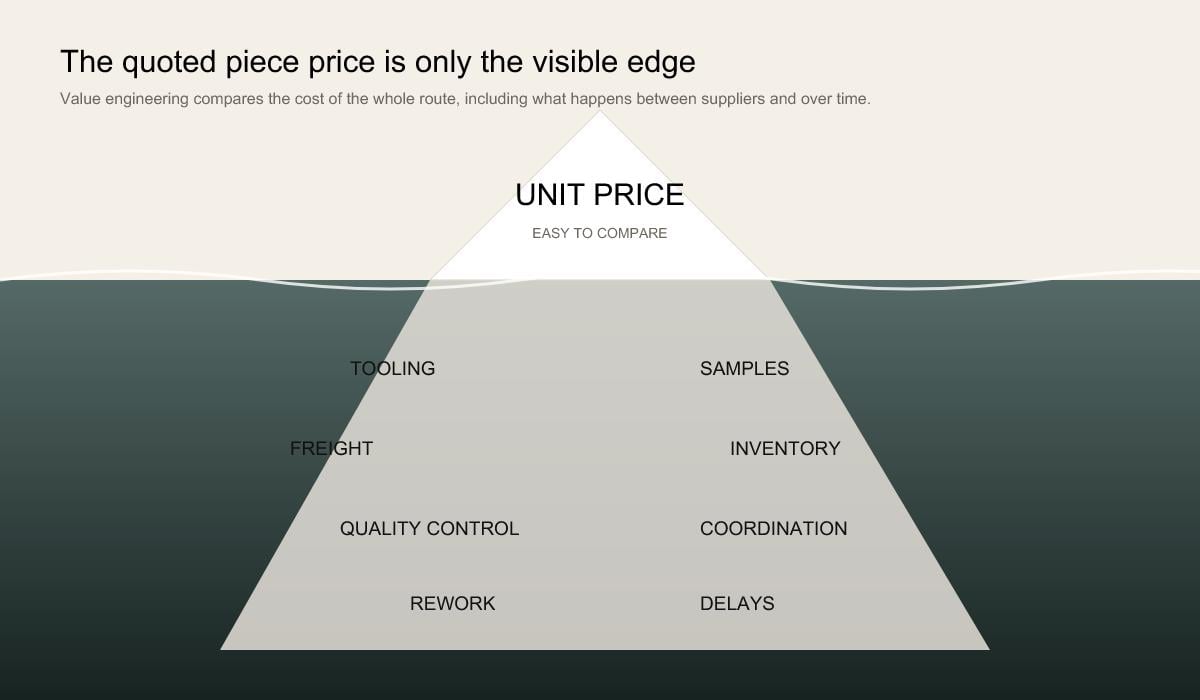
L'iceberg dei costi. Il prezzo unitario è il parametro più facile da confrontare, mentre il risultato commerciale viene spesso deciso al di là della fase dell’offerta. Schema tecnico in formato SVG.
La complessità è giustificata quando migliora il riconoscimento, la sensazione al tatto, le prestazioni o la protezione. Una geometria personalizzata del tappo che i consumatori riconoscono e riutilizzano in tutta la linea può rappresentare una complessità che aggiunge valore. Una seconda finitura metallica che sembra quasi identica ma richiede un altro fornitore, un altro modello master e un altro ciclo di campionatura può invece rappresentare una complessità che non aggiunge valore.
Ogni materiale, fornitore, colore, componente, stampo, finitura e SKU aggiuntivo crea una dipendenza. Le dipendenze richiedono specifiche, responsabili, scadenze e criteri di accettazione. Possono inoltre generare percorsi di errore: un ritardo nella fornitura di un tappo ritarda l’approvazione dell’adattamento della confezione; un rivestimento modificato altera l’adesione della stampa a caldo; la sostituzione di una pompa modifica l’altezza di installazione. Il costo della complessità è quindi in parte finanziario e in parte probabilistico: la confezione presenta un maggior numero di possibilità di subire ritardi, di risultare incompatibile o di diventare difficile da riordinare.
La soluzione non è il minimalismo fine a se stesso. Si tratta piuttosto di un registro esplicito della complessità. Per ogni componente eccezionale, il team registra il valore per il consumatore o il valore tecnico, la nuova dipendenza che crea, la persona responsabile dell’interfaccia e il piano di riutilizzo futuro. Se il valore non può essere definito chiaramente, vale la pena prendere in considerazione una semplificazione.
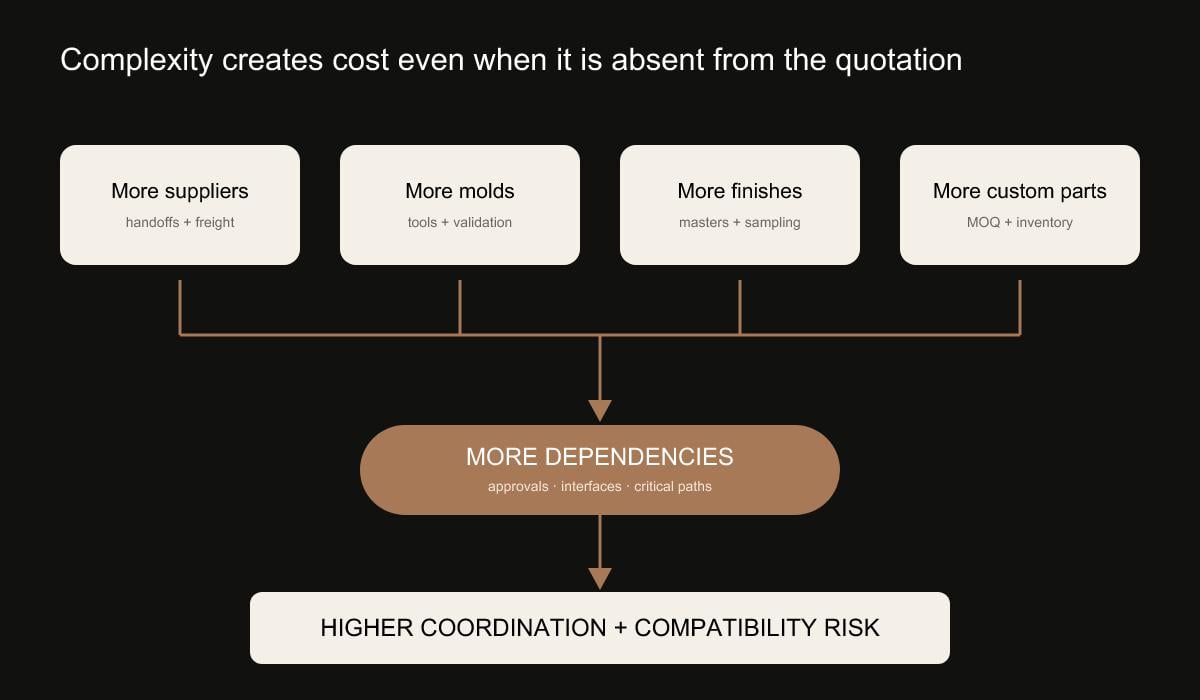
Costo della complessità. Il maggior numero di componenti non è di per sé un problema; lo sono invece le dipendenze non gestite o non ricompensate. Schema tecnico in formato SVG.
Un componente più economico che ritarda il lancio può rivelarsi costoso dal punto di vista commerciale. La progettazione degli utensili, la produzione degli stampi, la produzione di prova, i campioni di superficie, i test di compatibilità e l’approvazione finale si susseguono in una catena di dipendenze. Alcune attività possono essere svolte in parallelo; altre non possono iniziare finché non viene definito definitivamente un’interfaccia o un campione fisico.
Un marchio che deve rispettare scadenze fisse per la revisione della linea di vendita al dettaglio, i servizi fotografici per le campagne pubblicitarie o il lancio stagionale attribuisce un valore diverso al tempo rispetto a un fondatore che sta valutando la fattibilità di un’idea senza una data precisa. Nel primo caso, un flacone già esistente abbinato a un CMF personalizzato può garantire il rispetto della finestra di lancio. Nel secondo, un flacone personalizzato potrebbe giustificare un percorso più lungo, poiché la silhouette è fondamentale per il business. L’ingegneria del valore dovrebbe mettere in luce questa scelta, anziché trasformare silenziosamente la velocità in un obiettivo universale.
Il programma dovrebbe indicare le fasi relative, i responsabili dell’approvazione e il percorso critico. Dovrebbe inoltre includere i tempi decisionali da parte del cliente. Un campione in attesa di revisione costituisce comunque un ritardo nel progetto. Qui non viene indicata alcuna durata precisa, poiché la disponibilità effettiva di attrezzature, capacità, campionatura e produzione dovrà essere confermata una volta note le specifiche.
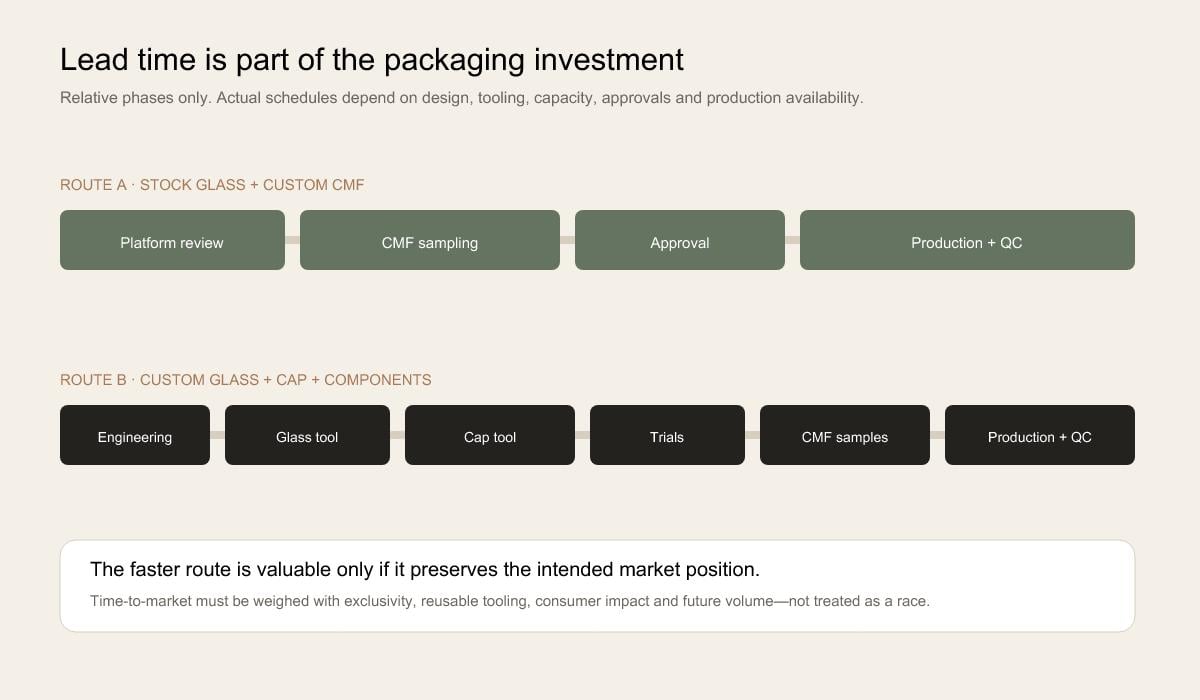
Percorsi di sviluppo relativi. Il diagramma mette a confronto le fasi, non i giorni di calendario; la pianificazione del progetto rientra nell’equazione del valore. Schema tecnico in formato SVG.
Il percorso più economico di primo ordine può rivelarsi instabile se dipende da un lotto di scorte temporaneo, da una corrispondenza cromatica non documentata o dalla memoria di una singola persona riguardo al processo di assemblaggio. Al contrario, un investimento elevato in attrezzature può rivelarsi inutile se risolve un’esigenza estetica una tantum senza supportare capacità o fragranze future. L’architettura del packaging dovrebbe essere rivista come un sistema commerciale ripetibile.
Per gli ordini ricorrenti, il team necessita di disegni tecnici, materiale grafico, standard cromatici, campioni fisici, riferimenti approvati dei componenti, istruzioni di montaggio e la gestione delle revisioni. La continuità dei fornitori e le regole di sostituzione sono fondamentali. Se una pompa non è più disponibile, il marchio dovrebbe sapere quali dimensioni e caratteristiche prestazionali sono fondamentali prima di proporre un prodotto sostitutivo. Se si ordina nuovamente un rivestimento, il riferimento approvato dovrebbe essere più attendibile di una fotografia scattata con il cellulare.
Gli stampi vengono valutati in base al volume previsto per l’intero ciclo di vita del prodotto, non solo in relazione al primo acquisto. Un tappo personalizzato in grado di essere riutilizzato per cinque lanci può rivelarsi una scelta più razionale rispetto a un accessorio esclusivo più economico che cambia per ogni SKU. Anche un flacone esistente può costituire una piattaforma a lungo termine, purché il suo sistema CMF (colore, materiale, finitura) sia gestito con attenzione. La scalabilità non è sinonimo di “personalizzato” o “di serie”; deriva da decisioni che rimangono sotto controllo.
Un pacchetto è scalabile quando è possibile riprodurne l'aspetto e le prestazioni previsti senza dover ricostruire la cronologia del progetto. La documentazione e la standardizzazione dei componenti sono quindi parte integrante di una progettazione di alto livello, anche se i consumatori non ne hanno mai visione.
Se ogni componente è specifico per una sola fragranza, le scorte residue hanno poche possibilità di acquisire valore in futuro. Una modifica alla grafica può rendere inutilizzabili i tappi già stampati. Una revisione del flacone può rendere inutilizzabili gli inserti. Una finitura fuori produzione può lasciare con dosatori il cui colore non è più abbinato. Il costo non è solo quello dello stoccaggio; si tratta di capitale circolante vincolato a una specifica che il marchio potrebbe non utilizzare.
La standardizzazione selettiva può ridurre tale esposizione senza creare un’esperienza generica per il consumatore. Diverse fragranze potrebbero condividere la piattaforma dell’erogatore, l’inserto del tappo, la geometria del collare o la struttura del cartone non decorato, pur differendo per rivestimento, grafica, finitura esterna del tappo o fascetta. I componenti comuni consentono di raggruppare la domanda e possono rendere il rifornimento più resiliente. Le implicazioni relative alla presenza di più SKU devono comunque essere pianificate con attenzione, ma l’obiettivo commerciale in questo caso è la flessibilità delle scorte piuttosto che il coordinamento della collezione.
I marchi dovrebbero chiedersi se ogni componente esclusivo possa essere riutilizzato in una futura produzione, in un’edizione limitata o in una ricarica, se possa essere decorato in un secondo momento e se sia possibile tenere in magazzino articoli neutri prima della definizione definitiva della grafica. Si tratta di domande relative alla fattibilità, non di garanzie. L’approccio preferibile dipende dalla durata di conservazione, dal materiale, dal processo di finitura, dalle prassi dei fornitori e dall’affidabilità delle previsioni.
Riservare i componenti specifici per codice articolo alle caratteristiche che i consumatori riconoscono o che sono necessarie per il funzionamento del prodotto.
Condividere pompe, inserti o strutture di base compatibili quando l'esperienza del cliente non richiede differenze.
I componenti neutri rifiniti o stampati in un secondo momento possono mantenere la loro flessibilità, fatte salve le limitazioni legate al processo e al fornitore.
L’architettura finale più plausibile ha mantenuto le decisioni rivolte al consumatore di maggior valore e ha messo in discussione il resto. Una piattaforma in vetro esistente avrebbe potuto essere mantenuta se una valutazione fisica avesse confermato che le sue proporzioni, la base, l’area decorativa e la qualità fossero adeguate. La differenziazione si sarebbe concentrata su una finitura fumé o opaca controllata, un trattamento preciso del logo, un tappo più piacevole al tatto e una confezione in cartone dal design rigoroso. La piattaforma della pompa e le interfacce nascoste sarebbero rimaste collaudate e compatibili, piuttosto che innovative solo per motivi estetici.
La bozza definitiva verrebbe approvata solo qualora creasse un elemento distintivo riutilizzabile — potenzialmente il tappo o un elemento specifico del marchio — mentre la decisione relativa allo stampo del vetro potrebbe essere rinviata fino a quando le previsioni, il valore per il proprietario e l’importanza della silhouette non fossero più chiari. Gli standard fisici relativi al colore e alla finitura dovrebbero armonizzare vetro, tappo, collare e cartone. Il packaging verrebbe valutato una volta assemblato, imballato e pronto per futuri riordini, piuttosto che approvato come campione isolato di bell’aspetto.
Questa linea guida costituisce un quadro di riferimento, non una garanzia di un risultato finale per il cliente. La bottiglia scelta, il materiale del tappo, la decorazione, la confezione in cartone, il percorso di produzione, la quantità e i risparmi effettivi sono da definire. L’obiettivo commerciale è chiaro: concentrare il budget laddove il consumatore possa premiarlo, eliminando MOQ superflui, scorte e dipendenze legate allo sviluppo.
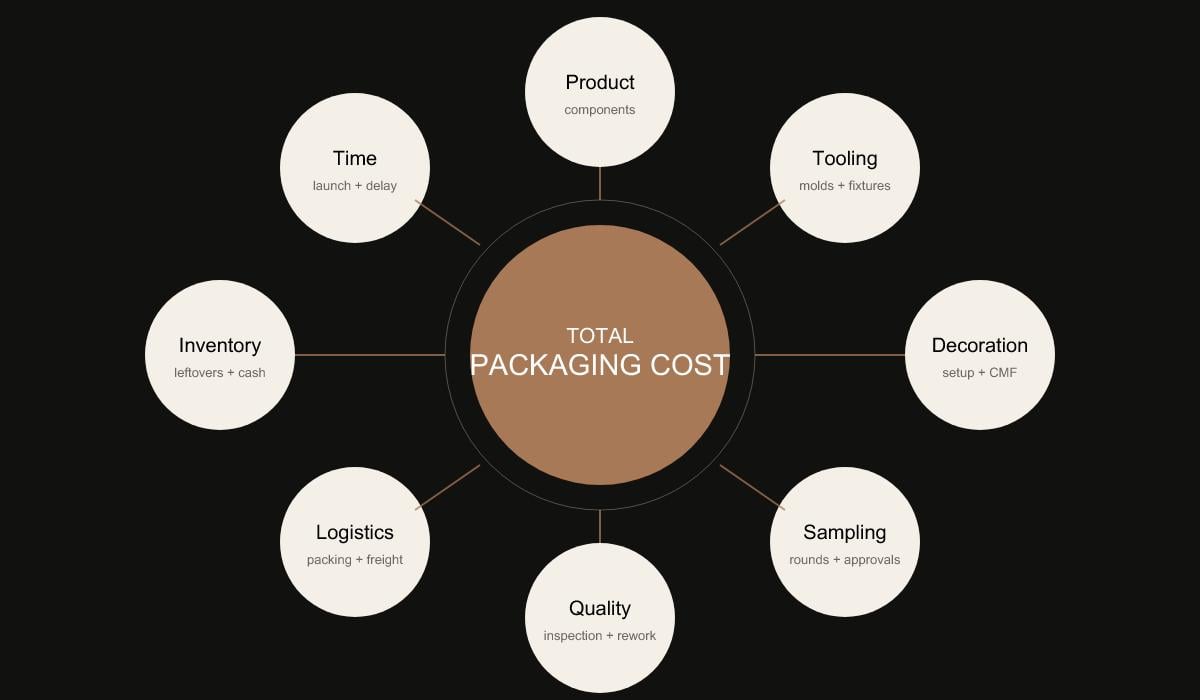
Schema dei costi totali di imballaggio. Il percorso definitivo deve avere senso dal punto di vista del prodotto, del sistema di approvvigionamento e della tempistica. Schema tecnico in formato SVG.
I casi di studio dei fornitori solitamente mettono in risalto tutto ciò che è stato aggiunto. L’ingegneria del valore, invece, documenta anche ciò che è stato eliminato. I componenti interni della pompa non necessitavano di una piattaforma proprietaria, purché un’opzione collaudata fosse in grado di garantire la spruzzatura richiesta, adattarsi al collo selezionato e rimanere disponibile. Personalizzare un meccanismo invisibile senza un beneficio definito per l’utente comporterebbe rischi in termini di qualificazione e sostituzione, senza rafforzare il riconoscimento del prodotto.
Il collo non doveva necessariamente diventare un'interfaccia esclusiva, se uno standard compatibile fosse stato in grado di supportare l'architettura composta da pompa, collare e tappo. Un collo innovativo nascosto sotto la chiusura avrebbe reso più difficile l'approvvigionamento futuro, offrendo al contempo scarso valore per il consumatore. L'inserto non necessitava di elaborate decorazioni nascoste se la sua vera funzione era quella di trattenere, proteggere e presentare la bottiglia in modo pulito. Il budget destinato alla decorazione doveva essere visibile al momento dell'apertura, non nascosto una volta rimosso il prodotto.
Un nuovo stampo per bottiglie non richiedeva un’approvazione automatica solo perché tecnicamente fattibile. Se i punti di forza principali del marchio erano la finitura, il tappo e la precisione grafica, un nuovo vetro avrebbe comportato un dispendio di attrezzature e tempo senza un impatto proporzionale sugli scaffali. La decisione avrebbe potuto essere riconsiderata qualora il volume, i dati sulla domanda o una silhouette davvero distintiva lo avessero giustificato.
Affermare che “questa parte non richiede uno strumento personalizzato” non significa rifiutare l’innovazione. È una questione di integrità commerciale. Protegge il budget destinato alle funzionalità che i consumatori utilizzano, riduce il numero di versioni minime e master che il marchio deve gestire e semplifica il processo di riordino. La risposta migliore da parte di un fornitore non è sempre l’elenco più lungo di funzionalità, bensì un’architettura che spieghi perché ciascuna funzionalità debba o non debba essere utilizzata.
I consumatori percepiscono un oggetto coerente, non un insieme di componenti su misura. La personalizzazione è preziosa quando crea riconoscibilità, sensazione tattile, funzionalità o protezione; in caso contrario, può comportare un impegno maggiore senza aggiungere qualità percepita.
Classifica la silhouette, il cappellino, il colore, la finitura, il logo e l’esperienza di apertura in base al loro ruolo all’interno del marchio. Un elemento più piccolo ma di grande impatto potrebbe meritare maggiore attenzione rispetto a una struttura più grande ma nascosta.
Le piattaforme collaudate per colli, pompe e inserti possono ridurre i rischi legati alla qualificazione e al riordino quando non è necessario che rechino un’identificazione visibile. La standardizzazione richiede comunque la verifica della compatibilità e delle prestazioni.
Registrare separatamente il vetro, ogni elemento decorativo, il tappo, la pompa, il collare, la scatola e l’inserto. Il requisito meno flessibile — non solo la quantità di bottiglie — spesso determina l’esposizione del capitale circolante.
La qualità dei materiali e la stabilità possono sostenere un posizionamento di fascia alta, ma un maggiore utilizzo di vetro incide anche sulla resistenza del cartone, sui costi di trasporto e sul consumo di materiale. È preferibile puntare sul giusto peso percepito piuttosto che sul peso fisico massimo.
Quando la silhouette strutturale non rappresenta il principale punto di forza del marchio, un uso controllato di CMF e una grafica accurata possono determinare un cambiamento visivo più significativo per ogni unità di complessità di sviluppo. La decorazione richiede comunque un’approvazione specifica per ogni processo.
Considerare i costi aggiuntivi relativi a fornitori, trasporto, campioni, ispezioni, assemblaggio, scorte e rilavorazioni. Un risparmio sui componenti deve superare l’intero percorso prima di poter essere definito tale.
Valutare se il modello costituisce una risorsa riutilizzabile e di proprietà dell'azienda in vista dei probabili lanci. Uno strumento che risolve una singola decisione stilistica temporanea potrebbe non riuscire mai a recuperare la propria complessità operativa.
Ogni materiale aggiuntivo, finitura, fornitore e stampo crea delle dipendenze. Mantenete la complessità che i clienti apprezzano o che la progettazione richiede, e mettete in discussione il resto prima dell’approvazione.
Un percorso che non rispetta le tempistiche di vendita al dettaglio o di una campagna pubblicitaria può rivelarsi economicamente oneroso anche quando i singoli elementi che lo compongono presentano prezzi vantaggiosi. Valutate la rapidità, l’esclusività e l’impegno richiesto per la realizzazione degli stampi alla luce del contesto reale del lancio.

Una semplificazione intelligente dovrebbe comunque mantenere un aspetto di alta qualità. Questo concept editoriale illustra la direzione stilistica; non si tratta di una fotografia del progetto di un cliente reso anonimo. Immagine editoriale generata.
La conclusione non è che i prodotti di serie siano migliori di quelli personalizzati, che l’ABS sia migliore dello zamac o che le decorazioni siano migliori degli stampi in vetro. È piuttosto che ogni decisione deve guadagnarsi il proprio posto. Un buon packaging personalizzato per profumi si crea sapendo esattamente dove investire, dove standardizzare e in che modo ogni scelta influisca sulla percezione del marchio, sul quantitativo minimo ordinabile (MOQ), sul costo totale, sul rischio e sui tempi di immissione sul mercato.
Che abbiate bisogno di una bottiglia già esistente o di una soluzione di confezionamento completamente personalizzata, il nostro team di esperti è pronto a supportare il vostro progetto, dalla progettazione e decorazione della bottiglia alle chiusure, al confezionamento e alla consegna.
 English
  Spanish
  French
  German
  Arabic
  Italian
  Dutch
Dutch  Portuguese
  Russian
  Korean
  Japanese