
Introduzione
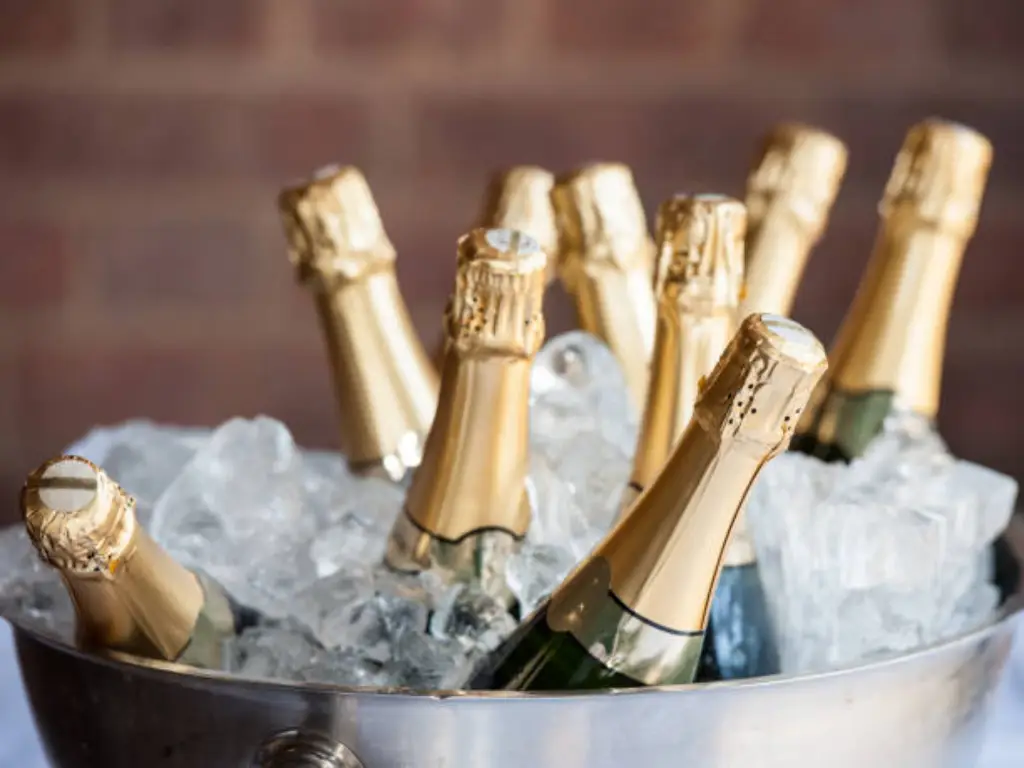
È importante conoscere le dimensioni delle bottiglie di champagne, sia per quanto riguarda il numero di porzioni da servire durante le occasioni speciali, sia per quanto riguarda la confezione da utilizzare per un nuovo marchio di vino. La maggior parte delle risorse si limita a fornire i nomi biblici, ma questa guida offre una disamina dettagliata e tecnica. Abbiamo la bottiglia standard, il gigante Melchizedek, l'intera gamma di formati delle bottiglie di champagne, con non solo i volumi di servizio, ma anche le specifiche ingegneristiche di altezza, diametro e peso, che devono essere conosciute per prendere una decisione consapevole.
La tabella completa delle dimensioni delle bottiglie di champagne
Per destreggiarsi nel gergo del vino spumante è necessario un punto di riferimento, fornito in questa guida completa. Il settore ha una nomenclatura che si basa in gran parte sull'Antico Testamento per classificare i volumi.
La scelta dell'imbarcazione appropriata non si limita alla semplice conoscenza dei nomi, ma è un calcolo basato sulla portata del vostro incontro. Quando si organizzano eventi speciali o altre occasioni eccezionali, il parametro principale da considerare è il numero di ospiti. Mentre una bottiglia standard è sufficiente per cene intime, il passaggio a un volume maggiore è una scelta popolare che può semplificare notevolmente il servizio e migliorare l'impatto visivo. Il grafico seguente disaggrega l'intera gamma di formati delle bottiglie di champagne, da quelle singole a quelle grandi, traducendo i litri in equivalenti e indicando il formato migliore da utilizzare in situazioni particolari.
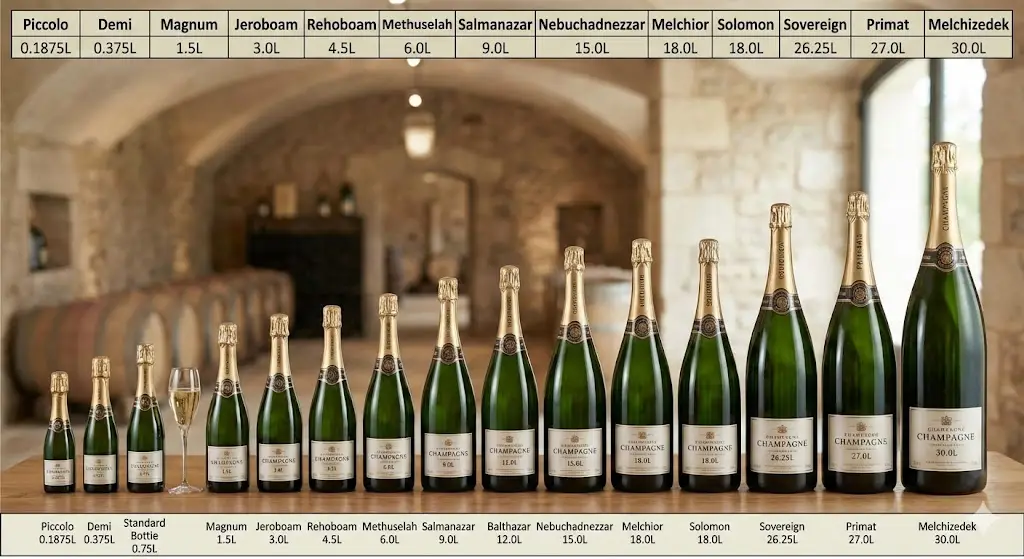
| Nome della bottiglia | Volume (litri) | Bottiglie standard equivalenti | Dosi (circa 125 ml) | Ideale per / Uso comune |
| Piccolo / Quarto | 0.1875 L | 0.25 (1/4) | 1.5 | Compagnie aeree, Minibar, Porzioni singole |
| Demi / Metà | 0.375 L | 0.5 (1/2) | 3 | Cena per due, Cesti regalo, Campionatura |
| Bottiglia standard | 0.75 L | 1 | 6 | Standard di vendita al dettaglio, Cene, Regali |
| Magnum | 1.5 L | 2 | 12 | Processo di invecchiamento, Collezionisti, Tavole di 4-6 |
| Geroboamo | 3.0 L | 4 | 24 | Matrimoni, podi automobilistici, feste |
| Rehoboam | 4.5 L | 6 | 36 | Rare uscite d'epoca (sempre più rare) |
| Matusalemme | 6.0 L | 8 | 48 | Grandiosi centrotavola, regali d'impatto |
| Salmanazar | 9.0 L | 12 | 72 | Grandi banchetti, anniversari aziendali |
| Baldassarre | 12.0 L | 16 | 96 | Locali notturni di alto livello, cene di gala |
| Nabucodonosor | 15.0 L | 20 | 120 | Lobby di hotel, inaugurazioni in pompa magna, acrobazie di pubbliche relazioni |
| Melchiorre | 18.0 L | 24 | 144 | Eventi ultra-esclusivi, Vetrine |
| Salomone | 18.0 L | 24 | 144 | Collezioni private (estremamente rare) |
| Sovrano | 26.25 L | 35 | 210 | Varo di navi (battesimo) |
| Primat / Golia | 27.0 L | 36 | 216 | Esposizioni museali, collezioni storiche |
| Melchisedec | 30.0 L | 40 | 240 | Lo status symbol per eccellenza per le grandi occasioni |
Perché le dimensioni contano: Potenziale di invecchiamento e gusto
La scelta tra diversi formati di bottiglie di champagne non determina solo il numero di persone da servire, ma la dimensione specifica della bottiglia di champagne cambia anche la qualità del vino in modo fondamentale.
Il principio scientifico è la proporzione tra il liquido e l'aria confinata nel collo della bottiglia (ullage). Il vino ha bisogno di un po' di ossigeno per maturare, ma un eccesso di ossigeno provoca l'ossidazione del vino, rendendo il suo sapore affaticato.
- Bottiglia standard: Fornisce un tasso minimo di invecchiamento.
- Mezza bottiglia: Con una mezza bottiglia di champagne, l'ossidazione è più rapida con una minore quantità di liquido rispetto all'aria. Sono da consumare quando sono giovani.
- Bottiglia Magnum: È generalmente considerato dagli amanti dello champagne e dai produttori di vino come il formato più desiderato per la conservazione. L'ullage assomiglia a una normale bottiglia, tranne per il fatto che la quantità di vino è doppia. In questo modo il rapporto ossigeno/liquido diminuisce e il ricambio d'aria è più lento. Il risultato è un processo di invecchiamento più armonioso, che mantiene la freschezza e permette la formazione di una complessa tavolozza aromatica (note tostate e di brioche) nel corso dei decenni.
Nota sulla produzione: Quando si tratta delle bottiglie di champagne più grandi (di solito più grandi di una Jeroboam 3L), i produttori utilizzano solitamente il metodo del transvasage. Lo champagne viene sottoposto a seconda fermentazione in bottiglie normali e poi pressurizzato nella bottiglia grande. Pertanto, la bottiglia Magnum e la Jeroboam sono di solito i formati più grandi in cui il vino ha fermentato nella particolare bottiglia che si sta acquistando e quindi la maggiore consistenza.
Specifiche tecniche: Altezza, diametro e peso
La precisione tecnica è la più importante per i professionisti del settore, i responsabili degli acquisti e i proprietari dei marchi. Una bottiglia di champagne è un pezzo industriale che deve potersi adattare perfettamente alle linee di riempimento, alle etichettatrici e alle casse di spedizione.
Di seguito sono riportate le dimensioni tecniche delle misure di produzione più comuni. Si noti che alcune dimensioni possono essere leggermente diverse a seconda del design dello stampo (ad esempio, forma standard e forma proprietaria).
| Formato della bottiglia | Volume | Gamma di altezza | Gamma del diametro della base | Peso tipico del vetro | Finitura (collo) |
| Piccolo | 187 ml | 200 - 205 mm | 56 - 58 mm | 240 g - 260 g | Corona da 26 mm |
| Demi / Metà | 375ml | 240 - 250 mm | 66-70 mm | 430 g - 460 g | Corona 29 mm / Sughero |
| Standard | 750ml | 298 - 305 mm | 88-90 mm | 835g - 900g | Corona 29 mm / Sughero |
| Magnum | 1.5 L | 370 - 385 mm | 112 - 116 mm | 1,75 kg - 1,9 kg | 29 mm / Sughero speciale |
| Geroboamo | 3.0 L | 470 - 485 mm | 134 - 138 mm | 3,0 kg - 3,25 kg | Sughero speciale |
| Matusalemme | 6.0 L | 570 - 590 mm | 170 - 176 mm | 5,1 kg - 5,4 kg | Sughero speciale |
| Salmanazar | 9.0 L | 640 - 655 mm | 190 - 195 mm | 7,5 kg - 7,8 kg | Sughero speciale |
| Baldassarre | 12.0 L | 710 - 725 mm | 210 - 220 mm | 9,3 kg - 9,8 kg | Sughero speciale |
| Nabucodonosor | 15.0 L | 760 - 780 mm | 230 - 240 mm | 11,5 kg - 12,5 kg | Sughero speciale |
È importante conoscere il diametro. Anche pochi millimetri nel diametro di base possono influenzare il numero di bottiglie che possono essere posizionate su un nastro trasportatore e le dimensioni dell'imballaggio secondario. In Daxin, manteniamo una rigorosa tolleranza dimensionale in modo che le nostre bottiglie standard di champagne e i formati più grandi possano adattarsi perfettamente al vostro sistema di imbottigliamento esistente.
Standard di produzione: Valori di pressione e sicurezza
La produzione di bottiglie di champagne di varie dimensioni è un problema di ingegneria. Una bottiglia di champagne è un recipiente a pressione, a differenza delle bottiglie di vino fermo che contengono semplicemente del liquido. Durante la fermentazione secondaria si produce anidride carbonica, che provoca una pressione interna di 6-8 bar. Si tratta di una pressione pari a circa tre volte quella di uno pneumatico d'auto.
Il vetro deve essere in grado di resistere a questa forza, il che significa che deve avere elevati standard di sicurezza:
- Spessore del vetro: Le pareti di una bottiglia di champagne sono molto più spesse di quelle di una bottiglia di vino fermo. Questo spessore è rafforzato dai formati di volume maggiore per garantire l'integrità strutturale.
- Il Punt: Il taglio profondo sul fondo della bottiglia non è solo ornamentale. Aumenta la superficie del vetro, rendendo la bottiglia resistente alla pressione interna e agli urti.
- Test di pressione: La sicurezza non è negoziabile. In Daxin Glass, nel nostro processo di produzione, effettuiamo campionamenti casuali di test di pressione di scoppio e di shock termico. Ci assicuriamo che tutti i formati di bottiglia, compresi quelli standard e Nabucodonosor, siano in grado di resistere all'enorme pressione che si crea durante la fermentazione e il trasporto.
Matrice di selezione strategica: Guida al marchio e all'approvvigionamento
Per il responsabile degli acquisti o il proprietario del marchio, la scelta del giusto mix di bottiglie è una scelta strategica. Comporta un compromesso tra il costo della complessità e la possibilità di differenziazione del mercato.
La tabella seguente mostra l'utilizzo ottimale di ciascuna categoria di formato a seconda della strategia di canale e dei limiti di produzione.
| Obiettivo strategico | Formato consigliato | Motivazione economica | Realtà produttiva e di approvvigionamento | Impatto della logistica e della catena di fornitura |
| Mercato di massa / Volume | Standard (750ml) | Massimizza l'efficienza operativa; il CAPEX più basso per gli utensili. | Completamente automatico: Disponibilità di stampi standard globali. Automazione ad alta velocità (oltre 300 bpm). Opzioni leggere (835g → 800g) disponibili per obiettivi di sostenibilità. | Alta densità: Massimo utilizzo dei pallet (oltre 1.000 unità/pallet). Costo di spedizione più basso per litro. |
| Premialità del marchio | Magnum (1,5L) | Segnale di qualità e longevità; giustifica un prezzo di 2,5 volte per un volume di 2 volte. | Automatico / Semi-Automatico: richiede impostazioni specifiche per le apparecchiature di riempimento, ma in genere utilizza processi di vetro standard. Elevata consistenza. | Media densità: Il numero di pallet diminuisce di ~40%. Richiede un imballo secondario più robusto (cartoni) per evitare le scalfitture. |
| Campionatura di prodotti / Viaggi | Piccolo (187ml) / Demi (375ml) | Riduce la barriera all'ingresso; alta velocità nelle compagnie aeree e nel travel retail. | Richiesto un volume elevato: Sono necessari MOQ elevati per ammortizzare i costi di allestimento delle macchine. La gestione dei tappi (corona o sughero) spesso richiede linee di tappatura specifiche. | Manipolazione complessa: Spesso richiede "Cluster Pack" o vassoi specializzati. Rischio di rottura più elevato se caricato alla rinfusa. |
| Visibilità della vita notturna (On-Trade) | Geroboamo (3L) | Lo "standard del club". L'alta visibilità massimizza il markup in loco. | La "soglia di complessità": Questo è spesso il limite della produzione completamente automatizzata. Qualsiasi cosa più grande richiede in genere il passaggio a fornitori semi-automatici con tolleranze più elevate. | Bassa densità: Solitamente confezionati 1 per scatola o 3 per astuccio. L'ingombro di magazzino aumenta notevolmente per litro. |
| PR e dominio del marchio | Matusalemme (6L) - Nabucodonosor (15L) | Crea momenti di marketing virale; stabilisce il dominio del marchio. | Barriera tecnica elevata: Solo produzione semiautomatica o soffiata a mano. Elevati tassi di scarto durante il controllo qualità a causa dei requisiti di pressione. Tempi di consegna prolungati (12-16 settimane). | Movimentazione speciale: Richiede casse di legno individuali (OWC). Spesso è necessaria la pallettizzazione manuale. Consegna costosa all'ultimo miglio. |
Il costo del passaggio da Magnum a Jeroboam è spesso sottovalutato dai marchi. Sebbene le bottiglie da 750 ml e 1,5 l siano prodotti di base, quelle da 3 l e oltre sono prodotti speciali. Ciò comporta rischi per la catena di approvvigionamento, come fornitori non certificati con spessore delle pareti incoerente e maggiori tassi di rottura durante il trasporto.
Opzioni di personalizzazione per la distinzione del marchio
Il packaging è il principale elemento di differenziazione in un mercato saturo. Sebbene la forma e le dimensioni convenzionali di una bottiglia di champagne siano iconiche, la maggior parte dei marchi è alla ricerca di un'identità visiva distintiva. La storia dello champagne è ricca di casi di stampi proprietari che producono la migliore cuvée.
Esistono diversi livelli di personalizzazione che i produttori possono fornire per le bottiglie di champagne di diverse dimensioni:
- Colore: Oltre al colore standard, Verde Champagne (Verde Antico), è disponibile il colore Flint (trasparente) per filtrare i raggi UV (Rosé), Foglia morta o Ambra scuro.
- Stampi personalizzati: I marchi hanno la possibilità di modificare l'inclinazione della spalla, la lunghezza del collo o la profondità del puntale.
- Goffratura: Il rilievo del vetro (stemmi, nomi o motivi) può essere impresso nella bottiglia, eliminando così la necessità di etichette di carta e rendendo il prodotto una bottiglia eccezionale.
La creazione di uno stampo su misura necessita di un'accurata progettazione e di utensili. Mettetevi in contatto con i nostri esperti oggi stesso per parlare del processo, dal rendering 3D alla produzione finale, e scoprire come possiamo aiutarvi a creare design unici in diverse dimensioni che definiscano il vostro marchio.
Guida alla logistica: Conteggio delle casse e carico dei pallet
L'approvvigionamento di bottiglie di champagne di vari formati ha un grande impatto sulla logistica e sul magazzino. L'efficacia di una catena di approvvigionamento si basa sul calcolo corretto del numero di casse e della densità dei pallet.
- Formato standard (750 ml): Di solito sono confezionate in 6 o 12 cartoni. Il numero di bottiglie che possono essere impilate su un pallet standard è di 1.000-1.200 bottiglie (in genere 5-7 strati). Questo formato è il più comodo da immagazzinare.
- Magnum (1,5L): In genere viene venduta in confezioni da 3 o 6 casse. La densità del pallet si riduce di circa il 40% rispetto alle bottiglie standard a causa dell'aumento del diametro.
- Grandi formati (3L+): Bottiglie come Jeroboam o Matusalemme sono troppo grandi per entrare in un normale cartone e potrebbero dover essere spedite in casse di legno separate (OWC). In questo modo si assicura il costoso vetro, ma si limita notevolmente la quantità di litri di champagne che possono essere trasportati in un container.
Per i responsabili degli acquisti, l'ottimizzazione del pack out è fondamentale per il controllo dei costi di trasporto. Nel caso di Daxin Glass, il nostro reparto logistico offrirà piani di pallettizzazione specifici per tutte le dimensioni delle bottiglie di champagne presenti nel vostro ordine, per garantire un uso ottimale dei contenitori.
FAQ: Domande comuni su dimensioni e specifiche
D: Qual è il numero di bicchieri di una tipica bottiglia di champagne?
Una bottiglia di champagne media (750 ml) può fornire 6 bicchieri di champagne, assumendo un versamento commerciale standard di 125 ml. Un Magnum (1,5L) serve 12 bicchieri, il che è efficace per le tavole più grandi.
D: Come mai le grandi bottiglie di champagne sono così costose?
Le bottiglie grandi non sono vendute a un prezzo lineare, a causa della difficoltà di produzione. La complessa soffiatura manuale del vetro o le speciali tecniche di stampaggio necessarie per produrre una Nabucodonosor (15 litri) comportano un aumento dei tassi di scarto e un maggiore spessore del vetro necessario per resistere alla pressione.
D: Qual è il peso di una bottiglia di champagne vuota?
Il peso di una bottiglia di champagne standard vuota varia tra gli 835 g e i 900 g.
Conclusione
La scelta dei formati appropriati per le bottiglie di champagne è un compromesso tattico tra l'estetica e la realtà industriale. È necessario uno stock standard per essere efficienti o uno stampo unico per essere un marchio, Daxin fornisce una produzione di alta qualità, con standard elevati a livello mondiale in termini di durata e design. Volete fornire alla vostra produzione tutte le varietà di bottiglie di champagne? Sfogliate il nostro catalogo su daxinglassbottles.com o chiamate il nostro team oggi stesso per ottenere un preventivo competitivo.

 English
  Spanish
  French
  German
  Arabic
  Italian
  Dutch
Dutch  Portuguese
  Russian
  Korean
  Japanese