
Glass Bottle Frosting: Processes, Suppliers, and Buying Decisions
What Is a Frosted Glass Bottle — and Why Brands Choose It
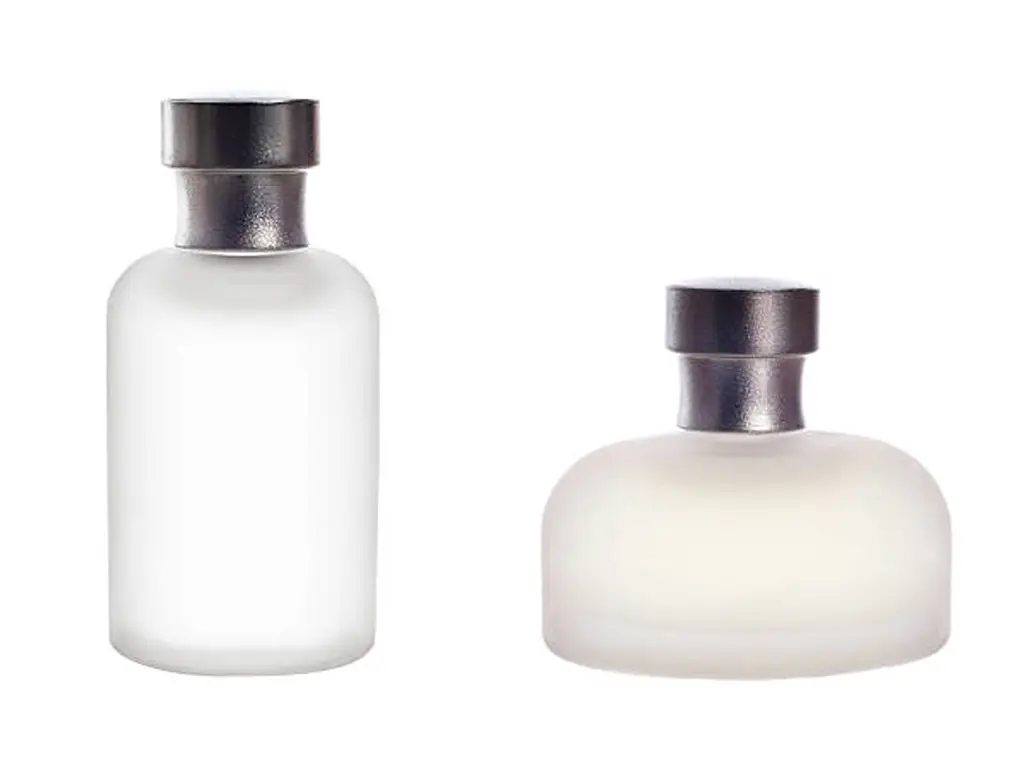
A frosted glass bottle is a clear (or colored) bottle whose surface has been turned matte and translucent: light scatters across the roughened glass, so the bottle glows but you can no longer see sharply into it.
Brands choose it for three reasons. Touch: frosted glass feels different in the hand, and in fragrance and skincare that feel is part of the product. Discretion: the finish softens what is inside and hides fill-level differences on the shelf. Shelf presence: next to rows of glossy clear bottles, a matte bottle catches light differently and reads as the premium one. That is why frosted has become the default "expensive-looking" finish across beauty, wellness, and home fragrance.
One clarification first. Search for glass frosting and you will find window-film companies and privacy-glass installers: architectural frosting, a different industry with different processes, minimums, and buyers. This article covers packaging frosting, applied to bottles and jars in production.
The same frosted look can be produced at least four genuinely different ways, from craft project to production line. The difference between a frosted bottle that embarrasses a brand and one that sells it is rarely skill. It is which layer the finish is created on.
Glass Bottle Frosting: The Four Ways the Finish Is Actually Made
Every frosted finish on glass is one of four mechanisms, and each gives a different answer to "will this still look right after six months of shipping and shelving?"
Physical abrasion (sandblasting in production, sandpaper at home): grit is blasted or rubbed into the surface until the glass itself is pitted. It cannot peel, but the open texture shows fingerprints and feels rougher than other frosted finishes.
Chemical etching (etching cream at home, acid etching in production): a mild acid dissolves the top layer of the glass and leaves a satin-smooth matte surface. Because the etch is eaten into the glass, the finish is permanent; there is no layer to wear off.
Frosted coatings (frosted spray at home, frosted lacquer in production): a translucent white lacquer is sprayed on and cured. It is the fastest way to the look, and the only one of the four that sits on top of the glass rather than in it, so it is only as durable as its adhesion. The DIY version has a deservedly bad reputation: reviews of the best-selling frosted glass spray report that "the film rubs off on your hand even after it's dried for hours," alongside bubbling, peeling, and yellowing over time. Production lacquers adhere far better, but they are still a layer: they scuff in transit and need qualifying against your fill, especially alcohol.
Mold-frosted glass: the mold carries the texture, so the bottle leaves the forming machine already frosted. No acid, no spray, no added process step. But the texture is fixed by the tool, cannot be adjusted later, and subtle satin effects are harder to hit than with etching.
Distill those four and one distinction explains almost every quality surprise in frosted packaging: finishes that bite into the glass versus finishes that sit on top of it. The first family cannot peel or scratch off. The second family can; it is only a question of how well the lacquer was formulated, applied, and protected.
A note for the DIY reader: etching cream works on a single bottle (apply, wait, rinse), but uniform depth on a curved surface takes practice, and unsealed spray-on frost will mark and wear. Expect a craft project to look handmade. Expect a product you will sell to need more; that is the next question.
Stock, Custom, or Factory-Direct: Where Your Frosted Bottle Should Come From
Once a brand moves past the craft stage, the question stops being how the finish is made and becomes where it is made. That decision sets your order minimum, your consistency, your cost, and your ceiling for differentiation. Four layers exist, and most buyers never see all of them at once:
| Livello | Who does it | Order minimum | Coerenza | Differentiation ceiling | Il problema |
|---|---|---|---|---|---|
| DIY | A craft project on one bottle | 1 bottiglia | Hand-dependent | One-of-a-kind | Not repeatable for a product line |
| Flaconi di scorta | A retailer or distributor shelf | As low as single bottles | Consistent, but only what exists | Frosting as offered | Everyone's shelf looks the same |
| Decorating service | A third-party decorator, on bottles you source | Often 10,000+ pieces | Depends on the outsourced shop | Finish only, second shipment | Loses time, adds markup |
| Factory-direct | The glass manufacturer, during your order | Tiered by process: stock 1,000; custom 5,000+ | One owner from gob to carton | Process, density, and combining decoration | You commit to a production run |
Frosted has stopped being a niche request. Industry decoration houses describe frosted packaging as how privacy, intimacy, and exclusivity get translated into product design, and at least one major supplier runs a whole dedicated frosted collection for beauty, wellness, and home fragrance. When a finish becomes the category default, the cheap way to get it stops being a differentiator.
The stock route: fast, low minimums, and everybody's shelf
The fastest route is buying a bottle that is already frosted. Distributors and wholesalers carry whole frosted lines, from a single case up, and quality and consistency are real because it is factory-made. The trade is every dimension of choice: capacity, shape, neck finish, and frost density are whatever the inventory says, and differentiation is limited to what you can add afterwards, a label, a cap, a silk-screened logo on a bottle a dozen other brands use. For a first product or a test SKU, that is a legitimate decision.
The decorating-service route: the 10,000-piece reality
The middle option is sending a bottle out for frosting as a decoration service, which many Western distributors offer from their catalog. Read the minimum before you plan around it: one major U.S. packaging distributor states its frosting application starts at 10,000 pieces or more, on top of the bottle cost and its lead time. Frosting is a separate production pass, so the decorator needs volume; the layer quietly excludes every brand not ordering in five figures, and it adds a second shipment leg and a second quality owner when the frosting comes out uneven.
The factory-direct route: frosting decided at the design stage
The fourth layer behaves differently: the glass manufacturer frosts the bottle during your production order, so frosting becomes a process choice made at the design stage, where shape, capacity, and closure are already being decided.
Frosting sits on our decorating menu at Daxin, alongside silk screening, hot stamping, and coating. Our decorating and finishing lines cover the full surface menu: frosting, engraving, UV coating, plating, and more. Because the finish is specified and managed inside your bottle order rather than bolted on afterwards, the process can fit the bottle: acid etching for a permanent satin that survives filling-line handling, frosted lacquer for a softer white and a tighter cost, or mold texturing for high-volume classics. Our order structure follows the same logic: stock bottles with a frosted finish start at a 1,000-piece minimum, and custom-decorated runs (frosting included) start at 5,000 pieces, well below the 10,000-piece barrier of the decorating-service route. What you get is one accountable supplier: the decorated bottle is what gets inspected and shipped, so there is no second quality owner and no "the frosting was fine when it left them" conversation between vendors.
The trade-off is real: factory-direct means committing to a production run and its timeline instead of pulling from a shelf. Need 500 pieces next week for a pop-up? Buy stock. Designing the bottle your brand will be known by? Factory-direct is where frosting becomes a design decision with the minimums to match.
Choosing the Right Frosting Process: What to Specify Before You Ask for a Quote
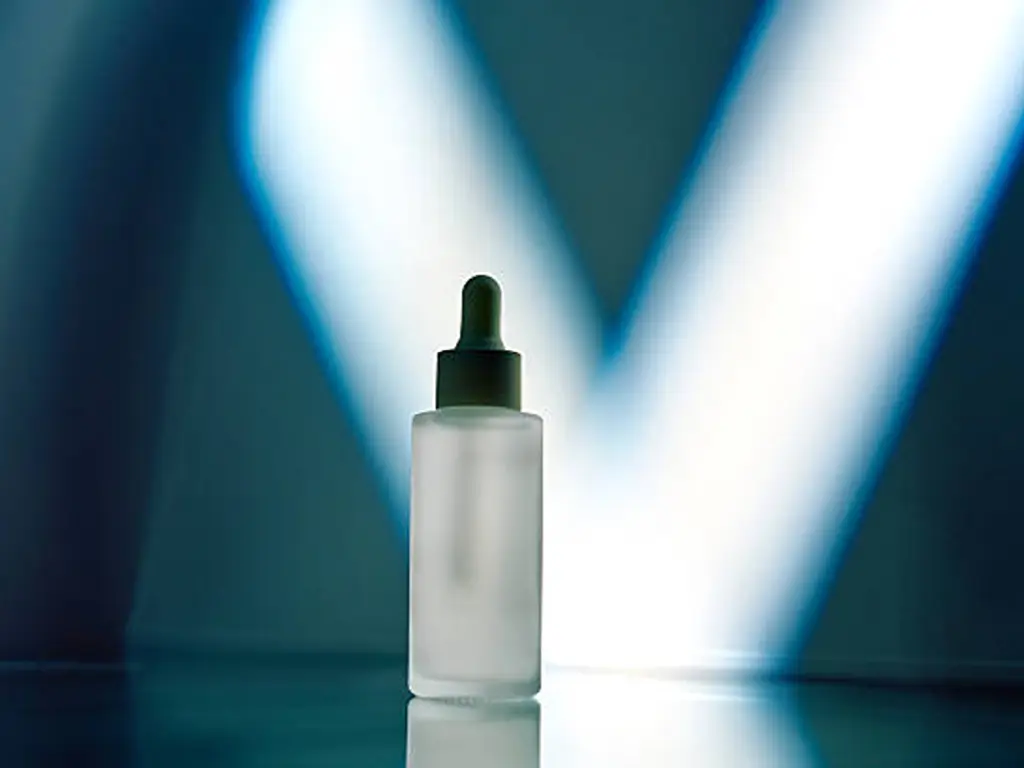
If your volume sits on the factory-direct layer, the next decision is which frosting process the bottle gets. Frosted is not one product but a family of surfaces with different costs, durability, and rules for what can combine with them.
| Process | Surface feel | Durability family | Posizione dei costi | Transit & filling behavior | Failure mode to ask about |
|---|---|---|---|---|---|
| Acid etching (frosting bath) | Satin, smooth | Etched in, cannot peel | A metà | Most scuff-resistant | Uneven depth on complex curves |
| Sandblasting | Matte, open texture | Etched in, cannot peel | Mid-high | Shows fingerprints, durable | Finer detail lost on small bottles |
| Frosted lacquer (spray) | Soft, whiter, tintable | Coated on, can scuff | Lower | Needs protective packing; scuffs in transit | Wear at edges; qualify alcohol resistance |
| Mold-frosted surface | Fixed tool texture | In the glass itself | Tooling-dependent | Most robust of all | Texture locked at tooling; no later adjustment |
Frosted finishes come in two families: finishes that bite into the glass (acid, sand, or paste etching) and finishes that sit on top of it (lacquers and paints). The first family cannot peel. The second family can. Almost every quality surprise in frosted packaging, from flaking on a new shipment to hazing after months on the shelf, traces back to this one distinction. When a supplier cannot tell you which family their frosting belongs to, treat that as an answer.
Combining frosting with the rest of your decoration
Frosting rarely travels alone; it is usually the canvas for your logo, and the order of operations matters. Etched or blasted surfaces accept silk-screened ink well: frost first, print second, cure the ink at temperature afterwards. A print on a coated frosted surface is only as durable as the coating underneath. The premium playbook layers further: a frosted body with one locally polished zone, where the matte surface is buffed back to gloss so a bright logo sits against satin, is an established high-end perfume treatment available only on etch-and-polish routes, and foil stamping reads strongly on frosted bodies. If your brief assumes any of these combinations, confirm the sequence and the cure step before committing to samples.
The layering order that works
Specifying frosting: what a serious quote answers
Four specifics separate a real production answer from a catalog reply. The process family: etching, blasting, lacquer, or mold texture, and hesitation on that question is itself an answer. The sample protocol: the finish is locked from an approved sample, with density, whiteness, and tactile feel signed off before any volume run, and the batch matched to that sample rather than a photograph. The acceptance standard: ask how defects are policed. Our practice is sampling 10% of an order, with 100% inspection if the defect rate exceeds 2%, and delivery acceptance at 98% or better; ask what happens to a rejected batch. And the transit question: coated frosted finishes need protective inner packing, and a supplier that ships frosted bottles like clear ones has not thought about scuffing yet. A quote that answers those four is one you can make decisions on.
How to Evaluate a Frosted-Bottle Supplier: Separating Real Factories from Middlemen
Once you can specify frosting, the remaining risk is the supplier. Every trading company can say "frosting available"; the evaluation is what the claim stands on.
Three signals count. Does the supplier control the decorating process end to end? Some factories frost on their own lines, others through audited partners; either can work, but whoever does the work must answer process questions in production language (bath composition, dwell time, belt speed), not catalog language. Can they name the process family and its limits on your bottle, say whether etching is safe on the wall thickness your shape requires, or whether a narrow-neck bottle frosts evenly at the shoulder? Can they show a physical sample of a comparable job, not renderings? Frosting is a surface you have to touch.
Signals that do not count: a menu page listing frosting among thirty services, stock photos, and yes to everything. A factory that has done this before will ask what your fill is, because alcohol content and filling-line friction are exactly what separate etched finishes (indifferent to both) from coated ones (very interested in both).
The sample protocol is the final filter: an approved sample locks the finish, process parameters are fixed from it, and production replicates the locked standard, not the memory of it. Ask for that sequence in writing, and what happens to a batch that drifts from the sample. A straight answer on rejection handling tells you more than any certification logo.
Frosting supplier checklist
- Do you frost on your own production line, or outsource?
- Which process family for my bottle: etched, blasted, lacquer, or mold texture?
- What are the minimums for stock frosted bottles vs. custom-decorated runs?
- Can frosting be combined with silk screening or foil on the same order?
- What is the sample-lock and batch-acceptance protocol?
- How is the finish protected for transit, and who owns a scuffed shipment?
The Business Case: Treat Frosting as a Design Decision, Not a Stock Choice
Step back and the picture reduces to one structural fact: every layer of the frosting supply chain sets its own minimum, consistency, and ceiling for looking different from the next brand. DIY cannot repeat for a product line. Stock frosted bottles are consistent but identical to every other shelf. Bolt-on decorating services carry a 10,000-piece minimum that filters out exactly the brands that need differentiation most. Factory-direct frosting, chosen at the design stage, decides finish, minimum, and differentiation together.
What this means for brands
If frosted is the default premium language of your category, and the dedicated frosted collections from major packaging suppliers say it is, then picking a stock option guarantees you premium language with zero premium differentiation. Concretely: brief the factory for frosting process options and the custom-decoration minimum up front, and design the logo placement around the finish (frosting, then print, then foil) instead of discovering the sequence after the samples.
The brands that win treat frosting as a design variable with the same weight as bottle shape — decided on the same drawing, specified against the same sample, ordered through the same production run.
What this means for distributors and wholesalers
For buyers who stock and resell, frosting is a two-tier inventory question. Plain frosted stock bottles are the traffic tier, where every competitor sits and margin lives at the bottom. Bottles with a finish combination no shelf photo can copy, an etched body with a polished detail, a custom density married to a house closure, are the margin tier, because that buyer chooses the bottle, not the price. Hold the traffic tier shallow and build the differentiated tier deliberately: the first keeps you in the conversation, the second pays for the shelf.
Whether you are opening the frosted catalog for the first time or specifying your third generation of frosted packaging, the finish is not the last decision in packaging. It is one of the first. Design it like one, and the bottle makes the product feel like the brand's, not like everyone's.
We have spent three decades making bottles and their finishes, and we will walk a first-time buyer through the frosting decision, from a 1,000-piece stock run to a fully custom-decorated launch, the way we would want it explained to us. Send us your bottle idea and the question you are stuck on; the reply comes from someone who makes glass, not a sales script.
Send a bottle spec. Get a frosting plan that survives the shelf.
Stock frosted bottles from 1,000 pieces; custom-decorated runs from 5,000 — with silk-screen and foil on the same order. Send your bottle shape, target volume, and finish idea, and get process options, tiered minimums, and a sample path back.
Start with your bottle specRiferimenti
- SKS Bottle & Packaging. “Custom Frosted Bottles and Jars.” https://www.sks-bottle.com/info/FrostedContainers.html
- Richmond Group. “Packaging Decoration Focus: Acid-Etching and Frosting.” https://www.richmondgroup.com/news-insights/insights/packaging-decoration-focus-acid-etching-and-frosting
- The Home Depot. “Reviews for Rust-Oleum Specialty 11 oz. Frosted Glass Spray Paint.” https://www.homedepot.com/p/reviews/Rust-Oleum-Specialty-11-oz-Frosted-Glass-Spray-Paint-1903830/100195608/1
- Bottiglie di vetro Daxin. “Decorazione e finitura.” https://www.daxinglassbottles.com/decorating-finishing/
- Bottiglie di vetro Daxin. “Bottiglie e barattoli di vetro personalizzati”.” https://www.daxinglassbottles.com/custom-glass-bottles-jars/
- Bottiglie di vetro Daxin. Homepage. https://www.daxinglassbottles.com/
 English
  Spanish
  French
  German
  Arabic
  Italian
  Dutch
Dutch  Portuguese
  Russian
  Korean
  Japanese