
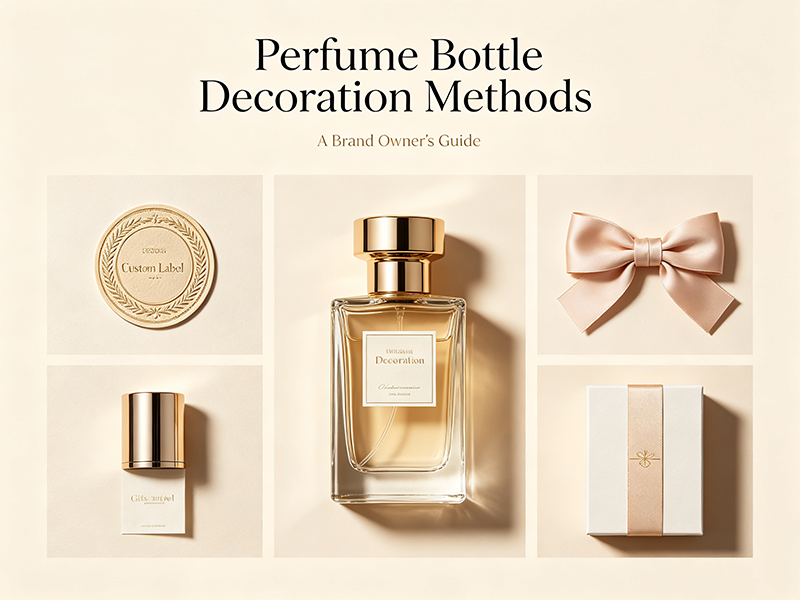
さまざまな選択肢の中から選ぶ 香水瓶の装飾方法 これは、単にプレゼンテーション上で最も高級感あふれる仕上げを選ぶというだけの問題ではありません。装飾は、香水のポジショニング、ロゴの再現性、ボトルを手にした時の感触、充填や流通過程での耐久性、ブランドが購入しなければならない在庫量、そして今後の生産においてデザインをどれだけ一貫して再現できるかといった点に影響を及ぼします。.
単色印刷を施した透明なボトルは、モダンで控えめな印象を与えることができます。同じガラス形状でも、半透明のグラデーションを施せばロマンチックな雰囲気に、濃い不透明コーティングを施せばドラマチックな印象に、メタリゼーションを施せば高い反射性を帯びた仕上がりになります。フロスト加工は、光の透過性と手触りの両方を変化させます。ホットスタンピングでは、精密なメタリックなアクセントを演出でき、デジタルUV印刷では、細部まで精緻な多色アートワークを再現できます。したがって、この工程は単なる生産上のステップではなく、ブランドアーキテクチャの一部なのです。.
しかし、どのような装飾技術にも限界があります。ボトルの形状によって、アートワークが歪んでしまう場合があります。デジタルレンダリングと一致するコーティングでも、照明条件によって見え方が異なることがあります。メタリック箔を使用する場合、元のデザインよりも平坦な印刷面が必要になることがあります。複数の色をスプレー塗装すると、実際の最低注文数が倍増する可能性があります。また、色基準、密着性、耐摩耗性、アートワークの位置、梱包による保護などが事前に定義されていなければ、見栄えの良いサンプルであっても、量産段階では失敗に終わる可能性があります。.
本ガイドでは、ブランドオーナーの視点から、香水ボトルの主な装飾技法について解説します。各技法の視覚的効果、適した用途、商業的な影響、品質リスク、試験要件、およびさまざまなボトルデザインとの適合性を比較しています。また、フレグランスパッケージングシステム全体の一環として、装飾の選定、サンプル作成、承認、検査を行うための実践的な枠組みも提供しています。.
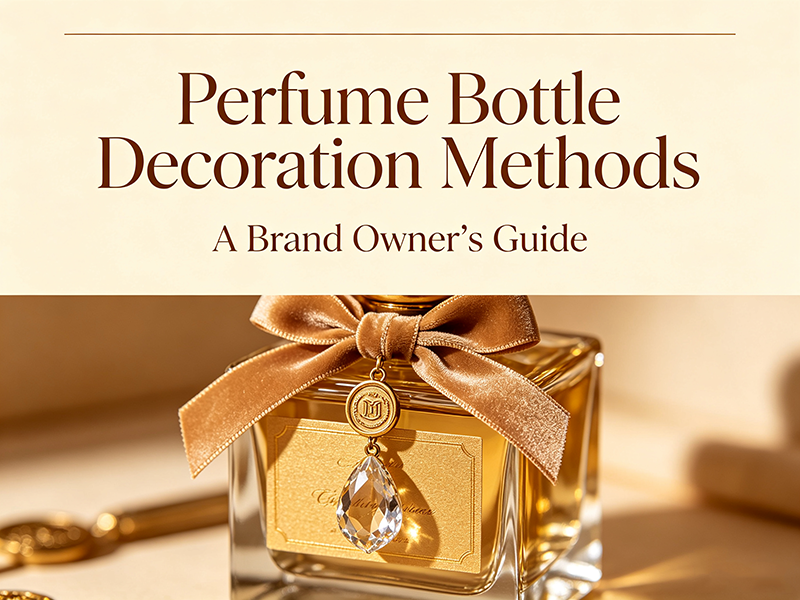
香水のボトルの装飾がブランドポジショニングにおいて重要な理由
ガラス型はボトルの基本的なシルエットを決定しますが、消費者が一目で感じる印象の多くは装飾によって左右されます。装飾によって、パッケージが「無機質」「職人風」「華やか」「ナチュラル」「遊び心のある」「男性的」「ロマンチック」、あるいは「高級感あふれる」といった印象を与えるかどうかに影響を与えます。.
装飾には、同時にいくつかの役割があります:
- ブランド名や香りの情報を伝える
- メインカラーとビジュアルの雰囲気を決定する
- 同じボトルを使用している複数の香りを区別します
- ボトル、キャップ、ポンプ、箱の間にコントラストを生み出します
- 液体の透明度と視認性を調整します
- 質感と奥行き感を演出する
- ロゴ、パターン、イラスト、あるいは限定版のストーリーを際立たせます
- 市販のボトルをより独自性の高いものに感じさせる
ブランドにとって、これは大きなビジネスチャンスとなります。製品ごとに新しいガラス型を開発する代わりに、実績のある1つのボトルを基に、色、プリント、キャップ、ラベル、箱を変化させることで、コレクション全体を構成することができます。これにより、金型投資のリスクを抑えつつ、統一感のある製品ファミリーを維持することができます。.
装飾は過剰になりすぎることもあります。効果が多すぎると、注目が分散し、拒絶されるリスクが高まり、再注文が複雑化し、ブランド認知度を高めるどころか、かえって弱めてしまう可能性があります。優れた装飾戦略とは、1つの主要なコンセプトを明確にし、それを補強する場合にのみ、二次的な加工を施すものです。.
最も重要な質問は、「どのプロセスが最も高品質か?」ということではありません。それは、
このボトルにおいて、この数量で、かつ企業が許容できるコストと生産リスクの範囲内で、意図したブランドイメージを効果的に伝えられるデザインはどれでしょうか?
「作業手順リスト」ではなく、「装飾の企画書」から始めましょう
手法を決める前に、完成したボトルが何を伝えるべきか、またどのように販売されるのかを明確にしておきましょう。装飾業者にとって、「高級感を出してほしい」という要望だけでは、それ以上の背景情報がなければ、信頼できる製造仕様として具体化することはできません。.
有用な装飾の仕様書には、以下の内容を含めるべきです:
- ターゲット顧客層と小売価格のポジショニング
- 香りの系統と感情的な方向性
- ボトルの材質、形状、容量、および寸法
- ガラスの色と表面の状態
- SKUおよび色ごとの目標発注数量
- 作品の色数
- 透明、半透明、または不透明な外観
- グロス、サテン、マット、フロスト、メタリック、または触感効果
- ロゴのサイズと必要な再現詳細
- 前面、背面、側面、肩、または全面をカバー
- キャップ、カラー、ポンプ、および箱の仕上げ
- 販売チャネルと想定される取り扱い方法
- 必須の摩耗試験、接着試験、耐薬品性試験、または輸送試験
- 目標サンプリング日および生産完了日
設計目標と提案されたプロセスを区別してください。例えば、真の要件は「中身の残量が見える、濃い青色の半透明のボトル」であり、「青色のスプレー塗装」ではないかもしれません。これにより、製造業者は適切なコーティングシステムや塗布方法を提案する余地が生まれます。.
また、ランクごとの要件についても同様です。ロゴの正確な可読性は必須である一方、完璧なラップアラウンドパターンは任意となる場合もあります。優先順位を正しく理解しているブランドであれば、形状、コスト、最小発注数量(MOQ)、あるいは耐久性といった制約によって当初のコンセプトが制限された場合でも、合理的な妥協点を見出すことができます。.
ボトルの形状が装飾に与える影響
同じアートワークでも、平らな長方形のボトル、丸いボトル、肩部分が湾曲したボトル、そして彫刻的な特注形状のボトルでは、その見え方が異なります。したがって、ガラスやキャップのデザインが完全に確定する前に、装飾について検討しておく必要があります。.
フラットパネル
前面と背面のパネルが平らなものは、一般的にスクリーン印刷、ホットスタンピング、ラベル貼り、プラークの取り付け、および細部のデザインに適しています。接触面が安定しているため、ロゴの位置決めが容易になります。.
一見平らに見える表面であっても、わずかな曲率や窪み、盛り上がった縁、あるいは成形継ぎ目がある場合があります。外観だけで判断するのではなく、サプライヤーに技術図面上で装飾可能な領域を明記してもらうように依頼してください。.
円筒形のボトル
丸瓶には、部分印刷や全面印刷、コーティング、デカール、および一部のデジタル印刷が適用可能です。アートワークを円周に沿って位置合わせしたり、継ぎ目で合わせたりする必要がある場合、見当合わせの精度がより厳しくなります。.
丸まった肩と先細りの体型
曲率によって接触圧力が変化し、アートワークが伸びたり歪んだりすることがあります。ホットスタンピングやダイレクトスクリーン印刷では、実用的な印刷可能領域が狭くなる場合があります。コーティングは形状に沿いやすいですが、端部の被覆や液溜まりについては依然として制御が必要です。.
彫刻的な質感を持つガラス
深い凹み、ファセット、リブ、窪み、不規則な輪郭は、追加のグラフィックなしでも強い個性を生み出すことができます。その一方で、塗装のムラ、影の発生、印刷時の接触不良、メタリック調の仕上がりの不均一さといった問題を引き起こす可能性もあります。場合によっては、形状全体を塗装しようとするよりも、特定のパネルに装飾を施したり、プレートを追加したりする方が確実な場合があります。.
金型継ぎ目とベースの形状
試作により実現可能性が確認されない限り、重要なグラフィックを金型の継ぎ目、急激な形状変化、または不安定な接触点の上に配置しないでください。また、重いボトルの底面、プッシュアップ形状、およびエンボス加工されたマークも、マスキング、取り扱い、および治具の設計に影響を与える可能性があります。.
主なガラス瓶の装飾手法の比較
以下の概要は、あくまで参考情報です。最終的な適合性は、実際のガラス、アートワーク、装置、コーティングまたはインクシステム、数量、および性能要件によって異なります。.
| 装飾方法 | 典型的な視覚効果 | 特に適しているのは | 主な利点 | 主な制約 |
|---|---|---|---|---|
| スプレー塗装 | 単色、半透明、グラデーション、マット、光沢、着色 | 全体的な色使いとコレクションごとの差別化 | 新しいガラス金型を使わずに、外観を大幅に変更 | 色の一貫性、塗膜の密着性、硬化、および耐擦傷性については、適切な管理が必要である |
| スクリーン印刷 | 鮮明な単色または多色のテキストやグラフィック | ロゴや比較的シンプルなイラスト | ガラス面への鮮明な直接印刷と再現性の高さ | 色が増えるごとに、セットアップや見当合わせの複雑さが増します |
| ホットスタンピング | メタリックまたは特殊フォイルのディテール | ロゴ、ライン、そして高級感あふれるアクセント | 高い視覚的コントラストと鮮明な焦点 | 形状と密着性が使用可能な範囲を制限する |
| デカール転写 | 精細な、あるいは多色使いのイラスト | 直接印刷が難しいイラストや図形 | 複雑なグラフィックスや、特定のラップアラウンド効果に対応しています | 塗布、継ぎ目処理、焼成または硬化、および取り扱いにより、工程が増えます |
| UVデジタル印刷 | フルカラーで精細なグラフィック、時には質感を感じさせるレイヤー | 小ロット、複雑なデザイン、カスタマイズ | すべてのアートワークの色に対して画面が設定されていない | インクの密着性、隠蔽性、表面形状、および機械の処理面積について試験を行う必要がある |
| フロスティングまたはエッチング | 柔らかなマット感、拡散感、質感を感じさせるガラスのような仕上がり | ミニマリスト、アポセカリー、ナチュラル、またはプレミアムといったコンセプト | ガラス面全体で光と感触が変化する | 本物のエッチング加工とフロスト加工には、それぞれ異なる特性があります |
| 真空メタライゼーション | 鏡面仕上げ、クローム仕上げ、ゴールド仕上げ、またはカラーメタリック仕上げ | 華やかで豪華な、存在感を放つボトル | 高い反射率 | 通常は不透明であり、指紋、傷、マスキング、およびコーティングによる保護が重要となる |
| パッド印刷 | 曲面や不規則な形状の箇所への小さなグラフィックの貼り付け | キャップ、肩部分、小型ボトル用ゾーン | 平面印刷では届きにくい場所にも印刷可能 | 画像領域が小さく、インクの転写に制限がある |
| 水転写印刷 | 大理石柄、木目柄、迷彩柄、複雑な表面模様 | 不規則な形状と装飾的な効果 | 3次元幾何学に対応可能 | パターンの配置と繰り返しには、明確な基準が必要だ |
| ラベルや銘板 | 紙、フィルム、メタリック調、樹脂、または独立したバッジ風仕上げ | 職人技を活かしたもの、柔軟性のあるもの、限定版、あるいは多層的なブランディング | 高いグラフィックの柔軟性と、視覚的な更新の容易さ | 接着性、位置合わせ、エッジの浮き、およびリサイクル可能性について検討が必要である |
| エンボス加工またはデボス加工 | ガラスに形成された恒久的な凹み | 独自のロゴおよびブランド構造の詳細 | ボトルに組み込まれた耐久性に優れた識別情報 | 金型設計が必要であり、製造後の装飾ではありません |
1. 香水ボトルのスプレーコーティング:色を変える最も柔軟な方法
スプレーコーティングは、ガラス表面に色付きまたは透明な仕上げを施す手法です。ガラス金型を変更することなく、既存のボトルの印象を完全に変えることができるため、最も汎用性の高い装飾手法の一つです。.
スプレーによる視覚効果
コーティングシステムや用途に応じて、各ブランドは次のような製品を開発することができます:
- 液体が透けて見える透明な着色剤
- 光の透過を和らげる半透明の色
- 不透明な単色
- グロス、サテン、またはマット仕上げ
- つや消し風の視覚効果
- ある色から透明へのグラデーション
- 2色または多色のグラデーション
- 透明なガラス部分の一部が透けて見えるように加工された窓
- 適切なシステムが利用可能な場合、ソフトタッチ効果
半透明の琥珀色は、薬局のような雰囲気や温かみのあるボタニカルなイメージを演出できます。濃くマットな黒のコーティングは、重厚でドラマチックな印象を与えることができます。淡いグラデーションを施すことで、同じストックボトルでもより軽やかで現代的な印象に仕上げることができます。.
デザインの強み
スプレー加工は、さまざまな形状のボトルに対応しており、1回の工程で最も大きな視覚的な変化をもたらします。1つのボトル金型を色違いにすることで、複数のSKUに分けることができるため、フレグランスコレクションにおいて特に有用です。.
また、これによって、さらなる装飾を施すための下地作りも可能です。コーティングと二次加工の相性が良ければ、スプレー塗装した下地にロゴをスクリーン印刷したり、ホットスタンプ加工したりすることも可能です。.
主な生産リスク
ブランドは、以下を定義し、確認する必要があります:
- 色の整合性と許容範囲
- 透明か不透明か
- 勾配の開始点、終了点、方向、および密度
- 光沢度またはマット度
- 肩部、角部、底面、および凹部の被覆
- ほこり、繊維、ピンホール、流れ、オレンジピール、またはフィルムのムラ
- 接着と硬化
- 耐スクラッチ性および耐摩擦性
- 二次印刷や箔押しとの互換性
色の見え方は、ガラスの厚さ、液体の色、照明、背景によって変化します。平らな見本で承認された色でも、厚みのある香水瓶では同じように見えない場合があります。可能な限り、実際のガラス上で承認を行うようにしてください。.
商業上の考慮事項
スプレー塗装する色ごとに、個別のセットアップと最小生産数量が設定される場合があります。DAXINでは、スプレー塗装の最小注文数量(MOQ)は1色あたり3,000個が目安となっています。したがって、3色の香りを揃えたコレクションについては、ボトルの総数だけでなく、色やSKU単位でも計画を立てる必要があります。.
2. シルクスクリーン印刷による香水瓶:直接的、精密、そしてブランド重視
シルクスクリーン印刷では、あらかじめ用意されたスクリーンを通じてインクをボトルに転写します。この印刷法は、ブランド名、フレグランス名、ロゴ、線画、および比較的単純なグラフィックの印刷に広く用いられています。.
スクリーン印刷が適している場面
スクリーン印刷は、デザインに次のような要件がある場合に効果的です:
- くっきりとしたテキスト
- 力強く、不透明なロゴ
- 1色、または明確に区別される複数の色
- 定義されたボトルパネル上での位置決めを繰り返し行う
- 透明、つや消し、またはコーティング加工されたガラスへの直接印刷
暗い色のガラスに白で印刷すると、高いコントラストが生まれます。透明なガラスに黒や落ち着いた色のインクを使うと、ミニマルな印象を演出できます。慎重に選んだメタリック調のインクは、反射性フォイルやメタライゼーションとは視覚的に異なりますが、繊細な効果を生み出すことができます。.
アートワークと幾何学的な制限
非常に細い線、極小の反転文字、広い単色インク領域、あるいは急な曲線を横切るアートワークは、一貫して再現するのが難しい場合があります。サプライヤーは、スクリーンを作成する前に、線の太さ、間隔、フォントサイズ、印刷領域、およびボトルとの接触面を確認する必要があります。.
通常、各色は個別に印刷されます。多色刷りのデザインでは、各層間の見当合わせが必要となるため、原画の許容誤差や印刷順序について事前に合意しておく必要があります。また、コーティングされた表面への印刷においては、コーティング剤、インク、硬化処理、およびその後の取り扱いとの相性も考慮する必要があります。.
品質基準
確認:
- 図版の位置と回転
- 色間の登録
- インクの不透明度と色
- エッジの鮮明さ
- インクの欠け、ピンホール、にじみ、または汚れ
- 硬化後の密着性
- 通常の取り扱いおよび梱包時の接触に対する耐性
DAXINでは、シルクスクリーン印刷の最小注文数量(MOQ)の目安は1,000個です。最終的な最低注文数量は、デザイン、色、ボトル、インクシステム、および生産体制によって異なります。.
3. ホットスタンピングを施した香水瓶:棚に並んだ際、際立つメタリックなディテール
ホットスタンピングとは、制御された熱と圧力を用いて、あらかじめ処理された表面に箔や特殊な層を転写する加工法です。ロゴ、フレグランス名、縁取り、および厳選された高級感あふれるディテールなどに広く用いられています。.
ブランドがホットスタンピングを採用する理由
箔は、通常のインクよりも反射性が高く、シャープな金属のアクセントを生み出すことができます。金、銀、銅、あるいはカラーの箔を使用することで、ボトルと金属製のキャップ、カラー、あるいは箱のディテールを調和させることができます。.
ホットスタンピングは視覚的なインパクトが強いため、限られた範囲に施すのが最も効果的であることが多い。マット仕上げのボトルに小さな金色のロゴを入れる方が、複数の要素を互いに競合するようなメタリック仕上げで覆うよりも、洗練された印象を与えるだろう。.
技術的な制約
ホットスタンピング用の金型には、安定した接触が求められます。深い曲面、テクスチャ加工された表面、窪み、隆起した細部、およびボトルの縁に近いアートワークは、転写が不完全になったり、歪みが生じたりする原因となります。下地のガラスやコーティングは、箔システムと適合している必要があります。.
確認:
- 実用的なスタンピングエリア
- 箔の色と反射率
- アートワークの細部と輪郭の鮮明さ
- 透明ガラスまたはコーティングされたガラスへの密着性
- 印刷要素またはマスク要素を含む登録
- 摩擦およびパッキングとの接触に対する耐性
具体的な素材の指定がない限り、「ゴールド」とだけ表記しないでください。箔には色調、輝き、温かみ、鏡面効果にばらつきがあり、アルミニウム製、電気めっき、またはメタライズ加工のキャップと並べると、見た目が異なって見える場合があります。.
4. デカール転写:複雑な視覚的ストーリーを表現する精緻なグラフィック
デカールには印刷された図柄が施されており、これをボトルに転写した後、選択したデカールと基材に適した工程を用いて定着させます。デカールは、多色刷りのイラスト、細かいディテール、特定の全周デザイン、および直接スクリーン印刷では施すのが難しい図柄にも対応可能です。.
対象となるブランドへの活用例
デカールは次のような場合に効果的です:
- 植物図譜
- 装飾用ボーダー
- エンブレムの詳細
- 多彩なストーリーテリング
- 限定版
- 伝統や職人の美学
管理すべき事項
アプリケーションは、独立した製造工程です。ブランドは以下の点を評価すべきです:
- 作品の鮮明さと色
- 位置、回転、および縫い目の可視性
- しわ、空気の混入、端の透け、または歪み
- ボトル表面との適合性
- 状態の改善または治療
- 加工後の密着性と耐性
- 曲面形状における製造の一貫性
デカールは、複雑なアートワークを再現できるという理由だけで選ぶべきではありません。追加されるデザインの細部は、施工の手順、検査の負担、およびコストやリードタイムに及ぼす可能性のある影響を正当化するものでなければなりません。.
5. 香水ボトルへのUV印刷:フルカラーでの自由度と精細なディテール
UVデジタル印刷は、専用の装置を用いて、インクを素材の表面に直接塗布し、硬化させます。この方式では、多色グラフィック、グラデーション、写真のような要素、デザインが頻繁に変わる小ロットの印刷物などを再現できるほか、適切な装置を使用すれば、重ね刷りや触感効果も表現可能です。.
ブランドオーナーにとってのメリット
デジタル印刷では、アートワークの色ごとに個別のスクリーンを用意する必要が少なくなります。これは、ビジュアルデザインに多くの色が使われている場合や、関連する複数のアートワークで同じボトルが共有される場合に役立ちます。.
以下の機能をサポートしている可能性があります:
- フルカラーのイラスト
- 精緻なグラフィックのディテール
- 色のグラデーション
- 変数名や限定版のシリアル番号
- 必要な箇所には、不透明な白の下地を塗る
- 対応しているシステムでは、選択された浮き彫りテクスチャが表示されます
確認すべき事項
機器の性能は機種によって異なります。以下を確認してください:
- 最大印刷可能領域およびボトルの寸法
- そのシステムが、平面、円筒面、あるいは不規則な形状の表面のいずれに印刷するか
- 下塗りや白い下地が必要な場合
- 透明ガラス、コーティングガラス、またはすりガラスへのインクの密着性
- 色の一貫性と再現性
- 硬化および臭気に関する要件
- 摩耗、湿気、および通常の化学物質との接触に対する耐性
- ラップアラウンドまたは両面アートワークへの登録
デジタル技術があっても、見本作りは不要にはなりません。画面上でフルカラーで表示されるファイルでも、透明なガラス上や、着色されたコーティングの上、あるいは液体の隣に置いた場合などでは、再現される色が異なってくることがあります。.
6. つや消し加工の香水瓶:柔らかな光と、触感に表れる控えめな美しさ
フロスティング加工を施すと、ガラスの透明感や光沢が抑えられ、光が拡散したようなマットな仕上がりになります。これにより、ボトルの質感がより柔らかく、手触りが良くなり、液体の色に視覚的に左右されにくくなります。.
つや消し仕上げを実現するさまざまな方法
「フロスト加工」という用語は、実際の表面エッチング、研磨処理、あるいはスプレーによるフロスト効果コーティングなど、さまざまな工程を指すことがあります。これらの加工方法では、外観、質感、耐久性、コスト、および環境管理の要件がそれぞれ異なります。.
したがって、ブランドは次のように自問すべきです:
- この効果は、ガラスの表面を変化させることによって生じるものですか、それともコーティングを施すことによって生じるものですか?
- 仕上げは全面塗装ですか、それともマスキング処理されていますか?
- 質感はどの程度均一ですか?
- 透明な窓や模様はそのまま残すことはできますか?
- その表面は、印刷、箔押し、ラベル貼り、あるいは接着剤の塗布に適していますか?
- どのような洗浄・取り扱い方法が適切でしょうか?
ブランドの用途
フロスト加工は、ミニマル、ボタニカル、ウェルネス、ジェンダーニュートラル、あるいは控えめなラグジュアリーといったコンセプトによく合います。フロストガラスにクリアなロゴを入れると落ち着いた雰囲気を醸し出し、黒の印刷を施すとより強いコントラストが生まれます。.
すべてのマットな表面が同じであると仮定することにはリスクが伴います。対象となるガラスの実際の質感、曇り具合、半透明度、指紋の付着状況、および耐性を確認してください。.
7. 香水瓶のメタリゼーション:鏡のような輝きと、不透明感が醸し出す高級感
真空メタライゼーションは、特殊なコーティングプロセスによって反射性のある金属的な外観を作り出すもので、通常、システムの要件に応じて、あらかじめ用意された下地層や保護層と組み合わせて使用されます。これにより、クロム、金、カラーメタリック、あるいは鏡面のような仕上げを実現することができます。.
視覚的な強み
メタリゼーションは店頭での存在感を高め、ありふれたボトルを劇的に変貌させることができます。インパクトのある新製品の発売、イブニングフレグランス、大胆な限定版、そしてボトル自体を反射するオブジェとして機能させるデザインなどに適しています。.
実用的なトレードオフ
仕上げは一般的に不透明であるため、デザインに透かし窓が設けられていない限り、液体や充填レベルが見えなくなる場合があります。また、反射する表面では、ほこり、指紋、傷、コーティングの欠陥、表面の歪みがより目立ちやすくなります。.
確認:
- メタリックな色調と反射性
- 全額または一部の補償
- 境界のマスキング
- 印刷またはレーザーマーキングとの互換性
- トップコートと傷防止
- 指紋の挙動
- 梱包方法
- キャップ、カラー、ホイル、箱との色の関係
“「ゴールド」は、一つの完全なカラーシステムとして承認されるべきである。ボトル、キャップ、カラー、ロゴの箔、箱の箔は、それぞれゴールドに見えつつも、暖かみや反射率において明らかに異なるものとなり得る。.
8. キャップ、カラー、および部品向けの電気めっきおよびPVD処理
電気めっきや物理気相成長法は、キャップ、カラー、プレート、その他の部品に金属仕上げを施すため、ボトル装飾の話題と併せて頻繁に取り上げられます。これらは一般的なスプレー塗装とは置き換え可能ではなく、実際の工程への適性は部品の材質や下処理によって異なります。.
これらの仕上げにより、光沢のあるもの、サテン調のもの、ブラッシュ加工のもの、着色されたもの、あるいはダークメタリックな効果を生み出すことができます。その主な役割は、多くの場合、キャップをプリントやメタリック加工が施されたボトルと調和させることにあります。.
ブランドオーナーにとって、確認すべき重要な点は以下の通りです:
- 基材および前処理
- 仕上げの色、光沢、質感
- 接着性および耐摩耗性
- 製造ロット間の色差
- 指紋や表面の痕跡
- 塗膜厚が適用された後の適合性
- 可動部品やスナップフィット部品への影響
- 梱包による保護
DAXINでは、電気めっきの最小発注数量(MOQ)の目安は10,000個です。キャップやポンプも10,000個を計画の基準としているため、MOQが比較的低いストックボトルプロジェクトにおいても、キャップが最大の在庫負担となる可能性があります。.
9. 狭い箇所や処理が難しい箇所へのパッド印刷
パッド印刷は、柔軟なパッドを用いてインクを所定の表面に転写する印刷法です。従来の平面印刷では印刷が難しい、曲面や窪み、不規則な形状の箇所にある小さな図柄の印刷に適しています。.
一般的な用途としては、キャップのロゴ、ショルダーマーク、側面の小さなグラフィック、部品のブランド表示などが挙げられます。転写が柔軟であるからといって、どの部分でも印刷できるわけではありません。画像のサイズ、表面の質感、深さ、インクシステム、および固定具の安定性によって、仕上がりは左右されます。.
実際の部品において、位置、歪み、エッジの鮮明さ、不透明度、および密着性を確認してください。パッド印刷は、多くの場合、ボトル装飾の主役というよりは、補完的な役割を担うものです。.
10. 有機柄およびラップアラウンド柄のための水転写印刷
ウォータートランスファー印刷、あるいはハイドログラフィック印刷は、立体的な表面に装飾模様を施すことができます。使用するシステムや部品によっては、大理石模様、木目、石目、迷彩、あるいは抽象的な模様などに利用されます。.
この手法を用いると、フラットスクリーンでは再現が難しい効果を生み出すことができます。また、このデザインには自然な配置のばらつきが含まれており、これは意図された美的要素である場合もあれば、ブランドがすべての製品を完全に同一の外観にすることを求めている場合には品質上の問題となる可能性もあります。.
定義:
- パターンのスケールと方向
- 各ユニット間の許容誤差
- 認識可能なパターン特徴の位置
- 色とトップコート
- 縁や窪み部分の被覆
- 耐摩耗性
- ボトルとキャップの形状の関係
この工程では、工程の特性上確実に実現できないグラフィックの位置合わせを厳格に要求するのではなく、ブランド側が一定の許容範囲内のばらつきを受け入れることで、最も良い結果が得られます。.
11. ラベル、銘板、および装飾用付属品
ラベルやプレートを貼ることで、意図的な多層的なアイデンティティを演出することができます。素材としては、デザインや用途に応じて、紙、フィルム、金属調の基材、樹脂部品、あるいは特注のバッジなどが用いられます。.
戦略的優位性
Applied elementsでは、以下のサービスを提供しています:
- グラフィックの複雑度が高い
- テクスチャ加工素材や特殊素材
- SKU間のデザイン変更が容易になる
- 伝統、薬局、工芸、あるいは限定版としての登場
- 透明ガラス、スプレー加工ガラス、またはすりガラスとの鮮明なコントラスト
評価すべきリスク
サプライヤーは、以下の試験を行う必要があります:
- ガラス本体またはコーティングへの付着性
- 位置と回転
- エッジの浮き上がりや気泡の発生
- 必要に応じて、湿気、油、アルコールとの接触、および温度サイクルに対する耐性
- 擦り傷や剥離
- ボトルの曲率との適合性
- アプリケーションの再現性
- 資源の分別およびリサイクル目標への影響
ラベルは、必ずしもダイレクトプリントよりも品質が劣るというわけではありません。素材、タイポグラフィ、接着剤、貼り付け方法を慎重に検討すれば、プレミアムなブランドイメージを表現する上で重要な要素となり得ます。.
12. エンボス加工、デボス加工、および成形ガラスの詳細
エンボス加工またはデボス加工されたロゴは、ガラスが製造された後に追加されるのではなく、ボトルの金型を通じて成形されます。これにより、永久的な浮き彫りが施され、色が付いていなくてもそのブランド独自のボトルを一目で識別できるようになります。.
メリット
- アイデンティティは構造に組み込まれている
- レリーフ自体にはインクや箔は不要です
- そのディテールは、いくつかのカラーバリエーションでも際立ったままです
- 触覚効果や光の反射効果に対応しています
制約条件
リリーフは、金型の設計、ガラスの流動、離型、検査、および装飾の各工程に影響を及ぼします。細かい部分の充填が不均一になる場合があり、また、深い部分や鋭利な形状は製造上の問題を引き起こす可能性があります。設計は、平面のロゴファイルをそのまま転用するのではなく、ガラス素材に合わせて設計する必要があります。.
成形レリーフ加工には、既存の型または特注の型が必要となるため、製造後の装飾ほど柔軟性はありません。DAXINでは、特注ガラス瓶の最小注文数量(MOQ)は10,000本ですが、在庫品のガラス瓶の場合は3,000本となっています。ブランドは、複数の生産ロットにわたって長期的なブランドアイデンティティを確立できる場合に、レリーフ加工への投資を検討すべきです。.
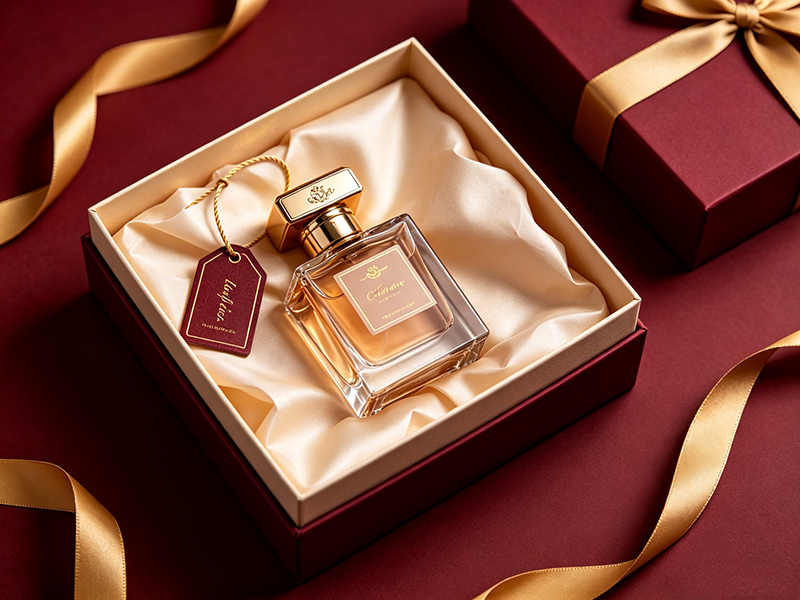
自分にぴったりの香水ボトルの装飾方法の選び方
最も適切なプロセスは、トレンドへの偏りではなく、体系的な比較を通じて導き出されるものである。.
1. まず、意図したブランドメッセージから始める
配置を視覚的な要件に落とし込む:
- ミニマルで洗練されたデザイン:透明またはすりガラスの素材、控えめな印刷、正確な配置
- ロマンチックで表現力豊か:柔らかなグラデーション、温かみのある色合い、イラスト、箔押しのアクセント
- 大胆で夜を思わせる:不透明なダークコーティング、メタリゼーション、強いコントラスト
- ナチュラルで職人技が光る:琥珀色または透明なガラス、手触りの良いラベル、落ち着いた色合いのインク、木目調のキャップ
- 現代的なラグジュアリー:控えめなモノクローム仕上げ、シャープなロゴ、統一感のあるメタルディテール
- 遊び心あふれるコレクターズアイテム:鮮やかな色使い、デジタルアート、SKUごとに異なるグラフィック
これは単なる定石ではありません。クリエイティブの方向性と制作上の選択を結びつけるための方法なのです。.
2. ボトルの形状を評価する
装飾可能な領域に印を付けてください。ロゴを曲率のきついショルダー部分に配置する必要がある場合は、大きなホットスタンプマークを無理に施すよりも、パッド印刷、小さなプレートの取り付け、あるいはデザインの位置変更の方が確実な場合があります。.
3. アートワークの複雑さをプロセスに合わせて調整する
単色のワードマークであれば、デジタル印刷は必要ないかもしれません。精緻な植物のイラストの場合、6色のスクリーン印刷に分けて印刷するのは、経済的にも技術的にも合理的ではない可能性があります。求められる効果を安定して再現できる、最もシンプルな製版方法を採用してください。.
4. 透明性と流動性の可視性を定義する
香りの色や充填量が重要な場合は、クリア印刷、半透明スプレー、部分的なつや消し加工、またはマスキング処理を施した窓部分をお選びください。不透明コーティングや全面メタライゼーションを施すと、その視認性が大幅に失われます。.
5. 消費者がどの表面に触れるかを決める
頻繁に接触される表面には、摩擦、油分、湿気、および包装材との接触に対して適切な耐性が求められます。浮き彫りのグラフィックやソフトタッチコーティングは、感覚的な付加価値をもたらしますが、想定される流通経路や使用状況に応じて試験を行う必要があります。.
6. SKUおよび色ごとの数量を確認する
装飾のコスト計算は、多くの場合、色、デザイン、またはセットアップごとに適用されます。合計12,000本の注文を6種類の塗装色に分けて生産する場合と、12,000本すべてを単一の色で生産する場合では、生産計画が異なります。.
7. 再注文の再現性を考慮する
シグネチャーカラーは、今後のロット間でも再現可能でなければなりません。物理的なマスター、目標色、許容範囲、基材、塗装システム、および観察条件を明確に定義してください。ブランドとして、旧在庫と新在庫の間に目に見える差異を許容できない場合は、基準を特に明確に定める必要があります。.
8. プロセス数ではなく、総価値を比較する
工程を増やしたからといって、自動的に高級感が生まれるわけではありません。優れたコーティングと精巧なロゴひとつが、平凡な効果をいくつも重ね合わせた場合よりも、多くの場合、より強い「コントロール感」を醸し出すものです。.
ボトルのデザインを過剰にせず、装飾手法を組み合わせる
一連の工程が技術的に整合し、視覚的にも統一感がある場合、複数の工程によって奥行きを生み出すことができます。.
一般的な組み合わせには、次のようなものがあります:
- 透明なスプレーコーティングに加え、スクリーン印刷によるロゴ
- マットな不透明コーティングに加え、ホットスタンプ加工によるブランド名
- すりガラス+単色印刷
- メタライゼーションと、マスクを施した透明な窓
- グラデーション塗装と繊細なフォイル加工
- 成形ロゴに加え、控えめな色合いのコーティングを施したもの
- 透明ガラスにプラークをあしらい、調和のとれたキャップを組み合わせたもの
- デジタルイラストとシンプルなメタリックカラーの組み合わせ
層を追加するたびに、依存関係が生じます。下地コーティングは、インクや箔を確実に受け入れるものでなければなりません。硬化温度や取り扱い方法によって、それ以前に施された加工に損傷を与えてはなりません。層間の見当合わせを明確に定義する必要があります。加工工程が増えることで、不良品の発生リスク、リードタイム、コスト、および梱包要件が増加する可能性があります。.
サプライヤーは、提案する工程順序を提示する必要があります。一般的なプロジェクトでは、ガラスの洗浄から下地コーティング、硬化、印刷、二次硬化、検査、保護梱包へと進むことが考えられます。具体的な順序は、使用するシステムによって異なります。外観だけで判断してはなりません。.
階層構造を活用する:
- 1つの際立った質感または色彩効果
- 主要なブランドマークが1つ
- 1つのオプションのアクセント
キャップ、首回り、ボトル、ラベル、箱のそれぞれが主役を争うような場合、パッケージ全体の視覚的な統一感が損なわれる可能性があります。.
How Decoration Changes Perceived Color
Color approval is one of the most difficult parts of decorated glass because the appearance is affected by more than pigment.
関連する変数には、以下のものが含まれます:
- Clear, tinted, recycled-content, or naturally variable glass tone
- Glass thickness and base thickness
- Transparent, translucent, or opaque coating
- Liquid color and fill level
- White, black, or reflective background
- Gloss, matte, or frosted surface
- Indoor retail light, daylight, and photography lighting
- Viewing angle
- Neighboring cap, foil, and box colors
A digital color value or paper swatch is useful for direction but may not predict the final bottle. Brand owners should approve color on the real glass, with the intended finish, and ideally compare it with the cap and box.
For critical colors, agree on:
- Physical approved master sample
- Instrumental color target where appropriate
- Measurement geometry and location where specified
- Acceptable color-difference range
- Viewing light and background
- Whether old and new batches may be mixed in the same shipment or retail display
Instrumental data can improve communication, but it does not replace a visually approved bottle. Transparent and metallic surfaces can be difficult to characterize with one simple reading, so the control method must match the finish.
Cost Drivers in Perfume Bottle Decoration
Decoration cost is not determined only by the process name. Major cost drivers include:
- Order quantity per SKU and color
- Bottle shape and handling difficulty
- Percentage of surface coverage
- 作品の色数
- Need for primers, base coats, or protective topcoats
- Color-development and sampling rounds
- Masking, fixtures, screens, dies, or plates
- Number and sequence of processes
- Manual application or inspection requirements
- Cure time and production speed
- Expected rejection rate
- 保護用内包装
- Testing and approval requirements
Compare quotations using the same specification. One supplier may include a protective topcoat and individual bags while another quotes only the visible effect. A lower line-item price is not comparable if durability, packing, or inspection is different.
Calculate cost per sellable unit, including excess components caused by different MOQs. If the bottle decoration supports 3,000 pieces but the custom cap requires 10,000, the closure may create more cash exposure than the glass finish.
Build an MOQ Matrix Before Finalizing the Artwork
DAXINでは、以下の計画に関する指針が適用されます:
| コンポーネントまたはプロセス | 最小注文数量(MOQ)の参考情報 |
|---|---|
| 特注のガラス瓶 | 10,000個 |
| 一般的なガラス瓶 | 3,000個 |
| キャップ | 10,000個 |
| ポンプ | 10,000個 |
| 紙箱 | 3,000個 |
| 散布 | 1色あたり3,000個 |
| シルクスクリーン印刷 | 1,000個 |
| 電気めっき | 10,000個 |
Final MOQs depend on the actual bottle, component, material, artwork, color, process, and production plan. These figures should be used to structure the discussion, not presented as universal industry minimums.
Build one row for every SKU and one column for every component and process. For example:
| SKU | ボトル | Spray color | Screen print | Cap finish | ポンプ | ボックス |
|---|---|---|---|---|---|---|
| Fragrance A | 3,000 | 3,000 blue | 3,000 white | 10,000 shared gold | 10,000 shared | 3,000 |
| Fragrance B | 3,000 | 3,000 red | 3,000 white | Uses shared gold | Uses shared pump | 3,000 |
| Fragrance C | 3,000 | 3,000 green | 3,000 white | Uses shared gold | Uses shared pump | 3,000 |
This example shows how three separate bottle colors can still share one cap and pump inventory. It also reveals that the brand would purchase 9,000 bottles but 10,000 shared closures. This is more useful than asking for one project MOQ.
Sampling Perfume Bottle Decoration Correctly
A decoration sample should answer specific questions. It should not be treated as a general promise that mass production will look “similar.”
Stage 1: Feasibility Review
Provide the bottle drawing, actual sample, artwork, colors, target finish, quantity, and performance requirements. The supplier marks the usable area, identifies technical limits, and recommends a process sequence.
Stage 2: Color or Effect Trials
For spraying, frosting, or metallization, develop focused trials that establish the surface effect. Limit the number of uncontrolled variables. Comparing three purposeful variations is more useful than requesting many samples without defined differences.
Stage 3: Artwork Proof and Tooling
Approve print files, vector artwork, dimensions, position, orientation, color separations, and any screen, die, plate, mask, or fixture requirements.
Stage 4: Decorated Bottle Sample
Produce the decoration on the actual or production-equivalent bottle. Review color, surface, artwork, adhesion, and interaction with the glass geometry.
Stage 5: Complete Packaging Sample
Assemble the bottle with the pump, collar, cap, label or plaque, and paper box. A bottle can look correct alone but conflict with the cap color or rub against the insert.
Stage 6: Golden Sample and Written Standard
The final approved sample should be connected to a signed specification that records:
- Bottle code and version
- Decoration process and sequence
- Color or physical master
- Artwork file and dimensions
- Position and tolerance
- Gloss, opacity, or transparency requirement
- Approved appearance range
- Adhesion and resistance tests
- Defect classifications
- 梱包方法
Retain matching samples with both brand and supplier where practical. Photographing the golden sample helps identification but does not replace the physical reference for color, gloss, texture, or metallic reflection.
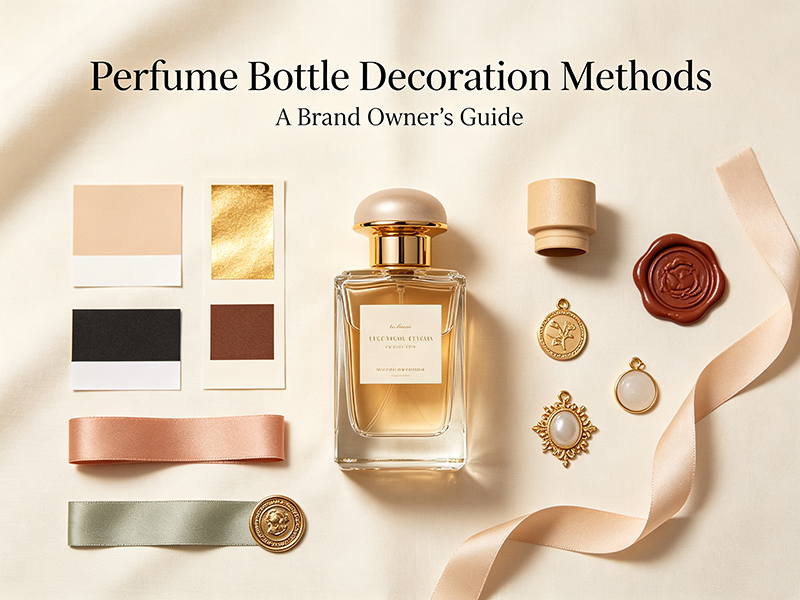
Quality-Control Tests for Decorated Perfume Bottles
Testing should be selected according to the finish, substrate, formula, distribution channel, and buyer requirements. Not every project needs every test, but every project needs defined acceptance criteria.
Visual Inspection
Inspect under agreed lighting and background conditions. Criteria may include:
- Color, gloss, opacity, and gradient position
- Coverage and uniformity
- Dust, fibers, pinholes, bubbles, runs, or orange peel
- Print position, rotation, registration, and edge sharpness
- Foil completeness and reflectivity
- Decal seams, wrinkles, or distortion
- Scratches, scuffs, fingerprints, or contamination
Adhesion Testing
Use an agreed tape, crosshatch, or other adhesion method appropriate to the coating or ink. The test procedure, conditioning time, tape or tool, number of cuts or repetitions, and acceptance result should be defined. “Good adhesion” is not measurable enough.
Abrasion and Rub Resistance
Simulate contact during assembly, packing, transport, retail handling, and consumer use. The test may involve dry rubbing, weighted rubbing, or contact with packing material, depending on the risk.
Chemical and Fragrance-Contact Resistance
Perfume, alcohol, oils, cleaning agents, hand creams, or other substances may contact the decoration during filling or use. Test the actual or technically representative materials under conditions agreed with the brand and filler. Do not assume that an external coating is protected from all formula contact.
Temperature and Humidity Exposure
Relevant projects may require checking color, adhesion, labels, or applied elements after controlled temperature or humidity exposure. Test conditions should reflect realistic transportation, storage, or buyer standards.
Assembly and Packing Tests
Check whether crimping, capping, inserting, and carton contact scratch or compress the finish. Verify that bags, dividers, trays, and box inserts do not transfer marks or create abrasion.
Sampling Plan and Defect Classification
Define critical, major, and minor defects. A sharp glass chip is not equivalent to a small cosmetic mark in a low-visibility area. Agree on the sampling plan or AQL approach where appropriate and reserve the right to inspect before shipment.
Common Decoration Defects and Likely Causes
The table below helps brand owners describe problems more precisely. It does not replace a technical root-cause investigation.
| 目に見える問題 | Possible areas to investigate |
|---|---|
| Uneven spray color | Application pattern, viscosity, film thickness, bottle position, curing |
| Runs or pooling | Excess material, geometry, application speed, flash time |
| Dust or fibers | Cleaning, booth environment, handling, packing area |
| Poor adhesion | Surface contamination, pretreatment, incompatible layers, insufficient cure |
| Print pinholes or missing ink | Surface condition, screen, ink transfer, contamination |
| Blurred print edges | Artwork, screen condition, ink control, bottle movement |
| Multicolor misregistration | Fixture position, screen alignment, bottle tolerance, process control |
| Incomplete hot stamping | Curvature, pressure, temperature, dwell, foil compatibility |
| Scratches after packing | Insufficient cure, surface sensitivity, bag or divider contact, movement in carton |
| Label edge lifting | Surface energy, coating compatibility, curvature, adhesive, application pressure |
| Metallic color inconsistency | Base surface, layer thickness, process batch, viewing angle, topcoat |
When a defect appears, record bottle batch, decoration batch, location, frequency, photographs, sample size, and packing condition. A precise problem statement helps the supplier separate an isolated handling issue from a systemic production problem.
Packing Decorated Bottles to Protect the Finish
Decoration is not complete when the process leaves the production line. The surface must survive inspection, packing, shipping, unpacking, filling, and retail distribution.
Protective methods may include:
- 個別の袋またはスリーブ
- 柔らかいインターリービング材
- 成形トレイ
- Dividers that prevent bottle-to-bottle contact
- Dedicated protection for corners, shoulders, or heavy bases
- Controlled orientation in cartons
- Clean gloves during handling
- Suitable carton strength and pallet pattern
The correct solution depends on the finish. A high-gloss black coating can reveal fine scratches more easily than clear glass. Metallized surfaces may show fingerprints. Raised printing can rub against a tight insert. Soft-touch surfaces may attract dust or mark from certain films.
Approve the packing configuration with the decorated bottle, not with undecorated glass. If bottles will be shipped to a separate filler, communicate unpacking and handling instructions so the decoration is not damaged after supplier release.
Decoration Strategies for Different Fragrance Brands
The following examples show how commercial context changes the best process choice.
Scenario A: Minimalist Niche Fragrance
The brand uses one stock rectangular bottle across three fragrances and wants a restrained, architectural identity.
Practical route: Clear glass or controlled frosting, one-color screen printing, and a shared cap finish.
This keeps the brand system consistent and reduces the need for three complex sprayed colors. Fragrance differentiation can come from the box, a small label detail, or subtle print changes.
Scenario B: Romantic Floral Collection
The brand wants three related fragrances with soft color identities and gift appeal.
Practical route: Translucent gradient spraying in three approved colors, one shared printed logo, and a coordinated metallic accent.
The main commercial issue is that each sprayed color may carry its own minimum and approval sample. The brand should validate whether the projected sales justify three color inventories.
Scenario C: Bold Oud or Evening Fragrance
The brand wants high contrast, low transparency, and a strong shelf object.
Practical route: Opaque dark coating with a limited hot-stamped logo, or partial metallization with a controlled window.
The brand should pay particular attention to scratches, fingerprints, metallic color coordination, and protective packing.
Scenario D: Illustrative Limited Edition
The brand needs detailed artwork that changes by release.
Practical route: UV digital printing or a decal system after confirming equipment, adhesion, geometry, quantity, and intended effect.
The artwork should be tested on the actual bottle and liquid background. Full-color flexibility does not remove the need for durability and registration standards.
Scenario E: Natural or Apothecary Positioning
The brand wants tactile materiality and a less industrial visual language.
Practical route: Amber or clear glass, frosting where appropriate, a carefully specified paper or film label, restrained printing, and a compatible wood-look or muted cap.
Natural visual language should not be confused with automatic environmental performance. Material count, adhesives, coating chemistry, pack weight, and separation should be assessed separately.
Scenario F: Growing Brand Upgrading a Stock Bottle
The brand has proven sales but is not ready for custom glass.
Practical route: Retain the reliable stock bottle and pump, then invest in one high-recognition touchpoint such as a signature sprayed color, custom plaque, or proprietary cap finish.
This concentrates cash on visible differentiation while preserving tested bottle and closure geometry.
Sustainability Questions for Bottle Decoration
Sustainability claims should be specific to the complete process and supported by relevant data. A decoration is not automatically sustainable because it uses less material than another visible option, and a water-based coating is not automatically lower impact in every production context.
Useful questions include:
- Does the decoration interfere with glass sorting or recycling in the target market?
- How much of the bottle surface is covered?
- Can labels or applied elements be separated?
- What primers, inks, coatings, foils, adhesives, and topcoats are used?
- What curing energy and waste controls apply?
- Does the finish increase rejection rates?
- Can the bottle be lightweighted without compromising performance?
- Can one decorated bottle platform support multiple reorders and reduce obsolete tooling?
- Is refill or reuse actually supported by the complete bottle, pump, closure, and consumer system?
Request supplier documentation for any environmental claim the brand intends to use publicly. Avoid broad terms such as “eco-friendly” without a defined basis.
Questions to Ask a Perfume Bottle Decoration Supplier
Before approving the process, ask:
- Which decoration method best produces the intended visual effect on this bottle?
- What area of the bottle can be decorated reliably?
- What design details need to change for production?
- Is the process performed internally or by a qualified partner?
- What is the MOQ per color, artwork, or setup?
- Which fixtures, screens, dies, masks, or plates are required?
- What is the sample sequence and cost?
- Will the sample use production-equivalent materials and processes?
- How will color be approved and controlled in future batches?
- What variation should the brand expect in gloss, opacity, gradient, or metallic tone?
- How are artwork position and registration controlled?
- Which adhesion, abrasion, chemical, or environmental tests are recommended?
- Can the decorated surface accept the proposed foil, printing, label, or plaque?
- Will cap assembly, crimping, or box insertion contact the finish?
- What are the common defects for this process?
- What inspection standards and sampling plan will be used?
- How will nonconforming bottles be segregated and handled?
- What protective packing is included?
- What is the production time after the golden sample is approved?
- Which changes would increase cost, MOQ, rejection risk, or lead time most?
A capable supplier should explain limitations before mass production. A quick “yes” to every design request is less valuable than a clear account of tradeoffs and a technically sound alternative.
Common Mistakes Brand Owners Should Avoid
Selecting a Process From a Rendering
A rendering communicates appearance but does not prove color, touch, opacity, reflectivity, adhesion, or manufacturability.
Approving Color on a Screen Only
Digital displays vary, and transparent glass changes color perception. Approve the real finish on the real bottle.
Ignoring Bottle Geometry
Artwork designed on a flat template may distort, lose contact, or become unreadable on the actual curve.
Adding Too Many Decoration Layers
Each layer adds cost, tolerance, curing, handling, and inspection dependencies. Use only processes that strengthen the visual hierarchy.
Comparing Unequal Quotations
Confirm whether primer, base coat, topcoat, setup, tests, rejects, individual bags, and protective packing are included.
Forgetting That MOQ Applies per Color or SKU
One total bottle quantity can become several smaller decoration runs with separate minimums and setups.
Finalizing the Box Too Early
The decorated bottle and completed cap assembly determine surface sensitivity, dimensions, insert clearance, and packing contact.
Using “Gold” as a Complete Specification
Gold ink, foil, metallization, electroplating, anodized aluminum, and box foil can differ visibly. Approve them together.
Accepting Vague Quality Standards
Terms such as “no scratches” or “same as sample” should be supported by viewing conditions, defect zones, tolerances, and test methods.
Skipping Production Inspection
A successful prototype does not guarantee a consistent batch. Inspect mass production against the golden sample and written standard.
Final Checklist for Choosing Perfume Bottle Decoration
Before mass production, confirm that:
- The decoration supports the intended brand position
- The bottle geometry and usable area have been reviewed
- The process is suitable for the artwork detail and number of colors
- Transparency, opacity, gloss, texture, and reflectivity are defined
- Colors are approved on actual glass
- Bottle, liquid, cap, collar, and box have been viewed together
- Component- and color-level MOQs fit the sales plan
- Setup, sampling, testing, packing, and reject assumptions are included in cost
- The process sequence and layer compatibility are confirmed
- Artwork, position, and tolerances are signed
- Adhesion, abrasion, and relevant chemical resistance are approved
- Critical, major, and minor defects are defined
- The golden sample represents production-equivalent materials and processes
- Protective packing has been tested with the finished surface
- Reorder color-control standards are retained
- The production schedule begins only after required approvals are complete
If these points are documented, decoration becomes a controlled brand asset rather than a late-stage cosmetic decision.
まとめ
The most effective 香水瓶の装飾方法 are those that translate brand positioning into a finish that can be produced consistently, protected through the supply chain, and reordered at a commercially sustainable quantity.
Spray coating offers broad color transformation. Screen printing delivers direct and precise branding. Hot stamping creates metallic focus. Decals and digital printing support complex artwork. Frosting changes light and touch. Metallization produces dramatic reflectivity. Labels, plaques, pad printing, and molded details solve different design problems. None is universally more premium than the others.
Brand owners should select the process only after reviewing bottle geometry, artwork, liquid visibility, tactile requirements, durability, MOQ, cost, color control, and production risk. A disciplined custom perfume bottle decoration project treats the bottle, pump, collar, cap, decoration, and box as one complete system for sampling and approval.
If you are developing decorated perfume bottles, share the bottle sample or drawing, quantity by SKU, color references, artwork files, cap and pump concept, box design, target market, performance requirements, and launch schedule. An experienced OEM/ODM perfume packaging supplier can help compare practical decoration routes and coordinate the complete pack from glass and surface finishing to components and protective packing.
よくある質問:
1. What are the most common perfume bottle decoration methods?
Common methods include spray coating, silk-screen printing, hot stamping, decal transfer, UV digital printing, frosting or etching, vacuum metallization, pad printing, water-transfer printing, labels, plaques, and molded embossing or debossing. Each method produces a different visual and tactile effect and has different requirements for bottle geometry, artwork, MOQ, durability, sampling, and inspection.
2. Which decoration method is best for a luxury perfume bottle?
No single method automatically creates luxury. A controlled matte coating with a precise logo may feel more premium than several inconsistent effects. Choose the method that fits the brand position, bottle shape, artwork, cap, box, retail price, and expected handling. Strong color control, fitting precision, finish consistency, and coherent material choices are usually more important than the number of processes.
3. Can stock perfume bottles be custom decorated?
Yes. Stock bottles can be transformed through spraying, printing, hot stamping, frosting, metallization, labels, plaques, and coordinated caps and boxes. This route allows a brand to use proven glass tooling while creating a more distinctive identity. The glass silhouette may remain available to other buyers, but the complete visual system can still be recognizable.
4. What is the MOQ for perfume bottle decoration?
MOQ depends on the bottle, process, color, artwork, and production arrangement. At DAXIN, spraying uses a 3,000-piece reference per color, silk printing 1,000 pieces, and electroplating 10,000 pieces. Stock glass bottles use a 3,000-piece reference and custom glass bottles 10,000 pieces. Final MOQs must be confirmed for every SKU, component, and decoration process.
5. Is screen printing or UV printing better for perfume bottles?
Screen printing is often effective for crisp logos, text, and artwork with a limited number of colors. UV digital printing can support detailed multicolor graphics, gradients, and variable artwork. The better option depends on bottle geometry, artwork complexity, color opacity, quantity, adhesion, durability, equipment capability, and cost. Both methods require testing on the actual surface.
6. How can a brand test perfume bottle decoration durability?
Use tests appropriate to the finish and expected use, such as agreed adhesion, abrasion, rub, chemical-contact, temperature, humidity, assembly, and packing tests. Conditions and acceptance criteria should be written before production. Testing should use the actual bottle, coating or ink system, and relevant fragrance or representative contact materials where required.
7. Why does decorated bottle color vary between samples and production?
Color can be affected by glass tone and thickness, coating film thickness, transparency, curing, liquid color, background, lighting, gloss, and viewing angle. Production control also influences variation. Approve color on actual glass, retain a physical master, define acceptable variation and viewing conditions, and use instrumental measurements where appropriate for the finish.
8. How long does perfume bottle decoration production take?
Timing depends on color development, sample approval, bottle availability, number of processes, curing, component coordination, quantity, and season. At DAXIN, normal production is approximately 30–35 days after the necessary details and samples are approved, with high-season production around 40 days. Decoration development, revisions, and sample shipping occur before the mass-production period and should be planned separately.
 English
  Spanish
  French
  German
  Arabic
  Italian
  Dutch
Dutch  Portuguese
  Russian
  Korean
  Japanese