
Reed Diffuser Packaging Ideas: From Inspiration to a Production-Ready Bottle
Search "reed diffuser packaging ideas" and you get pinboards, Etsy listings, and listicles from box printers: pastel palettes, magnetic closures, kraft paper, gift sets. All useful, and almost entirely about one thing. How the product looks when someone opens it.
If you make reed diffusers to sell, looks are one layer of packaging out of three. The other two are where products die quietly: the bottle that tips over in week three, and the purchase order that locks in a cost structure you can't sustain.
One note on the word "diffuser" first. It also names car air-vent clips and HVAC ceiling boxes. This article is about the home reed diffuser: the glass bottle with reeds in scented oil.
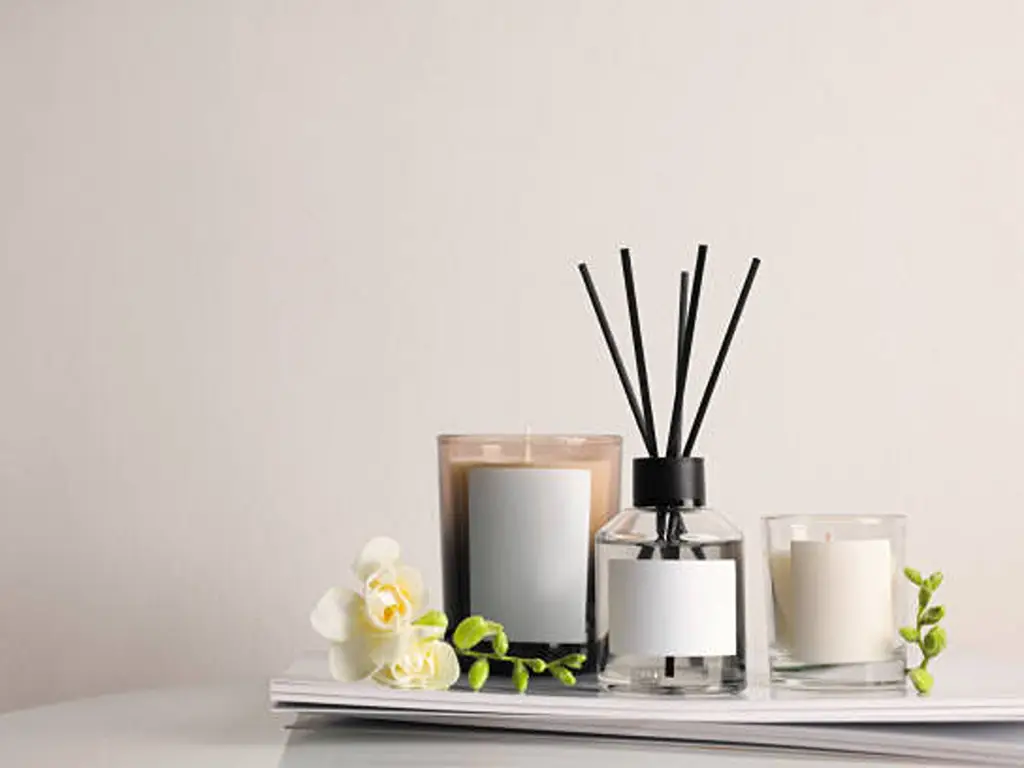
Reed Diffuser Packaging: One Idea List, Three Decisions
Think of reed diffuser packaging as three stacked decisions, made at three different moments in the product's life:
| Layer | The question it answers | Where it fails silently |
|---|---|---|
| Visual identity (shape, finish, label, box) | How expensive does it look? | Nowhere: looks can't save the other two layers |
| Vessel engineering (capacity, neck, balance, seals, material) | Will it still smell right, upright and leak-free, in week eight? | Fails: tipping, weeping oil, fading scent |
| Sourcing (stock vs custom, MOQ, molds, QA) | Can I buy this at my volume, on my timeline? | Fails: margins eaten, seasons missed |
- Visual identity: the bottle silhouette, surface finish, label, and outer box. It decides one thing: what price your product looks like.
- Vessel engineering: capacity, neck opening, weight distribution, seals, material. It decides whether the product still works in week eight.
- Sourcing: stock versus custom, minimums, mold costs, inspection, transit packaging. It decides whether the numbers on your price list are real.
Almost every "ideas" article covers layer one. That's because boxes are what those writers sell, so boxes are what they write about. The failure stories live in the other two layers, and nobody markets those.
The Visual Layer: Bottle Looks, Finishes, and Boxes That Price Your Brand
The design tiers you keep seeing (minimalist, luxury, eco) are not packaging categories. They are price stories assembled from the same parts: a bottle, a closure, a label or print treatment, and a box. You can build all four from one supplier by changing the combination.
| Positioning | Fles | Closure | Box | The finishing that sells it |
|---|---|---|---|---|
| Mass market | Clear or light glass, simple shape | Plain cap or basic cork | Folding carton or sleeve | Silk-screen or label: legibility wins |
| Hedendaags | Frosted or matte-coated glass | Minimal wood or black cap | Soft-touch sleeve or tuck box | Small mark, matte print |
| Premium | Heavier, colored or coated glass | Metal or zamac closure | Rigid or magnetic box | Hot stamping or embossing |
| Luxury | Frosted, plated or handcrafted detail | Wood or specialty cap | Rigid box with insert | Foil or engraving |
The glass carries most of the story. Frosting a clear bottle, spray-coating it a color, or screening your mark onto the body instead of stickering it: this is the finishing vocabulary of home fragrance, and the cheapest way to move a bottle up one price tier. Ask any factory for its finishing menu in writing. The standard list runs from frosting, spray coating, and in-mold coloring to silk-screen and UV printing, hot stamping, and engraving.
Eco positioning deserves one honest sentence. It's a credentials story, not a color story. Glass is recyclable by nature; what you verify is the specific claim: FSC-certified box paper, recycled-content percentage, a refill format that makes the bottle a durable asset. Certificates get checked in the sourcing layer.
And a caution: the visual layer can't rescue the others. A gorgeous bottle that weeps oil by week three collects one-star reviews, with photos of the gorgeous bottle.
The Engineering Layer: Three Bottle Specs That Decide Whether It Lasts Three Months
This is the layer you start caring about the moment you fill your first bottle. Also the moment your first customer sends you a photo of a stained sideboard.
Geometry First: Capacity, Neck, and Center of Gravity
Capacity sets the product's life. Oil volume, evaporation surface, and reed bundle together decide how many weeks the product throws scent, and when the customer needs a refill. Work backward from the life you want to promise. Don't copy a competitor's bottle and assume their life comes with it.
The neck opening sizes your reed bundle. More sticks means more evaporation and stronger throw. But a bundle too fat for the neck wedges, and one too thin looks sparse and dries fast. There's no universal chart, because reed diameters vary by material. The discipline: have the supplier trial-fit uw reeds in uw neck before you commit, and test the exact bundle you'll ship.
Weight distribution decides whether it falls over. This is the failure that ends most small-brand diffusers:
One candle-making regular put the fix in a sentence when advising a beginner: get a bottle deep enough to hold the oil and keep the reeds from tipping it. A wide, heavy base and a neck that centers the bundle are engineering, not style.
Glass, Ceramic, and Plastic: What the Oil Thinks of Your Bottle
Fragrance oil is a solvent blend that sits in this bottle for months. Material compatibility is therefore a durability question, not an aesthetic one.
- Glass is the category default. It's chemically inert against oils and alcohol, it doesn't absorb scent between fills, and it reads premium. The wholesale market is organized around it, which means the deepest stock selection and the most developed supply chain.
- Ceramic looks expensive, but the glaze is the product. A porous glaze can weep oil through the body, so ask how it's tested for oil resistance before committing.
- Plastic is light and cheap, but compatibility depends on the resin against uw base. No compatibility test for your formulation, no order: solvent can craze the wrong polymer over weeks.
- Provenance is now a marketing position. Some suppliers advertise "recycled European glass, no Chinese glass." Treat it as a claim to verify in the sourcing layer, not as a quality verdict.
Closures and the Two Faces of a Leak
Every reed diffuser leaks twice, in two ways, needing two fixes. The shipping leak, bottles on their side in transit with caps working loose, is a quality-control problem: filled, capped bottles must pass a seal test, and the transit pack must keep them upright. The creeping leak, oil wicking down the reeds and over the rim onto the surface below (hence the internet's "what do you put under a reed diffuser?"), is a design problem. A collar, tray, or coaster belongs in your packaging plan from the start, not after the first complaint. The closure does double duty: cork or wood seals for travel, a metal collar dresses the neck. Choose it for both jobs.
Container Options and Their Boundaries
| Container | Works for | Boundary (where it fails) | Verify before committing |
|---|---|---|---|
| Narrow-neck bottle (perfume-style) | Small reed bundles, elegant gifting | Neck limits the bundle; small volume shortens life | Trial-fit your actual reeds in the actual neck |
| Standard diffuser bottle | The mainstream choice; balanced throw and life | Only as good as neck fit, seal, and stability | Confirm neck, cap seal, and tip stability with filled samples |
| Wide-mouth jar | Big bundles, high throw for large rooms | Bigger evaporation surface burns oil faster | Measure real consumption before promising product life |
| Repurposed bottle (DIY) | Personal, zero-waste home use | No quality control on seal or stability | Move to a purpose-made vessel if you sell |
The Sourcing Layer: Stock Bottles, Custom Finishes, or a Custom Mold
Once the engineering is settled, the question becomes mechanical: what can you actually order, at what minimum, in what time, for what money?
The Four Rungs — and What Each Purchase Order Decides
| Rung | What it means | Order size | What it's for |
|---|---|---|---|
| Stock bottles | Existing designs; molds already paid | From ~1,000 units | Market tests and first runs |
| Light customization | Stock bottle + silk-screen or label | Near the stock minimum | A branded look without a new mold |
| Custom finishing | Stock or new bottle + decorative process (frosting, coating) | From ~5,000 units | A series with a distinctive surface |
| Custom mold | New shape from drawing to production | From ~10,000 units | A proprietary silhouette that becomes your moat |
Each rung buys a different thing. Stock buys speed and cheap testing. Light customization buys a branded look at near-stock risk. Custom finishing buys a surface nobody else in the catalog has. A custom mold buys an exclusive shape, plus the obligation to sell enough of it.
The mold rung has its own economics. A bottle mold is a one-time tooling fee, typically $1,000–$1,100 for a simple bottle at a Chinese glass factory, with closures and pumps tooled separately at higher cost, and the mold stays yours. Many factories rebate the fee once cumulative volume crosses a threshold. Lead times stack as you climb: stock ships in days-to-weeks, decoration adds production time, a new mold adds tooling time (commonly about ten days) before the 30–35-day production run starts. If you're chasing a season, the ladder tells you which rung is still reachable. Usually not the top one.
Write the One-Page Spec Sheet Before You Design a Box
Order it the other way and you pay twice. Write the vessel spec sheet first, let the box conform to it. Boxes are built around a bottle's final dimensions: the insert that holds the neck, the tray that stops it shifting. Bottles change during development, and that's normal. Boxes are where change gets expensive.
The One-Page Reed Diffuser Spec Sheet
- Capacity and promised product life
- Oil base and fragrance load (for compatibility tests)
- Reed material, count, length, diameter
- Neck opening that fits the bundle (trial-fitted)
- Closure: material, travel seal, collar
- Surface finish and print treatment
- Label format: direct print vs applied
- Box dimensions, structure, insert
- Transit packaging spec
- Certificates and market compliance
Shipping: The Packaging Layer You Never See
Three specifics separate factories that ship glass well from those that ship it hopefully. Individual cells, not blankets: every bottle in its own foam cell in a carton, not foam-wrapped together. Carton strength is a spec: export-grade double-wall is the norm for glass, while some quote single-wall and let your breakage rate pay for it. And leak and seal testing before packing, with filled, capped bottles tipped and rested, is a QC action you can ask any supplier to demonstrate.
Calendar math matters too. From a Chinese glass factory, production typically runs 30–35 days, and ocean transit to North America or Europe runs another 30–35 days, less to Southeast Asia. Count back from launch; the ladder tells you which rung is honest.
Verifying a Bottle Supplier Before You Commit
Every supplier page says the same thing: quality, experience, trust. Verification is in what they can show you.
Ask the engineering questions. Bring the spec sheet. Can they trial-fit your reed bundle, demonstrate a filled-bottle seal test, state capacity and neck options precisely? A supplier who can't hold the engineering conversation is wrong at any price, because the engineering is where your product lives.
Look at verifiable process, not adjectives. Which stages are inspected, and on what schedule? Is there instrumented checking of dimensions, weight, capacity, and wall thickness, or just eyeballing? Which third-party audits and certificates do they hold, and will they show you?
Prove it small first. Order stock or lightly customized bottles, run your real oil and reeds through them, ship a few to friends, then climb rungs with data. It's the cheapest mold you'll ever pay for.
For a concrete example of what clearing this checklist looks like: our reed diffuser program at DAXIN Glass pulls from 5,000+ existing molds, so you can often skip tooling and start from our in-stock bottle catalog at stock minimums around 1,000 units. The ladder is explicit from there: light customization near stock minimums; decorative processes such as frosting, spray coating, silk-screen, hot stamping, and engraving from about 5,000 units; custom molds from about 10,000, with a one-time bottle mold fee around $1,000–$1,100 rebated once volume crosses the threshold. Design drafts return in about three days, selected molds in about ten, production runs 30–35 days. We inspect on a fixed cadence during manufacturing and check dimensions, weight, capacity, and wall thickness with instruments, under ISO 9001 and third-party audits, and we'll show you the process, not just describe it. For custom glass bottle options, start with the spec sheet and we'll tell you honestly which rung your order belongs on.

Why the Box Comes Last: Unit Economics and the Scaling Path
Where the Margin Actually Goes
Run the three layers through a cost lens and the budget order falls out by itself.
The visual layer is commoditized. Boxes and print are sold by hundreds of suppliers competing on price, so money there buys completion, not advantage. The vessel layer hides quality cost: a tipping, weeping product loses not just that sale but the review score the next ten depended on. The sourcing layer locks structural cost: your rung sets unit cost, minimum cash outlay, and your ability to chase a season.
So the order writes itself: spend first on layer two (correct specs, tested samples), then layer three (the right rung), and last on layer one (completion). The classic small-brand loss is the reverse: a gorgeous box built around a bottle that fails testing, then a panicked switch that voids the box. Boxes are the most replaceable part of the system. Bottles are not.
The Category's Elevator
The market is growing steadily, which is why shelf space keeps appearing. Analysts put the reed diffuser market at roughly $0.84 billion in 2024 heading to $1.53 billion by 2034, a 6.2% CAGR (Market.us, 2025–2034). A second estimate frames it as $1.04 billion in 2026 reaching $1.82 billion by 2035 at 6.9% (Business Research Insights, 2026–2035). The definitions differ; the direction doesn't.
6.2%
CAGR, market estimate 2024–2034
$0.84B–$1.53B
Global reed diffuser market value, 2024–2034
Alt. estimate: $1.04B–$1.82B at 6.9% CAGR (2026–2035, Business Research Insights). Sources: Market.us; Business Research Insights.
That growth favors brands with a structural answer, and the ladder gives you one: launch on stock, build the brand with light customization, differentiate a series with custom finishing, let a proprietary mold carry the proven line. Climbing out of order is how brands lose money. Not by growing too slowly, but by paying for rung four while still proving rung one.
One structural note. A refill format, selling oil refills into a durable bottle, changes the economics above. The bottle becomes an asset the customer keeps, the refill the repeat purchase, and glass a feature instead of a cost. Same packaging system; the spec sheet, ladder, and checklist all still apply.
Closer
If your reed diffuser packaging ideas are becoming a purchase order, start at the bottom of the ladder, not the top of the idea board: lock the vessel specs, test them with real oil and reeds, then let the box catch up. Bring the one-page spec sheet to the conversation. That's where a product that lasts three months gets made.
Send your bottle spec. Get an honest sourcing answer.
Stock bottles start at 1,000 units, decoration at 5,000, and custom molds at 10,000. Send your capacity and launch window for a quote and sampling plan.
Send your bottle specReferenties
- Market.us. "Reed Diffuser Market Size & Forecast." 2024–2034. https://market.us/report/reed-diffuser-market/
- Business Research Insights. "Reed Diffusers Market Report." 2026–2035. https://www.businessresearchinsights.com/market-reports/reed-diffusers-market-120053
- r/candlemaking. "DIY Reed Diffuser Recipe Recommendations." Reddit, 2024. https://www.reddit.com/r/candlemaking/comments/1be76dp/diy_reed_diffuser_recipe_recommendations/
- DAXIN Glass. "In-Stock Bottle Catalog." 2026. https://www.daxinglassbottles.com/in-stock/
- DAXIN Glass. "Custom Glass Bottles & Jars." 2026. https://www.daxinglassbottles.com/custom-glass-bottles-jars/
- DAXIN Glass. "Quality Management." 2026. https://www.daxinglassbottles.com/quality-management/
- DAXIN Glass. "Homepage." 2026. https://www.daxinglassbottles.com/
 English
  Spanish
  French
  German
  Arabic
  Italian
  Dutch
Dutch