
Cosmetic Packaging Design Guide: Materials, MOQ, and Decoration
Cosmetic Packaging Design Is Two Jobs, Not One
Browse "cosmetic packaging design" anywhere and you will see the same thing: gorgeous renders, shelf scenes, and unboxing shots. What you are looking at is one half of the craft. Packaging design is actually two jobs that share a single phrase. The visible job is graphic design: color, typography, layout, pattern, and the style language that makes a brand recognizable. The invisible job is everything the mood board never shows you: the container itself (its format, material, and closure) and the manufacturing decisions that get it made (decoration processes, order minimums, tooling, and quality control). Behance and Pinterest deliver the first job brilliantly. Nobody on those feeds tells you about the second one, which is where most small brands spend their money and lose it.
The visible job
The hidden job
Style languages are where idea-collectors start, so here is the short map: luxury reads through material weight and metallic details; minimal through negative space, restraint, and typography discipline; eco through natural cues and a recycling story that has to be true; playful through bold color, unexpected shapes, and shareability. Each of these is eventually delivered by structural and process decisions, not by a palette. Matte luxury finishes need the right coating and basecoat. Playful silhouettes need tooling or a stock shape that comes close.
The anchor for this article: do not pick the prettiest package. Pick the one you can actually get made. The way to do that is to walk down the stack: from visuals to structure, then to the supply route your order size allows, then to the decorations that will survive real shelves and real test labs. Each deeper layer is the acceptance test for the layer above it.
Pick the Container Before the Label: Formats and Materials That Fit Your Formula
There is one ordering rule that saves more money than any design trick: decide the container before the label. Swapping artwork costs you a couple of weeks and a design fee. Swapping the container means a new development cycle, new minimums, and often a new supplier. The formula you fill dictates the container more than any aesthetic does: viscosity, sensitivity to light and oxygen, and how the customer doses the product.
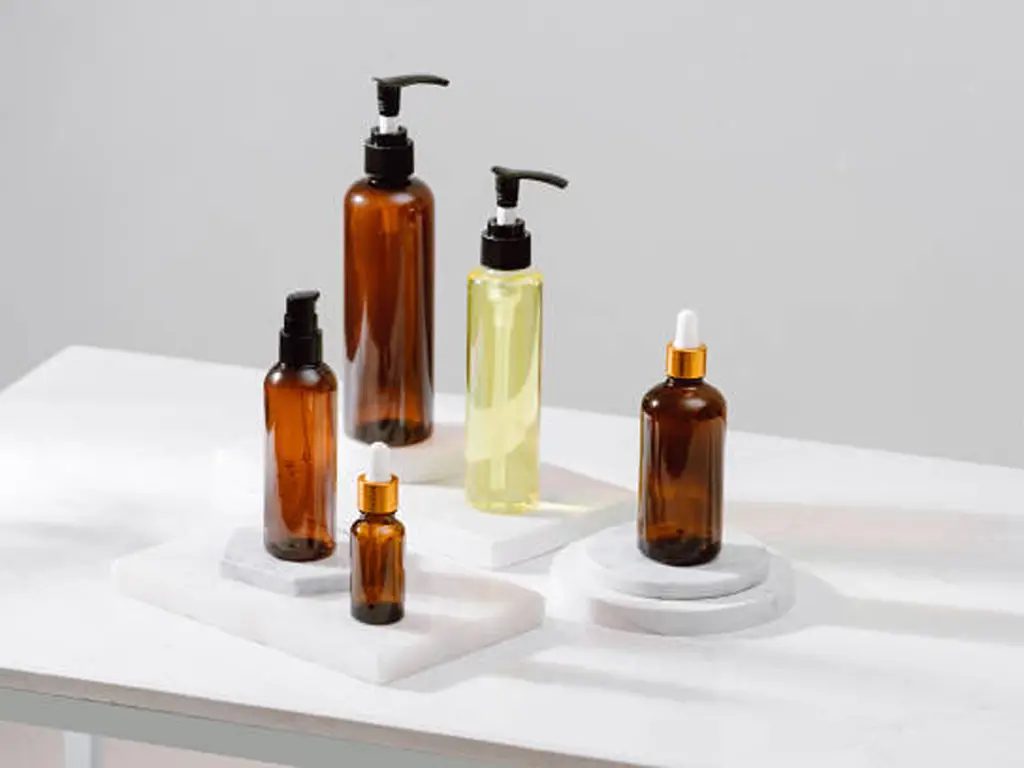
Which container format fits which formula
| Formula | Format that fits | What breaks the match |
|---|---|---|
| Thin watery serums and oils | Dropper bottle or pump bottle | A wide mouth that exposes the batch to air |
| Light lotions and milks | Pump bottle | Jars that force finger-dipping and contamination |
| Creams and thick moisturizers | Pump bottle or jar depending on preservative system and ritual | A pump that cannot draw a thick product |
| Balms butters and masks | Wide-mouth jar | Narrow necks that make scooping impossible |
| Alcohol-heavy formulas and fragrance | Tightly sealed glass with screw or spray closure | Soft plastics that permeate and let scent escape |
| Light- and oxygen-sensitive actives | Tinted or opaque glass with a sealed system | Clear wide containers that accelerate oxidation |
| Travel and sampling | Mini formats in the same visual family | A single full-size-only offer that stalls trial |
On material, skip the cliché debate and keep the two facts that decide things. Glass is chemically inert and dense. It will not react with alcohol, fragrance, or preservatives, and it holds scent and keeps oxygen out better than any plastic. It also lets customers see the product, and seeing the texture is trust. The costs are freight weight and breakage, both manageable. Plastics are lighter and cheaper, but they permeate gas and vapor at meaningful rates, and their recycling story downgrades each cycle rather than staying intact. One detail earns you credibility with any supplier: glass clarity is governed by iron content, so "crystal-clear glass" is a specification, not an adjective. When you ask for low-iron glass, ask for the iron-content and light-transmittance data behind it.
Two reminders while you are here. First, the closure is part of the format: pumps, droppers, and caps are engineered with the bottle, so choose them together instead of hunting for a cap that fits after the glass is done. Second, keep sustainability claims honest at your scale: refill systems and mono-material engineering mostly exist at volumes most small brands cannot reach yet. Glass needs no such caveat: it is infinitely recyclable without losing quality and does not age in the container, so it is a safe foundation for the eco part of your story.
Your Order Size Picks Your Route: Stock, Decorated Stock, or Custom Mold
Here is the sentence that most cosmetic packaging design content leaves out: every design idea lands on one of three shelves, and the number that decides which shelf is available to you is your order quantity. You can polish the mood board as long as you like; until you know how many units you can order, you cannot choose a route.
Stock bottles: the cheapest way to test a design
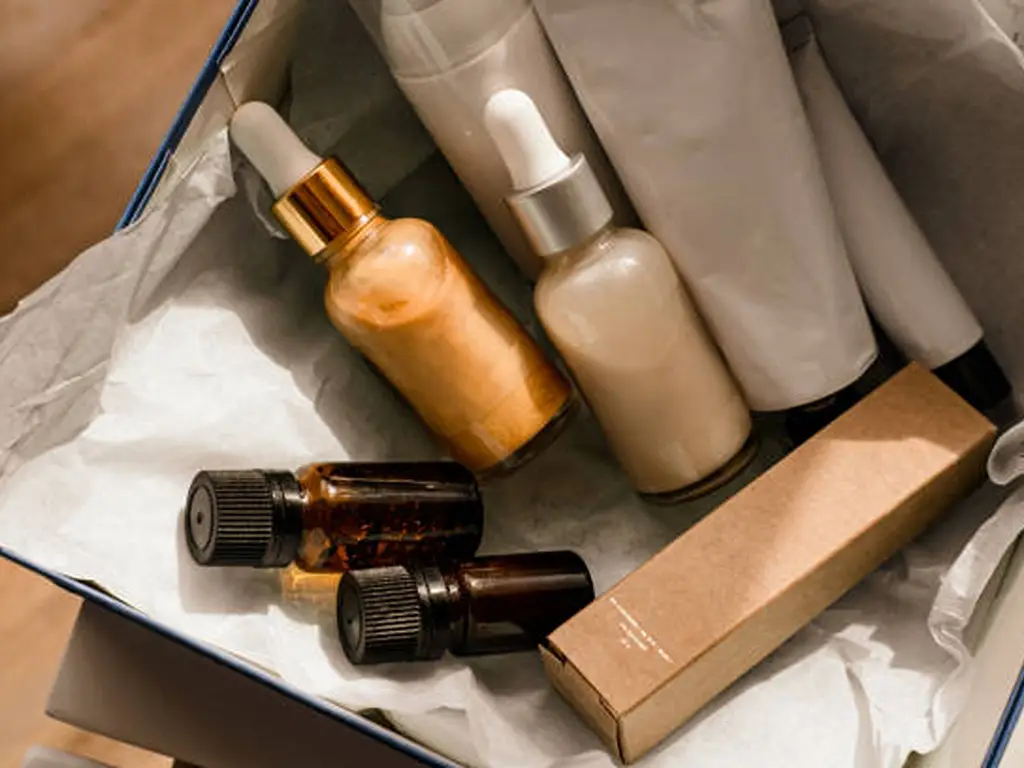
Every serious glassworks runs a catalog of existing shapes: bottles, jars, and pump bottles included. Stock routes start around a 1,000-unit order with a direct factory, carry no tooling cost, and ship fastest; typical ocean transit runs four to five weeks to North America and Europe. The trade-off is that the shape is shared. But shared is not fatal: the decoration on the glass and the label on the box do most of the identity work anyway. Stock is where you test whether the product sells before you commit capital to its container. If you plan wholesale, it is also how you afford the three-to-five-SKU line that stockists expect rather than a single hero product.
Decorated stock: where most small brands should live
The second shelf adds decoration to a stock container: silk-screen printing, hot stamping, labels, or spray coating. This is where the real minimums show up. Here is the expectation gap every founder hits: decorating small bottles is priced at around 5,000 units and up, with 10,000 preferred, according to sourcing veterans (Glass Bottle Sourcing / Label Printing, r/smallbusiness, 2024). If your brief says "500 units of my logo silk-screened on a custom bottle," there is no factory shelf for that; the realistic low-volume combination is stock bottles plus labels, which have the lowest minimums and the lowest texture ceiling. Within decoration, the ladder runs from single-color silk-screen (cheapest) to multi-color and hot stamping (mid) to spray coating and plating (most expensive, most premium).
Custom molds: what tooling costs and when it pays back
The third shelf is a mold cut to your shape: total design freedom and the only way to own a silhouette. It is also a different financial animal. A custom shape needs a two-part steel tool, and tooling is priced accordingly. One Australian cosmetics startup asking for a bespoke 100 ml bottle was quoted around $10,000 (Looking for Custom Cosmetic Glass Bottle Manufacturer, r/manufacturing, 2024). Mold costs are paid once, and some factories rebate the fee once your cumulative volume passes a threshold; ask, because it changes the math. Order quantities sit in the ten-thousand range, and lead times are the longest of the three routes: roughly three weeks from concept to sample, then four to six weeks of production before shipping.
A brief that asks for 500–1,000 units of a bespoke shape with a silk-screened logo is asking for two shelves at once. A custom shape requires tooling and ten-thousand-class runs; 500–1,000 units works on one shelf only: stock bottles with labels. Match the route to the quantity before you match the quantity to the dream.
When do you move up a shelf? When the evidence arrives: a SKU that sells through at decorated-stock scale, a wholesale line that needs to look like a line, or a moment when the shared shape itself is the thing capping your price. Until one of those is true, the mold fee is expansion capital, not launch capital. Founders who spent it before validation are the ones who describe packaging as the thing that sank their brand.
The three-shelf map, with the numbers that matter
| Shelf | Order scale | Tooling | Ontwerpvrijheid | Lead time | Move up when |
|---|---|---|---|---|---|
| Stock | From about 1,000 units | None | Shared shape, your decoration and label | Fastest, ocean transit 4–5 weeks | You want a logo and brand colors on the glass |
| Decorated stock | Decorating minimums about 5,000, 10,000 comfortable | None | Silk-screen, hot stamping, labels, spray coating | Mid | The shared shape caps your price point or a wholesale line needs range |
| Custom mold | Around 10,000 units | One-time fee, sometimes rebated at volume | Total freedom including silhouette | Longest, tooling plus production | The SKU has proven demand and the shape is the brand asset |
Three numbers will stay with you: 1,000: the stock shelf starts here. 5,000: decorating minimums. 10,000: the custom-mold floor. Every time a supplier quotes you, check which shelf the number belongs to, and ask for the three tiers separately instead of accepting one vague "MOQ."
Decorations That Survive the Shelf — and the Test Lab
Galleries judge decoration by how it photographs. Your customers will judge it by how it looks after six months of use, and your importer by whether it passes the test lab. Those are different standards, and the gap between them is where decorated packaging fails.
The four decoration families
Every finish on a cosmetic container belongs to one of four families. Printing (silk-screen, pad printing, decals, and fired-on enamel) carries logos and artwork; single-color silk-screen is the workhorse, and baked-on enamel fuses pigment into the glass for the most durable marks. Metallics (hot stamping and plating) add the premium gleam that says luxury and gift box. Coverage (spray lacquer in water- or solvent-borne grades, in solid colors, gradients, pearls, and mattes) recolors the whole bottle, with matte finishes needing a basecoat to grip. Frosting (acid-etched or sandblasted glass) turns the surface matte and translucent and is often the base layer beneath a contrasting bright mark. Labels are the fifth option in practice: the lowest minimums, the most flexible for small batches, and the lowest texture ceiling.
The three questions galleries never ask
First, durability against your own formula. Alcohol and essential oils are solvents, and they will attack a finish that was never tested against them. The industry shorthand is the alcohol-wipe rub test: perfume-grade decorations are expected to survive hundreds of wipe cycles, and a 500-cycle spec is a common request. Second, adhesion and compliance. Cross-hatch tape testing at 4B or better on the standard adhesion scale is the usual acceptance line, and if you export to Europe, VOC rules shape the choice: the EU's Decopaint Directive caps water-borne decorative coatings at 150 g/l (Directive 2004/42/EC, 2004), with ceilings tightening in later phases. That is why water-borne lacquers are the default for EU-bound goods. But water-borne is not automatically alcohol-resistant: ask for the alcohol-resistant grade, not just "water-based." Third, batch consistency. Gradients, large spray areas, and metallics drift in color between production runs; the fix is a locked-process protocol where a sealed master sample, captured parameters, and first-article sign-off come before mass production.
Decoration families: what each gives and what each asks
| Family | Voorbeelden | Gives you | Asks of you |
|---|---|---|---|
| Afdrukken | Silk-screen, pad, decal, fired-on enamel | Logos and artwork, cheapest durable marks | A minimum around the decorated-stock shelf |
| Metallics | Hot stamping, plating | Premium gleam and gift-box status | Higher cost and careful handling specs |
| Coverage | Spray lacquer water or solvent-borne, gradients, pearls, mattes | Total color control and tactile finish | Basecoat for matte, VOC compliance for export |
| Glazuur | Acid-etched or sandblasted | Matte translucency as a base layer | Changes how later printing grips |
| Etiketten | Pressure-sensitive | Lowest minimums and fastest iteration | The lowest texture ceiling |
Where decorated packaging actually fails
The failure modes are specific, so the checks should be too. Matte finishes without a basecoat lose adhesion. Gradients drift between batches more than solid colors. Frosting changes how subsequent printing and hot stamping grip the surface. Labels lift on curved or very slim bottles. And none of this shows up in a render. The practical response is a short list of demands you make of any decorator: alcohol-wipe rub data for fragrance-adjacent formulas, cross-hatch adhesion results, VOC documentation for EU-bound product, samples pulled from different production dates, and a first-article sign-off before the batch runs. Also ask whether neck and mouth finishing is included in the piece price. Ground, polished necks that fill cleanly and seat closures properly should not be an afterthought billed as an extra.
How to Vet a Packaging Supplier Before You Send Money
Everything so far fails in the same place: not on the mood board, but in the gap between what a supplier advertises and what the order form says. Founders who have sourced before name it as the first hidden cost: minimums that change when your decoration is added, tooling quotes that arrive after you have chosen the bottle, and MOQs that never quite match what the catalog promised.
So run the vetting as a written exercise, and ask for the answers in the same format you will sign. Five questions cover most of the risk. One: MOQs stated separately, with stock, decorating, and custom-mold tiers in writing. Two: the tooling quote itemized, including what it covers and the volume at which it is rebated. Three: the sample loop: days from approved design to sample, revision rounds included, and the production lead time after approval. Four: the decoration evidence from the previous section: rub tests, adhesion, VOC data, and batch samples, not promises. Five: quality and after-sales terms: inspection frequency during production, sampling ratios, the defect threshold that triggers 100% inspection, and what happens to breakage in transit.
That standard is measurable, and a supplier worth your time can answer all five in a single email. At Daxin Glass Bottles, we publish our answers instead of waiting for the question. Our in-stock range starts at 1,000 units for stock bottles, with decorating minimums and custom-mold programs quoted separately on the product pages, the same three-tier structure laid out above, so you can see which path fits before you call. We work from a pool of more than 5,000 existing molds, which means many "custom" briefs never need new tooling at all. On the evidence side, our quality routine runs inspections every five minutes during production, checks at the annealing exit, and sampling before shipment under ISO 9001, ISO 14001 and ISO 45001 systems, with SGS, TUV, Intertek and ETL reports available, and we list our decorating and finishing options and our quality management pages in full, because the checklist above is exactly how we prefer to be measured.
The budget rhythm follows the shelf logic: your first order is stock plus light decoration plus design fees. Tooling is what you buy after a SKU has proven itself, not before.
Whatever your order size, the first step is the same: ask the five questions in writing. Talk to us about your first order; we answer the same way we expect you to read us.
Put your first packaging brief on the right shelf
Share your formula, target formats, and realistic first volumes. We will walk you through stock, decorated, and custom-mold pricing, answer the five questions in writing, and send samples before you commit to a minimum.
Send your packaging briefReferenties
- European Union. "Directive 2004/42/EC on the limitation of emissions of volatile organic compounds (Decopaint Directive)." 2004. https://www.legislation.gov.uk/eudr/2004/42
- r/manufacturing. "Looking for Custom Cosmetic Glass Bottle Manufacturer." 2024. https://www.reddit.com/r/manufacturing/comments/1h6cj0q/looking_for_custom_cosmetic_glass_bottle/
- r/smallbusiness. "Glass Bottle Sourcing / Label Printing." 2024. https://www.reddit.com/r/smallbusiness/comments/1fd4f3w/glass_bottle_sourcinglabel_printing/
- Daxin Glass Bottles. "In-Stock Range." https://www.daxinglassbottles.com/in-stock/
- Daxin Glass Bottles. "Decorating and Finishing." https://www.daxinglassbottles.com/decorating-finishing/
- Daxin Glass Bottles. "Quality Management." https://www.daxinglassbottles.com/quality-management/
- Daxin Glass Bottles. "Contact." https://www.daxinglassbottles.com/contact/
- Daxin Glazen Flessen. Homepage. https://www.daxinglassbottles.com/

 English
  Spanish
  French
  German
  Arabic
  Italian
  Dutch
Dutch