
Como medir o comprimento do tubo de imersão – O guia completo para frascos, bombas e pulverizadores
Every pump bottle has one part nobody thinks about until it stops working: the dip tube. It is the plastic straw inside the bottle whose length decides whether your product pumps out to the last drop, or dies with an inch still in the bottle. Whether you are replacing a sprayer, pairing a pump with a stock bottle, or ordering pump bottles from a supplier, measuring dip tube length correctly separates a launch that works from a quiet stream of “why won’t it pump?” complaints.
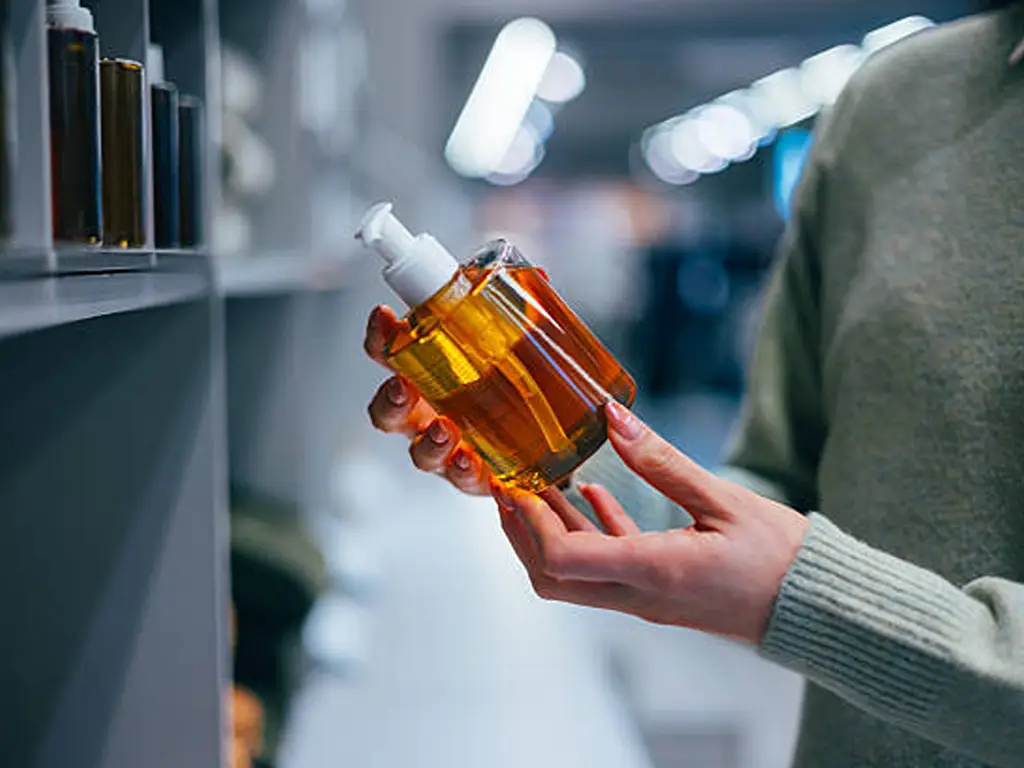
What Is a Dip Tube, and Why Its Length Is a Problem?
A dip tube is the suction pipe on the underside of a pump or sprayer. Screw the cap onto a bottle and the tube hangs down inside. Press the actuator and the pump draws liquid up through the tube and out of the nozzle. If the tube cannot reach the liquid, nothing comes out, no matter how well the pump works.
That simple mechanism explains the two failure directions:
- A tube that is too short leaves the pickup point floating above the bottom. The pump stops drawing while product is still in the bottle. Usually the leftover is visible, because the tube’s inlet sits physically above the product.
- A tube that is too long fails silently. Pressed against the container bottom, it blocks its own inlet. During capping and transit it can also kink or snap under shock. The pump then “works”; it just does not dispense.
This is why a brand-new pump bottle sometimes ships with the tube hovering above the bottom. It is not sloppy manufacturing. Pump makers leave a deliberate gap so the tube never touches the base, where it could crack during automated capping or break in shipping. Brands compensate by filling slightly above the labeled volume: dispensers are engineered to deliver the printed amount, not necessarily every last drop, as a former packaging engineer put it bluntly in a widely shared consumer thread. Understanding that tradeoff is step zero. You are not fixing a defect; you are tuning a tolerance.
One naming note before you go further: “dip tube” also refers to the cold-water inlet pipe inside water heaters and to the vapor tube in propane tanks. Those are different parts with completely different length logic. This guide is about the suction tube in bottle pumps and sprayers — the one that meters out your lotion, serum, perfume, and cleanser.
Not Every Dispenser Treats Its Dip Tube the Same Way
Before measuring anything, identify which dispenser family you hold. The pump type sets the tube’s rules, not the bottle:
| Dispenser type | Tube behavior | How length is handled |
|---|---|---|
| Fine-mist sprayer | Thin, flexible tube | Curved against the bottle wall, so it runs slightly longer than the bottle’s interior height |
| Trigger sprayer | Stiffer tube, household sizes | Sized to the bottle; retail tubes commonly run about 6¾–9½ in. |
| Lotion pump | Thick, rigid tube | Sits straight with a small gap above the bottom |
| Treatment pump | Short rigid tube for small bottles | Typical on 30–60 ml premium bottles; retail tubes from about 2¾ in. |
| Foam pump | Rigid tube, lotion-pump logic | Same small-gap rule as lotion pumps |
| Airless bottle | Usually no dip tube at all | A piston at the base rises and pushes product up — more in the decision section below |
Two common categories never involve tube length at all: dropper bottles and reed diffusers (nothing pumps). If that is your packaging, the measurement steps below do not apply.
The practical rule: thin sprayer tubes bend against the wall; thick pump tubes stand straight with a gap.
How to Measure Dip Tube Length, Step by Step
This is the workflow used across the packaging industry. It takes about five minutes, and the point is to do the thinking once, on one sample, instead of gambling on a production run.
Step 1: Start at the Gasket, Not at the Cap
Every guide agrees on one anchor: the gasket, the small rubber seal tucked under the pump or sprayer head, visible when you flip the dispenser over. Measure from its seating face (the flat surface that touches the bottle rim) down to the very end of the tube. That full span is the dip tube length. Do not measure only the tube exposed below the cap skirt, or measure to the bottle rim. Both undercount by the height of the closure, which is exactly the error that leaves a tube hovering above the product.
Step 2: Measure the Bottle’s Interior Height
Now measure the container the dispenser will sit on. Insert a ruler straight down to the inner base and read the height at the top rim. If a ruler will not fit (narrow necks, tall shoulders), drop a thin stick or straw in, mark it at the rim, and measure the stick afterward. Two accuracy notes:
- Interior, not exterior. Wall thickness and a recessed base can each add several millimeters of error.
- Watch the bottom shape. Conical or inwardly domed bases (common in glass) mean the usable liquid depth is shorter than the bottle’s outside height. Measure what the liquid can actually occupy.
Catalog listings sometimes quote “shoulder to base” heights instead of full interior depth. SKS Bottle & Packaging, for example, pairs its bottles and tubes on that basis. Shoulder-to-base is fine when you buy both bottle and pump from the same catalog. When mixing suppliers, measure interior depth yourself.
Step 3: Work Out the Target Tube Length
Here is where the guides stop agreeing, so here is the resolution. Take the bottle’s interior height and subtract a clearance that keeps the tube’s inlet off the base. How much?
3/32 in. ≈ 2.4 mm
The assembly clearance used by O.Berk when calculating dip tube length: measure from the bottle’s sealing surface (land) to the base, subtract 3/32 in. to compensate for the pump’s push-up, and the remainder is your target tube length.
The 3/32 in. (2.4 mm) figure is the only published numeric answer to “how much gap should I leave?” It is the number that turns dip tube fitting from a feel into a specification. Most consumer guides say “leave a small gap” or “don’t cut it flush.” 3/32 in. is simply that advice with a number attached.
Thin sprayer tubes bend instead of hanging straight, so The Cary Company recommends starting about 1 in. longer than the bottle and letting the bend take up the slack. The tube rides the wall while its inlet still reaches the base corner, where thin liquids pool last.
Formula to carry into the next step: target length ≈ bottle interior height − 3/32 in. (straight rigid tubes), or ≈ bottle height + about 1 in. (thin tubes that bend).
Step 4: Measure the Existing Tube and Trim
Lay the dispenser flat and measure the tube you actually have, from the gasket seating face to the end, using the same reference as Step 1. (Most pumps ship with one standard long tube, designed to be trimmed.) Subtract your target from this as-produced length. The difference is how much to remove.
Cut with a sharp blade or tube cutter; scissors crush soft polypropylene. Industry practice favors an angled cut (about 45°): a beveled inlet cannot seal itself against the base the way a flat cut can, and it stays clear if the tube settles deeper over time. Some pump makers offer a V-cut instead. Ask your supplier which cuts their pumps accept before standardizing. After trimming, check the cut edge for burrs and knock off any shavings that could clog the inlet.
Step 5: Test One Before You Commit
Assemble the trimmed tube into the bottle, prime the pump, and verify three things: it draws from the bottom (test with the bottle nearly empty), it does not suck air or “spit” after the first strokes, and nothing leaks when the bottle is inverted. Then use that sample as your template. Production tubes get compared against it rather than re-measured.
Measure twice, cut once — a tube cut too short cannot be uncut. When in doubt, trim less than your calculation says, test, and take a second tiny cut. A too-long tube is fixed in thirty seconds; a too-short one means a replacement part and a new wait.
How Long Should the Dip Tube Be? Matching Tube Length to Your Bottle and Product
If the last section answered the arithmetic, this one answers the decision behind it: which dispensing route your product should take in the first place. Read across your scenario in the matrix. It is the standard industry pattern for matching viscosity and value to a dispensing system.
The Decision Matrix: Match the Dispensing Route to Your Product
| Cenário do produto | Typical route | Dip tube handling | When this route breaks down |
|---|---|---|---|
| Low-viscosity mist (fragrance, body spray, toner) in a slim glass bottle | Fine-mist sprayer | Thin tube bent to the wall; target ≈ bottle height + bend allowance | Thick or sedimented formulas clog fine-mist actuators |
| Medium-viscosity lotion or serum in a pump bottle | Lotion or treatment pump | Rigid tube standing straight; target ≈ interior height − 3/32 in. | A bottoming tube snaps in transit or kinks in the bottle |
| Thick cream or balm | Thick-tube pump, or skip pumps for jars | Same small-gap rule; some formulas need a wider tube bore | High-viscosity products will not climb a thin sprayer tube |
| Household cleaners, automotive, garden (large volume) | Trigger sprayer | Longer tube sized to the bottle; check the cap’s venting too | A curled or mis-sized tube is the classic “sprayer stopped working” failure |
| Premium skincare where leftover product causes complaints | Airless pump bottle | No dip tube to measure — see below | Higher unit cost and a different filling method |
| Samples, travel sizes, 30–60 ml | Treatment pump | Short rigid tube | Not offered on every neck finish |
When You Can Skip Dip Tube Length Altogether
If your product is expensive per milliliter and customers will notice a leftover inch, remove the tube question entirely. Airless pump bottles have no conventional dip tube. Instead, a piston at the base rises as product is dispensed and pushes the contents toward the valve. That is why airless is the standard for formulas that must be fully evacuated and kept air-free. (The “empty space” at the bottom of a partly used airless bottle is the piston, not lost product.) The tradeoff is structural: higher unit cost and a different filling method (bottom-fill or special valve, not a standard top-fill line). Confirm your contract filler can handle it before switching.
The rule of thumb is cost-honest: choose airless when the leftover complaint or the oxidation risk justifies the higher unit price. Premium serums and actives, yes. Mass-market body lotion, usually not. And if you are evaluating glass airless or pump bottles, remember that the dispenser and the glass body often come from different specialists.
When bottle and pump arrive from different hands, the fit is on nobody.
Whoever assembles the pair is the supplier worth holding to that fit.
How to Specify Dip Tube Length When You Order from a Supplier
If you are ordering bottles and pumps in production quantities, you should not be cutting tubes by hand at all. You should be specifying them. Most pump manufacturers produce one standard long tube per pump and trim to order; distributors and suppliers offer pre-cut options as well. The failure mode is not the cutting; it is the spec. Make these four points explicit on your purchase order or quotation request:
The four-point spec
Reference point — state “gasket seating face to tube end,” or give the bottle’s interior height and the clearance you want and let the supplier calculate.
Unit system — say inches or millimeters out loud; US catalogs quote inches, Asian and European suppliers usually work in millimeters, and nobody converts for you.
Cut style — confirm the pump accepts an angled cut (or V-cut) before ordering; not all do.
Compatibility — include the neck finish (e.g., 24/410) and, if replacing a tube, the pump stem’s inner diameter, not just the length.
Two supplier realities are worth knowing before you negotiate. First, testing is routinely pushed back onto the buyer. SKS Bottle & Packaging states plainly that it helps match components but does not perform product testing. So put “sample assembled and draw-tested” on your own incoming-inspection checklist. Second, pre-cut tubes are a real but commercial service. Glassnow sells pre-cut dispensers to growing businesses that prefer not to trim in-house. Neither is a flaw; they are terms of trade. The trap is split sourcing: bottle from one supplier, pump from another, tube mismatch with no owner, and the rejection lands on your desk. That is how dip tube length becomes a purchasing problem instead of a five-minute measurement.
Why Getting the Dip Tube Right Pays Off
Run the failure chain backward and the economics become clear. A tube that is too short strands product in the bottle. Consumers notice, complain, and review (“I still have an inch of lotion left that I have to beat against my palm”). A tube that is too long kinks, snaps in transit, or blocks its own inlet, and the pump fails out of the box. Either way the complaint lands on the brand and travels back to whoever assembled the bottle-and-pump pair. With split sourcing, that chain dead-ends at your desk.
The fix is almost free: one ten-minute draw test on a sample (fill, pump dry, invert, check) before committing to a production quantity. Against the cost of returns and a launch with a pump that visibly “doesn’t work,” it is the cheapest insurance in packaging. And when you source glass and dispenser together, the question to ask a supplier is not “what pumps do you sell” but “will you own the fit”: will they match the tube to the bottle and verify it before samples ship?
At Daxin Glass Bottles, owning the fit is how we work with pump-bottle launches. We manufacture the glass body and source and assemble the pump head through our lid and pump supply chain, so tube matching happens against our own bottles. Tell us the bottle you have chosen from our glass pump bottles range and the viscosity of your formula, and we handle the matching before your sample ships. That is part of the standard development flow, not an extra: our design team returns first drafts within three working days, and a concept reaches a physical sample in roughly 15–20 days, with the assembled draw test done before anything leaves the factory. It is the same reason we keep 5,000+ existing molds and a stock program with a 1,000-piece entry point: the fit question never has to wait for a custom mold.
If you are planning a pump-bottle launch and want the dip tube question settled before samples ship, talk to Daxin Glass Bottles. Our team responds within 24 hours and stands behind every order.
Get the dip tube length settled in your sample round
Send us your bottle drawing or stock choice and we’ll reply with the pump match, tube length, MOQ, and a sample schedule that includes the fitted draw test.
Envie as especificações da sua garrafaReferências
- O.Berk. “Quick Question Monday: How Do You Measure Dip Tube Lengths?” 2015. https://www.oberk.com/packaging-crash-course/quick-question-how-do-you-measure-dip-tube-lengths
- The Cary Company. “How to Measure Dip Tube Length.” https://www.thecarycompany.com/insights/articles/how-to-measure-dip-tube-length
- SKS Bottle & Packaging. “How to Measure Dip Tubes.” https://www.sks-bottle.com/info/HowToMeasureDipTubes.html
- Glassnow. “How to Measure and Trim Your Dip Tube for Optimal Performance.” 2025. https://www.glassnow.com/blog/how-to-measure-and-trim-your-dip-tube-for-optimal-performance/
- Daxin Glass Bottles. “Lotion & Serum Bottles.” https://www.daxinglassbottles.com/lotion-serum-bottle/
- Daxin Glass Bottles. “Custom Lid & Pump.” https://www.daxinglassbottles.com/custom-lid-pump/
- Garrafas de vidro Daxin. Página inicial. https://www.daxinglassbottles.com/

 English
  Spanish
  French
  German
  Arabic
  Italian
  Dutch
Dutch  Portuguese
  Russian
  Korean
  Japanese