
Tampas para garrafas de vidro: todos os tipos de tampas, o que combina com a sua garrafa e como escolher
Ask ten people what a "bottle cap" is, and half will picture a beer bottle. If you are developing a product in a glass bottle, the closure matters more than the bottle itself. A perfume, a beard oil, a serum, an essential-oil blend: the cap decides how the product feels in the hand, whether it survives shipping, whether customers can refill it, and whether your formula slowly destroys the very thing sealing it. This guide covers the cap types that actually matter on glass bottles, what each one fits, and the parameters to check before you commit to 10,000 of anything.
Glass Bottle Closures: What "Closure" Actually Means
A closure is not one part. In packaging language, it is the whole assembly that seals the bottle. Usually that is two or three pieces working together: an outer cap, an inner insert (a dropper, an orifice reducer, a gasket or liner), and sometimes a collar. Tampa e lid are everyday words for pieces of it. Encerramento is the trade word for the system (Closure (container), Wikimedia Foundation, 2026).
One clarification before the map. The most famous "bottle cap" of all, the crimped metal crown cap on beer, belongs to a different conversation, along with the collectors who trade those caps. This guide is about closures for glass bottles in fragrance, cosmetic, oil and small-batch contexts: assemblies that seal a product people open, use and re-close hundreds of times.
Every closure attaches to the bottle one of five ways:
| Attachment mechanism | How it works | Where you meet it |
|---|---|---|
| Threaded (CT / lug / ROPP) | Screws onto a threaded glass neck | Most screw caps, dropper caps, pumps, sprayers |
| Crimped | Metal collar compressed around the neck | Perfume atomizers, crown caps |
| Snap / friction | Pressed on; held by interference fit | Glass stoppers, cork, silicone replacement caps |
| Snap-on (plastic) | Clicked over a bead on the neck | Mass-market personal care |
| Hinged / bail | Lever arm clamps a stopper down | Swing-top bottles |
That five-way split explains most closure failures in this article. Threading can loosen in transit. Crimping is permanent. Friction depends entirely on tolerances. The mechanism is the first decision, and the vocabulary above is worth having before you move on.
The 7 Closure Families That Matter on Glass Bottles
Search "types of bottle closures" and you get lists of wine corks, beer crowns and soda caps. Most of it is irrelevant to a cosmetic or fragrance product. On glass bottles for personal care and fragrance, seven families cover nearly everything on the shelf. Two things separate them: how the product comes out (or whether it comes out at all) and what texture of liquid each one tolerates.
| Closure family | What it does | Typical match |
|---|---|---|
| Plain screw cap | Seals only; you pour or dab | Oils, rinses, toners, diffuser refills |
| Orifice reducer | Cap with a restricting insert; drop-by-drop | Beard oils, essential-oil blends, serums |
| Dropper cap | Screw cap with glass pipette | Serums, tinctures needing precise dosing |
| Lotion pump | Screw-on pump with dip tube | Lotions, body oils |
| Sprayer / atomizer | Fine-mist spray; crimped or screw-on | Perfume, cologne, facial mists |
| Roll-on | Ball applicator in a threaded neck | Deodorants, roll-on oils |
| Pour spout / flip-top | Controlled pouring or one-hand opening | Culinary oils, syrups, body washes in glass |
The texture rule is blunt. Thin, alcohol-based liquids spray. Viscous oils pump or dropper. Everything in between is an orifice-reducer question. Most mismatches, and most "my sprayer clogged" complaints, start here. If you are blending a beard oil, dropper versus reducer is not cosmetic. Droppers dispense precisely and reach the bottom, but they tip over and need more sterilization care. Reducers look cleaner and spill less, but a small orifice turns a thick carrier oil into a patience test (What type of bottle cap do you like? (Orifice/Dropper?), r/beardoil). One maker tested four cap generations before settling on a child-resistant dropper. Shrink-wrapping every cap for wholesale orders ate their margin. Their first CR cap was so hard to open that a customer had to be sent a replacement bottle.
| If your product is… | Closure family that survives it | Where it typically fails |
|---|---|---|
| Alcohol-based fine fragrance | Crimped or screw-on atomizer | Leaks past the gasket in transit |
| Thick carrier oil (jojoba, argan) | Orifice reducer, wide-orifice | Reducer too small, slow messy pours |
| Serum / tincture (viscous, precious) | Dropper cap | Dropper tube not reaching the bottom |
| Lotion / body oil (high volume) | Lotion pump | Pump tube length vs bottle height mismatch |
| Pure essential oil | Glass dropper, glass-safe internals | Rubber bulb degraded by the oil itself |
| Product that must not be mistaken for a drink | Child-resistant options | Usability suffers; test with real users |
A note on material chemistry, because it ends more products than leaking does. Pure essential oils attack natural rubber. Terpenes swell and degrade the bulb of a classic rubber-bulb dropper. The vapors do it even when liquid never touches the rubber (Bottles and droppers, r/essentialoils). If your formula is aggressive, every "standard" closure part is a compatibility question, not a given.
Crimp vs Screw-On Atomizers: The Batch Size That Decides
Fine fragrance has the most instructive closure decision in this category. Perfume sprayers mount onto the bottle one of two ways. Crimped means a metal collar is mechanically compressed around the neck, permanently. Screw-on means the sprayer threads on and can be removed. Independent perfumers have argued this exact question for years, often with a very specific batch size in mind (Prensar ou não prensar? A batalha definitiva pelas tampas de 5.000 garrafas, r/DIYfragrance, 2025).
The five decision points
1. Equipment. Crimping needs a crimper. A manual bench tool works for small runs; a machine is needed for volume. The collet must exactly match the neck size. Screw-on needs nothing special. 2. Breakage. Independent makers hand-crimping fragile bottles report losing roughly one in three bottles with hand tools. Machine crimping changes the math. 3. Refillability. A crimped sprayer cannot be removed without destroying it. The bottle is single-life. Screw-on sprayers come off, which is the foundation of every refill program. 4. Transit. Screw caps can work loose in shipping. Crimped seals cannot loosen. But a sloppy crimp lets fragrance evaporate silently, which is worse. 5. Perception. Crimped reads "professional, permanent." Screw-on is sometimes read as cheaper. Even so, prestige houses use screw-on for refillable lines, and the same community that praises crimp's look admits that a screw cap good enough for a luxury refillable is good enough for anyone.
Crimp vs Screw-On Atomizer: Five Decision Points
Prós
Contras
Where your volume sits: stock, light customization, or custom mold
Before choosing a sprayer, know which of three lanes you are in. Custom bottle designs carry the highest floor. The lowest custom-mold minimums reported by independent brands sit around 10,000 pieces, with tooling lead time in weeks (Custom fragrance packaging from Alibaba, r/DIYfragrance, 2026). Below that line sit two cheaper lanes. Stock bottles and closures are off-the-shelf: no tooling, ordered by the case. Personalização leve uses stock shapes with your print, label or color, at minimums far below a mold program. A 5,000-bottle launch is not a custom-mold project. It is a stock-plus-light-customization project, and the supplier conversation is completely different.
| Lane | Ferramentas | Typical minimum | Lead time feel |
|---|---|---|---|
| Stock (off-the-shelf) | Nenhum | Case / pallet level | Short — existing inventory |
| Personalização leve | None (print/décor only) | Mid-hundreds to low thousands | Print and cure time |
| Molde personalizado | New glass or closure mold | ~10,000 reported floor | Mold tooling + production |
The refill trend is changing the math
The structural case for screw-on keeps strengthening. Refillable formats are the fastest-growing corner of fragrance packaging. Analysts value mini refillable perfume bottles at about USD 18.6 billion in 2025, heading toward USD 23.7 billion by 2031 (Mini Refillable Perfume Bottles Market, Research and Markets, 2025). A 2025 FEBEA consumer survey found that 59% of surveyed consumers had bought refillable beauty products. Independent makers already report choosing screw-on specifically to "offer refills and less waste." If your brand story includes refills, and the economics increasingly say it should, a permanent crimp is the wrong closure. It gives the product one life.
Either way, choose on your refill model, not on habit. The closure locks in your business model as firmly as your fragrance formula does.
Settled on crimp or screw-on? Send us the batch size and we will spec the neck finish and closure pairing around it.
Send your volume and get a specHow to Spec a Closure: Neck Finish, Seal, Materials, Compliance
This is where glass bottle closures stop being a shopping question and become an engineering one. The industry standardized the vocabulary. The bottle's mouth is called the finish, and closures are specified against it with a two-part code you can read at a glance.
Start with the finish: the two-number code
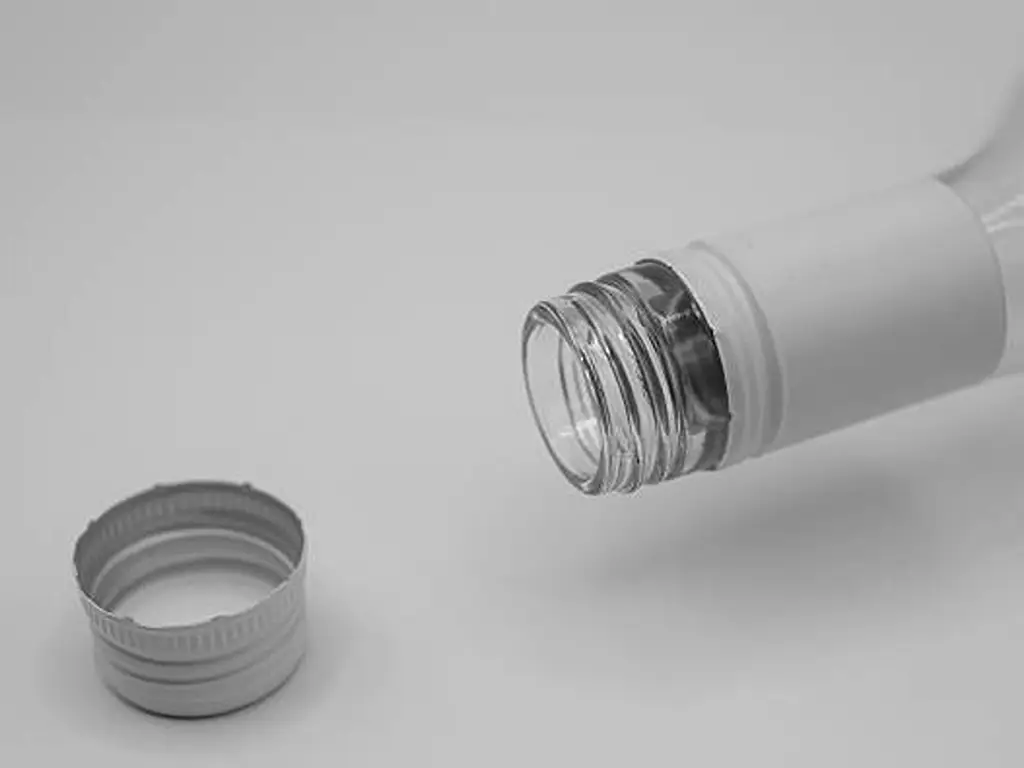
A neck finish code such as 20-400 (also written 20/400) is not a fraction. Under Glass Packaging Institute (GPI) conventions, the first number is the nominal outer diameter in millimeters, measured across the threads. The second is the standardized thread style: 400 means a single thread turn, 410 means one-and-a-half turns, 415 means two (Understanding Bottle Neck Finishes: The Difference Between 400, 410, and 415, Regent Plast). Both numbers must match. A 24-410 closure will not fit a 24-400 bottle: same diameter, different thread geometry, guaranteed leak or cross-thread.
3
Finish codes. Three different bottles.
20-400, 20-410 and 24-400 share nothing but a family name. Match both numbers — diameter and thread style — or the closure deal is lost before it starts.
Here is how the code maps to the bottles you are most likely to meet:
| Code | Meaning | Where it typically appears |
|---|---|---|
| 20-400 | 20 mm, single thread turn | Simple screw caps, small stock bottles |
| 20-410 | 20 mm, 1.5 turns | Serums, small dropper and spray bottles |
| 24-410 | 24 mm, 1.5 turns | The cosmetic workhorse — lotion pumps, flip-tops, mist sprayers |
| 28-400 / 28-410 | 28 mm | Larger shoulders and jars |
| 415 family | 2 turns, taller neck | Essential oils, maximum leak protection |
Perfume sprayers use their own code. Crimp necks are specified by FEA sizes (FEA 15, FEA 18, FEA 20, millimeters across the collar), with FEA 15 the most common fine-fragrance size (FEA15 vs FEA18: Perfume Bottle Neck Sizes Explained, Packamor). Neck size is not a function of bottle volume. Some 100 ml bottles are FEA 15; some 50 ml bottles are FEA 18. The only reliable move is to ask the supplier for the spec sheet and test a physical sample before ordering pumps.
Leaks are designed, not discovered
Here is the uncomfortable truth beneath every "it leaked in shipping" story. Screw caps can back off in transit: vibration and temperature cycles work the threads. A crimped closure cannot loosen, but it can be crimped badly (To Crimp or not to Crimp, r/DIYfragrance, 2025). Neither failure is the glass's fault, and neither is visible to the naked eye. What actually seals a glass bottle is a hierarchy of small parts: the liner (foam, pulp or induction foil inside the cap), the gasket or inner plug, and, for dispensing closures, the sealing geometry of the pump or dropper itself. Two questions separate brands that ship clean from brands that eat chargebacks:
- What is the sealing element, and what is it made of? A linerless cap seals via a deformable rim. A lined cap depends on the liner's compression set over time and its chemical resistance to your formula.
- What is the torque specification? Application torque, measured in inch-pounds, is the most under-specified parameter in small-brand packaging. Too low, and caps arrive loose. Too high, and customers cannot open them. Ask for your supplier's target range, then verify it on your own filling line. Your capping machine, not their cap, sets the real number.
The practical test that catches most of it needs no lab. Fill a batch with the actual formulation, cap it, and store it inverted for 24–48 hours at room temperature. Repeat with a simulated-shipping shake if you can. Products that survive inverted storage rarely leak in boxes.
Materials vs. your formula — and when child-resistant packaging is legally required
Closure materials form a short list with long consequences. Polypropylene tolerates most cosmetics but not all. Acrylic (PMMA) looks premium and glass-clear but can craze under aggressive solvents. Alumínio is light and recyclable. Zinc alloy (zamac) carries heavy, metallic prestige. Wood and bamboo give a natural profile but need careful lacquer selection, because alcohol and oils lift finishes. Two rules of thumb. First, never assume a material is inert against seu formula. Seventy-percent ethanol, citrus oils and pure essential oils can degrade parts that were fine in someone else's bottle. Second, always test the finished assembly (formula plus cap, liner and gasket together), because failures live in the combination.
On regulation, one myth needs correcting. Child-resistant (CR) packaging is not required for perfumes or cosmetics as a category in the United States. Under the Poison Prevention Packaging Act (16 CFR Part 1700), CR packaging is triggered by specific hazardous contents at regulated concentrations. Examples include products with 10% or more hydrocarbons by weight, or 4% or more methyl alcohol (Poison Prevention Packaging Act Business Guidance, U.S. CPSC). Enforcement is real. A luxury cosmetics brand recalled an essential-oil blend for exactly this gap. If your formula contains flagged ingredients, or could be mistaken for a drink by a child, plan for CR and its usability trade-offs from day one. CR closures that frustrate adults generate their own customer-service disasters.
Closure Spec Self-Check Before You Order
Who Should Supply Your Glass, Closure, and Finishing?
Once you know the finish, the seal and the material, the last structural question is sourcing. Three paths exist, and they differ in where the risk lands.
Path one: self-assemble. Buy bottles from a bottle maker, closures from a closure specialist, and decorating from a third shop. Each piece can be best-in-class. You pay for it in coordination: three suppliers, three minimums, three lead times, and the classic failure where cap finish and bottle finish were never validated together until the first carton arrives. Path two: a glass manufacturer that supplies closures and finishing in the same order. Bottle and finish are specified together. Closures are matched to that finish. Décor color-matching happens inside one quality system instead of across three. Path three: local wholesale stock. Fast and risk-free for prototypes and first runs. But the catalog owns the decisions, and scaling means switching paths anyway.
For fragrance and cosmetic runs, the decisive question is usually décor consistency. Glass decorating (spray coating, hot stamping, screen printing) and closure finishing (electroplating, anodizing, lacquer) are different process worlds. Color-matching across two factories is where "the cap is a slightly different gold than the bottle" gets born. At Daxin Glass Bottles, that entire chain runs as one single-order custom glass program: the glass bottle, the custom lids and pumps range (Zamac, plastic, acrylic and wooden caps plus perfume sprayers), and the decorating and finishing. There is a library of thousands of existing molds to pull from before you ever pay for a new one. Color samples and closure fit are locked in the same approval round. That is precisely the coordination that breaks down when bottle and cap come from different continents. Self-assembly is still right if you already trust a specialist closure house and need a very unusual cap design. Integration saves coordination; it does not automatically beat a supplier you have worked with for years.
Closure Failures in Real Life: What to Test Before You Fill 10,000
Every failure mode below has a name attached somewhere in the maker community. These are not hypotheticals. They are the ledger of people who shipped before testing.
| Real-world failure | The prevention move |
|---|---|
| Hand-crimping broke roughly one in three fragile bottles | Machine-crimp at volume, or switch to screw-on |
| Crimp applied too loose → fragrance evaporated in storage | Verify crimp tightness on samples before filling |
| Screw caps arrived loose / leaked after transit | Set torque spec; invert-test a batch before shipping |
| Rubber dropper bulb degraded and clouded the oil | Use glass or compatible polymer internals |
| Dropper tube didn't reach the bottom → last 15% wasted | Specify tube length against bottle interior height |
| Child-resistant cap too hard for adults → customer replacements | Prototype CR with real users; check the adult-open rate |
| Thick oil clogged a fine-mist sprayer | Match orifice size to formulation viscosity |
| Silk-screen décor peeled after alcohol wipe-downs | Verify décor cure and alcohol resistance with your formula |
The five-step release check below costs a day of work. It has caught every failure in the table above at least once in someone's production history:
Five-Step Release Check Before a Big Batch
The "sample was perfect, bulk was different" story is almost always a supplier change or a spec drift between sample and production. That is why the last step matters more than it sounds.
The Business View: Stock Bottles Without a Closure Plan Are Half a Product
The inquiries changed: the closure is the first question
Everything in this article compresses into one commercial observation. Customers no longer ask for a bottle. They ask for a bottle that dispenses and seals correctly. The small brands launching 5,000 units on stock bottles have absorbed the failure ledger above. Their first question to a supplier is not "what shapes do you have?" It is "will the cap fit, will it leak, and can I put my logo on it without opening a mold?" A catalog that answers bottle shapes but stays silent on closures forces that buyer to assemble the answer themselves across three suppliers. Most of them, at that stage, move on to whoever answers the whole question. If you stock glass, the closure is not an accessory line. It is the other half of every product you sell.
Assemble stock by the pair, not by the piece
The economics favor pairs. The demand that matters sits in the lane below the custom-mold line. That is the lane where buyers need stock bottles, matched closures and light customization (print, color, label) without a 10,000-piece tooling commitment. The demand clusters into a few high-volume combinations: narrow-neck bottles paired with crimped or screw-on atomizers for fragrance; Boston rounds paired with droppers or orifice reducers for oils; pump bottles paired with lotion pumps. Stocking these as assembled pairs rather than independent bottle and cap SKUs does three things. It answers the buyer's first question before it is asked. It moves the conversation from comparing bottle prices to comparing complete solutions. And it turns the closure margin, historically the forgotten line item, into part of every quote. The boundary to respect is real. Pairing everything with everything is how SKU counts explode and dead stock accumulates. Focus the pairs on the three or four product categories your buyers actually fill, and keep exotic closure requests on special order. That is the difference between a catalog that sells and a warehouse that collects dust.
If you are speccing closures for a new glass bottle run, or restocking a catalog that should have been paired years ago, send your neck finish and target volumes to our team. Get the closure math done before you commit to a mold or a container of anything.
Make the finish the first decision, not the last
Get a glass bottle and closure pairing built around your finish code — sample validation, décor color-matching, and QC documents on request.
Request closure samples and specsReferências
- Regent Plast. “Understanding Bottle Neck Finishes: The Difference Between 400, 410, and 415.” 2024. https://regentplast.com/understanding-bottle-neck-finishes-the-difference-between-400-410-and-415/
- Packamor. “FEA15 vs FEA18: Perfume Bottle Neck Sizes Explained.” https://www.packamor.com/blogs/knowledge-hub/fea15-vs-fea18-understanding-perfume-bottle-neck-sizes-before-you-order
- U.S. Consumer Product Safety Commission. “Poison Prevention Packaging Act Business Guidance (16 CFR Part 1700).” https://www.cpsc.gov/Business--Manufacturing/Business-Education/Business-Guidance/PPPA
- Research and Markets. “Mini Refillable Perfume Bottles Market, 2025–2031.” 2025. https://www.researchandmarkets.com/reports/6075200/mini-refillable-perfume-bottles-market-global
- Wikimedia Foundation. “Closure (Container).” 2026. https://en.wikipedia.org/wiki/Closure_(container)
- Reddit — r/DIYfragrance. “To Crimp or Not to Crimp? The Ultimate Cap Battle for 5,000 Bottles.” 2025. https://www.reddit.com/r/DIYfragrance/comments/1hydixf/to_crimp_or_not_to_crimp_the_ultimate_cap_battle/
- Reddit — r/DIYfragrance. “Custom Fragrance Packaging from Alibaba.” 2026. https://www.reddit.com/r/DIYfragrance/comments/1snynt7/custom_fragrance_packaging_from_alibaba/
- Reddit — r/beardoil. “What Type of Bottle Cap Do You Like? (Orifice/Dropper?)” https://www.reddit.com/r/beardoil/comments/5otcin/what_type_of_bottle_cap_do_you_like_orificedropper/
- Reddit — r/essentialoils. “Bottles and Droppers.” https://www.reddit.com/r/essentialoils/comments/bongwo/bottles_and_droppers/
- Garrafas de vidro Daxin. “Garrafas e potes de vidro personalizados.” https://www.daxinglassbottles.com/custom-glass-bottles-jars/
- Daxin Glass Bottles. “Custom Lid & Pump.” https://www.daxinglassbottles.com/custom-lid-pump/
- Daxin Glass Bottles. “Contact.” https://www.daxinglassbottles.com/contact/
- Garrafas de vidro Daxin. Página inicial. https://www.daxinglassbottles.com/



 English
  Spanish
  French
  German
  Arabic
  Italian
  Dutch
Dutch  Portuguese
  Russian
  Korean
  Japanese