
Tipos de frascos de vidro: um guia prático sobre nomes, formatos e usos
What "Types of Glass Bottles" Actually Means
Search the phrase and you will get a strange mix. One result explains annealed versus tempered glass for windows. Another walks through the seven glass families of materials science, including fiberglass. A third is someone identifying a vintage bottle from 1902. None of that is what you are asking about, and the confusion is worth clearing up in thirty seconds.
"Types of glass bottles," in the packaging sense, is about commercially made glass containers: what they are named, what shapes they come in, and what each combination is actually for. The flat-glass vocabulary you may have seen (annealed, tempered) belongs to windows and tabletops, and uses the same raw material through a different process. Vintage bottles are a collector's category, not a packaging category. And "glass jars" are not a separate universe; they are the wide-mouthed half of the same family, which you will meet in the shape section below.
Why is the topic so messy, then? Because nearly every guide on the internet is written by a supplier selling one slice of the market. A perfume-bottle maker explains shapes. An essential-oil supplier explains colors. A lab-glass distributor explains chemistries. All of them are right, and none of them gives you the whole picture.
So here is the framework this guide uses instead:
Every glass bottle is four decisions stacked on top of each other: the glass it is made from, the shape it is cut into, the seal it closes with, and the way it is produced for you. Material, form, seal, production. If you can answer those four questions about any bottle on a shelf, you know its type, and more usefully, you know whether it fits what you want to put in it.
The glass — chemistry and clarity
The form — shape, color, finish
The seal — neck, closure, liner
The production — stock, customized, or molded
The next four sections take them one at a time, from the glass itself to the moment you are comparing suppliers. Each section is written so you can stop there with a complete answer. If you read to the end, you will be able to do something most packaging articles never teach: specify a bottle the way a factory expects to receive the request.
The Glass Itself: One Material, Three Chemistries
Start with the raw material, because it sets the physical ceiling for everything else. Almost every commercial glass container on the planet is soda-lime glass: a blend of silica, soda, and lime that is cheap, chemically stable, and endlessly recyclable (Glass Packaging Institute). It is the default for a simple reason: for food, beverage, cosmetic, and fragrance packaging, nothing else is needed.
The chemistry distinctions you will see in articles come from the pharmaceutical world, where glass holds injectables and must meet hydrolytic standards (Peoria Production Solutions, 2024). The three "types" are:
| Type | O que é isso | Where you meet it |
|---|---|---|
| Type I | Borosilicate glass — high thermal and chemical resistance | Laboratory ware, pharmaceutical vials, premium kitchenware |
| Type II | Soda-lime glass with a dealkalized (sulfur-treated) inner surface | Pharmaceutical containers that need better chemical resistance than plain soda-lime |
| Type III | Plain soda-lime glass | Your everyday bottle: drinks, oils, sauces, perfumes, jars |
When a search result tells you there are "7 types of glass" and includes lead glass and fiberglass, you are reading the full materials-science menu. Interesting, but not the containers you buy and fill. For bottles, remember the one-liner: the container you need is soda-lime glass, and the only real question is how clean and colorless a version of it you want.
That last part is the detail almost no guide mentions. "Clear" glass is not one thing. Ordinary soda-lime glass carries iron impurities, typically around 1% by weight, and in a thick-walled bottle that iron shows as a faint green or blue-green tint, most visible at the glass edge. Low-iron formulas (below about half a percent) are what fragrance and cosmetics brands mean when they ask for truly colorless, "crystal-style" transparency. When you see two "clear" bottles side by side and one looks greener at the rim, you are not imagining it. You are looking at the iron content, and the difference matters most when the product is pale and the bottle is thick.
One boundary is worth stating now, because it will come back in the candle section: soda-lime glass handles normal use superbly, but it does not enjoy sudden, extreme temperature change. That is not a defect; it is the material's nature, and manufacturers manage it in forming and annealing rather than by swapping chemistry. How well they manage it is exactly what separates a bottle that survives its first winter shipment from one that shows up cracked.
Glass Bottle Shapes and Names: The Taxonomy That Covers Them All
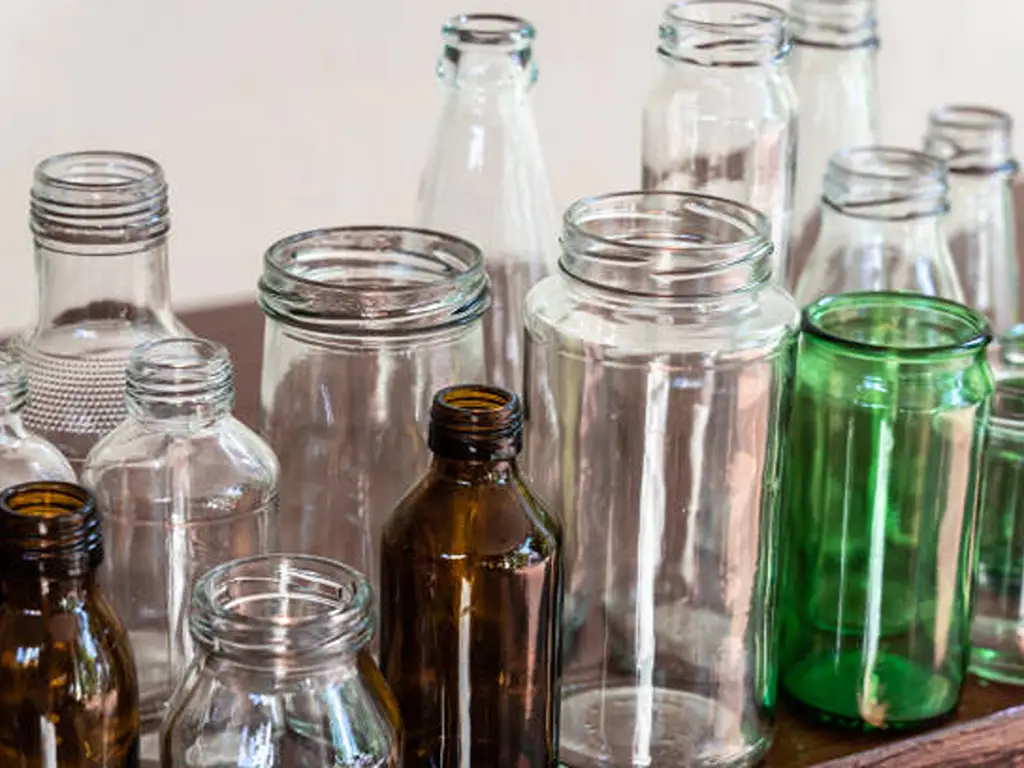
Every shape name in this industry describes a job. Once you see the jobs, the names stop being a random vocabulary list and start behaving like a system. Eight families cover roughly everything you will encounter, so here is the whole map at once:
| Shape family | How to recognize it | Typical products | Skip it for |
|---|---|---|---|
| Boston round | Rounded shoulders, round body, short neck | Essential oils, tinctures, syrups, any liquid needing a dropper or plain cap | Thick pastes and balms — the narrow mouth fights you |
| French square / Victorian square | Square or softly squared body, flat panels | Perfume, premium cosmetics, anything label-heavy | High-speed filling lines that prefer round bodies |
| Hexagon | Six-sided body | Cosmetics, apothecary-style lines | Fragile-thin designs; corners reduce impact resistance |
| Cylinder / straight-sided | True round column, flat sides | Beverages, serums, cold-pressed juices | Products poured by hand — nothing to grip |
| Woozy / RN / oil bottles | Tall, slim, narrow neck; some with ringed necks or square oil-style bodies | Hot sauce, oils, dressings, flavor concentrates | High-viscosity products that need a wide mouth |
| Perfume family | Small, heavy, decoration-ready; square, round, hexagonal, or vintage-curved | Eau de parfum, cologne, roller oils | Bulk liquids — perfume bottles are priced as premium objects |
| Wide-mouth jars | Opening wider than the body (or nearly), screw or press lid | Candles, creams, honey, preserves, spice | Anything dispensed by the drop |
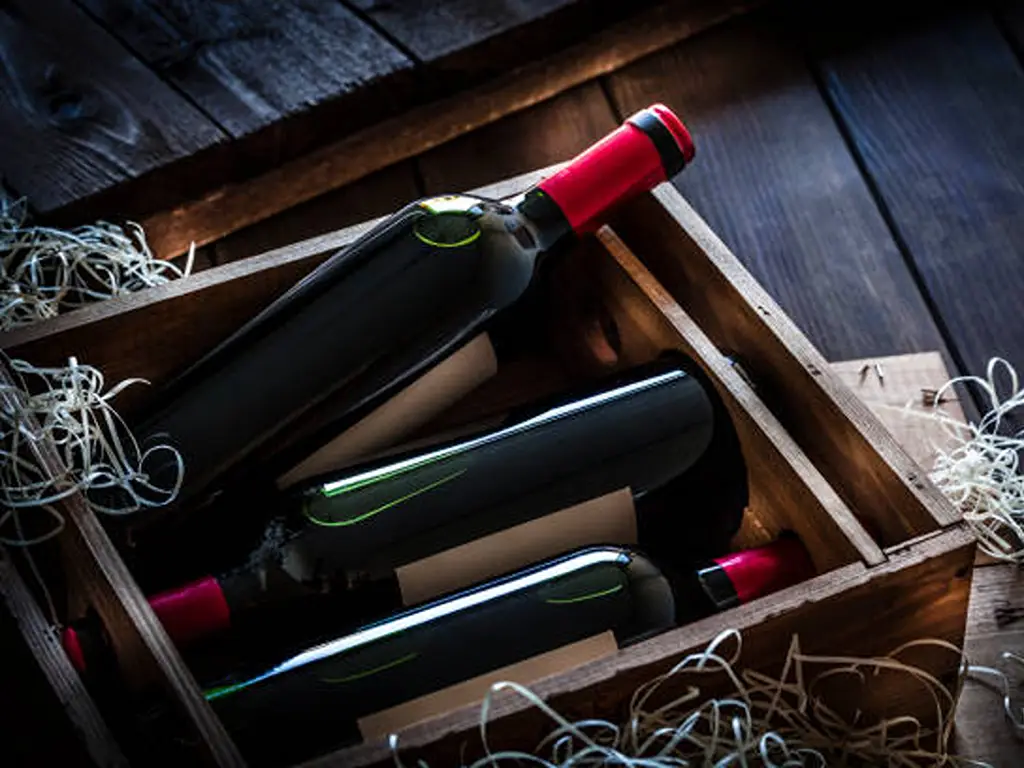
| Wine, spirits & beer | Tall silhouettes: Bordeaux and Burgundy shoulders, thick champagne glass, long-neck beer | Wine, spirits, beer, mixers | Anything needing a resealable daily cap (except where designed so) |
A few notes make the map usable. Boston round is the workhorse of the entire category. The rounded shoulder exists so that a few drops of concentrated product settle back down to the neck instead of hiding in the shoulder, which is why it dominates essential oils and pharmacy-style liquids. The square family exists for labels and shelving: flat panels print beautifully and pack edge-to-edge with less wasted air than rounds. Woozy-style bottles are hot sauce for a reason: the narrow neck throttles a thin, aggressive liquid into a drizzle instead of a flood.
O jar-versus-bottle distinction is physical, not stylistic. Below roughly a 30mm opening you get a narrow-mouth bottle, formed by one blowing method. Above it you get a wide-mouth jar, formed by another. That is why candle jars, cream jars, and honey jars feel structurally different from bottles: they are a different forming class with the same glass.
Frosted isn't a bottle type. Frosted, matte, and pearl finishes are surface treatments applied after forming, not bottle types. When a supplier lists "frosted glass bottles" as a category, they mean clear glass bottles with a frosted finish. The distinction matters when you spec: finish is a decoration decision with its own costs, while type decides what the bottle can physically do.
Colors follow one logic: light protection. Amber glass blocks most UV and is the default for anything light-sensitive: essential oils, beer, many pharmaceuticals. Green does similar work with a longer heritage in wine. Blue and opal are more about brand mood than physics, and flint (colorless) is chosen when the product itself is the display. Everything else you read about colored glass is decoration layered on top of this one principle.
Why do names feel chaotic? Because two naming systems coexist: the antique-bottle collector's taxonomy (from bottle-typing societies that catalog nineteenth-century forms) and the commercial packaging catalog. The collector's "Baltimore oval" and the supplier's "oblate" may describe the same silhouette. You do not need both systems. The commercial one above is what suppliers, fillers, and factories actually use.
Necks, Closures & Liners: The Hidden Spec
Most first-time buyers pick a bottle by how it looks, then discover after ordering that the cap world has rules of its own. This section is where "buying a bottle" turns into "specifying a container," and it is the least documented part of the topic.
The neck is a set of numbers
Every bottle mouth carries a finish code: a size and thread specification such as 24-410, where the first number is the diameter in millimeters and the second describes the thread. The thread style matters as much as the size. Continuous-thread (CT) caps screw on and off and dominate everyday packaging. Roll-on pilfer-proof (ROPP) closures are crimped aluminum, used for spirits and oils where tamper evidence matters. Crown caps belong to beer and carbonated drinks. Lug caps twist a quarter turn and suit jars. If you want to change caps later, say, moving a lotion from a plain CT cap to a pump, the bottle mouth must already be in the matching finish. Rule one: decide your closure family before you commit to a bottle, and confirm the finish code with the supplier in writing.

The liner chemistry decides whether your formula survives
Inside the cap sits a liner or gasket, and that small disc is where most product losses actually happen. Different formulations react with different liner materials:
- Alcohol and fragrance concentrates. Ethanol and aroma chemicals are aggressive solvents. They can swell or degrade soft rubber compounds and some foamed liners over months of contact.
- Essential oils and citrus oils. Terpenes behave like solvents; the classic failure is a rubber dropper bulb that softens, distorts, or lets product evaporate through it.
- Water-based and cream formulas. The least demanding; simple polyethylene or foam liners hold them fine.
The robust engineering choices are the ones that avoid soft rubber in contact with the liquid. Polycone-lined phenolic caps and PTFE-faced liners are the standard answer for alcohol- and oil-heavy formulas, because the cone or the PTFE layer blocks solvent contact. Cork deserves a special warning in this company. It looks premium, but it sheds sediment, absorbs scent and liquid, and does not seal airtight: charming on a one-week decanter, risky for anything stored for months. And the classic advice against rubber dropper bulbs for perfumery is not fussiness. Concentrate can evaporate through the bulb or break it down over time, which is why serious fragrance work uses glass droppers or phenolic caps instead.
Droppers, sprayers, and pumps are systems, not accessories
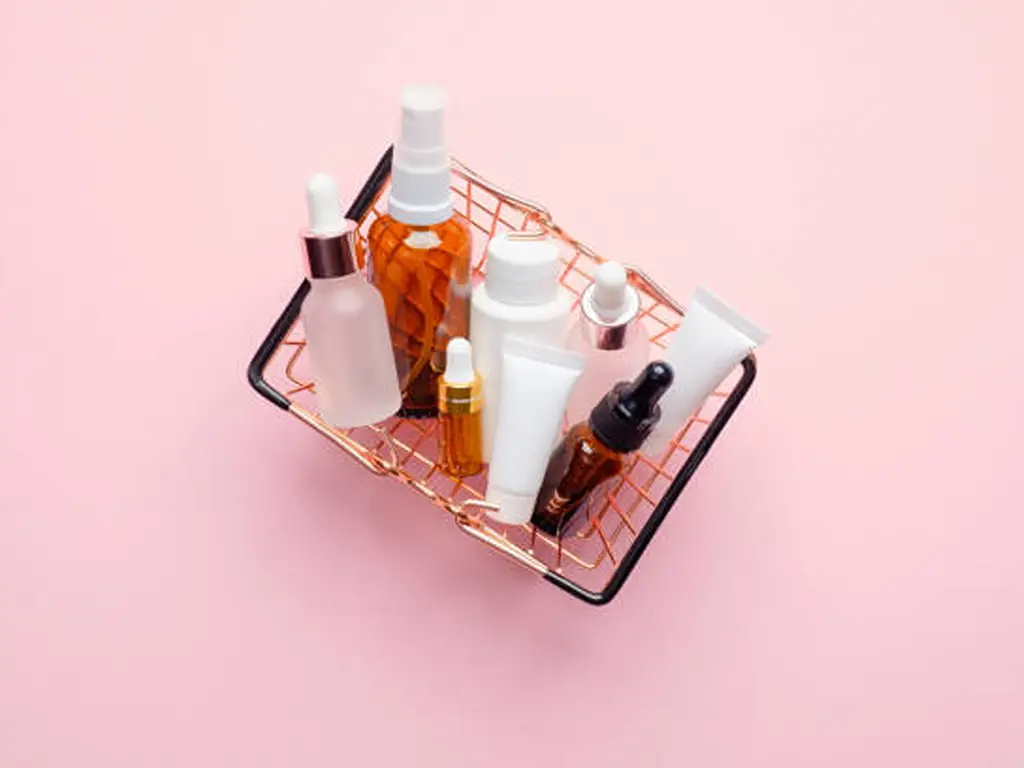
A bottle body is agnostic about how the product leaves it; the dispensing system is what matches the formula to the ritual. Dropper bottles suit oils and serums metered by the drop. Sprayers split further: fine-mist atomizers for alcohol-based perfume, wider sprayers for body mists. The pump bottle is the standard for lotions and creams that must not be exposed to air. The same body style can serve very different products simply by swapping the dispensing system, which is why stock bottle programs carry a handful of bodies and a wall of closures. It is also why, at the factory level, glass forming and closure supply are usually organized as separate specialties, and why a supplier who coordinates both under one roof can settle compatibility questions before you place the order rather than after the first leak report.
The three classic failures are all seal failures, not glass failures: a dropper bulb dissolved by essential oils; a cork that let a batch oxidize and leak; a "universal" cap that did not match the finish code and never seated. Check liner compatibility for your solvent, and always test-seal a filled sample before committing to a run.
Candle Jars, Perfume, and EO: A Fast Decision Path
If you make one of the three categories this article keeps circling, here is the decision shortcut, plus the one controversy worth settling.
The candle glass question, settled. Community wisdom insists candle containers must be "tempered glass." Industry practice quietly contradicts it: major candle brands pour into annealed flint-glass jars, and the mason jar, the most common candle vessel in America, is annealed, not tempered. Who is right? The tempered rule is a misunderstanding imported from flat-glass safety glazing. A candle does not need a jar that shatters safely on impact; it needs a jar that tolerates repeated local heating without cracking. That property comes from annealing quality and wall design, not tempering. A candle flame reaches roughly 1,000 °C at its core (National Candle Association), and while the jar wall never gets close to that, it does experience uneven heating that pushes stress into the glass. Well-annealed glass with low internal stress shrugs that off; poorly annealed glass or thin, uneven walls can crack, and a cracked candle jar is a product-liability event, not a return. What you can actually do: ask the supplier whether the jar is annealed in multiple temperature zones (a real quality marker) and whether it is thermal-shock tested; ISO 7458 is the container standard that defines how (ISO, 2004). Then get their testing in writing before you put your label on it.
The perfume and EO shortcut. Both are solvent products, so the decision path collapses to three checks: low-iron glass if the liquid must look colorless in the bottle, amber glass if it must survive light exposure, and a solvent-safe liner in the closure, meaning the polycone or PTFE options from the previous section. Shapes for both families come down to brand: the perfume world has the widest shape vocabulary of any category because fragrance brands treat the bottle as part of the product.
Here is the whole shortcut as a matrix. Each row assumes you already picked the four specs, and just warns you where each product family missteps:
| Your product | Vidro | Form | Seal | Don't |
|---|---|---|---|---|
| Perfume / alcohol-based | Low-iron clear, or amber for light-sensitive juice | Perfume family, square or round | Fine mist sprayer, solvent-safe liner | Rubber bulbs; cork; "crystal" claims without low-iron glass |
| Essential oils | Amber (UV), or clear for display | Boston round, 5–30 ml | Phenolic or PTFE-lined cap, glass dropper | Rubber dropper bulbs long-term |
| Lotions & creams | Clear or frosted-finish | Wide-mouth jar or pump bottle | CT cap or pump, simple liner fine | Narrow-mouth bottles for thick creams |
| Candles | Annealed soda-lime, even walls | Wide-mouth jar family | Decorative lid (seal is not the job) | Repurposed drinkware or untested "cute" vessels |
| Food & beverages | Soda-lime, color by light needs | Woozy, Boston round, wine/beer forms | CT, ROPP or crown by product | Non-food-grade vessels, mismatched finishes |
By this point you can walk into any supplier conversation and describe your product in four spec layers. That is the whole trick of this topic: the types are not a list to memorize; they are four questions you can answer about your own product. What remains is the question most brands actually stall on: should this be a stock bottle or your own mold?
Stock Bottles or Your Own Mold — and How to Check Quality
Every custom bottle starts life as a stock decision, and most should end there too. But the threshold is real, and crossing it changes your cost structure permanently.
Every stock-versus-mold decision starts the same way — send the four specs (glass, form, seal, quantity) and we will show you which route costs least at your volume.
Check stock vs. custom for my specsThree signals that it is time to talk about a mold
A dedicated mold, glass tooling made to your exact drawing, is justified when three things are true at once. Volume: custom minimums typically start at five-figure quantities, so the math only works when you will actually run that many. Diferenciação: a shape consumers recognize as yours, or a functional detail a stock bottle cannot give you. Staying power: the design will survive more than one season. If only one or two signals are present, the middle path is the smart one: a stock bottle with light customization, whether silk-screen printing, hot stamping, frosting, or a custom cap. That middle path is where the great majority of successful new brands live, because it buys you an ownable look at stock-bottle minimums and lead times.
Mold economics are the part buyers get wrong most often. The mold itself is a one-time charge, usually a four-figure amount for a bottle, and it is often refundable in whole or in part once your production volume crosses a threshold, which suppliers state plainly when you ask. What is not refundable is your time. A custom mold means a tooling cycle measured in weeks before the first sample, so never start a mold conversation against a launch deadline.
The acceptance checklist: four specs you can actually verify
When the bottles arrive, stock or custom, the four-layer framework turns into a verification list. Do not inspect by eye alone; ask for numbers:
- Material: if colorless clarity was part of the deal, the glass should show no green tint at the thickest points. Write it into the spec, not the small talk.
- Forming: consistent weight is the factory-floor proxy for consistent walls. Ask what weight tolerance they hold. Batch-weight control at roughly ±1 gram is what separates a disciplined line from a sloppy one, because a bottle that is heavier in one corner is thinner somewhere else.
- Annealing: the quality marker from the candle section applies to every bottle. Multiple annealing temperature zones and finished-part stress checks are the difference between containers that survive shipping and hot filling and ones that develop hairline cracks months later.
- Finishing and packaging: the mouth and base should be ground smooth as standard practice. A rough mouth scratches caps and jams filling nozzles, and the shipping pack should hold each bottle in its own cell with a promised damage rate you can hold them to.
That last line is the philosophical shift of the whole article: "I want a beautiful bottle" and "I want these four verified parameters" are two different ways to buy. The first gets you a catalog page; the second gets you a spec sheet a factory can be held to. Once you start speaking the second language, supplier comparisons become honest, because now you are comparing identical requirements rather than marketing pages.
Who to buy from: full-stack or specialist
The remaining choice is supplier structure. A specialist glass factory sells you bottles, and you source caps, decoration, and assembly elsewhere. That gives you maximum price transparency per component and maximum coordination work. A full-stack manufacturer keeps forming, decorating, and closure supply under one roof, which costs a little more per unit in exchange for one thing small brands undervalue: single accountability. When a seal fails, a finish is wrong, or a decorated bottle arrives scratched, one supplier owns the problem instead of three pointing at each other. For a brand without a packaging engineer on staff, which is most brands, that is usually the right trade.
At Daxin Glass, this is the conversation we have with most first-time buyers, and we keep the four specs answerable in a single exchange: we cast from more than 5,000 existing molds, so a stock bottle can carry your label at a 1,000-piece minimum; we hold batch weight to roughly ±1 gram so walls stay even; we anneal in three temperature zones rather than one; and we grind every bottle mouth and base as standard, at no extra charge. Whether that makes sense for your product is exactly what our in-house molding process page exists to help you judge: the mold decision, the decorating routes, and the lead times are all laid out there before you ever email us.
The Distributor's View: Which Stock to Carry
One last reader deserves their own section: the distributor or wholesaler whose shelf is the first stop for half the small brands in this article. For you, the four-spec framework reads differently, not as a buying guide but as an inventory philosophy.
The insight from the earlier sections is that formula compatibility lives in the glass and the seal, not in the decoration. That means a neutral, standard-finish stock bottle, a Boston round or a classic jar in a clean finish, can serve an essential-oil maker, a perfume startup, and a lotion brand at the same time: same body, swapped liner and dispenser, three different customer conversations. The standard finish is the key. If you stock bottles in odd or proprietary finishes, each one serves exactly one buyer. If you stock standard finishes, your inventory becomes a platform your customers configure.
The second insight is the mold threshold from the last section. Your customers will keep hitting it: the candle brand that outgrows stock jars, the fragrance line that wants its own silhouette. You do not need to absorb that demand into your own inventory. Route it toward customization. Stock the platform, and let each brand's custom or decorated work happen on their own order with the factory.
So the stance this article ends with is deliberate: carry the widest-compatibility stock in the cleanest standard finishes, hold a modest selection of decorated and premium lines as margin, and quote your customers in spec language rather than catalog language. A distributor who can say "this body, this finish, this liner, this quantity" on the phone sounds like a partner; one who can only describe shapes sounds like a shelf. When you compare suppliers for your own stock, use the same discipline: identical specs, then prices, and the market's marketing pages stop being comparable at all.
That is the entire field guide: glass, shape, seal, production. Name those four things about your product, and every "type of glass bottle" on the shelf, from Boston rounds to wine bottles to candle jars, resolves into the one that is actually yours.
Turn your four specs into a real bottle
Send glass, form, seal, and volume — we will come back with stock matches, customization routes, and mold economics for your quantity.
Comece com as especificações da sua garrafaReferências
- ISO. “ISO 7459:2004 — Glass Containers: Thermal Shock Resistance and Thermal Shock Endurance — Test Methods.” 2004. https://www.iso.org/standard/35615.html
- National Candle Association. “Candle Science.” https://candles.org/candle-science/
- Glass Packaging Institute. “What Is Glass?” https://www.gpi.org/what-glass
- Peoria Production Solutions. “Type II Glass.” 2024. https://www.peoriapros.com/knowledge-base/glossary/type-ii-glass/
- Daxin Glass Bottles. “In-House Molding.” https://www.daxinglassbottles.com/in-house-molding/
- Daxin Glass Bottles. “Quality Management.” https://www.daxinglassbottles.com/quality-management/
- Garrafas de vidro Daxin. “Garrafas e potes de vidro personalizados.” https://www.daxinglassbottles.com/custom-glass-bottles-jars/
- Daxin Glass Bottles. “In-Stock Bottles & Jars.” https://www.daxinglassbottles.com/in-stock/

 English
  Spanish
  French
  German
  Arabic
  Italian
  Dutch
Dutch  Portuguese
  Russian
  Korean
  Japanese