
Der Siebdruck auf Glasflaschen ist das Verfahren, das hinter den meisten Parfüm-, Kosmetik- und Kerzenverpackungen steckt, von denen man das Etikett nicht abziehen kann. Eine Schablone, ein Sieb und eine Rakel drücken die Farbe direkt auf das Glas. Dann entscheidet etwas darüber, ob dieses Logo ein Jahr lang im Regal überdauert oder schon abblättert, sobald die erste Flasche Alkohol damit in Berührung kommt. Dieses “Etwas” ist der Teil, den fast niemand, der über den Siebdruck schreibt, erklärt: die Farbe, die Aushärtung und an welcher Stelle in der Lieferkette der Druck tatsächlich stattfindet.
Dieser Leitfaden führt Sie durch den gesamten Prozess – von der Funktionsweise bis hin zu den Zahlen, die Sie von einem Lieferanten einfordern sollten, bevor Sie einen Auftrag unterzeichnen.
Was ist Siebdruck auf Glasflaschen und wie funktioniert er?
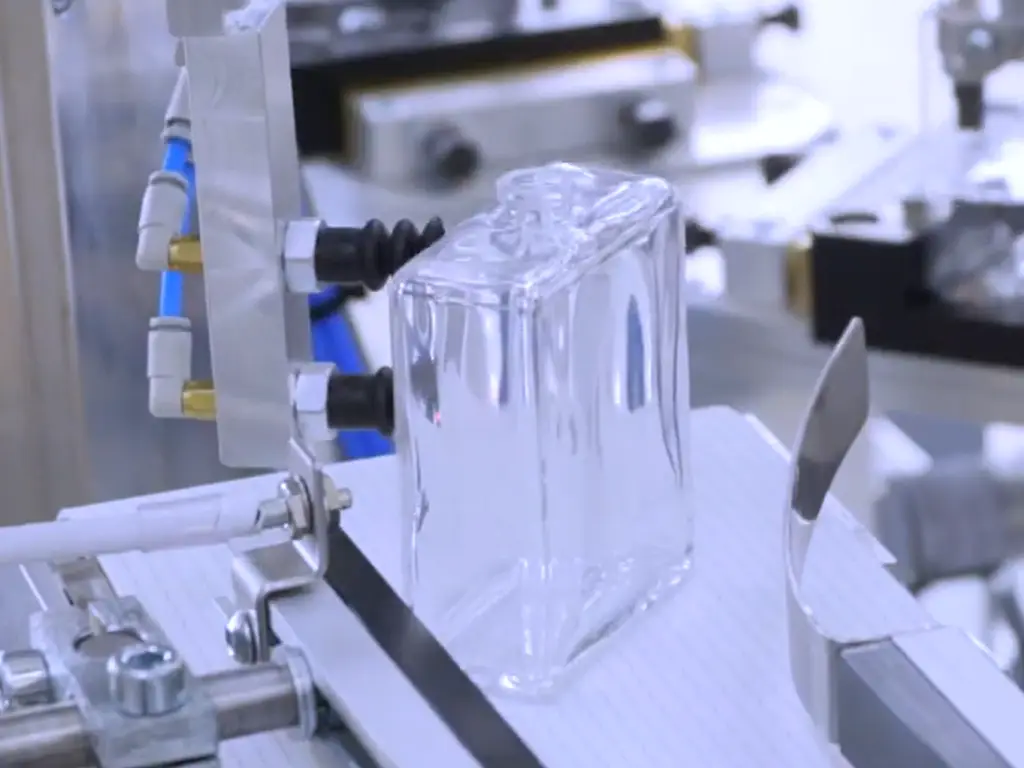
Der Siebdruck auf Glasflaschen funktioniert wie jeder andere Siebdruck auch, mit einem Unterschied: Die Flasche dreht sich, anstatt dass das Sieb flach aufgedrückt wird. Die Farbe wird durch ein feines Gewebe gepresst, das mit einer lichtempfindlichen Emulsion beschichtet und belichtet wurde, um eine Schablone zu bilden. Durch die offenen Bereiche des Motivs dringt die Farbe hindurch; alles andere hält sie zurück. Eine Rakel streicht über das Gewebe und drückt die Farbe während der Drehung auf die Flaschenoberfläche. Das Ergebnis ist ein scharfes, deckendes Bild, das auf auf dem Glas selbst und nicht auf einem daran befestigten Stück Papier.
Der Prozess läuft in vier Schritten ab:
- Siebherstellung. Das Gewebe wird beschichtet, das Motiv wird darauf belichtet, und die unbelichtete Emulsion wird ausgewaschen, sodass die offene Schablone zurückbleibt.
- Einrichtung. Die Flasche wird auf eine rotierende Halterung geladen und unter dem Sieb positioniert.
- Drucken. Der Rakel zieht die Farbe über das Sieb, während sich die Flasche darunter dreht, wodurch das Bild entlang der Krümmung übertragen wird.
- Aushärten. Die Tinte wird getrocknet, eingebrannt oder gebrannt, damit sie sich mit dem Glas verbindet. Dieser Schritt entscheidet mehr als jeder andere darüber, wie lange der Druck hält.
Zwei Dinge sollte man vorab wissen. Erstens, Für eine Farbe wird eine Siebdruckform benötigt.. Ein zweifarbiges Logo bedeutet zwei Siebe und zwei Durchgänge, weshalb der mehrfarbige Druck pro Stück teurer ist. Zweitens ist die zylindrische Form der Grund dafür, dass der Druck auf Glasflaschen maschinell erfolgt. Eine Flachbettdruckmaschine kann keine Rundung abbilden, daher drehen Rotationssiebdrucker die Flasche unter einem feststehenden oder sich bewegenden Rakel. Einfache Logos auf zylindrischen Flaschen sind Routine; bei komplexen mehrfarbigen Motiven auf konturierten Formen wird jedoch echte Spezialausrüstung erforderlich.
Damit ist auch eine häufig auftretende Verwechslung bei der Suche geklärt: Der Siebdruck auf Glasflaschen hat nichts mit dem Siebdruck auf T-Shirts oder Leiterplatten zu tun. Es handelt sich zwar um dieselbe Technikfamilie, aber um völlig unterschiedliche Druckfarben und eine völlig andere Chemie. Die Glasvariante ist im Bereich der industriellen Dekoration angesiedelt.
Siebdruckfarben und Aushärtung: Was entscheidet über die Haltbarkeit?
Hier liegt der Widerspruch, der sich in jedem Artikel zu diesem Thema verbirgt. Der eine Drucker wird Ihnen sagen, dass der Siebdruck “dauerhaft” ist. Ein anderer wird Ihnen erzählen, dass seine Farben eine Stunde lang eingebrannt werden. Ein dritter brennt seine Flaschen bei 600 °C ein. Alle drei beschreiben unterschiedliche Farbfamilien, und die von Ihnen gewählte Farbfamilie – nicht die Technik an sich – entscheidet darüber, ob der Druck die Lebensdauer Ihres Produkts übersteht.
Lufttrocknende und thermoplastische Druckfarben: Die bewährten Optionen
Die am häufigsten verwendete Druckfarbe für den Siebdruck auf Glasflaschen ist eine thermoplastische (lösungsmittelhaltige) Tinte, die durch Einbrennen aushärtet. Die bedruckte Flasche durchläuft einen Aushärtungsofen. In Produktionsglaswerken bedeutet dies in der Regel etwa eine Stunde Einbrenndauer bei mäßiger Temperatur, wodurch Lösungsmittel entweichen und das Harz zu einem widerstandsfähigen Film vernetzt wird. Dies ist das Arbeitstier der Branche: gute Haftung, gute Farbwiedergabe, angemessene Kosten, und es hält den Belastungen durch Handhabung, Feuchtigkeit und Temperaturschwankungen stand, denen eine Flasche im Vertrieb ausgesetzt ist.
Lufttrocknende Druckfarben sind die „Schnellvariante“: Sie härten bei Raumtemperatur aus, während das Lösungsmittel verdunstet. Sie lassen sich schneller herstellen und eignen sich gut für kurzlebige oder dekorative Gegenstände, aber der Film bleibt weicher und durchlässiger. Das ist ein echtes Problem, wenn der Inhalt der Flasche aggressiv ist, denn dann greift der Inhalt irgendwann die Außenseite an.
⭐ Wenn Sie eine Flasche für Kosmetika, Parfüm oder Lebensmittel auswählen, ist der eingebrannte thermoplastische Weg die Standardwahl. Lufttrocknung ist die Ausnahme, nicht die Regel.
Keramiktinten und UV-Tinten: Die Ausnahmen
Zwei weitere Familien decken die äußeren Bereiche des Spektrums ab.
Keramiktinten (für hohe Brenntemperaturen) werden aufgedruckt und anschließend bei etwa 500–600 °C gebrannt, sodass sich das Pigment mit der Glasoberfläche verbindet. Dies ist die haltbarste Verzierungstechnik für Glas. Sie ist die klassische Wahl für Wein- und Spirituosenflaschen sowie für Premium-Spirituosensortimente und der Grund für die Behauptungen im Internet, dass die Verzierung “dauerhaft” sei. Die Nachteile: Die hohe Temperatur schränkt die Auswahl an Farben und Effekten ein, und der Brand erfolgt in der Regel als Teil des Glasproduktionsprozesses, was die Möglichkeiten für die Durchführung einschränkt.
UV-härtende Tinten Sie härten unter UV-Licht innerhalb von Sekunden aus. Sie sind schnell und eignen sich gut für feine Details. Als Produktgruppe weisen sie jedoch eine geringere Lösungsmittelbeständigkeit auf als eingebrannte thermoplastische Druckfarben. Für eine Flasche, die ein Parfüm auf Alkoholbasis enthalten soll, sind sie nicht die erste Wahl.
Alkoholbeständigkeit und Haftung: Die entscheidenden Zahlen
Bei Parfüm- und Kosmetikflaschen ist Haltbarkeit kein bloßer Slogan. Sie lässt sich nachweisen. Zwei Zahlen stehen in den Gesprächen mit Lieferanten im Vordergrund:
- Prüfung mit Alkoholtüchern. Parfümflakons werden beim Abfüllen, in den Regalen und von den Kunden mit Alkohol abgewischt, und die Verzierung eines Flakons sollte dies unbeschadet überstehen. In der Parfümherstellung gilt als Maßstab ein Alkoholbeständigkeitstest mit 500 Wischvorgängen auf der verzierten Oberfläche. Eine Beschichtung auf Ölbasis, die diese Anforderung erfüllt, hält über die gesamte Lebensdauer einer Parfümflasche hinweg, ohne ihre Beschriftung zu verlieren.
- Haftfestigkeitstest mit Kreuzgitterklebeband. Lieferanten prüfen, wie gut Tinte oder Farbe auf Glas haftet, und verwenden dazu die als […] standardisierte Kreuzschnitt-Klebeband-Abziehmethode. ASTM D3359. In den Film wird ein Raster eingeschnitten, das Klebeband wird abgezogen, und der verbleibende Film wird mit 0B–5B bewertet. Eine Bewertung von 4B oder höher gilt in den meisten Beschichtungsspezifikationen als akzeptable Mindestanforderung (KTA-Tator, “Messung der Haftfestigkeit mittels Klebebandtest gemäß ASTM D3359”). Das ist der Maßstab, an dem jeder Anbieter von Dekorationsartikeln gemessen werden muss.
Hinzu kommt noch der Aspekt der Einhaltung gesetzlicher Vorschriften. Europäische Vorschriften legen Obergrenzen für den VOC-Gehalt (flüchtige organische Verbindungen) von Beschichtungen fest (EU-Richtlinie 2004/42/EG), wobei die Werte bei lösungsmittelhaltigen Produkten bei mehreren hundert Gramm pro Liter liegen, während wasserbasierte Systeme weit darunter bleiben. Für Duftstoffverpackungen, die für den EU- und US-Markt bestimmt sind, sind wasserbasierte Druckfarben der sichere Weg zur Einhaltung der Vorschriften. Sie bestehen denselben 500-Wisch-Alkoholtest, wenn sie mit einem für Duftstoffe geeigneten Polyurethanharz formuliert sind, erfordern dafür jedoch eine zusätzliche klare Deckschicht.
| Tintenfamilie | Aushärten | Alkoholresistenz | Haftfestigkeit (ASTM D3359) | Kosten | Am besten für |
|---|---|---|---|---|---|
| An der Luft trocknen lassen | Raumtemperatur | Schwach — dünne Schicht | Variabel, oft unter 4B | Niedrigster | Dekorative Einzelstücke in kleiner Auflage |
| Thermoplast (ausgebacken) | ca. 1 Stunde im Ofen backen | Kräftig – besteht den 500-Wisch-Parfümtest | ≥4B | Gering bis mäßig | Standardflaschen für Parfüm und Kosmetika |
| Keramik (hochgebrannt) | Bei ca. 500–600 °C gebrannt | Hervorragend – verschmilzt mit dem Glas | Ausgezeichnet | Mäßig bis hoch | Wein, Spirituosen, hochwertige Verpackungen mit langer Haltbarkeit |
| UV-Härtung | Sekunden unter UV-Licht | Schwächer als gebackener Thermoplast | Gut geeignet für glatte Oberflächen | Mäßig | Schnelle und detailgenaue Arbeit |
Siebdruck vs. Etiketten, Heißprägen und UV-Druck: Was passt am besten zu Ihrer Flasche?
Der Siebdruck ist nicht die einzige Möglichkeit, eine Flasche mit Ihrem Logo zu versehen, und er ist auch nicht immer die richtige Wahl. Hier finden Sie einen ehrlichen Vergleich, denn die Kosten für die Wahl der falschen Methode werden Ihnen erst nach der ersten Produktionscharge bewusst.
| Methode | Dauerhaftigkeit | Farbpalette | Kosten bei Kleinserienfertigung | Kosten für Großserienfertigung | Wahrgenommene Qualität | Einschränkungen hinsichtlich der Flaschenform | Lieferzeit |
|---|---|---|---|---|---|---|---|
| Siebdruck | Hoch (gebacken) bis mäßig (luftgetrocknet) | Einfarbig, Pantone-konform; keine fotografischen Details | Mäßig: Kosten für die Einrichtung des Bildschirms | Niedrigster Stückpreis bei großen Mengen | Hoch: haptisch, integriert | Es werden rotationssymmetrische (meist zylindrische/konische) Formen benötigt | 2–4 Wochen ab Produktionsbeginn |
| Klebeetiketten | Gering bis mäßig; abziehbar, kann Blasen bilden | Vollfarbig, fotografisch | Niedrigster: keine Werkzeuge | Mäßig | Unten: sichtbar angebracht | Fast keine | Am schnellsten |
| Heißprägung (Folie) | Hoch | Metallic-Farben, Gold/Silber | Hoch: Formen erforderlich | Niedriger Stückpreis bei großen Mengen | Höchste: edle Verarbeitung | Eher flache Platten sind am einfachsten | Mäßig |
| UV-Digitaldruck | Mäßig; geringere Lösungsmittelbeständigkeit | Vollfarbdruck, Farbverläufe, feine Details | Niedrig: keine Bildschirme | Pro Stück teurer als auf dem Bildschirm | Mäßig | Arbeiten auf gekrümmten Flächen | Schnell |
Das sehenswerte Muster: Der Siebdruck punktet bei großen Auflagen mit Pantone-genauen Volltonfarben, muss sich jedoch in puncto Flexibilität den Etiketten und bei fotografischen Details dem UV-Druck geschlagen geben. Etiketten sind nach wie vor die richtige Wahl für gesetzliche Angaben, die je nach Markt angepasst werden müssen, sowie für Testläufe mit einer Auflage von wenigen hundert Flaschen. Der UV-Digitaldruck ist die Lösung für vollfarbige Motive in kleinen Auflagen. Die Heißprägung übertrifft alle anderen Verfahren hinsichtlich der wahrgenommenen Wertigkeit, weshalb Premium-Parfümmarken sie oft mit dem Siebdruck kombinieren, anstatt ihn zu ersetzen.
Zwei Dinge, die in den Vergleichstabellen der meisten Blogs nicht berücksichtigt werden. Erstens, Die Farbe auf Glas entspricht nicht der Farbe auf Ihrem Bildschirm.. Glas reflektiert das Licht, anstatt es zu durchlassen; daher ist ein Pantone-Farbmusterbuch, das bei reflektiertem Licht betrachtet wird, die einzige verlässliche Referenz. Verlangen Sie vor Produktionsbeginn unbedingt ein physisches Muster. Zweitens hat sich der Trend bei Premium-Düften in Richtung kombinierte Dekoration: Siebdruck für das Logo, Sprühbeschichtung für einen matten oder mit Farbverlauf versehenen Flaschenkörper, Heißprägung oder Goldkonturierung für Akzente – alles auf einer einzigen Flasche. Das ist der Look, der hinter den Regalen für moderne Luxusprodukte steckt, und der Siebdruck bildet die Grundlage, auf der diese Art von Verpackungen aufbaut.
Die kombinierte Ausstattung ist der Luxusstandard. Im Siebdruckverfahren wird das Logo aufgebracht, durch Sprühbeschichtung entsteht der matte oder mit Farbverläufen versehene Flaschenkörper, und Heißprägung oder Goldkonturierung sorgen für den letzten Schliff – eine Flasche, mehrere Dekorationslinien in einer Anlage.
So wählen Sie einen Siebdruck-Anbieter aus: Lokale Betriebe vs. Integration in die Fertigung
Sobald Sie wissen, dass Sie sich für den Siebdruck entschieden haben, stellt sich die eigentliche Frage: Wer bedruckt Ihre Flaschen? Die Antwort verändert Ihre Kosten pro Flasche um einen Faktor, den Sie anhand eines einzelnen Angebots nicht erraten können, da vier sehr unterschiedliche Vertriebskanäle sehr unterschiedliche Zahlen nennen.
Die vier Kanäle im Vergleich
Kanal 1: Drucken Sie es selbst aus. Es gibt manuelle Siebdruckanlagen für Flaschen, die von Hobbybastlern für Muster und Kleinserien genutzt werden. Die mehrfarbige Passgenauigkeit auf einer gewölbten Oberfläche lässt sich mit manuellen Geräten nur sehr schwer erzielen, und lufttrocknende Druckfarben schränken die Haltbarkeit ein. Dieser Kanal dient dem Lernen und der Prototypenentwicklung, nicht der Serienproduktion.
Kanal 2: Lokale Fachgeschäfte für Dekoration in kleiner Auflage. Man kauft Flaschen, schickt sie an einen Anbieter, der sie dann bedruckt und zurückschickt. Dies ist der Vertriebskanal, auf den sich die Suchergebnisse beziehen: Druckereien mit Sitz in den USA, deren Mindestbestellwert im niedrigen dreistelligen Bereich liegt. Ein etablierter Anbieter nennt einen Preis von Mindestens $275 pro Bestellung für den Flaschendruck, zzgl. $50 pro nicht standardmäßiger Druckfarbe (Normans Druckerei). Vorteile: keine Mindestbestellmenge, schnelle Lieferung, Kommunikation auf Englisch. Einschränkungen: Die meisten Anbieter akzeptieren nur zylindrische oder flachseitige Flaschen, Ovale und stark konturierte Formen werden variiert, und Milchglas ist riskant, da ein Druckfehler kann nicht gelöscht und neu bedruckt werden, daher müssen zusätzliche Behälter einkalkuliert werden. Die Stückkosten bleiben unverändert, da die Betriebsführung der Werkstatt arbeitsintensiv ist.
Kanal 3: Die Glasfabrik „The Source“, die den Druck selbst durchführt. Die Flasche wird im selben Produktionsablauf geformt, bedruckt, verschlossen und verpackt. Das führt zu einer völlig anderen Kostenstruktur. Der Stückpreis sinkt mit steigendem Volumen, da die Dekoration auf der Glasproduktionslinie erfolgt und die Druckkapazitäten Teil der Werksausstattung sind. In einem typischen Werk für dekoriertes Glas handelt es sich dabei um automatisierte Siebdruckmaschinen sowie eine Reihe halbautomatischer Maschinen, die dahinter stehen. Die Mindestbestellmengenstruktur dieses Vertriebskanals ist mehrstufig: grob gesagt 1.000 Stück bei Standarddesigns, 5.000 Stück bei individuellen Verzierungen wie Siebdruck und 10.000 Stück, wenn eine neue Form erforderlich ist. Die Lieferzeiten sind länger: Die Produktion dauert 30–35 Tage, zuzüglich Seefracht. Die Flasche, der Aufdruck und der Verschluss werden jedoch als eine Bestellung geliefert.
Channel 4: Marktplatz-Betreiber (nach dem Vorbild von Alibaba). Verkäufer bieten bedruckte Flaschen mit Mindestbestellmengen ab etwa 500 Stück und niedrigen Listenpreisen an. Das Risiko liegt nicht im Preis, sondern in der Überprüfung: In den meisten Angeboten werden zwar Menge und Preis angegeben, jedoch keine Angaben zur Aushärtungsmethode, zum Haftfestigkeitstest und zur Beständigkeit gegen Alkohol. Das bedeutet, dass man sie mit nichts vergleichen kann. Die Beschaffung über Marktplätze funktioniert nur, wenn man bereits genau weiß, was man benötigt, und dies anhand von Mustern überprüfen kann.
Eine Leistungscheckliste, an die Sie Ihre Lieferanten halten können
Unabhängig davon, für welchen Vertriebskanal Sie sich entscheiden – es sind immer dieselben fünf Fragen, die einen Anbieter, der in Parfümqualität arbeiten kann, von einem unterscheiden, der dazu nicht in der Lage ist:
- Welche Tinte und welche Aushärtung? Bei allen alkoholhaltigen Produkten ist das Aushärten im Ofen (Rechne mit etwa einer Stunde im Ofen) besser als das Trocknen an der Luft. Wenn die Antwort “an der Luft trocknen” lautet, frag nach dem Grund.
- Hält es dem 500-Wisch-Alkoholtest stand? Für Inhaltsstoffe in Parfüms und Kosmetika ist dies der Maßstab. Die Angabe “dauerhaft” ohne Angabe einer Prüfmethode ist ein Marketingbegriff und keine Spezifikation.
- Wie hoch ist die Haftkraft? Fragen Sie nach dem Kreuzschraffur-Ergebnis. 4B oder besser gemäß ASTM D3359 ist die Passleiste.
- Wie wird eine Farbe freigegeben? Bestehen Sie auf einem physischen Muster, das mit einem Pantone-Farbfächer abgeglichen wird, und nicht auf einem Bildschirmproof.
- Was passiert mit den Ausschusswaren? Erkundigen Sie sich nach den Prüfungsrichtlinien. Eine vertretbare Produktionsbasis ist eine 10% Stichprobenprüfung, wobei eine Vollprüfung ausgelöst wird, wenn die Fehlerquote 2% übersteigt, und eine Lieferabnahmequote von ≥98%. Ein Lieferant, der seine Richtlinien für zurückgewiesene Ware nicht darlegen kann, kann Ihr Risiko nicht beziffern.
| Kanal | Mindestbestellmenge | Stückkosten | Lieferzeit | Überprüfung der Alkoholbeständigkeit | Für wen es geeignet ist |
|---|---|---|---|---|---|
| Heimwerken / Anleitung | Keine – Einzelflaschen | Hoher Arbeitsaufwand pro Stück | Tage | Nein – lufttrocknende Druckfarben | Prototypenentwicklung, Lernen |
| Lokales Einrichtungsgeschäft | Niedrig (~1 TP5T275 Min. Ladung) | Flach, arbeitsintensiv | 1–2 Wochen | Oft unausgesprochen | Kleine Losgrößen, kurze Durchlaufzeiten, zylindrische Formen |
| Glasfabrik (eigener Druck) | 1.000 Lagerware / 5.000 Sonderanfertigungen / 10.000 neue Formen | Tropfen mit Volumen | 30–35 Tage Produktionszeit + Transportzeit | Testbar – 500-Wisch-Benchmark | Großunternehmen im Bereich Parfüm und Kosmetik |
| Marktplatz-Assembler | ~500 Stück | Niedriger Listenpreis | Variabel | Selten dokumentiert | Preisorientierte Beschaffung mit Musterprüfung |
Wo die einzelnen Optionen an ihre Grenzen stoßen
- Heimwerken geht schief Sobald man zwei Farben oder eine Flasche benötigt, die nicht perfekt zylindrisch ist.
- Lokale Geschäfte gehen pleite hinsichtlich der Form (Ovale sind aus dem Trend gefallen), hinsichtlich des Volumens (pauschale Stückpreise) und hinsichtlich der Alkoholbeständigkeit (Leistungsdaten werden selten veröffentlicht).
- Die Integration in die Fabrik funktioniert nicht mehr Bei einmaligen Werbeauflagen von unter ~500 Stück ohne Nachbestellungen lohnen sich der Werkzeugaufwand und die Wartezeit nicht. Das gilt auch für Flaschen, die bei jeder Charge ein neues Design erfordern, da dann immer wieder Kosten für Siebdruckwerkzeuge anfallen würden.
- Marktplatz-Assembler scheitern genau dort, wo Qualität am schwersten zu erkennen ist: keine Aushärtungsspezifikation, keine Prüfdaten und ein Vergleich zwischen verschiedenen Lieferanten ist unmöglich.
Die Zahl, die diesen gesamten Abschnitt zusammenfasst: 500. Der Test zur Alkoholbeständigkeit mit 500 Wischvorgängen ist das entscheidende Kriterium, das Dekorationen in Parfümqualität von allen anderen unterscheidet. Fragen Sie danach, beobachten Sie, wie ein Lieferant darauf reagiert, und Sie werden wissen, mit welchem Vertriebskanal Sie es wirklich zu tun haben.
Maßstab für Dekorationen in Parfümqualität
500 Alkohol-WischtestsDer einzige Test, der Dekoration in Parfümqualität von allem anderen unterscheidet. Fragen Sie jeden Lieferanten danach.
Zusammenarbeit mit einem Glashersteller, der selbst druckt
Wenn Ihre Stückzahlen eine Integration in die Produktionskette rechtfertigen, wie sieht die Zusammenarbeit dann konkret aus? Der hauseigene Druck bedeutet, dass die Dekoration Teil desselben Auftrags ist wie die Flasche selbst. Eine einzige Bestellung umfasst das Glas, den Siebdruck, den Verschluss oder die Pumpe sowie die Exportverpackung. Genau diese Struktur mit einer einzigen Bestellung ist der entscheidende Punkt: Die Verantwortung wird nicht zwischen verschiedenen Anbietern hin- und hergeschoben. Ein Druckfehler ist das Problem der Glasfabrik und wird mit den Mitarbeitern gelöst, die die Flasche hergestellt haben – nicht über eine E-Mail-Kette zwischen einem Flaschenverkäufer, einer Druckerei und einem Spediteur.
Der typische Ablauf sieht folgendermaßen aus:
- Entwurf. Das Designteam des Lieferanten setzt Ihre Idee in eine serienreife Vorlage um. Bei diesem Modell werden Konzeptentwürfe und 3D-gedruckte Muster kostenlos bereitgestellt, wobei die Entwürfe in etwa 3 Arbeitstagen vorliegen.
- Stichproben. Ein physisches Muster dient zur Überprüfung von Farbe, Platzierung und Haftfestigkeit, bevor eine Mengenverpflichtung eingegangen wird. Der Zeitraum vom Konzept bis zum Muster beträgt etwa 15 bis 20 Tage.
- Produktion. Die Standard-Produktionsdauer beträgt 30–35 Tage, wobei während der Fertigung regelmäßig über den Fortschritt berichtet wird.
- Versand. Die Flaschen werden in einer speziell für zerbrechliche Güter konzipierten Exportverpackung versandt: einzelne Fächer in einer stoßdämpfenden Innenschale innerhalb eines 5-lagigen Wellpappen-Exportkartons.
Eine ehrliche Einschränkung dazu, wer diesen Kanal nicht nutzen sollte: Wenn Sie weniger als ca. 500 Flaschen als Einmalbestellung ohne Nachbestellung benötigen oder Ihr Etikett bei jeder einzelnen Charge neu gestalten, sind die Kosten für die Fabrikintegration höher als der Nutzen. Die Siebdruckwerkzeuge und die Produktionsplanung sind auf wiederkehrende Stückzahlen ausgelegt. Und wenn Ihre Stückzahl zwar realistisch ist, Ihr Konzept sich aber noch nicht bewährt hat, ist der kluge Weg der, den die Branche tatsächlich nutzt: Beginnen Sie mit Standardflaschen mit geringfügiger Individualisierung (Siebdruck oder Etikettierung auf versandfertigen Designs), testen Sie den Markt und steigen Sie erst dann auf individuelle Dekorationen und Sonderformen um, sobald sich das Produkt seinen Platz im Regal erobert hat.
Bringen Sie den „500-Wipe“-Standard auf Ihrer eigenen Flasche an
Senden Sie uns Ihr Flaschendesign zu, und wir bestätigen Ihnen die Werte für Tinte, Aushärtung und Haftung, bevor Sie sich festlegen.
Einen Dekorationstest anfordernFehler beim Siebdruck: Was kann schiefgehen und wie lässt sich das vermeiden?
Der Siebdruck auf Glasflaschen weist vorhersehbare Mängel auf. Wenn Sie diese kennen, werden Sie nicht mehr nur ein Käufer, der auf das Beste hofft, sondern einer, der die Ware prüft.
Fehler 1: Der Druckfehler, den man nicht rückgängig machen kann. Bei Milchglas kann eine fehlerhaft bedruckte Flasche nicht gereinigt und neu bedruckt werden. Die Druckfarbe dringt in die mattierte Oberfläche ein, und die Flasche muss entsorgt werden. Druckereien wissen das und sollten Ihnen aufgrund dieses Risikos zusätzliche Flaschen anbieten. Wenn das Wort “milchglas” in Ihrer Spezifikation vorkommt und in Ihrem Angebot keine zusätzlichen Flaschen aufgeführt sind, fragen Sie nach dem Grund.
Fehler 2: Abweichung bei der Mehrfarben-Passung. Jede zusätzliche Farbe bedeutet einen weiteren Siebdruck und einen weiteren Durchgang, und die Ausrichtung zwischen den Durchgängen (“Registerhaltung”) ist nur so gut wie die Maschine, die die Flasche hält. Bei manuellen und halbautomatischen Anlagen kommt es zu Abweichungen; automatisierte Rotationsmaschinen gewährleisten eine konstante Ausrichtung, da die Flasche in derselben Halterung indexiert bleibt. Wenn Ihr Logo zwei oder mehr Farben hat, ist die Frage der Registerhaltung eine Frage der Maschinenleistung.
Fehler 3: Der Inhalt steht im Widerspruch zum Druckbild. Dies ist der klassische Fehler in der Parfümindustrie: Ein alkoholbasierter Duftstoff auf einem Druck, der nicht dafür ausgelegt ist. Lufttrocknende Tinten und herkömmliche UV-Tinten werden durch den Kontakt mit Alkohol aufgeweicht, und das Logo verblasst, bildet Blasen oder löst sich innerhalb weniger Wochen ab. Die Lösung liegt bereits im Vorfeld: bei der Auswahl der Tinte und des Aushärtungstisches im ersten Abschnitt dieses Leitfadens. Es geht nicht um eine nachträgliche Reparatur.
So überprüfen Sie Ihre Sendung: Für einen Kreuzschraffur-Klebebandtest gemäß ASTM D3359 benötigt man ein Messer, ein Stück Klebeband und zehn Minuten. Sie können diesen Test an einer Probe aus Ihrer eigenen Charge durchführen. Vergleichen Sie die fertige Flasche unter derselben Beleuchtung mit dem freigegebenen physikalischen Muster, da Farbabweichungen der häufigste versteckte Fehler sind. Lesen Sie außerdem die Prüfvorschriften des Lieferanten als Teil des Vertrags: Die Produktionsbasis ist eine Stichprobenprüfung von 10%, eine Vollprüfung bei einer Fehlerquote von über 2% und eine Lieferabnahmequote von ≥98%. Das sind Zahlen, auf deren Einhaltung Sie den Lieferanten schriftlich verpflichten können.
Drei Dinge, die vor der Produktion zu klären sind
(1) Milchglas – planen Sie zusätzliche Behälter für Druckfehler ein; (2) mehrfarbige Druckmotive – fragen Sie nach, welche Maschine die Passgenauigkeit gewährleistet; (3) alkoholhaltige Inhalte – verlangen Sie eine eingebrannte thermoplastische Tinte, die den 500-Wisch-Test besteht. Bei allen drei Punkten handelt es sich um schriftliche Fragen, nicht um Vermutungen.
Das Geschäft mit bedruckten Flaschen: Mindestbestellmenge, Kosten und Vertriebskanal-Kalkulation
Die Dekoration verändert die Wirtschaftlichkeit einer Flaschenbestellung, und die Berechnung lässt sich klar in verschiedene Stufen unterteilen. So sehen die Zahlen konkret aus.
Was die drei MOQ-Stufen für Ihre Liquidität bedeuten
- ~1.000 Stück: Standardausführungen, geringfügige Anpassungen. Wählen Sie aus einem Lagerkatalog aus und bedrucken oder beschriften Sie die Artikel. Das finanzielle Risiko ist gering, Sie benötigen keine Werkzeuge und der Versand erfolgt innerhalb weniger Tage. Diese Stufe dient dazu, Konzepte zu testen, ohne das Unternehmen zu gefährden.
- ~5.000 Stück: individuelle Gestaltung. Individueller Siebdruck, Sprühbeschichtung, Heißprägung. Bei diesem Umfang amortisieren sich die Sieb- und Rüstkosten, und die Stückpreise sinken spürbar. Dies ist die Einstiegsstufe für eine ernstzunehmende Parfüm-Artikelnummer.
- ~10.000 Stück: Sonderformen. Eine speziell für Ihre Marke geformte Flasche. Die Kosten für die Formwerkzeuge (etwa $1.000–$1.100 für eine Flaschenform) werden in Rechnung gestellt. einmal. Beim werkseitig integrierten Modell erfolgt die Rückerstattung ab 100.000 Flaschen. Auf der Formebene wird die Verpackung zu einem firmeneigenen Produkt, wodurch sie nicht mehr kopierbar ist.
Der Wasserfall, den man nicht vergessen sollte: „Rohteil → verziert → geformt“ – das ist die Reihenfolge, die in der Branche tatsächlich verwendet wird, denn jede Stufe verringert das Risiko für die nächste. Marken, die direkt auf maßgefertigte Formen setzen, bevor sich das Produkt bewährt hat, binden Kapital in Werkzeugen für eine Flasche, die der Markt noch nicht bestätigt hat.
Mindestbestellmengen für bedrucktes Glas
Vertriebsstruktur und Gewinn
Die Kalkulation ist einfach, sobald man sie einmal verstanden hat. Lokale Geschäfte berechnen pauschale Stückpreise, da ihre Kostenbasis auf Arbeitskosten beruht; Fabriken berechnen Stückpreise, die mit steigendem Volumen sinken, da ihre Kostenbasis auf Maschinenkosten beruht. Für eine Marke, die jährlich Tausende von Einheiten verkauft, bedeutet dieser Unterschied, ob die Dekoration eine Kostenstelle ist oder Teil der Bruttomarge. Das Premium-Regal verstärkt diesen Effekt noch: Kombinierte Veredelungen (Siebdruck plus Sprühbeschichtung, Heißprägung oder mattes Schleifen auf einem einzigen Gefäß) sind es, die Luxuspreise rechtfertigen, und sie sind nur dort verfügbar, wo mehrere Veredelungslinien in einer Anlage untergebracht sind.
Aus diesem Grund ist der in den vorangegangenen Abschnitten beschriebene Auswahlstandard auch ein unternehmerischer Standard. Ein Lieferant, der den 500-Wisch-Test, die Haftungsstufe und seine Ausschussrichtlinien dokumentieren kann, ermöglicht es Ihnen, Ihr tatsächliches Risiko zu beziffern. Die Kosten für ein dokumentiertes Prüfverfahren sind geringer als die Kosten für eine Nacharbeit der gesamten Charge. Die Rechnung geht immer so auf.
Dies ist der Weg, den wir bei Daxin Glass Bottles eingeschlagen haben: Ein einziger Auftrag umfasst die Flasche, den Siebdruck, den Verschluss oder die Pumpe sowie die Exportverpackung, sodass die Verantwortung für die Dekoration, den Werkzeugbau und die Lieferung bei einem einzigen Partner liegt. Unsere Mindestbestellmengen richten sich nach der oben genannten Berechnung: 1.000 Stück für Standarddesigns, 5.000 Stück für individuelle Dekorationen wie Siebdruck und 10.000 Stück, wenn eine neue Form erforderlich ist. Die Formgebühr wird einmalig berechnet und ab 100.000 Flaschen zurückerstattet. Die Zeit vom Konzept bis zum Muster beträgt 15–20 Tage, die Standardproduktion 30–35 Tage, wobei über 2.000 Standarddesigns innerhalb von 7–10 Tagen versandfertig sind. Siehe Unser Programm für individuell gestaltete Glasflaschen und -gläser für das vollständige Dekorationsangebot oder unser Sortiment an Parfümflaschen für die Formen, auf denen dieses basiert.
Der Siebdruck auf Glasflaschen belohnt diejenigen Marken, die ihn als technische Anforderung und nicht als bloßen Slogan betrachten. Legen Sie die Farbgruppe entsprechend dem Inhalt fest, überprüfen Sie die Eignung mit dem Wisch- und dem Klebebandtest und wählen Sie den Produktionsweg je nach Stückzahl: zunächst aus Lagerware, dann bedruckt und schließlich im Formguss, wenn das Produkt dies rechtfertigt. Bei Daxin Glass Bottles brennen wir siebgedruckte Flaschen nach dem Druck etwa eine Stunde lang ein, während ein Großteil der Branche sie an der Luft trocknen lässt. Das ist der Unterschied zwischen einem Logo, das ein Jahr im Regal überdauert, und einem, das ein Leben lang Alkohol-Reinigungstüchern standhält. Wenn Sie diese Zahlen auf Ihre eigene Flasche drucken lassen möchten, fordern Sie ein Angebot an oder senden Sie uns Ihre Flasche , und wir unterziehen sie denselben Tests.
Konfigurieren Sie Ihre Parfümflasche in einem einzigen Auftrag
Flasche, Siebdruck, Verschluss und Exportverpackung aus einer Hand. Standarddesigns ab 1.000 Stück; individuelle Gestaltung ab 5.000 Stück.
Senden Sie uns Ihre Flaschenspezifikation
 English
  Spanish
  French
  German
  Arabic
  Italian
  Dutch
Dutch  Portuguese
  Russian
  Korean
  Japanese