
Bouchons pour bouteilles en verre : tous les types de bouchons, celui qui convient à votre bouteille et comment faire le bon choix
Demandez à dix personnes ce qu’est un " bouchon de bouteille ", et la moitié d’entre elles imagineront une bouteille de bière. Si vous développez un produit conditionné dans une bouteille en verre, le bouchon a plus d’importance que la bouteille elle-même. Un parfum, une huile à barbe, un sérum, un mélange d’huiles essentielles : c’est le bouchon qui détermine la prise en main du produit, sa résistance au transport, la possibilité pour les clients de le recharger, et le risque que votre formule n’abîme pas petit à petit le bouchon lui-même. Ce guide présente les types de bouchons qui comptent vraiment pour les bouteilles en verre, à quoi chacun correspond, ainsi que les paramètres à vérifier avant de vous engager à en commander 10 000 exemplaires.
Bouchons de bouteilles en verre : que signifie réellement le terme " bouchon " ?
Un bouchon n'est pas une pièce unique. Dans le jargon de l'emballage, il s'agit de l'ensemble complet qui assure l'étanchéité de la bouteille. En général, cet ensemble se compose de deux ou trois éléments qui fonctionnent ensemble : un capuchon extérieur, un insert intérieur (un compte-gouttes, un réducteur d'orifice, un joint d'étanchéité ou une doublure) et, parfois, un collier. Capuchon et couvercle Ce sont des mots courants pour désigner certaines de ses parties. Clôture est le terme technique désignant le système (Fermeture (récipient), Fondation Wikimedia, 2026).
Une petite précision avant de passer à la carte. La " capsule de bouteille " la plus célèbre de toutes, à savoir la capsule métallique sertie que l'on trouve sur les bouteilles de bière, relève d'un autre sujet, tout comme les collectionneurs qui échangent ces capsules. Ce guide porte sur les bouchons destinés à bouteilles en verre destinées aux parfums, aux cosmétiques, aux huiles et à la production en petites séries: des systèmes d'étanchéité destinés à des produits que les consommateurs ouvrent, utilisent et referment des centaines de fois.
Chaque bouchon se fixe à la bouteille de l'une des cinq façons suivantes :
| Mécanisme de fixation | Comment ça marche ? | Où le trouver |
|---|---|---|
| Fileté (CT / à oreilles / ROPP) | Se visse sur un col de bouteille fileté | La plupart des bouchons à vis, des bouchons compte-gouttes, des pompes et des vaporisateurs |
| Sertie | Collier métallique serré autour du cou | Vaporisateurs de parfum, capsules à couronne |
| À encliquetage / à friction | Enfoncé ; maintenu par ajustement serré | Bouchons en verre, en liège et capuchons de rechange en silicone |
| À encliqueter (en plastique) | J'ai fait sauter une perle sur le col | Produits de soins personnels destinés au grand public |
| À charnière / à anse | Le bras de levier maintient une butée en place | Bouteilles à bouchon à bascule |
Cette distinction en cinq catégories explique la plupart des défaillances de fermeture évoquées dans cet article. Le filetage peut se desserrer pendant le transport. Le sertissage est définitif. Le frottement dépend entièrement des tolérances. Le choix du mécanisme est la première décision à prendre, et il est utile de maîtriser le vocabulaire ci-dessus avant de poursuivre.
Les 7 principaux types de bouchons utilisés pour les bouteilles en verre
Si vous effectuez une recherche sur les " types de bouchons de bouteilles ", vous obtiendrez des listes de bouchons de vin, de capsules de bière et de bouchons de boissons gazeuses. La plupart de ces résultats n’ont aucun rapport avec les produits cosmétiques ou les parfums. En ce qui concerne les flacons en verre destinés aux soins personnels et aux parfums, sept familles couvrent la quasi-totalité de l’offre en rayon. Deux éléments les distinguent : le résultat final du produit (ou s'il sortira un jour) et quelle consistance de liquide chacun supporte.
| Famille de fermetures | Fonctionnalités | Match type |
|---|---|---|
| Bouchon à vis simple | Uniquement les joints ; à verser ou à appliquer par petites touches | Huiles, rinçages, toniques, recharges pour diffuseurs |
| Réducteur d'orifice | Bouchon avec insert de régulation ; goutte à goutte | Huiles à barbe, mélanges d'huiles essentielles, sérums |
| Casquette à cordon | Bouchon à vis avec pipette en verre | Sérums et teintures nécessitant un dosage précis |
| Pompette pour lotion | Pompe à visser avec tube plongeur | Lotions, huiles pour le corps |
| Pulvérisateur / atomiseur | Pulvérisation à fine brume ; à sertir ou à visser | Parfums, eaux de Cologne, brumes pour le visage |
| Roll-on | Applicateur à bille dans un col fileté | Déodorants, huiles en roll-on |
| Bec verseur / bouchon à rabat | Versement contrôlé ou ouverture d'une seule main | Huiles alimentaires, sirops, gels douche en verre |
La règle concernant la texture est claire et nette. Les liquides fluides à base d’alcool s’utilisent avec un vaporisateur. Les huiles visqueuses s’utilisent avec une pompe ou un compte-gouttes. Pour tout ce qui se situe entre les deux, le choix d’un réducteur d’orifice est déterminant. La plupart des incompatibilités, ainsi que la plupart des plaintes du type " mon vaporisateur est bouché ", trouvent leur origine ici. Si vous préparez une huile à barbe, le choix entre un compte-gouttes et un réducteur d'orifice n'est pas une question d'esthétique. Les compte-gouttes dosent avec précision et permettent d'atteindre le fond du flacon, mais ils se renversent facilement et nécessitent davantage de soins de stérilisation. Les réducteurs d'orifice ont l'air plus propres et renversent moins, mais un petit orifice transforme une huile de base épaisse en une véritable épreuve de patience (Quel type de bouchon préférez-vous ? (Orifice / Compte-gouttes ?), r/beardoil). Un fabricant a testé quatre générations de bouchons avant d'opter pour un compte-gouttes à sécurité enfants. L'emballage sous film thermorétractable de chaque bouchon pour les commandes en gros réduisait considérablement sa marge. Son premier bouchon à sécurité enfants était si difficile à ouvrir qu'il a fallu envoyer un flacon de remplacement à un client.
| Si votre produit est… | Famille de fermetures qui y survit | Les cas où cela échoue généralement |
|---|---|---|
| Parfum de luxe à base d'alcool | Atomiseur à sertir ou à visser | Fuites au niveau du joint pendant le transport |
| Huile de support épaisse (jojoba, argan) | Réducteur à orifice, à large orifice | Réducteur trop petit : versement lent et salissant |
| Sérum / teinture (visqueux, précieux) | Casquette à cordon | Le tube du compte-gouttes n'atteint pas le fond |
| Lotion / huile pour le corps (grand format) | Pompette pour lotion | Incompatibilité entre la longueur du tube de la pompe et la hauteur du flacon |
| Huile essentielle pure | Compte-gouttes en verre, composants internes compatibles avec le verre | La poire en caoutchouc s'est détériorée sous l'effet de l'huile elle-même |
| Produit à ne pas confondre avec une boisson | Options à l'épreuve des enfants | L'ergonomie en pâtit ; effectuez des tests avec de vrais utilisateurs |
Une remarque sur la chimie des matériaux, car elle est à l'origine de la destruction d'un plus grand nombre de produits que les fuites. Les huiles essentielles pures attaquent le caoutchouc naturel. Les terpènes font gonfler et détériorent la poire d'un compte-gouttes classique à poire en caoutchouc. Les vapeurs provoquent ce phénomène même lorsque le liquide n'entre jamais en contact avec le caoutchouc (Flacons et compte-gouttes, r/essentialoils). Si votre formule est agressive, la compatibilité de chaque élément de fermeture " standard " doit être vérifiée ; elle ne va pas de soi.
Atomiseurs à sertir ou à visser : tout dépend de la taille du lot
Dans cette catégorie, c'est le secteur des parfums haut de gamme qui offre le choix de bouchons le plus instructif. Les vaporisateurs de parfum se fixent sur le flacon de deux manières différentes. Sertie signifie qu'un collier métallique est comprimé mécaniquement autour du cou, de manière définitive. À visser ce qui signifie que le vaporisateur se visse et peut être retiré. Les parfumeurs indépendants débattent de cette question précise depuis des années, en ayant souvent à l'esprit une taille de lot très spécifique (Serrer ou ne pas serrer ? La bataille ultime des bouchons pour 5 000 bouteilles, r/DIYfragrance, 2025).
Les cinq étapes décisives
1. Matériel. Le sertissage nécessite une pince à sertir. Un outil manuel d'établi convient pour les petites séries ; une machine est nécessaire pour les grandes quantités. La pince de serrage doit correspondre exactement à la taille du col. Le vissage ne nécessite aucun outil particulier. 2. Bris. Les artisans indépendants qui sertissent à la main des bouteilles fragiles déclarent perdre environ une bouteille sur trois lorsqu'ils utilisent des outils manuels. Le sertissage à la machine change la donne. 3. Possibilité de recharge. Un vaporisateur à sertissage ne peut pas être démonté sans être endommagé. Le flacon n'est destiné qu'à un usage unique. Les vaporisateurs à visser, quant à eux, peuvent être retirés, ce qui est le principe même de tout programme de recharge. 4. Transports en commun. Les bouchons à vis peuvent se desserrer pendant le transport. Les bouchons sertis ne peuvent pas se desserrer. Mais un sertissage mal réalisé laisse le parfum s'évaporer sans qu'on s'en aperçoive, ce qui est pire. 5. Perception. Crimped reads "professional, permanent." Screw-on is sometimes read as cheaper. Even so, prestige houses use screw-on for refillable lines, and the same community that praises crimp's look admits that a screw cap good enough for a luxury refillable is good enough for anyone.
Crimp vs Screw-On Atomizer: Five Decision Points
Pour
Cons
Where your volume sits: stock, light customization, or custom mold
Before choosing a sprayer, know which of three lanes you are in. Custom bottle designs carry the highest floor. The lowest custom-mold minimums reported by independent brands sit around 10,000 pieces, with tooling lead time in weeks (Custom fragrance packaging from Alibaba, r/DIYfragrance, 2026). Below that line sit two cheaper lanes. Stock bottles and closures are off-the-shelf: no tooling, ordered by the case. Light customization uses stock shapes with your print, label or color, at minimums far below a mold program. A 5,000-bottle launch is not a custom-mold project. It is a stock-plus-light-customization project, and the supplier conversation is completely different.
| Lane | Outillage | Typical minimum | Lead time feel |
|---|---|---|---|
| Stock (off-the-shelf) | Aucun | Case / pallet level | Short — existing inventory |
| Light customization | None (print/décor only) | Mid-hundreds to low thousands | Print and cure time |
| Moule sur mesure | New glass or closure mold | ~10,000 reported floor | Mold tooling + production |
The refill trend is changing the math
The structural case for screw-on keeps strengthening. Refillable formats are the fastest-growing corner of fragrance packaging. Analysts value mini refillable perfume bottles at about USD 18.6 billion in 2025, heading toward USD 23.7 billion by 2031 (Mini Refillable Perfume Bottles Market, Research and Markets, 2025). A 2025 FEBEA consumer survey found that 59% of surveyed consumers had bought refillable beauty products. Independent makers already report choosing screw-on specifically to "offer refills and less waste." If your brand story includes refills, and the economics increasingly say it should, a permanent crimp is the wrong closure. It gives the product one life.
Either way, choose on your refill model, not on habit. The closure locks in your business model as firmly as your fragrance formula does.
Settled on crimp or screw-on? Send us the batch size and we will spec the neck finish and closure pairing around it.
Send your volume and get a specHow to Spec a Closure: Neck Finish, Seal, Materials, Compliance
This is where glass bottle closures stop being a shopping question and become an engineering one. The industry standardized the vocabulary. The bottle's mouth is called the finish, and closures are specified against it with a two-part code you can read at a glance.
Start with the finish: the two-number code
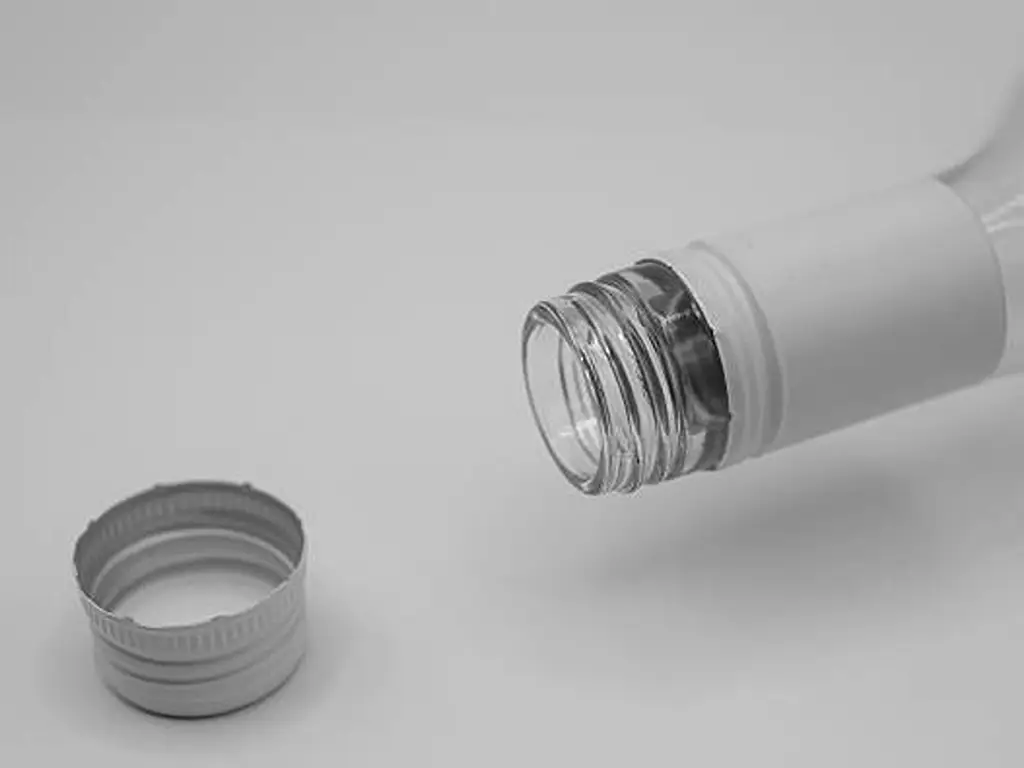
A neck finish code such as 20-400 (also written 20/400) is not a fraction. Under Glass Packaging Institute (GPI) conventions, the first number is the nominal outer diameter in millimeters, measured across the threads. The second is the standardized thread style: 400 means a single thread turn, 410 means one-and-a-half turns, 415 means two (Understanding Bottle Neck Finishes: The Difference Between 400, 410, and 415, Regent Plast). Both numbers must match. A 24-410 closure will not fit a 24-400 bottle: same diameter, different thread geometry, guaranteed leak or cross-thread.
3
Finish codes. Three different bottles.
20-400, 20-410 and 24-400 share nothing but a family name. Match both numbers — diameter and thread style — or the closure deal is lost before it starts.
Here is how the code maps to the bottles you are most likely to meet:
| Code | Meaning | Where it typically appears |
|---|---|---|
| 20-400 | 20 mm, single thread turn | Simple screw caps, small stock bottles |
| 20-410 | 20 mm, 1.5 turns | Serums, small dropper and spray bottles |
| 24-410 | 24 mm, 1.5 turns | The cosmetic workhorse — lotion pumps, flip-tops, mist sprayers |
| 28-400 / 28-410 | 28 mm | Larger shoulders and jars |
| 415 family | 2 turns, taller neck | Essential oils, maximum leak protection |
Perfume sprayers use their own code. Crimp necks are specified by FEA sizes (FEA 15, FEA 18, FEA 20, millimeters across the collar), with FEA 15 the most common fine-fragrance size (FEA15 vs FEA18: Perfume Bottle Neck Sizes Explained, Packamor). Neck size is not a function of bottle volume. Some 100 ml bottles are FEA 15; some 50 ml bottles are FEA 18. The only reliable move is to ask the supplier for the spec sheet and test a physical sample before ordering pumps.
Leaks are designed, not discovered
Here is the uncomfortable truth beneath every "it leaked in shipping" story. Screw caps can back off in transit: vibration and temperature cycles work the threads. A crimped closure cannot loosen, but it can be crimped badly (To Crimp or not to Crimp, r/DIYfragrance, 2025). Neither failure is the glass's fault, and neither is visible to the naked eye. What actually seals a glass bottle is a hierarchy of small parts: the liner (foam, pulp or induction foil inside the cap), the joint or inner plug, and, for dispensing closures, the sealing geometry of the pump or dropper itself. Two questions separate brands that ship clean from brands that eat chargebacks:
- What is the sealing element, and what is it made of? A linerless cap seals via a deformable rim. A lined cap depends on the liner's compression set over time and its chemical resistance to your formula.
- What is the torque specification? Application torque, measured in inch-pounds, is the most under-specified parameter in small-brand packaging. Too low, and caps arrive loose. Too high, and customers cannot open them. Ask for your supplier's target range, then verify it on your own filling line. Your capping machine, not their cap, sets the real number.
The practical test that catches most of it needs no lab. Fill a batch with the actual formulation, cap it, and store it inverted for 24–48 hours at room temperature. Repeat with a simulated-shipping shake if you can. Products that survive inverted storage rarely leak in boxes.
Materials vs. your formula — and when child-resistant packaging is legally required
Closure materials form a short list with long consequences. Polypropylene tolerates most cosmetics but not all. Acrylique (PMMA) looks premium and glass-clear but can craze under aggressive solvents. Aluminium is light and recyclable. Zinc alloy (zamac) carries heavy, metallic prestige. Wood and bamboo give a natural profile but need careful lacquer selection, because alcohol and oils lift finishes. Two rules of thumb. First, never assume a material is inert against votre formula. Seventy-percent ethanol, citrus oils and pure essential oils can degrade parts that were fine in someone else's bottle. Second, always test the finished assembly (formula plus cap, liner and gasket together), because failures live in the combination.
On regulation, one myth needs correcting. Child-resistant (CR) packaging is not required for perfumes or cosmetics as a category in the United States. Under the Poison Prevention Packaging Act (16 CFR Part 1700), CR packaging is triggered by specific hazardous contents at regulated concentrations. Examples include products with 10% or more hydrocarbons by weight, or 4% or more methyl alcohol (Poison Prevention Packaging Act Business Guidance, U.S. CPSC). Enforcement is real. A luxury cosmetics brand recalled an essential-oil blend for exactly this gap. If your formula contains flagged ingredients, or could be mistaken for a drink by a child, plan for CR and its usability trade-offs from day one. CR closures that frustrate adults generate their own customer-service disasters.
Closure Spec Self-Check Before You Order
Who Should Supply Your Glass, Closure, and Finishing?
Once you know the finish, the seal and the material, the last structural question is sourcing. Three paths exist, and they differ in where the risk lands.
Path one: self-assemble. Buy bottles from a bottle maker, closures from a closure specialist, and decorating from a third shop. Each piece can be best-in-class. You pay for it in coordination: three suppliers, three minimums, three lead times, and the classic failure where cap finish and bottle finish were never validated together until the first carton arrives. Path two: a glass manufacturer that supplies closures and finishing in the same order. Bottle and finish are specified together. Closures are matched to that finish. Décor color-matching happens inside one quality system instead of across three. Path three: local wholesale stock. Fast and risk-free for prototypes and first runs. But the catalog owns the decisions, and scaling means switching paths anyway.
For fragrance and cosmetic runs, the decisive question is usually décor consistency. Glass decorating (spray coating, hot stamping, screen printing) and closure finishing (electroplating, anodizing, lacquer) are different process worlds. Color-matching across two factories is where "the cap is a slightly different gold than the bottle" gets born. At Daxin Glass Bottles, that entire chain runs as one single-order custom glass program: the glass bottle, the custom lids and pumps range (Zamac, plastic, acrylic and wooden caps plus perfume sprayers), and the decorating and finishing. There is a library of thousands of existing molds to pull from before you ever pay for a new one. Color samples and closure fit are locked in the same approval round. That is precisely the coordination that breaks down when bottle and cap come from different continents. Self-assembly is still right if you already trust a specialist closure house and need a very unusual cap design. Integration saves coordination; it does not automatically beat a supplier you have worked with for years.
Closure Failures in Real Life: What to Test Before You Fill 10,000
Every failure mode below has a name attached somewhere in the maker community. These are not hypotheticals. They are the ledger of people who shipped before testing.
| Real-world failure | The prevention move |
|---|---|
| Hand-crimping broke roughly one in three fragile bottles | Machine-crimp at volume, or switch to screw-on |
| Crimp applied too loose → fragrance evaporated in storage | Verify crimp tightness on samples before filling |
| Screw caps arrived loose / leaked after transit | Set torque spec; invert-test a batch before shipping |
| Rubber dropper bulb degraded and clouded the oil | Use glass or compatible polymer internals |
| Dropper tube didn't reach the bottom → last 15% wasted | Specify tube length against bottle interior height |
| Child-resistant cap too hard for adults → customer replacements | Prototype CR with real users; check the adult-open rate |
| Thick oil clogged a fine-mist sprayer | Match orifice size to formulation viscosity |
| Silk-screen décor peeled after alcohol wipe-downs | Verify décor cure and alcohol resistance with your formula |
The five-step release check below costs a day of work. It has caught every failure in the table above at least once in someone's production history:
Five-Step Release Check Before a Big Batch
The "sample was perfect, bulk was different" story is almost always a supplier change or a spec drift between sample and production. That is why the last step matters more than it sounds.
The Business View: Stock Bottles Without a Closure Plan Are Half a Product
The inquiries changed: the closure is the first question
Everything in this article compresses into one commercial observation. Customers no longer ask for a bottle. They ask for a bottle that dispenses and seals correctly. The small brands launching 5,000 units on stock bottles have absorbed the failure ledger above. Their first question to a supplier is not "what shapes do you have?" It is "will the cap fit, will it leak, and can I put my logo on it without opening a mold?" A catalog that answers bottle shapes but stays silent on closures forces that buyer to assemble the answer themselves across three suppliers. Most of them, at that stage, move on to whoever answers the whole question. If you stock glass, the closure is not an accessory line. It is the other half of every product you sell.
Assemble stock by the pair, not by the piece
The economics favor pairs. The demand that matters sits in the lane below the custom-mold line. That is the lane where buyers need stock bottles, matched closures and light customization (print, color, label) without a 10,000-piece tooling commitment. The demand clusters into a few high-volume combinations: narrow-neck bottles paired with crimped or screw-on atomizers for fragrance; Boston rounds paired with droppers or orifice reducers for oils; pump bottles paired with lotion pumps. Stocking these as assembled pairs rather than independent bottle and cap SKUs does three things. It answers the buyer's first question before it is asked. It moves the conversation from comparing bottle prices to comparing complete solutions. And it turns the closure margin, historically the forgotten line item, into part of every quote. The boundary to respect is real. Pairing everything with everything is how SKU counts explode and dead stock accumulates. Focus the pairs on the three or four product categories your buyers actually fill, and keep exotic closure requests on special order. That is the difference between a catalog that sells and a warehouse that collects dust.
If you are speccing closures for a new glass bottle run, or restocking a catalog that should have been paired years ago, send your neck finish and target volumes to our team. Get the closure math done before you commit to a mold or a container of anything.
Make the finish the first decision, not the last
Get a glass bottle and closure pairing built around your finish code — sample validation, décor color-matching, and QC documents on request.
Request closure samples and specsRéférences
- Regent Plast. “Understanding Bottle Neck Finishes: The Difference Between 400, 410, and 415.” 2024. https://regentplast.com/understanding-bottle-neck-finishes-the-difference-between-400-410-and-415/
- Packamor. “FEA15 vs FEA18: Perfume Bottle Neck Sizes Explained.” https://www.packamor.com/blogs/knowledge-hub/fea15-vs-fea18-understanding-perfume-bottle-neck-sizes-before-you-order
- U.S. Consumer Product Safety Commission. “Poison Prevention Packaging Act Business Guidance (16 CFR Part 1700).” https://www.cpsc.gov/Business--Manufacturing/Business-Education/Business-Guidance/PPPA
- Research and Markets. “Mini Refillable Perfume Bottles Market, 2025–2031.” 2025. https://www.researchandmarkets.com/reports/6075200/mini-refillable-perfume-bottles-market-global
- Wikimedia Foundation. “Closure (Container).” 2026. https://en.wikipedia.org/wiki/Closure_(container)
- Reddit — r/DIYfragrance. “To Crimp or Not to Crimp? The Ultimate Cap Battle for 5,000 Bottles.” 2025. https://www.reddit.com/r/DIYfragrance/comments/1hydixf/to_crimp_or_not_to_crimp_the_ultimate_cap_battle/
- Reddit — r/DIYfragrance. “Custom Fragrance Packaging from Alibaba.” 2026. https://www.reddit.com/r/DIYfragrance/comments/1snynt7/custom_fragrance_packaging_from_alibaba/
- Reddit — r/beardoil. “What Type of Bottle Cap Do You Like? (Orifice/Dropper?)” https://www.reddit.com/r/beardoil/comments/5otcin/what_type_of_bottle_cap_do_you_like_orificedropper/
- Reddit — r/essentialoils. “Bottles and Droppers.” https://www.reddit.com/r/essentialoils/comments/bongwo/bottles_and_droppers/
- Bouteilles en verre Daxin. “ Bouteilles et bocaux en verre sur mesure. ” https://www.daxinglassbottles.com/custom-glass-bottles-jars/
- Daxin Glass Bottles. “Custom Lid & Pump.” https://www.daxinglassbottles.com/custom-lid-pump/
- Daxin Glass Bottles. “Contact.” https://www.daxinglassbottles.com/contact/
- Bouteilles en verre Daxin. Page d'accueil. https://www.daxinglassbottles.com/
 English
  Spanish
  French
  German
  Arabic
  Italian
  Dutch
Dutch  Portuguese
  Russian
  Korean
  Japanese