
The Ultimate Guide to Packing Material for Glassware: Stop Losing Money to Breakage
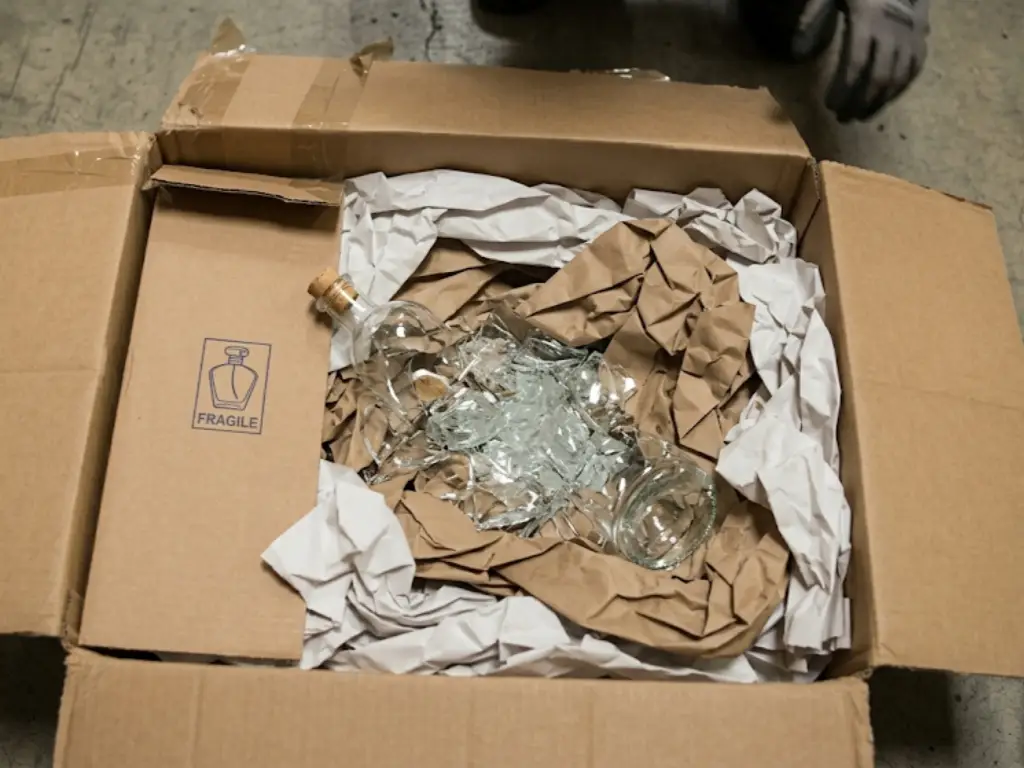
In the high-stakes, hyper-competitive environment of global B2B e-commerce and wholesale distribution, the physical integrity of your product during transit serves as the ultimate litmus test of your entire operational efficiency. When you are dealing with fragile, high-value commodities such as premium bespoke perfume bottles, electroplated cosmetic jars, pharmaceutical vials, or artisanal laboratory glassware, the margin for logistical error is absolutely non-existent. A significant number of manufacturing businesses and brand owners operate under the dangerous and outdated misconception that secondary packaging is merely a consumable expense—a line item to be aggressively minimized in the pursuit of higher margins. This fundamental misunderstanding inevitably leads to a cascading series of catastrophic financial leaks: astronomical product replacement costs, skyrocketed dimensional weight (DIM) shipping penalties, irreparably destroyed brand equity, and a relentless flood of negative customer reviews that can permanently derail a product launch.
Choosing the right packing material for glassware is not about browsing a catalog and buying the cheapest roll of plastic wrap available. It is a highly engineered, strategic corporate decision that must perfectly balance impact deceleration physics, internal immobilization mechanics, and advanced logistics mathematics. Whether you are shipping a handful of sample glass jars to a prospective buyer or fulfilling a massive wholesale order of 100,000 custom-molded fragrance bottles across the Pacific Ocean, your packaging architecture directly dictates your ultimate profit margins. This comprehensive, industrial-grade guide will dismantle the pervasive myths surrounding traditional packing methods, deeply explore the physics of shock absorption and vibration damage, and provide a masterclass on selecting and deploying B2B protective materials that guarantee your glassware arrives perfectly intact, every single time.
The Hidden Business Cost of Inadequate Glassware Packaging
Before we can dive into the specific polymers, foams, and papers used to wrap fragile glass, we must firmly establish the true macroeconomic impact of packaging failures on your balance sheet. When a glass product shatters in transit, the financial blow extends far, far beyond the initial manufacturing cost of the broken item itself. The true equation that supply chain directors and procurement officers must face is the Total Cost of Ownership (TCO) in Fulfillment, which is accurately calculated as: Packaging Material Cost + Dimensional Shipping Cost + Damage Replacement Cost + Customer Acquisition Penalty + Labor Wasted on Returns.
According to comprehensive data from leading packaging machinery manufacturing associations, the hidden profit erosion caused by product damage can consume up to 5% to 8% of gross revenue for high-volume fragile goods shippers who utilize substandard logistics protocols. When a B2B client or an end-consumer receives a crushed carton filled with broken glass and leaked fluids, you are immediately forced to pay for a replacement product, cover the expedited shipping costs a second time out of pocket, absorb the labor cost of customer service intervention, and potentially lose the lifetime value (LTV) of that buyer entirely. Suddenly, the few cents you thought you saved by purchasing substandard, ultra-thin packing material translates into thousands of dollars lost on the back end.
If your breakage rate hovers around 2% or 3%, you are bleeding capital. In the realm of top-tier cross-border B2B delivery, acceptable breakage rates must be aggressively suppressed to below 0.5%, steadily approaching Parts Per Million (PPM) quality levels. Achieving this requires a paradigm shift: viewing packaging not as a localized warehouse task, but as an integrated engineering extension of the product itself.
The Pre-Packaging Truth: Why Glass Durability Starts at the Furnace
Here is a harsh reality that most packaging blogs will never tell you: absolutely no amount of premium external packaging can save a glass vessel that is structurally compromised from the inside out. Before we even discuss bubble wrap or foam, we must address the foundational manufacturing process of the glassware itself.
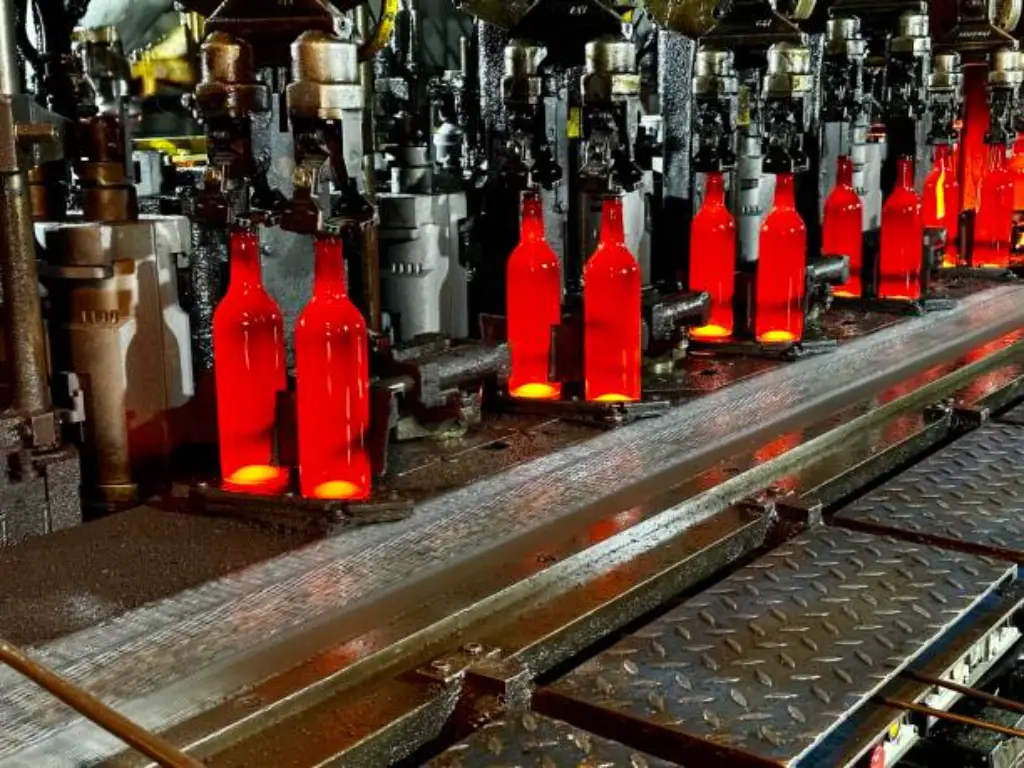
High-quality glass containers rely heavily on a critical manufacturing phase known as the annealing process. When molten glass is blown or pressed into its final mold at temperatures exceeding 1000°C, the exterior of the glass cools significantly faster than the interior. This temperature differential traps immense, invisible internal stress within the molecular structure of the silica. If a bottle is packed and shipped in this state, the slightest temperature fluctuation in a cargo plane, or a minor vibration in a delivery truck, will cause the bottle to spontaneously shatter—a phenomenon often misdiagnosed as “shipping damage.”
Top-tier glass producers like Daxin Glass completely neutralize this threat before the bottle ever sees a cardboard box. In their elite facilities, immediately after forming, the glass bottles are sent through a continuous annealing lehr (a specialized temperature-controlled tunnel). Here, the glass undergoes a rigorous 1.5 to 2-hour gradient cooling process. The bottles are held at a critical temperature zone of 520°C to 560°C for 30 to 60 minutes, allowing the internal molecular structure to fully realign and relax, completely eliminating internal stress.
This process grants the glass extreme thermal shock resistance and immense structural durability. Only when you start with a structurally sound, Daxin-certified annealed glass container does the external packing material for glassware become a predictable, effective shield against the brutal kinetic forces of the modern logistics network. If your supplier rushes the annealing process to save fuel costs, you will pay the price in shattered inventory regardless of how much you spend on bubble wrap.
Core Wrapping Materials for Surface and Impact Protection
Assuming your glassware is expertly manufactured, the first line of external defense in your packaging strategy is surface isolation and primary shock deceleration. This layer sits closest to the product and is tasked with a dual mandate: decelerating the sudden G-force of a drop and preventing abrasive friction from destroying the aesthetic finish of the glass. Not all protective wraps are created equal, and selecting the wrong substrate can result in catastrophic aesthetic damage.
Traditional Bubble Wrap versus Polyethylene (PE) Foam
Bubble wrap is arguably the most ubiquitous packing material for glassware globally, but its application is frequently misunderstood in commercial shipping environments. To use bubble wrap effectively, a packer must understand the critical distinction between cell sizes. Small bubble wrap (typically featuring 3/16-inch bubbles) is engineered almost exclusively for surface protection and minor scratch prevention. Large bubble wrap (1/2-inch bubbles or larger) is designed strictly for void fill and primary impact deceleration. You cannot substitute one for the other without compromising safety.
However, traditional plastic bubble wrap has a fatal flaw when dealing with luxury glassware: it is inherently abrasive over long transit times. For high-value items like custom color-coated perfume bottles, matte-painted cosmetic jars, or glass adorned with delicate gold hot-stamping, the constant micro-vibrations during shipping cause the plastic bubbles to ruthlessly rub against the product’s surface. This relentless friction can lead to “ghosting” (leaving permanent circular imprints), chemical reactions with water-based coatings, or outright scratching of the finish. This is where Expanded Polyethylene (PE) Foam emerges as the vastly superior B2B alternative.
PE Foam sheets are closed-cell, highly resilient, and, most importantly, completely non-abrasive. Think of bubble wrap as a sudden-impact airbag, while PE foam acts as a protective silk sleeve. Wrapping a custom-sprayed glass bottle in a 1/16-inch or 1/8-inch PE foam sheet ensures that the aesthetic integrity of the product remains absolutely pristine, regardless of the physical turbulence occurring outside the carton. Furthermore, PE foam provides excellent thermal insulation, protecting sensitive liquid contents from extreme temperature fluctuations.
| Material Type | Dynamic Shock Absorption | Surface Anti-Abrasion | Volumetric Efficiency | Recommended B2B Use Case |
|---|---|---|---|---|
| Small Bubble (3/16″) | Low | Moderate (High risk of ghosting on paint) | High (Compact profile) | Basic clear glass, low-end retail items |
| Large Bubble (1/2″) | High | Poor (Abrasive to finishes) | Low (Highly bulky, increases DIM) | General void fill, heavy duty industrial glass |
| PE Foam Sheets | Moderate to High | Exceptional (100% Non-abrasive) | High (Thin profile saves space) | Luxury perfume bottles, electroplated glass, painted jars |
| Honeycomb Kraft Paper | Moderate | Excellent | Very High (Flat storage until used) | Eco-conscious brands, aesthetic unboxing |
Honeycomb Packing Paper and Corrugated Sleeves
As global consumer sentiment shifts aggressively toward sustainable, zero-plastic unboxing experiences, die-cut honeycomb kraft paper has revolutionized the way forward-thinking brands protect their glassware. Honeycomb paper utilizes a brilliant 3D interlocking structural design. When mechanically stretched by a dispenser, the flat paper expands into a rigid, three-dimensional hexagonal honeycomb matrix. This geometric transformation provides remarkable cushioning capabilities that easily rival traditional plastic bubble wrap, but with significant operational and environmental advantages.
Because the angled cells of the honeycomb paper interlock tightly with one another, the material is entirely self-fastening. This completely eliminates the need for adhesive tape during the wrapping process. In a high-volume B2B packing line, stripping away the time required for a worker to cut and apply tape to individual bottles drastically reduces labor costs and dramatically increases throughput. Additionally, pre-glued corrugated sleeves—cylinders of single-face corrugated board—can be rapidly slipped over standard wine bottles, liquor bottles, or cylindrical jars to provide instant, rigid impact resistance.
Void Fill Solutions: The Danger of Vibration Settling
A fundamental law of packaging engineering is that thick external armor is entirely useless if the internal organs are allowed to crash into each other. The vast majority of glassware breakage occurs not from a direct external puncture to the box, but from internal kinetic energy. If a box is dropped and the glass items inside have even a centimeter of room to shift, the resulting glass-on-glass collision or glass-on-cardboard impact will result in catastrophic shattering. Void fill materials are deployed to achieve absolute immobilization.
The Fatal Flaw of EPS Peanuts and the Settling Effect
It is imperative to address the legacy use of Expanded Polystyrene (EPS) packing peanuts. From a professional B2B logistics standpoint, EPS peanuts must be completely eradicated from your supply chain. While environmental regulations are banning them globally, their biggest technical failure is a phenomenon known as Vibration Settling (or Migration).
During a 30-day cross-border ocean freight journey, or a 3,000-mile cross-country truck route, cargo is subjected to relentless, low-frequency vibrations. Under these conditions, heavy glass items packed in loose EPS peanuts act like heavy stones placed on sand. The continuous vibration causes the lightweight peanuts to vibrate upward, while the heavy glass slowly sinks to the bottom of the carton. By the time the box reaches its destination, the glass is resting directly against the unpadded bottom of the cardboard box. The moment the box is set down heavily by a courier, the glass shatters instantly. Loose-fill peanuts provide an illusion of safety that disintegrates under real-world transit conditions.
Inflatable Air Pillows and Kraft Paper Dunnage
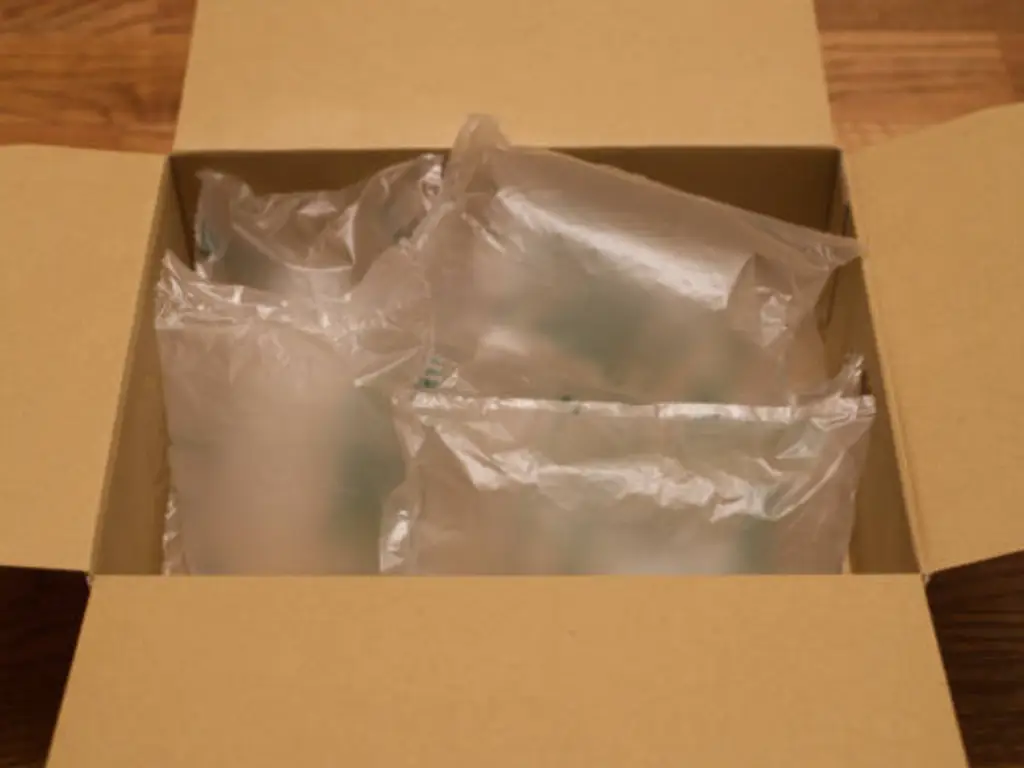
To combat settling, modern operations utilize structured void fill. Air pillows are a marvel of warehouse efficiency. Shipped flat on massive rolls, these high-density polyethylene films are inflated on-demand. A single pallet of uninflated air pillow film yields the void-fill equivalent of an entire truckload of bubble wrap, saving massive warehouse rent. However, they are highly susceptible to punctures and should never be used alongside sharp-edged glass or metal caps. Air Column Bags, however, feature independent inflated chambers that wrap tightly around cylindrical bottles, ensuring that even if one chamber pops, the rest maintain structural integrity.
For absolute immobilization without plastic, crumpled kraft paper (dispensed automatically via dunnage machines) remains the most reliable solution. Kraft paper possesses a unique “memory rebound” characteristic. When crumpled and jammed tightly into the voids of a box, it actively pushes back against the glass and the carton walls, creating a tightly locked, shock-absorbing suspension zone that cannot suffer from vibration settling.
Advanced Engineering Packaging for High-Volume B2B Shipping
When transitioning from small-scale retail shipping to high-volume B2B wholesale distribution, the methodology must evolve from manual wrapping to engineered, standardized systems. When you are shipping thousands of fragile glass containers, relying on warehouse staff to manually guess how much bubble wrap to use is a recipe for wildly inconsistent protection. True industrial packaging requires custom-engineered solutions that eliminate human error entirely.
Custom Molded EPE Foam Inserts (The B2B Gold Standard)
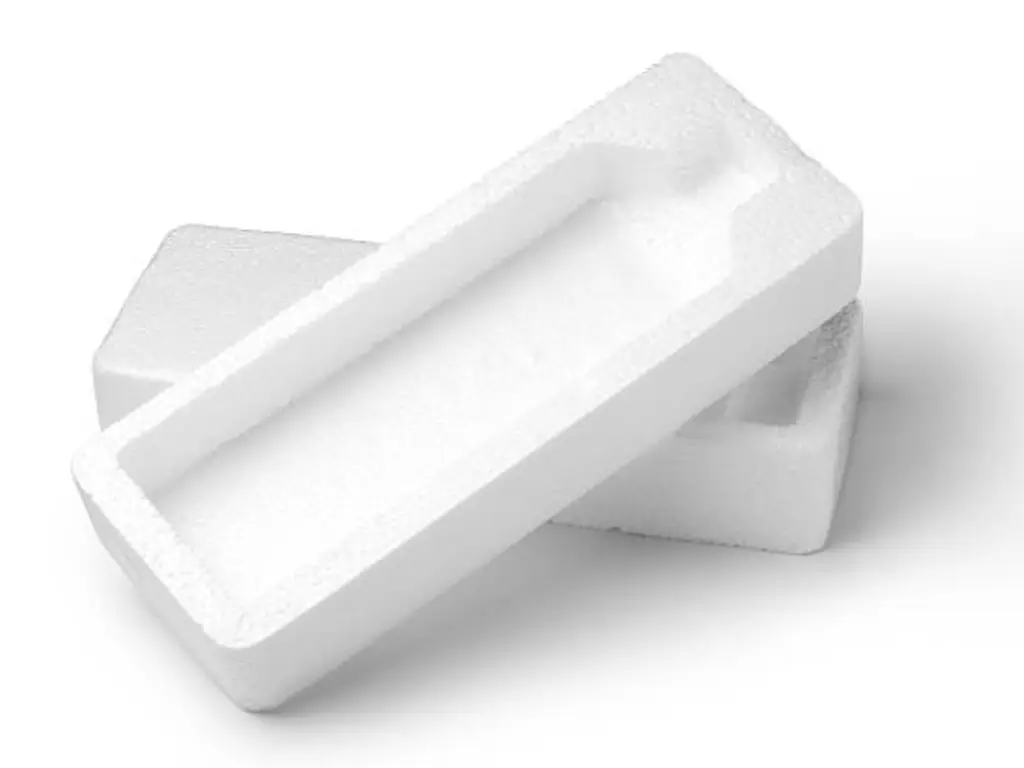
For manufacturers and global brands distributing premium glassware, the undisputed gold standard for physical protection is Custom Molded Expanded Polyethylene (EPE) foam inserts. It is vital to distinguish EPE from cheap molded pulp (wet-pressed paper trays) or brittle EPS (Styrofoam).
While heavy molded pulp offers decent static compression strength, it generates paper dust that contaminates cosmetic jars, and it absorbs ambient humidity during ocean freight, which weakens its structure. EPS is rigid but brittle, snapping under high impact and leaving a blizzard of white debris. EPE, conversely, is a highly flexible, closed-cell foam that offers exceptional dynamic cushioning. It can absorb repeated, violent impacts—compressing and rebounding perfectly—without losing its structural memory. Crucially, EPE is 100% moisture-resistant and completely dust-free, ensuring medical or cosmetic glassware arrives clinically clean.
By utilizing EPE inserts, the packaging is CNC-routed or die-cut to perfectly match the exact 3D contours of the specific glass bottle. This achieves 100% surface contact and absolute immobilization. Instead of a worker spending three minutes cutting and wrapping a bottle, they simply drop the bottle into its designated cavity in one second. For instance, by standardizing these custom EPE inserts across their export supply chain, Daxin Glass has successfully crushed cross-border transit breakage rates strictly below the 0.5% threshold, completely eliminating the need for client repackaging and safeguarding brand reputations globally.
Furthermore, utilizing custom EPE foam inserts drastically elevates the end-user’s unboxing experience. When high-end retail buyers or VIP corporate clients open a shipment, they are greeted with a meticulously organized, pristine presentation rather than a chaotic jumble of torn plastic wrap. This flawless visual presentation subconsciously reinforces the premium positioning of your brand, proving that true B2B packaging engineering protects not just the physical glass, but the perceived value of the product itself.
Suspension and Retention Packaging Systems
For ultra-fragile or exceptionally high-value glassware, suspension and retention packaging represent the absolute pinnacle of drop protection. This system utilizes a highly elastic, tear-resistant polyurethane film attached to a rigid corrugated cardboard frame. The glassware is literally suspended between two layers of this taut film, floating entirely in the center of the outer carton. This creates a “trampoline effect.” When the box is violently dropped or kicked, the kinetic energy is absorbed entirely by the stretching film and the empty air space around the product, rendering courier mishandling completely harmless.
The B2B Standard Operating Procedure (SOP) for Packing Glassware
Knowing which materials to use is only half the battle; executing a flawless, repeatable packing protocol is what separates world-class logistics operations from amateurs. To survive brutal transit drop tests, your packing line must adhere to strict operating procedures.
Individual Surface Isolation and Cell Kits
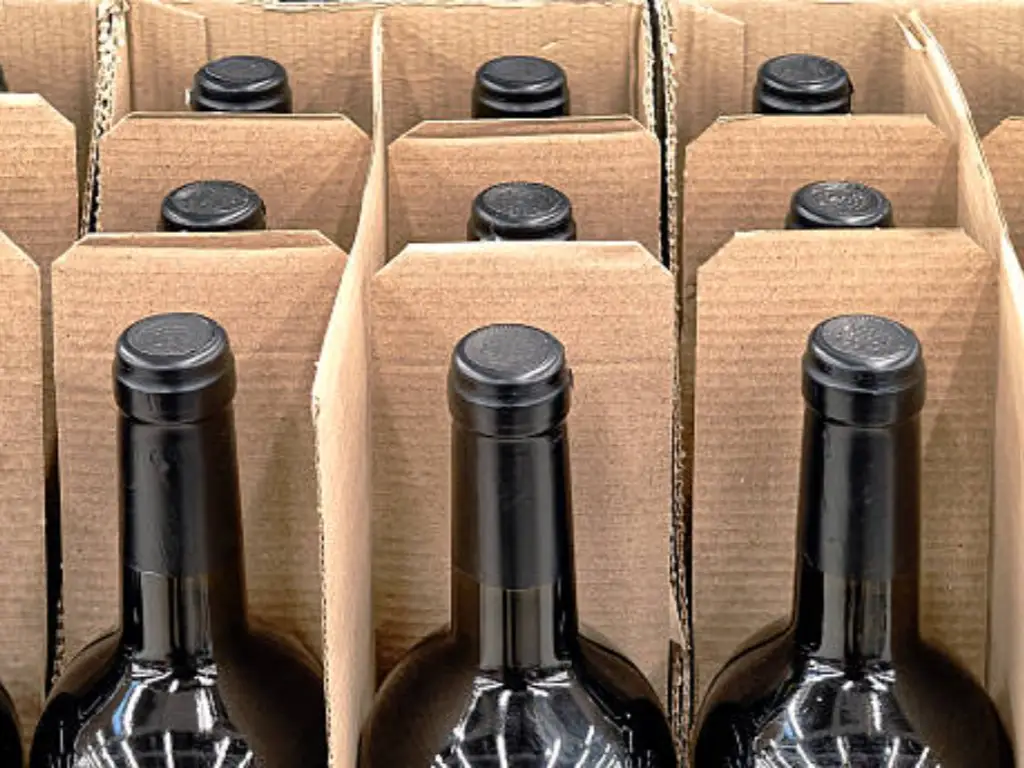
The absolute, unbreakable law of packing multiple glass items in a single carton is that glass must never touch glass. When shipping cases of identical glassware (e.g., 24 perfume bottles), the mandatory SOP dictates the use of corrugated cell dividers (cell kits). These interlocking cardboard grids create individual, isolated chambers for each item, preventing lateral crushing. The dividers absorb side-impacts and distribute the load evenly across the entire carton.
The Double-Walled Carton Method and Final Seal
All the advanced EPE foam in the world will fail if the primary external vessel—the shipping carton—collapses under vertical pressure. A shocking number of businesses attempt to ship heavy glassware in cheap, single-wall 3-ply corrugated boxes to save pennies. This is a fatal logistical error. When pallets are stacked inside a humid shipping container, 3-ply boxes quickly lose their structural integrity, resulting in the bottom cartons being crushed under the immense weight of the load.
For international export and high-stakes B2B delivery, the absolute non-negotiable standard is the 5-Ply Double Wall Corrugated Carton. Elite glass partners like Daxin Glass strictly mandate these heavy-duty outer cartons, which are engineered to exceed standard Edge Crush Test (ECT) ratings, ensuring absolute safety even under intense stacking pressure. The “Box-in-Box” method can also be employed for extreme fragility, surrounding an inner box with 2 inches of dense void fill to act as a crucial “crush zone.” Finally, the carton must be sealed using the H-Tape method—sealing the center seam and all four edge seams with high-tensile tape to prevent corner blowouts and block moisture infiltration.
Balancing Material Costs with DIM Weight Shipping Fees
We have reached the ultimate financial reckoning of glassware packaging. It is entirely possible to pack a glass vase so securely that it could survive a drop from a building. The problem is that doing so using amateur methods will bankrupt your company through Dimensional (DIM) Weight shipping penalties. Modern logistics carriers (FedEx, UPS, DHL) do not just charge by the actual weight of the box; they charge by the amount of physical space the box occupies in their aircraft.
The standard DIM weight formula is: (Length x Width x Height in inches) / Dimensional Divisor (e.g., 139 for US domestic). The carrier bills you for whichever is greater: the actual scale weight or the calculated DIM weight. This creates a vicious paradox: to protect the glass, amateurs add massive layers of cheap bubble wrap. The bubble wrap makes the item bulky, requiring a significantly larger cardboard box, triggering massive freight surcharges.
Let us look at a real-world B2B mathematical scenario:
Imagine you are air-freighting a wholesale order of 50 luxury glass perfume bottles.
- The Amateur Approach: You use thick rolls of cheap bubble wrap and loose peanuts. The massive padding forces you to use a 20″ x 20″ x 20″ master carton.
DIM Weight Calculation: (20 x 20 x 20) / 139 = 57.5 lbs billed weight. - The Professional B2B Approach: You invest in custom, high-density EPE foam inserts that perfectly contour the bottles. Because EPE is incredibly space-efficient, the 50 bottles fit tightly into a 14″ x 14″ x 14″ master carton.
DIM Weight Calculation: (14 x 14 x 14) / 139 = 19.7 lbs billed weight.
By investing perhaps an extra $2.00 in premium EPE foam packaging at the factory level, you shrink the box size drastically and slash your billed shipping weight by 38 pounds per carton. In international air freight, that translates to saving tens, if not hundreds, of dollars per box. High-end packaging does not cost you money; it actively generates net profit by defeating DIM weight penalties.
Rethink Your Packaging Strategy
Stop bleeding margins on expensive, makeshift packing materials at the end of your supply chain. The smartest Total Cost of Ownership (TCO) strategy is Packaging-Integrated Manufacturing.
Partner with a premier glass manufacturer that engineers the packaging simultaneously with the bottle. At Daxin Glass Bottles, our export shipments come standard with custom EPE foam inserts and 5-ply double-wall corrugated cartons. Discover how our optimized, zero-waste packaging architecture not only drives transit breakage rates near zero, but significantly slashes your DIM weight shipping fees right from the source.
Explore Daxin’s Turnkey Glass Manufacturing & Zero-Damage Delivery
 English
  Spanish
  French
  German
  Arabic
  Italian
  Dutch
Dutch  Portuguese
  Russian
  Korean
  Japanese