
How to Pack Glassware for Shipping: The Zero-Breakage Guide
For direct-to-consumer (DTC) brands, antique dealers, and high-volume B2B distributors, shipping glassware is not merely an operational task—it is a high-stakes financial challenge. A shattered glass is never just a lost physical product. It represents a severed customer relationship, a disastrous unboxing experience that will likely end up on social media, and a devastating blow to your profit margins through refund processing, customer service hours, and replacement shipping costs. If your fulfillment center is still relying on moving-day strategies—like haphazardly stuffing newspaper into single-wall boxes—you are leaving your inventory at the absolute mercy of the global logistics machine. This comprehensive, engineering-grade guide will transition your operations from amateur wrapping to a zero-breakage suspension system, balancing the delicate line between maximum protection and dimensional (DIM) weight cost control.
The Harsh Reality of Shipping Glassware: Why Most Breakages Occur
There is a fundamental misconception in the e-commerce world that glassware breaks during transit simply because it “wasn’t wrapped tightly enough.” The physical reality of modern logistics is far more brutal and complex. Breakage is the direct result of kinetic energy transfer, concentrated point-stress, and mechanical resonance. When you hand a parcel over to commercial carriers like UPS, FedEx, or USPS, it enters a highly automated sortation facility—a relentless, high-speed environment where packages travel on complex conveyor belt networks at speeds often exceeding 600 feet per minute.
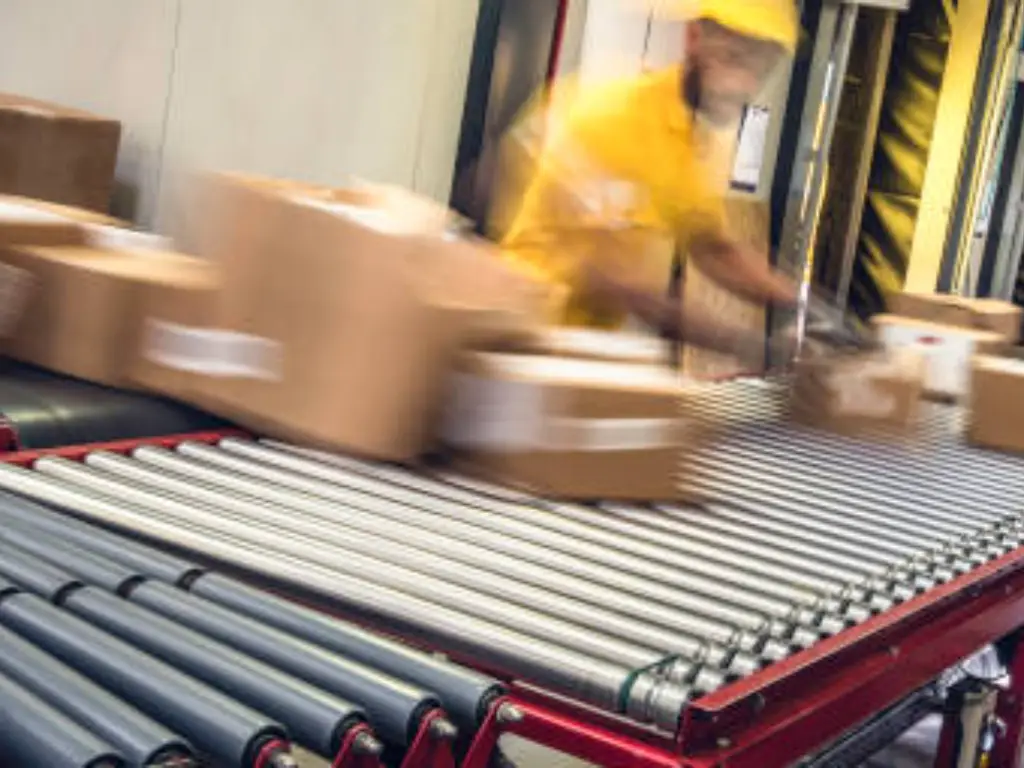
In this automated environment, optical scanners read routing barcodes with laser precision, but the robotic diverters, mechanical pushers, and gravity chutes do not possess the ability to read or respect “Fragile” or “Handle with Care” stickers. A fragile label will absolutely not slow down a conveyor belt, nor will it generate a magical forcefield to prevent a 30-pound box of automotive parts from tumbling down a sortation chute and landing directly on top of your delicate crystal wine glasses. Relying on stickers is a psychological comfort for the sender, not a physical protection for the product.
To truly understand the baseline requirement for shipping glassware, professionals look to the ISTA (International Safe Transit Association) 3A Test Standard. This rigorous testing protocol simulates the actual parcel delivery system environment. It requires packages to survive multiple free-fall drops from a height of exactly 3 feet (approximately 1 meter) directly onto concrete floors, systematically targeting every face, edge, and vulnerable corner of the box. A glass dropping from your dining table to a soft living room carpet is an unfortunate household accident; a package undergoing an ISTA 3-foot corner drop with the added momentum of a moving sorting belt is an industrial impact test. Therefore, your packaging logic must undergo a paradigm shift: you must move away from the concept of simply “covering the glass” and advance to “creating a shock-absorbing suspension chamber.” In this chamber, external kinetic energy is entirely dissipated by the surrounding packaging materials before the shockwave ever reaches the fragile silica surface of your product.
Selecting the Right Packing Materials for Impact Resistance
Achieving a consistent zero-breakage rate requires a strategic, layered approach to material selection. You must strictly differentiate between primary surface protection (which prevents surface scratching and mitigates immediate, localized impact) and secondary void fill (which absorbs volumetric shock and prevents payload migration). Utilizing the wrong material in either of these layers will compromise the entire suspension system.
Primary Surface Protection Films and Wraps
The first layer of defense must sit directly against the glass. Its primary job is not to absorb massive structural shocks, but to protect the pristine surface from micro-abrasions and to distribute localized pressure points evenly across the glass body. A critical rule in professional shipping: Never use printed newspaper. The extreme temperature and humidity fluctuations inside long-haul cargo trucks will cause condensation. This moisture acts as a solvent, transferring the acidic ink directly from the newspaper onto your transparent glassware, completely ruining the premium unboxing experience and potentially causing permanent staining on porous, frosted, or treated glass types.
Instead, your baseline should begin with a generous layer of acid-free tissue paper or high-barrier Kraft paper. This provides a chemically neutral, clean, and non-abrasive foundation. Once the surface is protected from scratches, you must wrap the item tightly in small-bubble wrap (typically featuring 3/16-inch bubbles). Small bubbles are essential here because they contour easily around the complex curves, delicate handles, and thin stems of glassware, acting as a flexible, form-fitting exoskeleton. You must secure this layer tightly with high-quality packing tape. If the bubble wrap is loose, the glass will slide independently inside its protective sleeve during transit, completely negating the cushioning effect and creating friction. Follow this fitted layer with a final, broader wrap of large-bubble wrap (1/2-inch bubbles) to provide the initial layer of volumetric shock absorption. Think of this multi-stage process as dressing the glass for a harsh winter: the acid-free tissue paper is the soft, anti-chafing undergarment, the tightly taped small bubble wrap is the fitted thermal layer, and the large bubble wrap is the heavy, impact-resistant winter coat.

Secondary Shock-Absorbing Void Fills: The B2C vs. B2B Divide
Once your glassware is individually wrapped, it must be placed into a corrugated box and surrounded by void fill. The fundamental physical purpose of void fill is complete immobilization. If the wrapped item can move even a fraction of an inch inside the box, the momentum generated during a drop will multiply the impact force upon collision with the interior box wall. However, the type of void fill you choose depends entirely on your operational scale.
The Scale Threshold: If your business operations involve packing less than 50 individual orders per day, utilizing manual void fill materials like crumpled Kraft paper is a commercially reasonable approach. However, if you are a scaling DTC brand experiencing rapid growth, or a B2B distributor handling large-volume sourcing, relying on manual, labor-intensive stuffing will obliterate your profit margins through sheer labor hours, while simultaneously introducing human error into the safety equation. For high-volume operations, industrial-grade custom packaging is the only mathematically sound solution.
| Material Type | Impact Resistance | Moisture Resistance | Best Use Case & Scale |
|---|---|---|---|
| Packing Peanuts (EPS / Biodegradable) | Moderate | High (EPS) / Low (Bio) | Low-volume B2C. Prone to severe shifting, settling, and crushing during transit, leading to void spaces. |
| Air Pillows | Variable | High | Filling large empty spaces for non-fragile items. Warning: Highly vulnerable to altitude pressure changes in air-freight; can pop and leave glass unprotected. |
| Crumpled Kraft Paper (70lb+) | High | Moderate | Low-to-medium volume B2C. Crumpled heavy-duty paper interlocks well and resists crushing far better than peanuts. |
| Custom EPE Pearl Cotton Trays | Maximum | Ultimate | Scaling DTC & High-volume B2B sourcing. Provides engineered, independent slots for zero glass-to-glass contact. |
For large-scale B2B logistics, especially for brands sourcing empty glass bottles and jars from overseas manufacturers, the benchmark is set by top-tier suppliers like Daxin Glass Bottles. Their standard export packaging completely bypasses the unpredictability of manual void fill by utilizing custom EPE (Expanded Polyethylene) pearl cotton inserts. Unlike traditional EPS (styrofoam), which is highly brittle, snaps under torsional pressure, and creates an electrostatic mess, EPE features a highly resilient, closed-cell structure. It offers immense flexibility, superior memory (returning to its original shape after impact), and absolute moisture resistance.
More importantly, Daxin’s custom EPE trays provide an exact, precision-cut isolated slot for every single bottle in the carton. This structural engineering completely eliminates the “dead corners” where glass-to-glass collisions typically occur during pallet movement. By integrating industrial-grade EPE buffer systems, professional manufacturers can confidently push their international transit breakage rates down to an astonishingly low 0.1%. This demonstrates a core logistics truth: genuine protection at scale comes from intentional structural engineering, not from throwing random handfuls of cushioning materials into a cardboard box and hoping for the best.
The Box-in-Box Methodology for Maximum Suspension (Single-Parcel fulfillment)
For shipping high-value items, irreplaceable antiques, or exceptionally delicate glassware directly to an end consumer, relying on a single corrugated box is an unacceptable gamble. The ultimate defense mechanism against the ISTA 3A drop test is the Box-in-Box (or Double-Boxing) methodology. This technique effectively creates a localized, floating suspension field, completely isolating the inner fragile payload from the catastrophic external forces acting on the exterior shell during last-mile delivery.
Preparing the Inner Enclosure
The inner box serves as the immediate housing for your wrapped glassware. A standard, high-quality single-wall corrugated box is usually sufficient for this layer. The absolutely critical metric for configuring the inner box is the 2-Inch Rule. There must be a minimum of two clear inches of space between your wrapped glassware and every single interior wall of the box (the top, the bottom, and all four side walls). This void space must be densely packed with your chosen void fill (such as tightly crumpled 70lb Kraft paper). When sealed, the inner box should feel dense, heavy, and totally solid. Think of the inner box as a custom-fitted spacesuit for an astronaut—it must completely envelop the occupant with zero internal shifting or breathing room.
Configuring the Outer Shell & The 5-Layer ECT Standard
The outer box serves as the vehicle’s rigid exterior chassis, tasked with resisting sharp punctures, blunt compression, and catastrophic crushing from heavier parcels falling on top of it. This is exactly where many e-commerce businesses—and even sub-par overseas glass suppliers attempting to cut overhead costs—make a fatal, short-sighted error. Utilizing a cheap, standard 3-ply (single-wall) box as the outer shell completely compromises the mathematical integrity of the double-boxing strategy.
To survive the courier network, the outer box must be a 5-Layer Double-Wall Corrugated Carton. Professional B2B packaging engineers, such as the team at Daxin Glass, mandate this 5-layer specification as their absolute baseline for all global export shipments. Specifically, you should ensure the box has an Edge Crush Test (ECT) rating of 48 or higher (or a Mullen Burst Test rating of 275 lbs). The ECT rating specifically measures the stacking strength of the corrugated board, which is vital when your parcel is at the bottom of a heavy delivery truck pile.
The implementation requires precision: prepare the heavy-duty outer box by laying down a solid 2-inch bed of dense void fill. Center your perfectly sealed inner box precisely in the middle of the outer box. Fill the remaining 2-inch gaps on all four surrounding sides with extreme density, and finish with a final 2-inch layer on top before sealing. This nested, concentric architecture ensures that even if the Daxin-grade 5-layer outer carton is heavily dented or pierced by a sharp object on the automated conveyor belt, the kinetic energy is entirely absorbed by the intermediary void fill layer long before it ever breaches the inner sanctuary.
B2B Bulk Fulfillment & Master Carton Standards (FBA & Sea Freight)
It is crucial to distinguish the single-parcel “Box-in-Box” method from the rigorous standards required for B2B bulk fulfillment, such as shipping wholesale pallets to distributors or sending inventory into Amazon FBA (Fulfillment by Amazon) warehouses. When you are shipping bulk inventory, you are dealing with Master Cartons.
FBA Compliance & Dimensions: E-commerce platforms maintain draconian rules regarding inbound shipments to protect their warehouse workers and automated storage retrieval systems (ASRS). For instance, Amazon FBA strictly dictates that standard-size Master Cartons must not exceed 50 lbs (approx. 22kg) in total weight, and no single side of the carton can exceed 25 inches (approx. 63cm). Utilizing standardized, high-strength 5-layer double-wall export cartons ensures that your bulk shipments not only protect the hundreds of glass units inside but also perfectly comply with platform regulations. Failing to adhere to these dimensional and weight limits will result in severe warehouse rejection fees, inventory stranding, and devastating stockouts.
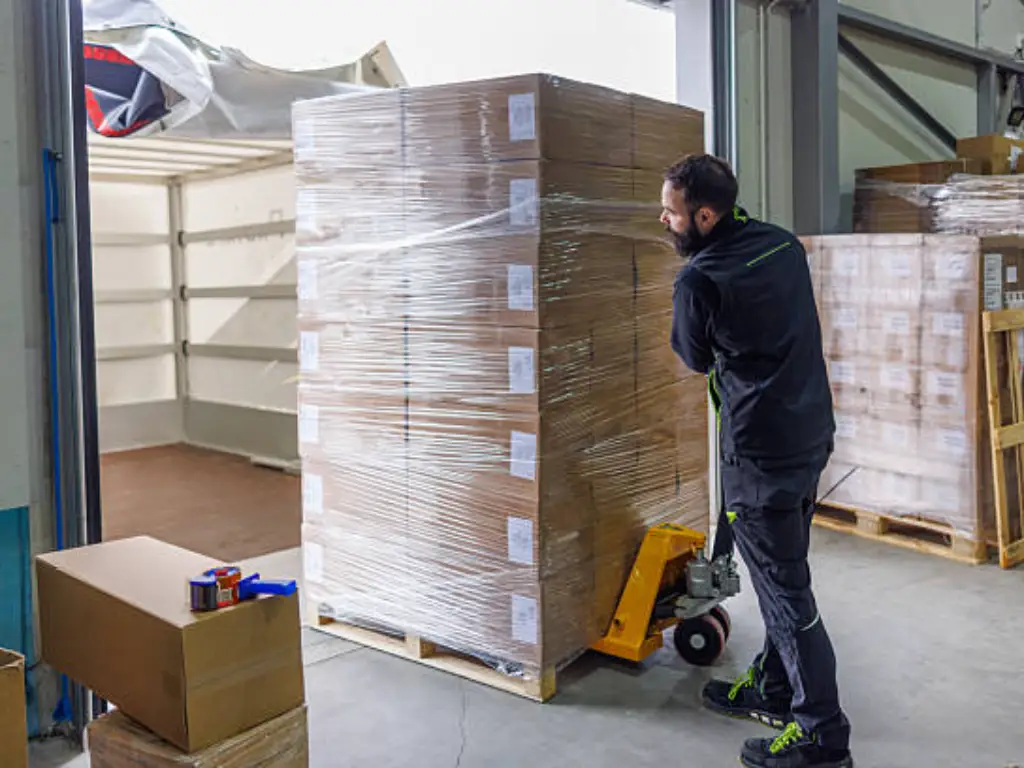
Conquering “Container Rain” in Ocean Freight: Furthermore, B2B shipments often travel via ocean freight, spending 30 to 35 days in the highly volatile environment of a shipping container. During transit across different climate zones, the temperature fluctuations inside the steel container cause massive condensation, a phenomenon known in the logistics industry as “Container Rain.” Corrugated cardboard is highly porous; if exposed to this moisture, a 5-layer box will rapidly turn to mush, causing the entire pallet to collapse under its own weight. To combat this, professional B2B packing SOPs do not rely on tape. Instead, they require the use of heavy-duty PE (Polyethylene) moisture-barrier inner bags to line the master carton, combined with large-capacity industrial desiccant packs (like silica gel or calcium chloride) placed strategically inside the carton before sealing. This creates a hermetically sealed, dry micro-climate that preserves the ECT strength of the cardboard for the entire month-long voyage.
Targeted Packing Strategies for Unique Glass Profiles
Broad, standardized packaging advice completely fails when applied to specialized, non-cylindrical glassware. The structural integrity and physics of a heavy, solid-base whiskey decanter are vastly different from those of a delicate crystal champagne flute. Identifying, isolating, and protecting the specific stress points of your unique product is vital for survival.
Securing Stemware and Irregular Shapes
Stemware (including wine glasses, champagne flutes, and martini glasses) is notoriously the most difficult category of glassware to ship successfully. The physical vulnerability lies in the mechanical concept of leverage. The thin stem acts as a highly fragile bridge connecting a relatively heavy base to a wide, delicate goblet. If the base and the goblet are subjected to compressive forces from opposite directions during transit, the stem acts as a fulcrum and will snap instantly due to sheer stress.
To successfully neutralize this risk, you must eliminate the structural disparity of the glass before wrapping it. Never simply take a wine glass and roll it in a sheet of bubble wrap. First, gently fill the interior hollow of the goblet with crumpled acid-free tissue paper; this provides outward structural support to prevent inward crushing forces. Next, take thin strips of bubble wrap and coil them specifically and repeatedly around the thin stem. Continue wrapping the stem until its thickness perfectly matches the widest outer circumference of the goblet and the base. By artificially transforming the hourglass shape of the stemware into a uniform, solid cylinder, any external impact from the shipping box is distributed evenly across the entire vertical length of the glass. This completely neutralizes the leverage effect and eliminates the stress differentials that cause snapped stems.

Reinforcing Flat Glass and Mirrors: The Spall Shield Effect
Shipping flat glass, framed antique mirrors, or delicate glass cosmetic display trays presents a distinctly different physical challenge. Flat glass is highly susceptible to catastrophic shattering from center-point impacts, torsion (twisting forces), and edge-shocks. Before applying any form of bubble wrap or cardboard edge protectors, you must employ the Painter’s Tape X-Pattern.
Take high-quality, non-residue painter’s tape (which will not leave a sticky mess on the glass) and place multiple large “X” shapes across the entire flat surface of the glass, extending closely from edge to edge. It is critically important to understand the actual physics here: applying tape does not alter the surface tension of the solid glass, nor will it magically increase the tensile strength of the pane to prevent it from breaking if struck by a heavy blow. Instead, the tape acts as a Spall Shield. It provides a strong adhesive backing. If the glass flexes and a micro-fracture occurs, the tape holds the shards tightly together. This structural containment prevents the glass from instantly shattering and collapsing inward, stopping razor-sharp shards from flying out and destroying surrounding valuable components (like an irreplaceable antique wooden frame), and crucially, it protects the recipient from severe lacerations during the unboxing process.
Mastering the H-Tape Sealing Technique
You can engineer the most mathematically perfect Box-in-Box suspension system, source the finest industrial EPE pearl cotton, and utilize premium 5-layer double-wall corrugated board—but if you seal the exterior box improperly, the entire structural system will fail upon its first drop. The burst strength and torsional rigidity of a cardboard box are highly dependent on the integrity of its seams.
Never, under any circumstances, use standard office cellophane tape, masking tape, or duct tape for shipping. Duct tape, despite its rugged reputation in household repairs, lacks the specific tensile strength and temperature resilience required for commercial shipping logistics; its adhesive will literally melt and slide off in a sweltering 110-degree cargo truck, and it will freeze, turn brittle, and peel off in high-altitude aviation environments. You must strictly utilize 2-inch or 3-inch wide pressure-sensitive Acrylic tape or Hot Melt packaging tape.
You must apply the H-Tape Method. Do not simply run a single strip of tape down the center seam and call it a day. Apply tape securely to the main center seam, extending at least two inches down the sides of the box. Then, apply tape along the two parallel edge seams on the ends of the flaps. This forms the shape of the letter “H” on both the top and the bottom of the carton. This method serves two critical purposes. First, it exponentially maximizes the burst strength of the box, preventing heavy inner payloads from acting like a battering ram and dropping through the bottom flaps during transit. Second, it physically seals the carton against environmental contaminants, preventing abrasive warehouse dust and dirt from infiltrating the package and ruining the presentation.
Balancing DIM Weight Costs with Optimal Protection
For commercial sellers and DTC brand owners, engineering a zero-breakage package is only half the battle; the other, equally terrifying half is surviving the carrier’s shipping invoice. Major logistics carriers (like UPS, FedEx, and DHL) do not simply charge based on how heavy your box is; they utilize Dimensional (DIM) Weight pricing to charge you based on the sheer volume of space your package occupies in their trucks and airplanes.
The standard formula for calculating DIM weight is (Length x Width x Height) / DIM Divisor. The Divisor varies by carrier and contract, but it is typically around 139 for domestic shipments and 166 for international shipments. If you obsessively overpack a set of four lightweight, 2-pound cocktail glasses into a massive 24x24x24 inch box to ensure “maximum safety,” the math is brutal: (24 x 24 x 24) / 139 = 99.4. The carrier will legally charge you as if that box weighs 100 pounds, instantly vaporizing your product profit margin and likely putting the transaction into a net loss.

This is precisely where the advanced economics of packaging engineering comes into play. You must find the mathematical equilibrium between safety and volume. Upgrading to high-density, low-volume interior protection—such as the custom EPE foam inserts discussed earlier—might cost you an extra $1.50 to $3.00 in packaging materials upfront compared to cheap peanuts. However, because these engineered materials offer vastly superior shock protection in a much thinner physical profile, you can reduce your outer box dimensions significantly. Shrinking an outer box from 18x18x18 down to a tightly packed 14x14x14 reduces the billed DIM weight from 42 lbs down to just 20 lbs. Depending on the shipping zone, that dimensional reduction can save you upwards of $15.00 to $25.00 in shipping charges per single parcel.
Are DIM Weight Charges Destroying Your Margins? Investing in premium, space-saving packaging materials is not an operational cost; it is a profound cost-reduction strategy. If your current glassware packaging is bulky, heavy, and causing your shipping rates to skyrocket, it’s time for an engineering audit. Contact Daxin’s Packaging Engineers to Optimize Your ROI.
Navigating Carrier Liability and Shipping Insurance
No matter how flawlessly you execute your packaging strategy, acts of God, extreme weather, and catastrophic logistics failures (such as a forklift physically driving over a pallet) can still occur. When disaster strikes, shippers often realize far too late that they fundamentally misunderstood the nature of carrier liability.
Paying extra for “Declared Value” with FedEx or UPS is absolutely not the same thing as purchasing an unconditional, third-party insurance policy. Declared value merely raises the financial cap on the carrier’s liability—if and only if they officially admit fault for the damage. The critical, often-overlooked trapdoor lies deep within their Terms of Service under the Minimum Packaging Guidelines. If your package arrives sounding like a maraca full of broken glass, the carrier will dispatch a claims adjuster to inspect the wreckage. If that adjuster determines that your outer box was only single-wall, or that you failed to provide the mandatory 2 inches of dense void fill on all six sides, they will officially classify the claim as “Improper Packaging.”
Under the Improper Packaging designation, your financial claim will be instantly and irrevocably denied, regardless of how much extra money you paid for declared value. Your packaging must serve a dual purpose: it must physically protect the glass from breaking, and it must serve as physical, undeniable evidence of your compliance with shipping regulations. Upgrading to 5-layer corrugated boxes and utilizing professional-grade suspension materials is, in reality, your insurance policy against the insurance adjuster.
The Ultimate Pre-Shipment Shake Test and Final Verification
Before you print the shipping label and hand that meticulously packed box over to the logistics network, you must perform the final, definitive, and non-negotiable physical audit: The Shake Test.
Pick up the fully sealed box. Hold it firmly in both hands and shake it vigorously in all directions—up and down, side to side, back and forth. You are not just shaking it casually; you are actively listening and feeling for the slightest indication of internal failure. If you hear the muffled, high-pitched clink of glass touching glass, or if you feel the heavy weight of the payload shifting or sliding even a millimeter inside the box, your void fill strategy has failed. Do not cross your fingers and hope for the best. Cut the H-tape, open the box, identify the empty void, and re-pack it completely.
In the high-stakes world of glassware logistics, Silence is Security. If your package feels as solid, dense, and utterly silent as a solid block of wood when shaken, you have successfully engineered a micro-environment capable of surviving the brutal reality of the global supply chain. By elevating your standards from basic aesthetic wrapping to ISTA-compliant physical suspension, you protect your product, secure your profit margins, and guarantee a flawless, premium unboxing experience for your end consumer.
Is Your Supply Chain Ready for the Shake Test?
If your business volume has outgrown manual bubble-wrapping, or if your current supplier is providing fragile, single-wall cartons that fail the ISTA 3A standards, it is time to upgrade your sourcing.
Get Your Custom EPE & 5-Layer Packaging Solution


 English
  Spanish
  French
  German
  Arabic
  Italian
  Dutch
Dutch