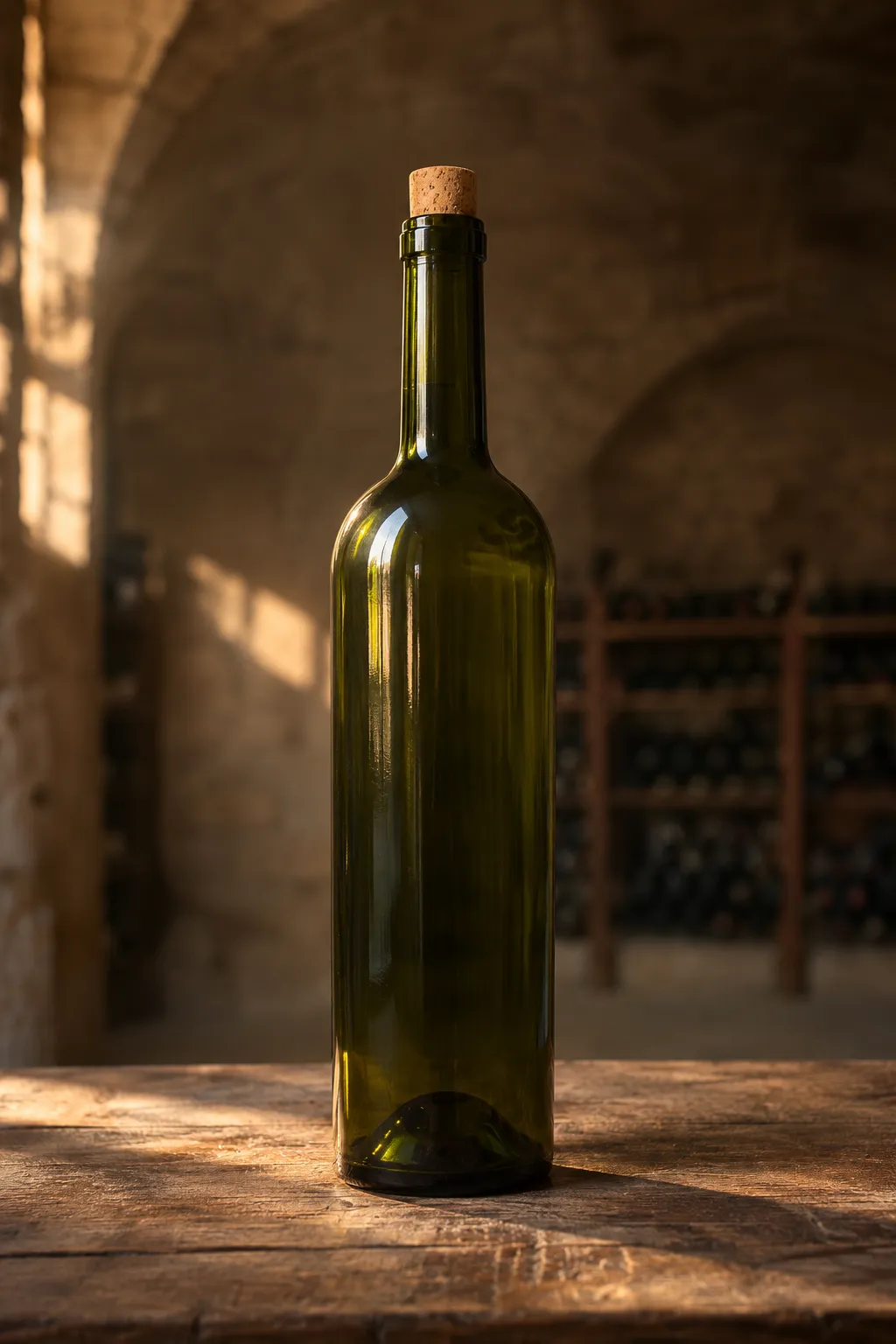
Tip an empty wine bottle over and run a finger along the base. The glass curves inward into a shallow dome instead of sitting flat. That dent has a name, the punt, and so does every other curve on the bottle. Once you have the names, every conversation about bottles gets shorter, whether it is with a sommelier, a homebrew shop, or a glass factory halfway around the world.
What Is the Anatomy of a Wine Bottle?
Start at the top and walk down. The finish is the shaped very top of the neck, built to accept a cork or a screwcap. Just below it sits the bead, a small raised ring that marks where the glass ends and gives a capsule something to grip. The neck is the slim column you hold when pouring. Then comes the shoulder, the part that gives a bottle its character: high and square on a Bordeaux bottle, long and sloped on a Burgundy. The body is the straight cylinder that carries the wine and the label. The label panel is the flat or gently curved zone on the body where labels sit. At the bottom, the heel is the curve where the side wall turns into the base, and the punt is the dent pushed up into the base itself.
Wine bottle parts, top to bottom
| Part | Where it is | What it does |
|---|---|---|
| Finish | Top of the neck | Accepts cork or screwcap, defines the closure fit |
| Bead | Just below the finish | Raised ring that stops a capsule from sliding |
| Neck | Below the bead | Grip point for pouring, holds the closure seal |
| Shoulder | Between neck and body | Slopes or steps the glass; shapes sediment flow and style signal |
| Body | Main cylinder | Holds volume, carries the label |
| Label panel | Flattest zone on the body | Sized zone for labels or direct printing |
| Heel | Base curve | Where side wall meets base, common chip point |
| Punt (kick) | Center of the base | Upward dome for strength, sediment and tradition |
Two names cause most of the confusion. The heel is not the punt: the heel is the outer curve where the wall meets the base, the punt is the dome in the center. And this article covers the bottle only. Bottle openers and wine glasses have their own anatomy, and neither appears again here.
One caution on vocabulary: factories on different continents label some parts differently, and punt is also called a kick or an upstand. When a real order is at stake, the drawing decides, not the dictionary.
The Four Maps: Shapes, Closures, Colors, and Sizes
Before a bottle is opened it has already told you four things. Every bottle sits on four maps at once: shape, closure, color, and size. Old World regions grew traditions around the shape map, and those traditions traveled. Bordeaux for Cabernet and Merlot, Burgundy for Pinot Noir and Chardonnay, a tall slim Hock flute for Riesling. New World wineries treat the maps as a menu rather than a rulebook, which is exactly what they are.
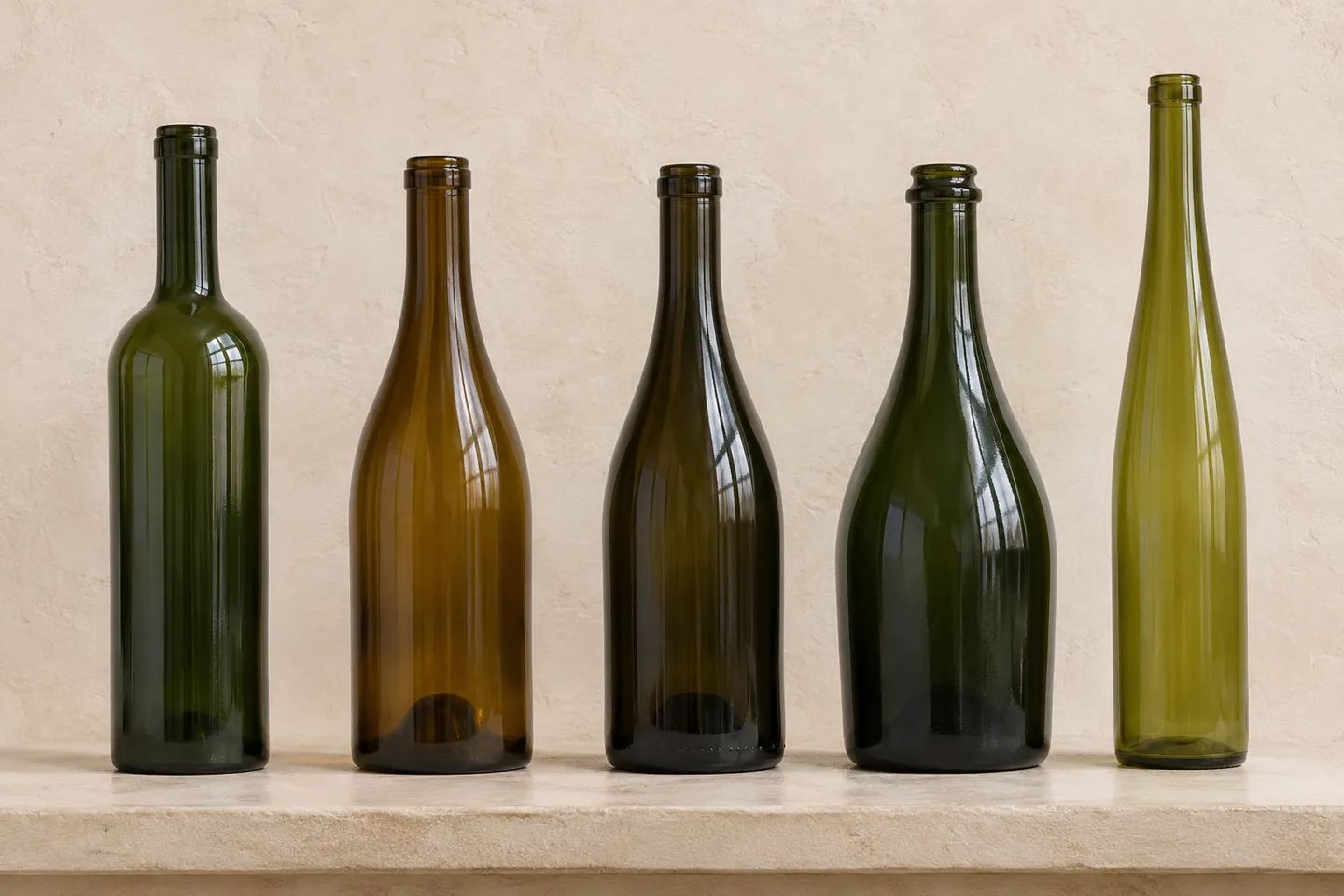
The shape map, read by silhouette: the Bordeaux bottle is the straight-sided workhorse with high shoulders, the most common silhouette on shelves worldwide. The Burgundy bottle is wider, with shoulders that slope gently into a longer neck. The Rhône bottle resembles a Burgundy with subtle ridges at the shoulder and a slightly heavier base. The sparkling bottle is thick-walled with a deep punt, built for pressure. The Hock flute is tall, slim, and usually green or brown, holding sweet German whites. Silhouette hints at style, it does not prove it.
| Shape | Silhouette | Typical wines | Closure | Note |
|---|---|---|---|---|
| Bordeaux ⭐ | Straight sides, high square shoulders | Cabernet, Merlot, Sauvignon Blanc | Cork or screwcap | Easiest to stack and store |
| Burgundy | Wide body, sloping shoulders | Pinot Noir, Chardonnay | Cork | Slope slows sediment at the pour |
| Rhône | Burgundy-like, shoulder ridges | Grenache, Syrah | Cork | Heavier base than Burgundy |
| Sparkling | Thick walls, deep punt, wide body | Champagne, Cava, Prosecco | Crown cap or cork with cage | Pressure-rated glass |
| Hock flute | Tall, slim, gently sloped | Riesling, dessert wines | Cork | Long neck shows off clarity |
The closure map has three common entries. A cork finish, sometimes called bar-top, is a straight bore sized for a cork, optionally under a foil or wax. A screwcap finish carries a rolled thread for an aluminum ROPP cap. Sparkling bottles wear a crown cap or a flanged cork finish that holds a wire cage. The color map runs from flint (clear) through antique green and olive to amber, with blue and pink as pure shelf play. Size concentrates hard on one number: 750 ml. US rules under 27 CFR 4.72 authorize 25 different wine container sizes (Cornell LII, 2026), yet shelves order 375 ml half bottles, 750 ml standard, and 1.5 L magnums almost exclusively. Everything rarer, from split to Jeroboam and beyond, is a one-line exception on the map.
Why a Wine Bottle Is Built the Way It Is
Every curve on a wine bottle answers to physics, history, or both. The punt is the best example, because it collects more myths than any other part.
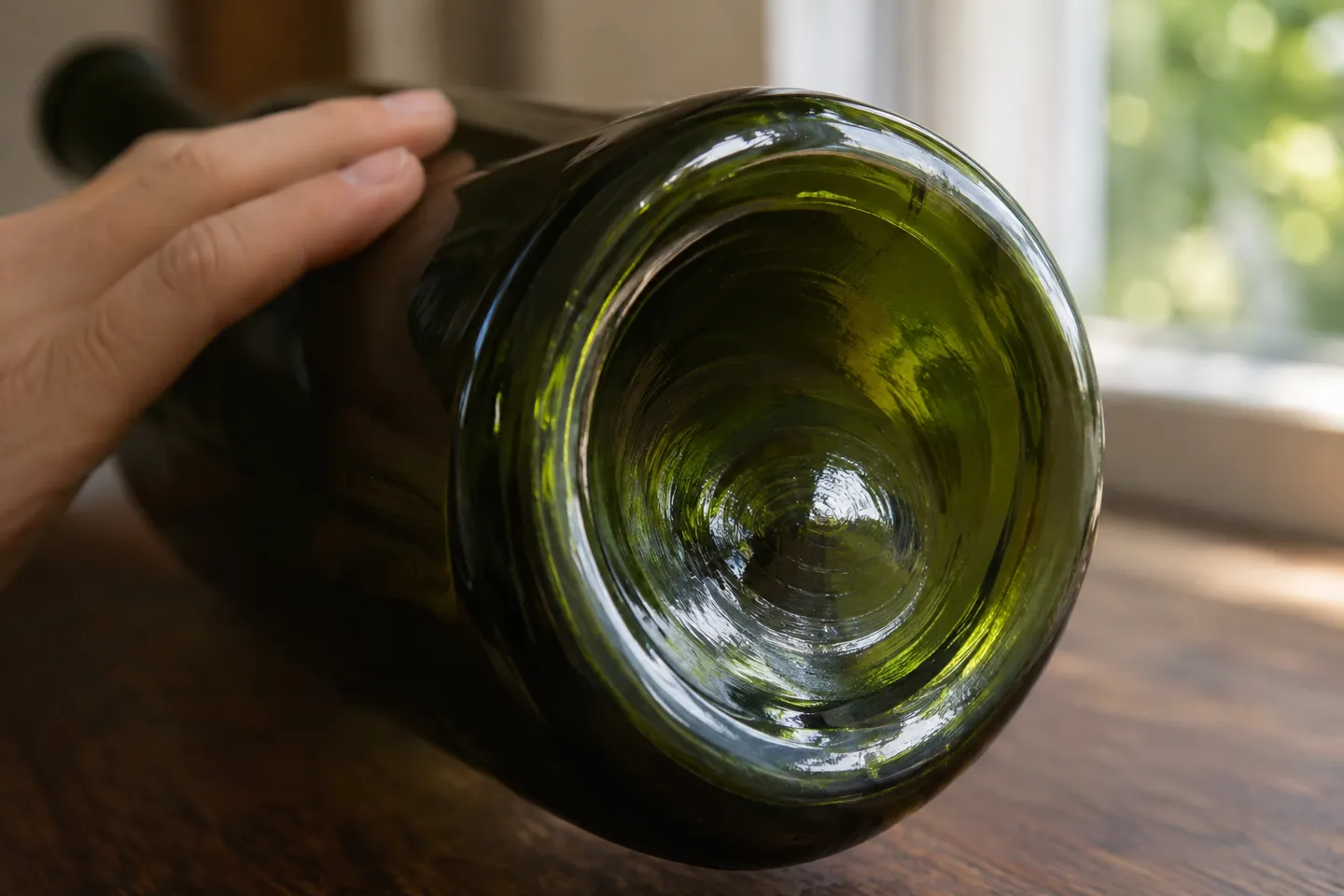
Three reasons for the punt survive scrutiny. First, structure: a domed base turns internal pressure into arch strength. A ring of contact at the heel is also far easier to make stand true than a perfectly flat bottom, which tends to rock. Second, history: hand-blown bottles were pushed inward at the pontil where the blowpipe was cracked off. The dent became tradition the day machines could make flat bases and nobody wanted them. Third, sediment: a deep punt gives aging wine a narrow ring to settle into along the heel, so the first pour lifts less of it.
The popular fourth reason does not survive. A deep punt does not mean better wine inside.
The punt myth, settled: punt depth measures glass weight and price positioning, not wine quality. The signal is real but it is correlation, not causation: expensive wines do often sit in heavier, deep-punted bottles because buyers expect them to. Filtered, young, or well-made inexpensive wines have no sediment problem to solve and no obligation to fake a dome. Judge the wine, then the bottle.
Pressure makes the sparkling bottle the exception worth memorizing. Carbonation puts roughly 5 to 6 bar inside the bottle (Comité Champagne). That is why sparkling glass is noticeably thicker, and about twice the weight of a still bottle of the same volume (Wine Business Monthly, 2023). Color carries its own physics. Antique green and amber glass filter the UV light that skews wine in clear flint. Delicate whites and rosés accept that trade-off for shelf appeal. Light-sensitive reds lean green or brown. Even the shoulder works for a living. A sloped Burgundy shoulder lets sediment drift back toward the heel during a slow pour. A sommelier’s thumb in the punt is not superstition either. It is the steadiest grip a heavy bottle offers.
Reading a Wine Bottle Like a Spec Sheet
The same anatomy answers a different question once an order is attached to it: which line on the spec sheet does each part become? Buyers who answer that precisely get fewer surprises, because most bottle problems are spec problems that showed up late.
Neck Finish and Bore: The Line That Decides Your Cork
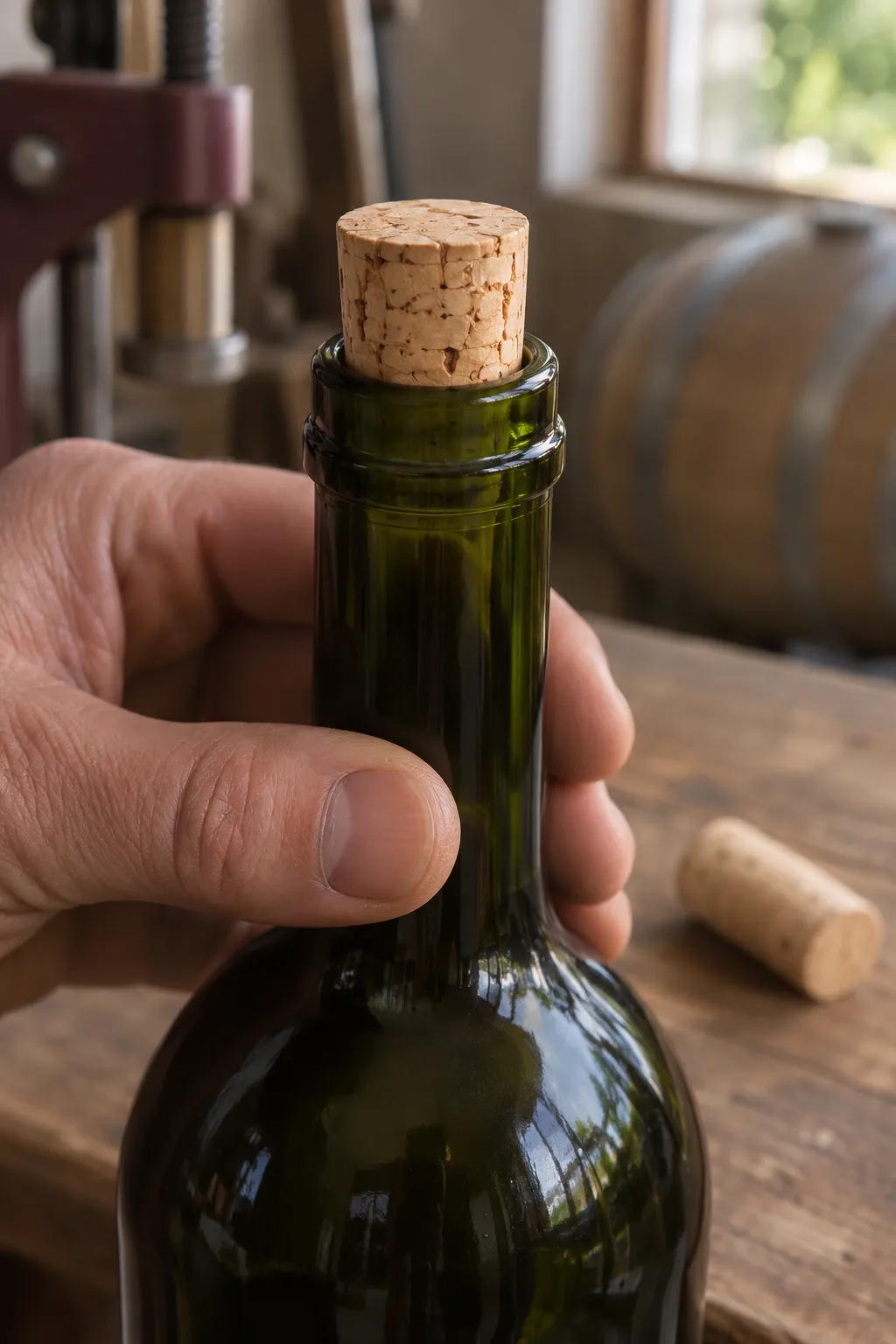
A cork-finish bottle is defined by its neck bore and finish. Cork dimensions must match the measured bore and the corking equipment; WineMaker Magazine explains why sizing and compression matter. Confirm bore tolerance and cork gauge together on the same drawing before ordering either part. For screwcap programs, confirm the exact thread and cap finish with the closure supplier.
Height, Diameter, and the Carton Nobody Thinks About
Bottle height and maximum body diameter determine carton clearances, pallet patterns, and shelf fit. Ask for the dimensioned drawing of the exact bottle SKU and send it to the carton maker before approving labels or case packs. A few millimeters can affect a packed case, so verify with a physical sample.
Label Panel, Glass Weight, and Color Codes
Glass weight affects freight and handling costs. Compare the empty weight of the exact 750 ml bottle designs under consideration instead of treating one published average as a specification. Color is also a protection and supply decision: clear glass shows the wine, while green or amber glass reduces light exposure. Confirm color availability and lead time with the factory.
Spec sheet boundary matrix: what breaks, and what to confirm
| Spec line | How to write it | Holds when | Breaks when | Confirm with the supplier |
|---|---|---|---|---|
| Neck finish and bore | Bore mm + tolerance + cork gauge or thread system | Cork gauge matches bore spec on same drawing | Gauge ordered separately from bore, or tolerance unstated | Bore tolerance, cork gauge, thread standard |
| Height and diameter | Overall mm including closure | Carton sized from final bottle dimensions | Height set after cartons printed, or closure adds height late | Total height with closure, carton inner dims, pallet pattern |
| Label panel | Panel width x height + curvature | Label sized and tested on curved zone | Label designed off a straight-body mockup | Panel dimensions, curvature radius, label material |
| Glass weight class | Target grams for the silhouette | Weight chosen against freight and channel rules | Weight inherited from a catalog photo | Gram range per shape, cullet policy |
| Glass color | Color + UV requirement | Color matched to wine sensitivity and stock availability | Color picked for looks, supply checked later | Color availability, lead time, UV filter level |
The four lines that belong in the first email
- Neck finish: bore mm, tolerance, cork gauge or thread system.
- Bottle dimensions: total height and diameter, closure included.
- Label panel: size and curvature of the printable zone.
- Glass weight class and color, matched to channel and wine.
How Brands Actually Choose a Wine Bottle
Catalogs describe what exists. Order data shows what brands commit to, and the two do not tell the same story.
What Brands Actually Order
Two independent order datasets agree to within three points. Across 2,065 brief-driven container picks, Bordeaux and Burgundy silhouettes take 83 percent; across 716 self-serve orders they take 86 percent, with Bordeaux at 44 to 46 percent and Burgundy right behind (Outshinery, 2026). The 750 ml bottle is 88 percent of picks in the open library and 99 percent in the fixed menu. Cork-based closures lead screwcaps more than 2 to 1 in both sets, 65 and 70 percent respectively. Even concentration resists the skew test: the 22 busiest self-serve accounts placed 62 percent of orders and still chose a Bordeaux or Burgundy at the same 86 percent rate. Read together, this is the default option effect: two French silhouettes and one size are not traditions brands obey, they are the safe picks brands repeat.
What brands actually order
83-86%
Bordeaux plus Burgundy share of brand picks across two order datasets
88-99%
750 ml share of picks, open library versus fixed menu
65-70%
Cork-based closures; screwcap takes 25-29%
53%
Deep punt share of modeled picks
Source: Outshinery order data, 2026 (2,065 brief-driven and 716 self-serve picks)
The Bottle Weight Rule Reshaping the Market
While order data leans heavy, the channel is moving the other way. The SWR Bottle Weight Accord sets an average bottle-weight target for participating retailers. That collides head-on with the 27 percent of modeled picks still choosing heavy or prestige glass against 13 percent choosing eco or light (Outshinery, 2026). A brand that picks its weight class for shelf theater now inherits two bills. Freight, because glass is 40 percent of a full bottle’s weight. And access, because participating retailers have a published average-weight goal. The check takes one email: ask whether your target chain has signed the accord, then set the weight class against that threshold. Sparkling is exempt on physics, not on taste: pressure-rated glass has to stay heavy, and a premium gift build can still justify its grams where the price supports it.
The SWR Bottle Weight Accord aims to reduce signatory retailers’ average 750 ml still wine bottle weight from 550 g to below 420 g by the end of 2026.
Molds, MOQ, and the Real Cost Math
Custom shape starts with a mold. Tooling price, minimum order quantity, sampling time, and unit price vary by design and production route, so request an itemized quotation for the exact bottle drawing. For a first release, compare a stock mold with custom decoration against a dedicated shape, then divide the mold fee by the expected order volume before committing.
Send your silhouette, target volume and weight class, and we will come back with stock-mold versus custom-mold numbers for your first run.
Get a Mold and MOQ QuoteWhat the Anatomy Means for Your Bottle Program
Three facts from this anatomy decide most of a bottle program, and none of them is about styling.
Every part is a spec line. The boundary matrix in the spec-sheet section converts directly into the four-line spec sheet: bore and closure system, total dimensions, label panel, weight class and color. A brand that sends those four lines in the first email gets quotes that compare like for like, because every factory is pricing the same drawing.
Weight class is the total-cost decision with a deadline. The accord’s average-weight target for participating retailers, freight costs, and shelf height limits all affect the choice. Pick the weight class against your channel’s rules and your landed cost. Then let the deep punt justify itself only where it actually earns, in sparkling or true premium builds.
Molds and minimums, meanwhile, are physics. Stock shapes carry low minimums and decorated stock carries a mid one, while a dedicated shape waits for volume it can amortize into. The sequence that works: write the four spec lines. Set weight class by channel threshold. Launch on a stock mold with custom surface work, and order the dedicated mold when the repeat orders, not the launch, ask for it.
That last step is routine work at Daxin Glass. Our catalog includes more than 5,000 existing bottle and jar designs; confirm availability for the wine bottle shape you need. For a first release, a stock silhouette with custom decoration often reduces the need for new tooling; confirm the decoration minimum for the chosen SKU. And our design-to-sample service turns a sketch into a sample for fit and appearance review (Daxin Glass, 2026).
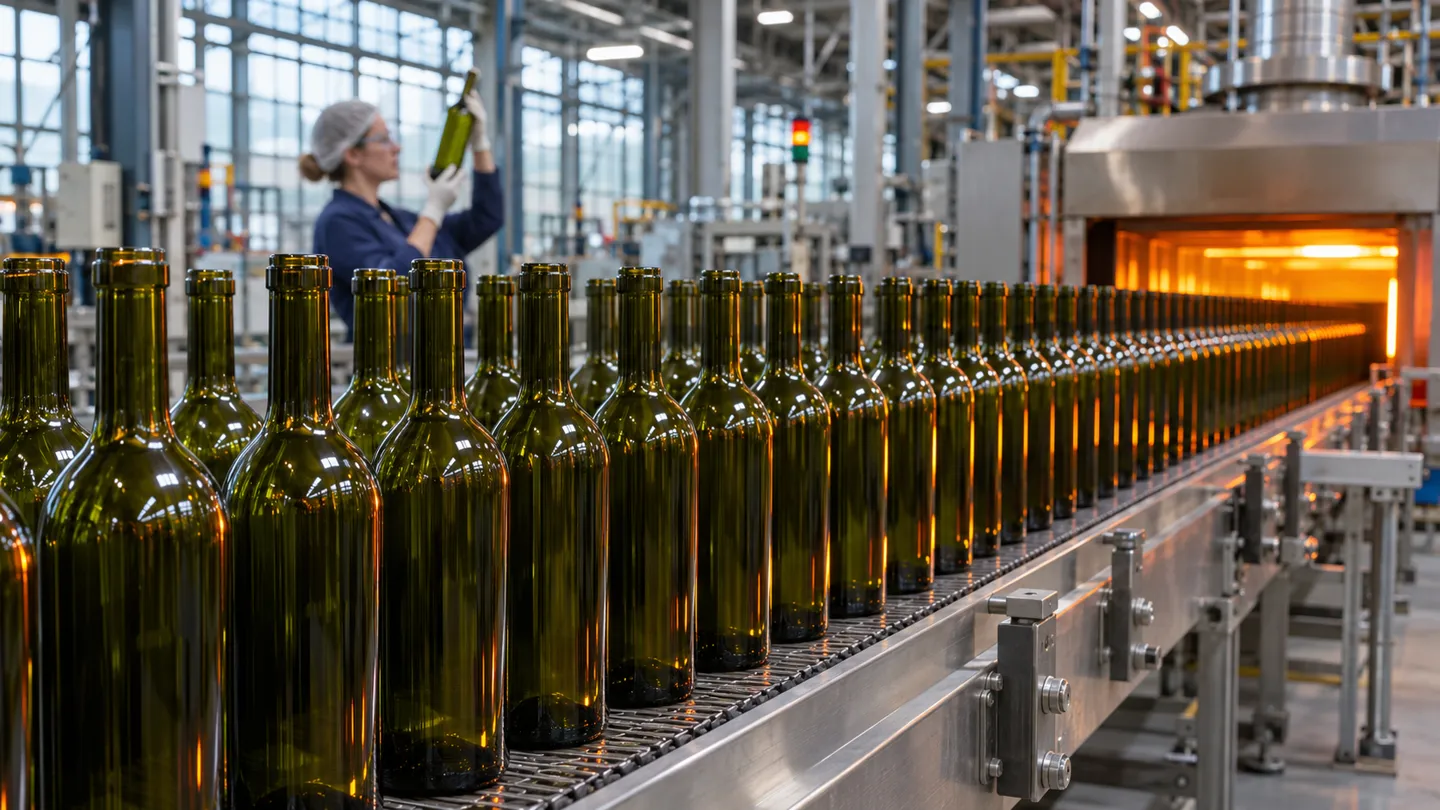
Bring your four spec lines to Daxin Glass and we will check bore fit, weight class and carton dimensions against them before anything is ordered.
Check Your Four Spec Lines Before You Order
Send bore fit, weight class and carton dimensions to Daxin Glass and compare factory quotes like for like.
Start the Pre-Order CheckReferences
- Outshinery. “Most popular wine bottle shapes: order data.” 2026. https://www.outshinery.com/articles/bottle-shapes-brands-actually-order
- Sustainable Wine Roundtable. “Bottle Weight Accord.” https://sustainablewine.co.uk/launch-of-the-swr-bottle-weight-accord/
- Cornell LII. “27 CFR 4.72: Standards of fill for wine.” https://www.law.cornell.edu/cfr/text/27/4.72
- Comité Champagne. “Champagne frequently asked questions.” https://www.champagne.fr/en/champagne-frequently-asked-questions?nid=609
- WineMaker Magazine. “Getting Closure: Corkers and Cork Sizing.” 2013. https://winemakermag.com/articles/getting-closure-corkers-and-cork-sizing
- Wine Business Monthly. “Glass Under Pressure.” 2023. https://www.winebusiness.com/wbm/article/273950
 English
 Spanish
 French
 German
 Arabic
 Italian
 Dutch
 Portuguese
 Russian
 Korean
 Japanese