
Behind the Glass: The Hardcore Reality of Luxury Perfume Bottle Production
You have spent months, perhaps years, perfecting a fragrance. You have sourced the finest absolute from Grasse, balanced the top notes of Calabrian bergamot, and anchored it with a rich, hypnotic oud. But the moment you pour that liquid gold into a substandard vessel, the magic dies. The hardcore reality of luxury perfume bottle production is that it is not merely about shaping melted sand; it is a ruthless battle against chemistry, physics, and microscopic tolerances. Welcome to the invisible frontlines of packaging engineering.
The Raw Anatomy: Why High-End Perfume Bottles Start with Chemistry
The illusion of the fragrance industry is that the bottle is just a physical container. In reality, the most expensive perfumes demand a chemical fortress. If the material formula is flawed from the start, no amount of exterior decoration can save the product from degradation. The soul of a top-tier perfume bottle lies in its foundational chemistry.
The Soda-Lime Glass Formula and Fragrance Stability
Why does the fragrance industry almost universally mandate Soda-Lime Glass? The answer lies in chemical inertness. Perfume is a highly volatile, reactive mixture of alcohol, essential oils, and synthetic aroma chemicals. If these compounds interact with free metallic ions leaching from the interior walls of a cheap glass bottle, the results are catastrophic: pristine citrus notes become muddy, the liquid turns a sickly yellow, and the olfactory profile collapses completely within three months.
The foundational recipe requires a precise, non-negotiable matrix: approximately 70% silica sand (the structural backbone), soda ash (to lower the melting point), and limestone (to act as a stabilizer). However, the true differentiator between mass-market utility glass and luxury perfumery glass is the battle against impurities, specifically iron oxide. High iron content in the raw silica naturally imparts a cheap, greenish tint to the glass, which is glaringly obvious in thick-bottomed designs.
The Crystal White Benchmark
Ordinary flint glass typically contains 1.2% to 1.5% iron, while even “high-white” glass hovers around 1.0%. For brands demanding diamond-like brilliance and absolute transparency, elite supply chains like Daxin Glass strictly execute the “Crystal White” standard. This uncompromising formula caps iron content at a microscopic 0.5% to 0.8%. Furthermore, it demands the precise addition of 0.15% to 0.25% high-purity (99.9%) Cerium Oxide (CeO2) as an advanced clarifying agent, while strictly limiting the use of recycled cullet to under 5%. This is not just a specification; it is the definitive metric for evaluating whether a supplier is capable of delivering true luxury.
Furnace Dynamics and the Cullet Ratio
Once the pristine raw materials are blended in an automated, dust-free batching center, they enter a raging inferno. The furnace operates at a staggering 1400°C to 1600°C. Here, industry insiders speak of the “Cullet Ratio.” Cullet refers to recycled broken glass. While adding a controlled amount (typically 10% to 50% in standard production) lowers the overall melting point, saves immense energy, and reduces the carbon footprint, high-end perfumery carefully balances this to avoid introducing unpredictable impurities.
The most critical phase within the furnace is the fining process (degassing). Think of the furnace as a colossal pressure cooker. For 4 to 6 continuous hours, the molten mixture is subjected to intense homogenization to force out microscopic seeds and blisters (air bubbles). As the liquid glass exits the furnace into the forehearth, it undergoes secondary homogenization, dropping to a precisely controlled 1100°C to 1200°C. This exact viscosity ensures the molten glass is ready for the punishing physical deformation of the forming stage.

From Molten Drop to Signature Shape: The Forming Engineering
The transition from a glowing, honey-like viscous liquid to a crystalline, sharp-edged architectural vessel is a marvel of thermal and mechanical engineering. The molten glass is extruded through a feeder orifice and severed by high-speed mechanical shears. In top-tier facilities, these shears are driven by advanced servo motors, guaranteeing that each glowing “Gob” (glass drop) hits an astonishing weight tolerance of ±0.5 to 1 gram. From here, the gob plunges into the forming machines, where two distinctly different destinies await.
The Blow-and-Blow Process for Delicate Designs
For tall, slender designs with narrow necks and thin walls, the Blow-and-Blow (B&B) method is paramount. The gob drops into a blank mold (parison mold), where compressed air blows it downward to form the delicate neck finish. A second blast of air from the bottom expands the glass upward, creating a hollow parison. A robotic arm instantly flips this glowing parison into the final blow mold, where high-pressure air forces the glass outward against the chilled metal walls to take its final shape. It is a rapid, delicate ballet of pneumatics, ensuring uniform wall thickness for intricate, lightweight designs.
The Press-and-Blow Process for Heavy-Base Luxury
If you want to understand why a 50ml niche salon fragrance bottle weighs a substantial 200 grams, giving it that undeniable, expensive heft in the palm of your hand, you must understand Press-and-Blow (P&B). Instead of relying on air in the first stage, a solid metal plunger violently forces its way into the gob within the blank mold.
This physical pressing allows engineers to exert god-like control over “Glass Distribution.” The plunger intentionally forces a massive accumulation of glass to remain at the bottom of the mold, creating the iconic “heavy base” or “fire-polished bottom” that defines modern luxury. When the parison is transferred to the final blow mold, only the upper portion expands.
| Dimension | Blow-and-Blow (B&B) | Press-and-Blow (P&B) |
|---|---|---|
| Forming Mechanism | Air pressure in both stages | Metal plunger followed by air pressure |
| Ideal Bottle Type | Tall, narrow neck (d30mm), thin walls | Wide mouth, heavy luxury bases, short/stout |
| Glass Distribution | Highly uniform throughout | Extreme control; allows for massive bottom weight |
| Tooling Complexity | Standard | High (Plunger requires frequent maintenance) |
The Invisible Lifesaver: Annealing and Thermal Shock Resistance
When a newly formed perfume bottle emerges from the mold at roughly 600°C, it looks perfect. But it is, in fact, a ticking time bomb. The rapid contact with the relatively cold metal molds creates severe internal thermal stress. The outer skin cools and shrinks faster than the molten core. If left untreated, the simple act of filling the bottle with room-temperature fragrance on a high-speed line will cause it to violently shatter into a thousand pieces.
Enter the Lehr—a massive, continuous annealing tunnel that acts as a deep, structural massage for the glass molecules. The bottles are conveyed through this tunnel, where they are first reheated to their precise annealing point. The core zone maintains a strict 520°C to 560°C. For 30 to 60 crucial minutes, the glass “soaks” in this heat, allowing the chaotic, stressed molecular bonds to relax and realign evenly.
Following this, the temperature is carefully reduced at a painstakingly slow rate of 2°C to 5°C per minute until it reaches room temperature. While average industry standards might rush this process in 40 minutes to save fuel, superior protocols stretch this journey to a full 1.5 to 2 hours. The result? A structurally flawless vessel capable of withstanding massive thermal shock (temperature differentials of -20°C to 80°C) and the brutal mechanical pressures of international logistics.
Surface Decoration: Engineering the Visual and Tactile Illusion
A bare glass bottle is merely a canvas. To transform it into an object of desire that commands a $200 retail price, we must employ secondary decoration. This phase is where brands differentiate themselves, utilizing both subtractive and additive engineering to create profound visual and tactile illusions.
Subtractive Techniques: Acid Etching and Polishing
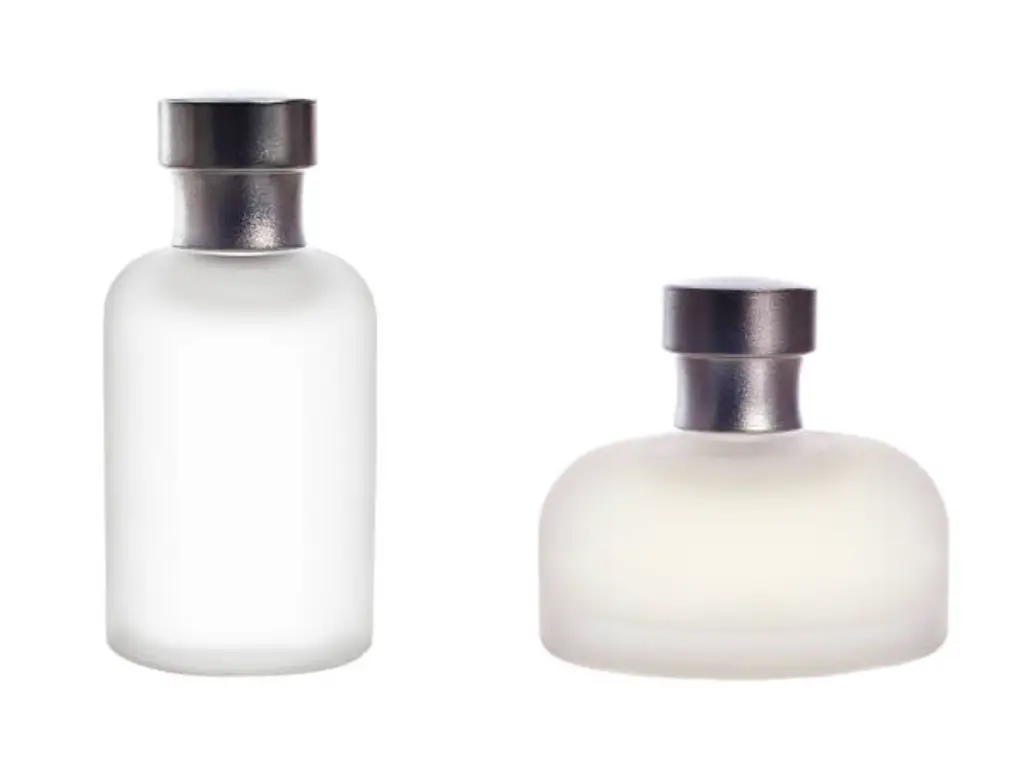
To achieve a truly premium frosted effect, the industry shuns cheap mechanical sandblasting, which leaves a rough, sandpaper-like texture that easily traps dirt. Instead, luxury brands demand Acid Etching. The glass is submerged in a highly controlled bath of hydrofluoric acid mixture. The chemical aggressively reacts with the silica, micro-pitting the surface to create a permanent, incredibly smooth, silk-like matte finish. It diffuses light gorgeously and is highly resistant to scratching.
Additive Coatings: Screen Printing, Hot Stamping, and Metallization
Applying color and branding to glass is fraught with chemical challenges. Glass is non-porous and hydrophilic, making adhesion notoriously difficult.
- Color Coating (The Alcohol Test): Perfume is mostly alcohol, the ultimate solvent. Standard water-based paints will literally melt off if a drop of perfume runs down the bottle. Elite production requires specialized “alcohol-resistant water-based polyurethane emulsions” mixed with isocyanate hardeners, often topped with a clear protective seal. A bottle only passes QC if it survives 500 aggressive alcohol rubs and achieves a e4B rating on the cross-cut adhesion test.
- High-Temperature Screen Printing: Instead of cheap self-drying inks, true luxury packaging utilizes ceramic-based inks. Once printed, the bottles are pushed through a baking oven at 500°C—600°C. The ink literally melts and fuses into the glass surface, becoming indestructible.
- Vacuum Metallization & Hot Stamping: For that blinding, high-gloss metallic finish (gold, rose gold, gunmetal), bottles are placed in a vacuum chamber where vaporized metal atoms coat the surface. Hot stamping uses heat and pressure to transfer metallic foil for precise logos.
“The hidden mathematics of custom decoration is the cascading yield rate. If your bottle requires acid etching (95% yield), gradient coating (90% yield), and hot stamping (90% yield), your final cumulative yield drops to 76%. This exponential waste is exactly why heavily decorated custom bottles carry such a staggering unit cost.”
The Graveyard of Perfume Brands: Dimensional Tolerances and Leak Prevention
You can have the most beautiful bottle in the world, but if it leaks, your brand is dead. Browse any B2B fragrance entrepreneur forum, and the air is thick with horror stories: thousands of dollars of product lost in transit, ruined packaging, and irate customers. The culprit is almost always a failure in the micro-engineering of the neck finish.
Mastering the Neck Finish and FEA Standards
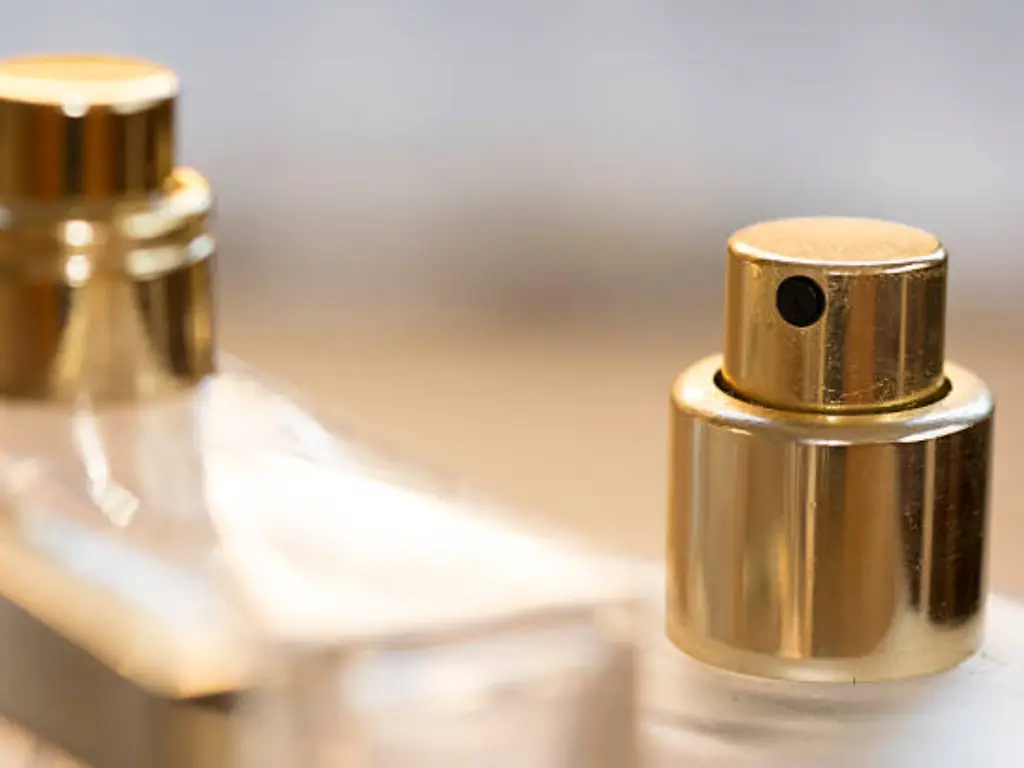
The global fragrance industry operates on strict sizing protocols, the most common being the FEA 15 standard (referring to a 15mm neck diameter designed for standard crimp pumps). The naked eye cannot see it, but the sealing capability of a crimped pump relies on extreme precision. The outer diameter, the inner bore hole, and the exact locking height of the glass collar must be maintained within a draconian tolerance of ±0.2mm.
If the blow-and-blow forming process is even slightly off, causing the neck to become slightly oval (ovality defect) or leaving a pronounced vertical seam line from the mold halves, disaster strikes. When the metal crimping machine forces the pump collar down, it will not form a perfect 360-degree seal against the glass. During air freight, as cabin pressure drops at 30,000 feet, the expensive fragrance will simply bypass the compromised seal, evaporating into the corrugated boxes. This is why rigorous Vacuum Leak Testing on the assembly line is non-negotiable.
Glass Distribution and Structural Integrity
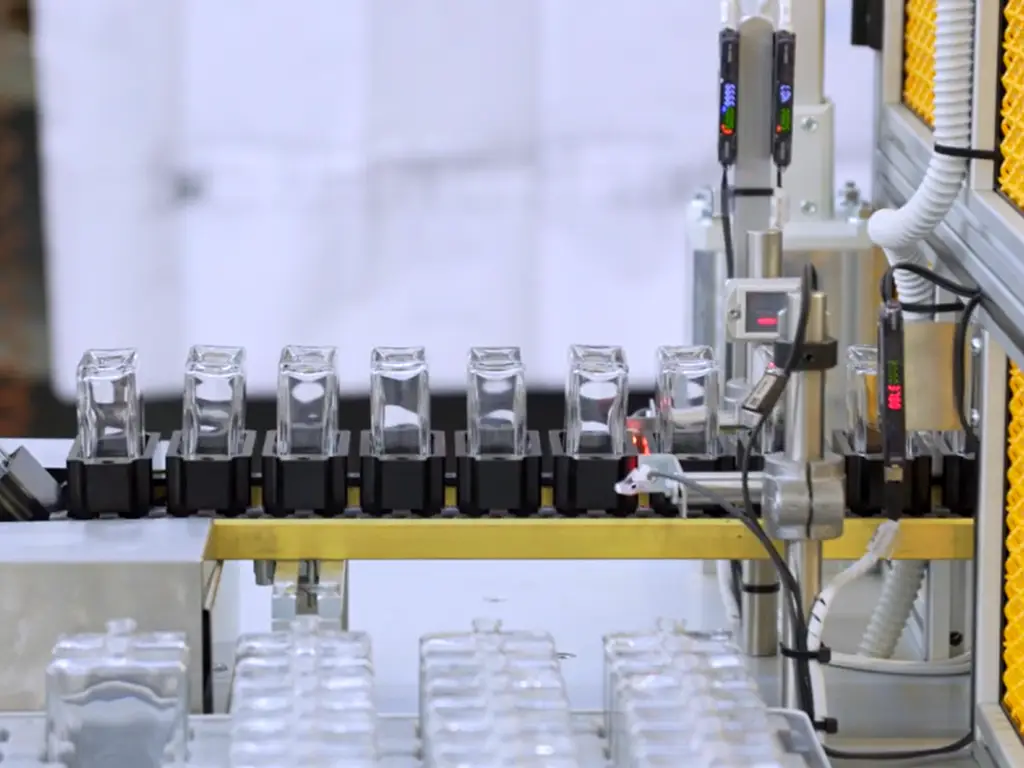
Quality control extends to the macro structure. Wall Thickness Measurement and Eccentricity checks ensure the glass hasn’t pooled unevenly. A bottle with one paper-thin wall might survive visual inspection, but the moment it is squeezed by the pneumatic clamps of an automated filling machine, it will explode, shutting down the entire line. Furthermore, all this precision is meaningless if the goods are destroyed in shipping. Standard 3-layer cardboard is a joke in international freight. Premium suppliers mandate internal packaging using custom-molded EPE (Expanded Polyethylene) pearl cotton trays nested within 5-layer double-corrugated export cartons, ensuring the glass never touches glass, absorbing extreme kinetic shocks.
The Buyer’s Dilemma: Custom Bespoke Tooling vs. Stock Bottles
We have explored the physics, the chemistry, and the engineering. Now we must confront the cold, hard capitalism of supply chain management. Every fragrance founder faces a pivotal crossroads: Do I invest heavily in a completely bespoke, proprietary bottle shape, or do I leverage existing infrastructure?
The True Cost of Bespoke Molds
Designing a custom mold is an ego-driven endeavor that quickly drains cash flow. The reality is that creating industrial-grade, multi-cavity steel molds is highly specialized metallurgy. You are not just paying for metal; you are paying for the immense downtime the factory incurs to swap out their massive production lines just for your specific run.
| Tooling Phase | Estimated Timeline | Estimated Cost / Commitment |
|---|---|---|
| 3D Rendering & Acrylic Prototype | 1 – 2 Weeks | $100 – $300 (Design verification) |
| Pilot Mold (Single Cavity Metal) | 3 – 4 Weeks | $500 – $1,000 (To test glass flow/weight) |
| Production Molds (Multi-Cavity) | 4 – 6 Weeks | $1,500 – $3,000+ |
| Factory Run Commitment (MOQ) | Strictly Enforced | 30,000 to 50,000+ units minimum |
If your startup capital is limited, forcing a custom mold means you will tie up tens of thousands of dollars in empty glass inventory before you have even sold a single drop of perfume.
The “Frankenstein” Strategy: Elevating Stock Packaging
The most sophisticated indie brands and agile procurement managers use a different playbook. They utilize “Stock Bottles”—existing, heavily-tested, zero-mold-fee designs that the factory already owns. By applying the “Frankenstein” strategy, you take a standard heavy-base rectangular stock bottle and invest the saved mold money into magnificent surface decorations: a radical gradient spray, an acid-etched matte finish, and a brutally heavy, customized Zamac (zinc alloy) overcap.
The consumer experiences the tactile weight of the cap and the visual brilliance of the coating; they have no idea the underlying glass is a public mold. This strategy offers maximum agility and minimal risk.
The Agile Manufacturing Solution
This exact market gap is why established industry leaders like Daxin Glass maintain an arsenal of over 2,000+ ready-to-produce stock designs. By bypassing the engineering bottleneck, brands can launch with an incredibly low Minimum Order Quantity (MOQ) of just 1,000 units, with rapid global dispatch times of 7-10 days (reaching North American and European shores in 30-35 days via sea freight). Furthermore, for brands that rapidly scale and eventually desire exclusivity, Daxin implements a visionary partner policy: once your accumulated orders for a custom design reach 100,000 units, the initial mold fees are fully refunded, effectively rewarding your growth rather than penalizing your startup phase.
Stop letting prohibitive tooling costs paralyze your fragrance launch. Explore Daxin’s 2,000+ stock catalog or request a free 3D custom prototype today
to engineer your vision into reality.
 English
  Spanish
  French
  German
  Arabic
  Italian
  Dutch
Dutch