
Sourcing the right glass manufacturer is the difference between a luxury launch and a logistical nightmare. Beyond the aesthetics, your bottle must be a feat of precision engineering. This guide cuts through the industry’s marketing jargon to expose the technical benchmarks and hidden OEM costs that suppliers often obscure. From glass clarity standards to leak-proof neck tolerances, we provide the ultimate procurement blueprint and a curated shortlist of the world’s most reliable factories to streamline your sourcing journey.
The Hidden Engineering Behind Premium Perfume Packaging
In the multi-billion dollar global fragrance industry, a perfume bottle is never merely a container. It is the silent salesman, the physical embodiment of brand equity, and above all, a highly precise piece of engineering designed to protect “liquid gold.” Many emerging fragrance houses and niche indie brands pour their entire budget into securing the perfect olfactive formulation from master perfumers, only to face commercial disaster due to critical oversights in packaging procurement.
Choosing the wrong perfume glass bottle manufacturers can lead to catastrophic consequences. A minuscule 0.2mm tolerance error on the bottleneck can result in severe leakage during the drastic pressure changes of international air freight. Similarly, selecting an inferior glass composition can impart a cheap, greenish tint that completely distorts the color of the perfume, instantly destroying the luxury illusion and plummeting the perceived value of a $150 niche fragrance down to drugstore levels.
Decoding Glass Clarity: Super Flint vs High Flint
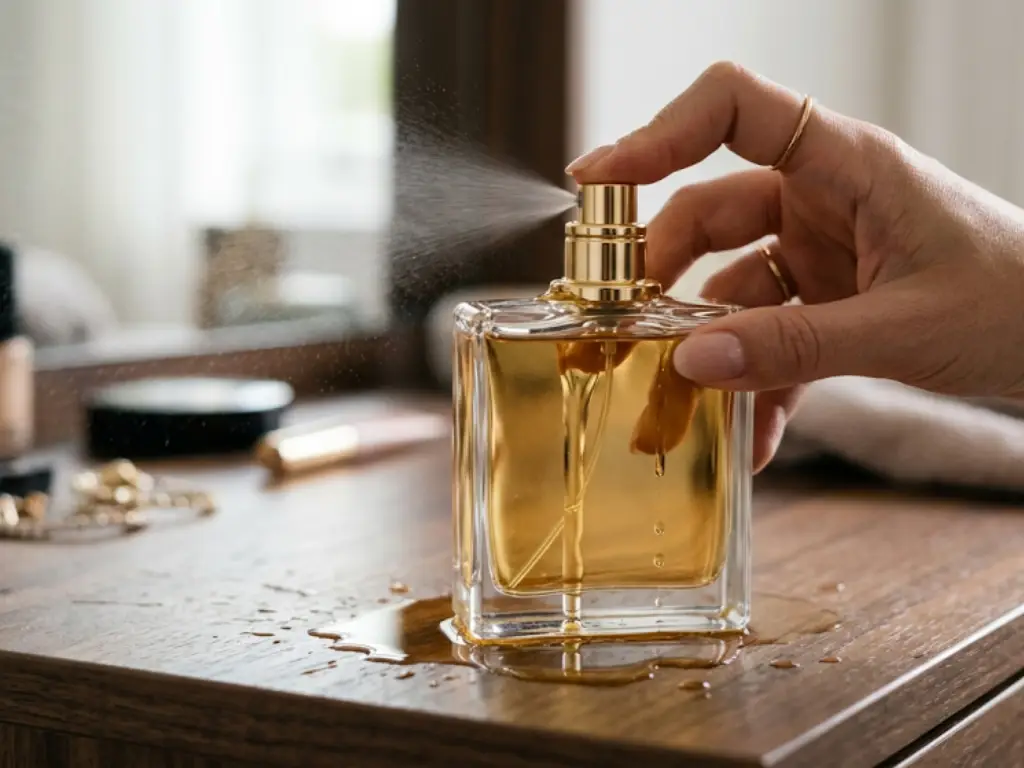
One of the most common mistakes inexperienced buyers make is assuming “all glass is created equal.” In the realm of haute parfumerie, the optical refraction index of the glass dictates the premium feel of the product. The clarity of the glass is primarily determined by its silica sand quality and, more specifically, its iron content (Fe2O3).
Top-tier perfumes mandate the use of Super Flint Glass (Extra Clear Glass). This premium material boasts exceptionally low iron levels, resulting in crystalline transparency that beautifully refracts light without altering the liquid’s true color. However, achieving this level of purity requires an incredibly strict annealing process. If the glass cools unevenly in the annealing lehr, the thick base of the bottle will develop cheap, wave-like distortions and become structurally fragile.
Beware of the industry’s dark secret: Many low-end factories attempt to pass off standard High Flint glass as Super Flint by heavily dosing the molten batch with chemical decolorizers (such as cobalt or erbium). While this masks the inherent green tint of the iron, it results in a dull, greyish, or unnatural bluish hue when viewed under retail lighting. Imagine pouring a delicate, pale-pink floral fragrance into an over-decolorized bottle—the vibrant pink will instantly turn into a muddy, unappealing shade, killing consumer desire.
| Material Type | Iron Content | Optical Refraction | Best For | Cost Index |
|---|---|---|---|---|
| Super Flint Glass (Crystal) | < 100 ppm (Typically 50-80 ppm) | Crystal-like brilliance, zero color distortion, heavy base clarity | Luxury niche fragrances, ultra-premium retail lines | $0.80 – $2.50+ / unit |
| High Flint Glass | 150 – 300 ppm | Good clarity, but may exhibit slight green/grey tint in thick bases | Commercial perfumes, masstige cosmetic packaging | $0.40 – $0.80 / unit |
| Standard Flint Glass | > 300 ppm | Noticeable green hue, poor light transmission | Pharmaceuticals, mass-market roll-ons | $0.15 – $0.35 / unit |
Note: Estimated unit costs are based on a standard 50ml-100ml volume at a 10,000 MOQ. Prices will vary depending on glass weight and market fluctuations.
Mastering Surface Treatments to Elevate Perceived Value
While the raw glass composition sets the foundation, the secondary surface treatments are what transform a raw industrial object into a luxurious piece of art. A mature B2B buyer evaluates a factory not just by their glassblowing, but by their mastery over the entire decorative lifecycle and their rigorous defect-rate control.
Fire Polishing and Mold Seam Elimination
Before any color is applied, the most critical structural step is the elimination of the Mold Seam (Parting Line). When molten glass is pressed and blown inside a two-part metal mold, a visible line is inevitably left where the mold halves meet. If left untreated, even the purest Super Flint glass will feel like cheap plastic when a consumer runs their finger over the edges.
Elite manufacturers employ advanced Fire Polishing (or mechanical polishing) techniques. By briefly subjecting the newly formed bottle to intense, targeted flames, the outer layer of glass melts just enough to smooth away the seams, resulting in a flawless, seamless silhouette that screams high-end craftsmanship.
Color Coating and Frosting Dynamics
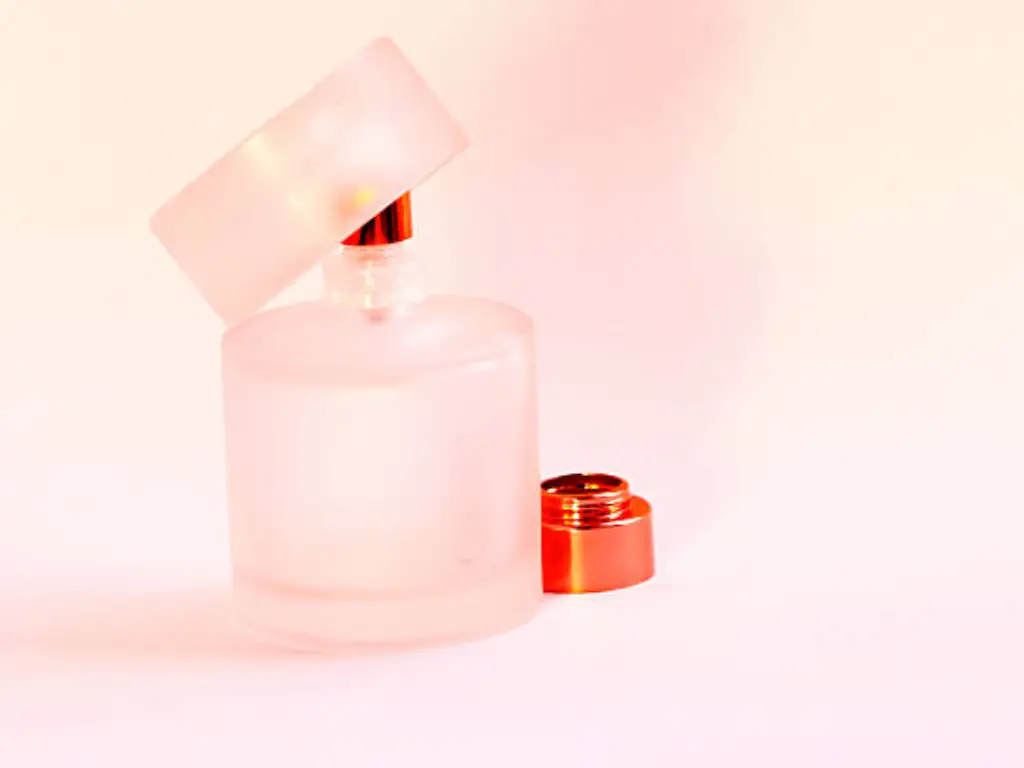
Applying a gradient color coating or a soft-touch frosting can significantly alter the tactile and visual dynamics of a bottle. A semi-transparent gradient coating on a thick-based bottle can create an illusion of suspension, making the vessel appear taller and more sophisticated.
However, extreme caution must be exercised with Inner Coating. If a brand desires a fully opaque inner color, the factory must conduct a rigorous Fragrance Compatibility Test. High-concentration perfume alcohol is a potent solvent; if the inner coating is unstable, the alcohol will dissolve the paint over time, causing the fragrance to turn cloudy, alter its scent profile, and ultimately poison the product.
Metallic Foils and Precision Silk-Screening
When applying branding via Hot Stamping (metallic foils) or Silk-Screening, durability is paramount. Consumers handle perfume bottles daily, often with hands coated in alcohol-based liquids or lotions. To ensure the brand logo doesn’t scratch or flake off, high-end silk-screening must undergo High-Temperature Baking (often exceeding 500°C), fusing the ceramic ink permanently into the glass surface. Standard low-temp UV printing simply will not survive the lifespan of a premium perfume.
Neck Standardizations and the Science of Leak Prevention
The neck of the perfume bottle is arguably the most complex engineering challenge. This is the absolute deepest moat separating premium manufacturers from amateur glass factories. You can have the most beautiful bottle in the world, but if the pump doesn’t seal perfectly, your brand is doomed.
In the premium fragrance sector, the FEA 15 and FEA 18 Crimp Neck standards are the golden rules. These specifications dictate the exact millimeter dimensions of the bottle opening to ensure a flawless bite when the aluminum pump is crimped over the glass flange.
Here is where amateur procurement goes wrong: conducting leak tests only at room temperature. A true premium manufacturer will validate their FEA neck tolerances by combining an incubator set to 45°C with a -0.06 MPa negative pressure Vacuum Leak Test. Furthermore, they will subject the assembled bottles to a Thermal Shock Test. This extreme cross-testing perfectly simulates the brutal conditions of a Boeing 777 cargo hold during international air freight, where drastic atmospheric pressure drops combined with extreme hot and cold cycles will easily force liquid out of any poorly engineered seal.
Leading Global Perfume Glass Bottle Manufacturers
To build a robust sourcing strategy, buyers must understand the global manufacturing landscape. We have segmented the top reliable suppliers into two distinct matrices: the Tier 1 European Heritage Giants (offering supreme brand prestige and patented crystal formulas, but demanding massive MOQs) and the APAC Agile Supply Chain (offering rapid turnkey solutions, high ROI, and flexible customization).
Verescence
Location: France (Puteaux) & Global presence.
Company Intro: A dominant pioneer with over 130 years of heritage, Verescence virtually controls the global prestige fragrance packaging market. They merge traditional glassmaking excellence with rigorous modern sustainability standards, most notably through their patented PCR (Post-Consumer Recycled) Infinite Glass technology.
Pros: Top-tier global prestige; exceptionally advanced sustainable melting technologies that align perfectly with modern ESG goals.
Cons: Private mold customization typically requires a strict MOQ threshold of 50,000 to 100,000+ units, alongside substantial initial tooling investments, making it less viable for early-stage niche brands.
Source & Disclaimer: Data sourced from recent corporate CSR reports and industry benchmarks. Note: MOQ and tooling fees fluctuate based on real-time capacity and custom design complexity. Direct RFQs are essential for accurate project scoping.
Groupe Pochet
Location: France (Clichy).
Company Intro: Boasting nearly 400 years of glassmaking mastery, Groupe Pochet (Pochet du Courval) is synonymous with French luxury packaging. They are globally renowned for their proprietary Ultra-Flint glass formula, achieving an unrivaled crystal-like clarity. They excel in crafting highly complex, heavy-based, non-standard bottle geometries.
Pros: Unmatched glass refractive index; superior multi-material assembly capabilities (seamlessly integrating glass with Zamak metals); absolute “Made in France” premium aura.
Cons: Extended lead times and a highly selective client onboarding process tailored predominantly for multinational luxury conglomerates (e.g., LVMH, Chanel).
Source & Disclaimer: Data sourced from recent corporate CSR reports and industry benchmarks. Note: MOQ and tooling fees fluctuate based on real-time capacity and custom design complexity. Direct RFQs are essential for accurate project scoping.
Bormioli Luigi
Location: Italy (Parma).
Company Intro: Representing the pinnacle of Italian industrial glassmaking, Bormioli Luigi combines profound aesthetic creativity with highly innovative melting processes. Their glass is engineered to be exceptionally pure while maintaining a unique structural resilience.
Pros: Outstanding mechanical durability (anti-breakage capabilities) combined with high optical clarity; highly mature processes that ensure exceptionally low defect rates.
Cons: Base unit pricing remains consistently at a premium tier compared to emerging market suppliers, requiring a healthy retail markup to justify.
Source & Disclaimer: Data sourced from recent corporate CSR reports and industry benchmarks. Note: MOQ and tooling fees fluctuate based on real-time capacity and custom design complexity. Direct RFQs are essential for accurate project scoping.
Stölzle Glass Group
Location: Austria (Köflach) & European network.
Company Intro: Established in 1805, this European powerhouse excels in conquering avant-garde, non-standard bottle geometries. Stölzle Glass Group offers robust in-house mold engineering paired with an incredibly extensive array of sophisticated surface decoration options under one roof.
Pros: High success rate with highly complex 3D shapes; incredibly agile in-house decoration capabilities that offer massive design flexibility.
Cons: Heavy reliance on European manufacturing facilities can translate to significantly higher ocean freight costs and import duties for buyers based in APAC and the Americas.
Source & Disclaimer: Data sourced from recent corporate CSR reports and industry benchmarks. Note: MOQ and tooling fees fluctuate based on real-time capacity and custom design complexity. Direct RFQs are essential for accurate project scoping.
Daxin Glass
Location: China (Xuzhou).
Company Intro: Leveraging the immense glass manufacturing hub of Xuzhou, Daxin Glass is an aggressive, highly efficient B2B solutions provider. They specialize in offering comprehensive “turnkey” packages—supplying the glass bottle, perfectly calibrated FEA pumps, collars, and caps together to drastically eliminate the risk of cross-supplier compatibility leaks.
Pros: High ROI structure with bespoke tooling costs typically 30%-40% lower than European counterparts; rapid OEM capabilities bringing 3D concepts to first-sample physical reality in just 15-20 days; excellent full-suite packaging integration.
Cons: Custom private molds necessitate starting MOQs around 10,000 units. While this is highly flexible for commercial brands scaling up, it may still present an initial inventory hurdle for micro-niche studios operating on shoestring budgets.
Source & Disclaimer: Data sourced from recent corporate CSR reports and industry benchmarks. Note: MOQ and tooling fees fluctuate based on real-time capacity and custom design complexity. Direct RFQs are essential for accurate project scoping.
Navigating OEM Tooling Costs and Minimum Order Thresholds
For procurement managers, the biggest black box in sourcing is the tooling cost. Understanding the financial mechanics of mold development will help you negotiate better terms and map out a realistic time-to-market.
Private Mold Investments vs Stock Options
If you utilize a factory’s Stock Molds (Public Molds), you pay zero tooling fees, and MOQs can be as low as a few thousand units. However, your bottle shape won’t be exclusive.
Developing a Private Mold ensures 100% brand exclusivity. This involves intensive 3D CAD modeling and CNC machining of metal molds. Tooling fees generally range from $2,500 to $8,000 depending on the complexity of the shape and the number of cavities in the mold. Standard MOQs for private molds range from 10k to 30k units in Asia, and up to 100k in Europe.
Agile Lead Times and Risk Mitigation
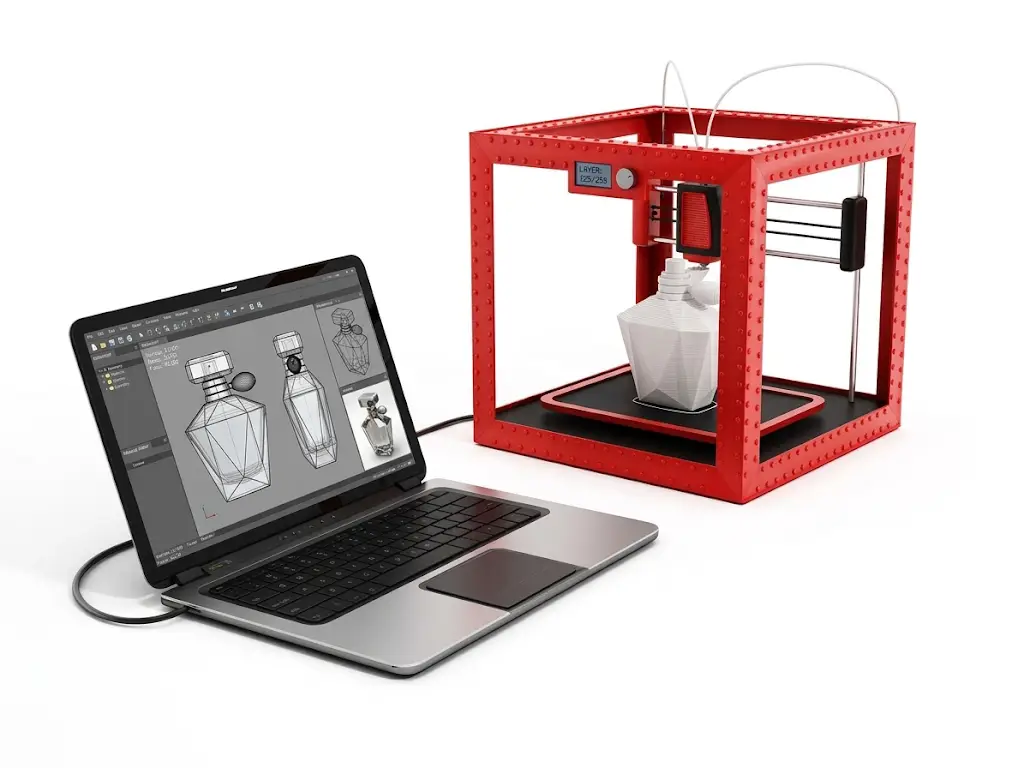
Fear of committing thousands of dollars to a metal mold only to hate the physical result is a major friction point. Smart buyers mitigate this by requesting a 3D Printed Resin Mockup. Before cutting metal, modern factories can 3D print a weight-accurate resin prototype in just 3-5 days, allowing you to physically verify the ergonomics and proportions.
3D Drawing & Resin Mockup
Digital CAD confirmation and rapid 3D printing to verify physical hand-feel and volumetric accuracy.
Rough Mold & Initial Sampling
Machining the pilot mold and producing the first batch of real glass samples for approval and leak testing.
Mass Production & Decoration
Creating the multi-cavity production molds, mass glass blowing, annealing, polishing, and executing surface treatments (silk-screening, coating).
Note: Always factor in an additional 3-5 weeks for ocean freight. A ground-up private mold project should be initiated at least 4 to 6 months before your desired launch date.
The Strategic RFQ Checklist for Perfume Brand Owners
When you are ready to initiate contact with the manufacturers listed above, do not send a generic “What is your price?” email. Use this structured, gradient RFQ checklist to lower your risk, prove your industry knowledge, and secure the highest quality responses.
-
The Micro-Conversion Buffer:
“Could you first send a ‘Stock Sample Kit’ featuring your Super Flint glass with pre-tested FEA 15 crimp pumps for our initial quality and weight evaluation?” (This reduces your initial commitment and lets you feel the glass quality firsthand). -
The Hardcore Optical Audit:
“Can you provide the Spectrophotometer Transmittance Report to verify the balance between iron content and decolorizers in your Super Flint batch?” (This prevents them from selling you low-grade glass masked with blue/purple chemicals). -
The Engineering Stress Test:
“Do your internal QC protocols include leak tests combining 45°C incubators with -0.06 MPa negative pressure, alongside thermal shock testing?” (This proves you know exactly what causes air-freight leakage). -
The Commercial Alignment:
“If we proceed with a bespoke private mold, what is your exact tooling fee refund policy upon reaching our projected annual volume targets?” (This establishes a long-term, ROI-focused partnership from day one).
By shifting your sourcing mindset from simply “buying bottles” to “engineering a packaging solution,” you protect your brand equity, ensure zero leakage, and ultimately elevate your fragrance to the luxury tier it deserves.
 English
  Spanish
  French
  German
  Arabic
  Italian
  Dutch
Dutch  Portuguese
  Russian
  Korean
  Japanese