
Introduction
The size of the liquor bottle is not just a convenience of consumers; this system is a complicated process of historical trade, international contracts of metrology and special government laws. To the consumer, these variables may be understood to make a correct estimate in case of large gathering or individual collections. To the industry professional, be it a brand owner, manager of the distillery or procurement officer, understanding the exact dimension/volume implication is central to supply chain management, cost analysis and positioning of the brand.
This discussion offers a comprehensive explanation of world liquor bottle sizes that change the volumetric standards of dimensions to physical dimensions and manufacturing factors.
Global Liquor Bottle Sizes Chart (ML, Oz, Shots)
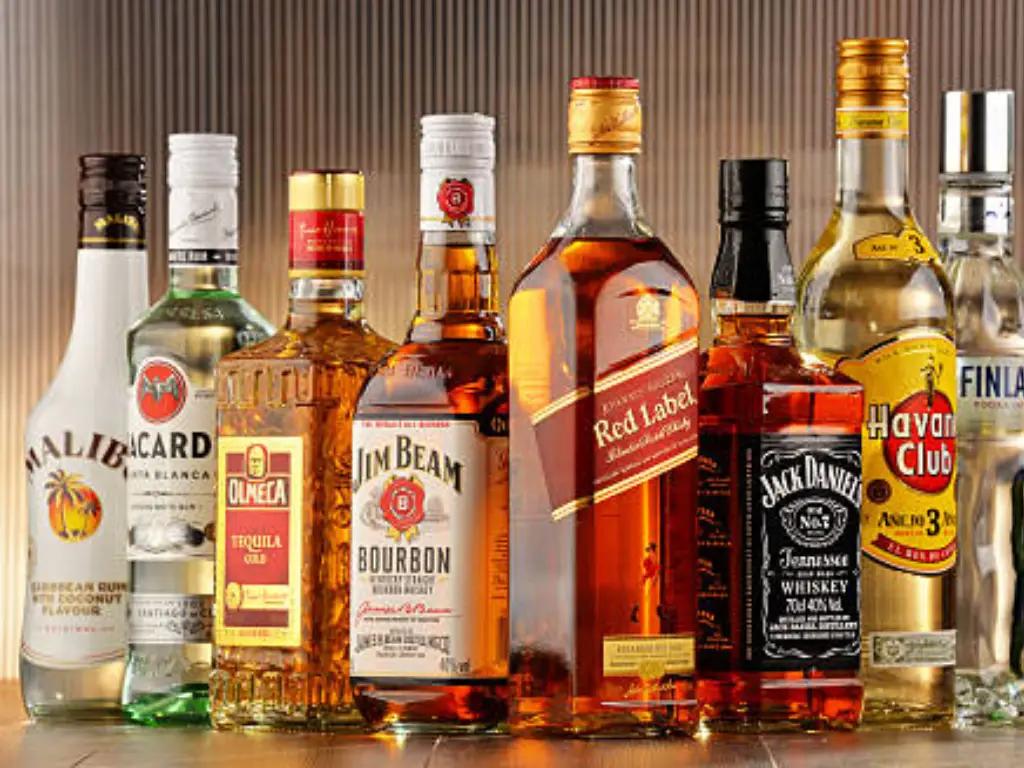
To navigate the market effectively, one must first establish a baseline of volumetric data. The following dataset correlates the metric system, which is the global standard for commerce, with the U.S. Customary units are still prevalent in the United States domestic market.
The “shot” is defined here as the standard US serving size of 1.5 fluid ounces (approximately 44ml). This metric is critical for calculating the number of servings available per unit, a key metric for inventory control in bars and restaurants.
| Metric Volume (ml) | U.S. Customary (approx. fl oz) | Common Terminology | Capacity (No. of 1.5 oz Shots) | Primary Context |
| 50 ml | 1.7 oz | Nip / Miniature | 1 | Samples / Travel |
| 100 ml | 3.4 oz | Quarter Pint | 2.2 | Gifts / Personal Use |
| 200 ml | 6.8 oz | Half Pint | 4.5 | Flask size / Portable |
| 375 ml | 12.7 oz | Pint / Split | 8.5 | Small Gifts / Half-Bottle |
| 700 ml | 23.7 oz | European Standard | 15.8 | EU & Global Export |
| 750 ml | 25.4 oz | Fifth / Standard | 16.9 | US Standard / Retail |
| 1 L | 33.8 oz | Liter | 22.5 | Duty-Free / Bar Rail |
| 1.5 L | 50.7 oz | Magnum | 33.8 | Large Parties / Wine |
| 1.75 L | 59.2 oz | Handle / Half Gallon | 39.4 | Value / Volume Retail |
| 3 L | 101.4 oz | Double Magnum | 67.6 | Special Occasions |
Understanding Common Bottle Names and Measurements
The nomenclature of the sizes of liquor bottles is based on an amalgamation of the archaic British measures and the modern metrication. These terms should be understood in detail to analyze inventory data and consumer demand.
Small Formats: Nips to Pints
The smallest market segment has a particular purpose: trial and portability.
- The Nip/Miniature (50ml): This bottle is commonly known as a miniature, and it contains 50 milliliters. It includes a single standard shot. These miniature bottles are everywhere in hotel mini bars, airplanes and in gift packages. To brands, they are a low risk entry point where consumers can sample high quality spirits without spending on a full bottle.
- The Half Pint (200ml): This is not half of a US pint (236ml), but the metric approximation. It is a popular size of larger spirits such as hennessy or vodka bottles that are to be used personally.
- The Pint (375ml): This is a half of the normal 750ml bottle. It is a popular format used by craft distilleries that issue special releases or limited runs in which stock is scarce. It enables the consumer to purchase a high quality spirit at a reduced price point than the standard size.
Standard and Large Formats: Fifth to Handle
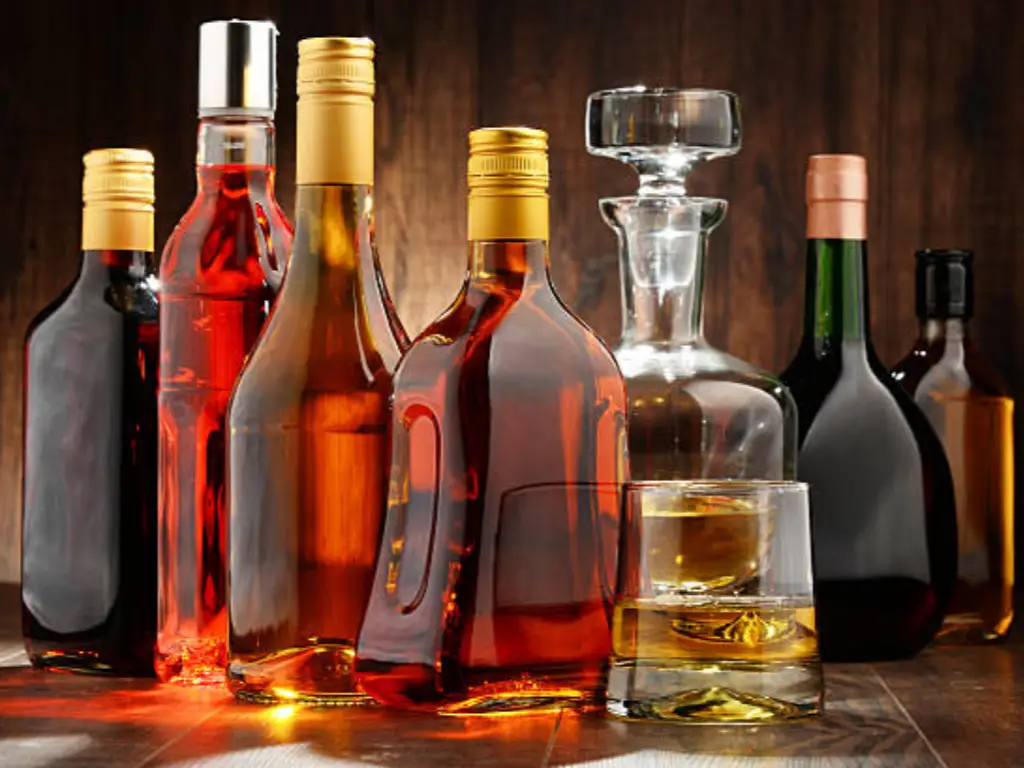
This type is the huge majority of commercial sales in liquor stores and supermarkets.
- The Fifth (750ml): This is the standard size in the United States. Fifth is a historical term that means one-fifth of a US gallon (equivalent to 757ml). When the industry was metricated, 750ml was taken as the closest round metric equivalent. This is the default expectation when a customer buys a bottle of liquor.
- The Liter (1L): The liter is the standard of duty-free business and the professional bar in the US, although less frequently used in retail. The margin of on-premise establishments is better with the slightly larger volume.
- The Handle (1.75L): This bottle size is also referred to as a half gallon and is used to consume large volumes of the product. The handle is a descriptive term; these huge glass bottles are literally heavy and usually a handle is built into the glass or plastic mold to make it easy to pour. They are very useful to the consumer and are a staple to large parties.
Oversized Bottles for Collectors
In addition to the handle, the size of bottles becomes a matter of novelty and ultra-premium presentation. These massive bottle sizes usually have biblical names and are consumed mainly as a symbol of luxury or during special occasions.
- Magnum (1.5L): The equivalent of two standard bottles. This is typical of wine and high-end champagne but is being applied to high-end vodka and tequila.
- Jeroboam (3L): The same as four regular bottles (or a Double Magnum).
- Rehoboam (4.5L): The equivalent of six standard bottles.
These bigger sizes are not often kept on standard shelves because of their size and weight; they are used well as marketing tools in night clubs or as a center piece at parties.
Standard Physical Dimensions: Height and Diameter
Although the main concern of the liquid is volume (capacity), the main concern of the logistics, warehousing, and shelf management is the physical dimensions, height, and diameter. A bottle that cannot fit into the standard bar rails or retail shelf encounters high distribution barriers.
Depending on the design of the bottle, the physical footprint differs. These may be divided into three main shapes:
| Bottle Profile | Volume | Average Height | Base Diameter / Width | Logistic & Retail Implication |
| Bordeaux Style (Standard Round) | 750ml | 11.5″ – 13″ (29.2 – 33 cm) | 2.9″ – 3.2″ (7.3 – 8.1 cm) | The Industry Reference. Fits 99% of retail shelves, bar speed rails, and standard shipping cases. The safest choice for mass distribution. |
| Long Neck Style (Slender / Tall) | 750ml | 13″ – 14.5″ (33 – 36.8 cm) | 2.4″ – 2.8″ (6 – 7 cm) | Visual Impact. Appears elegant and taller on the shelf, but often too tall for standard home bar cabinets or fixed-height retail shelves. |
| Rectangular / Square (Tennessee Style) | 750ml | 10″ – 11″ (25.4 – 28 cm) | 3″ – 3.5″ (Square) | Packing Efficiency. Offers zero wasted space in shipping cases (high density). Requires specific “facing” on shelves to ensure the label is visible. |
These dimensions are important to packaging solutions. These sizes are also correlated with the finish (the neck opening), which usually needs standard closures that need to be ordered correctly.
US 750ml vs. EU 700ml: What Brands Must Know
There is a clear regulatory difference between the European Union and the United States, which poses a challenge to international alcoholic beverages brands.
The 750ml bottle is the established standard in the United States. Although the Alcohol and Tobacco Tax and Trade Bureau (TTB) introduced the 700ml size as a legal fill standard late in 2020, the 750ml size still prevails on retail shelves, in bar optics, and consumer perceptions.
On the other hand, the European Union standard is 700ml.
The Economic Implication:
A manufacturer who uses a 750ml bottle in the US market and 700ml bottle in the EU market will need two different production runs and possibly two different glass molds. The 50ml difference influences the total alcohol content, the tax amount, and the unit price.
- To the Consumer: 700ml bottle will have about 1.1 shots less than 750ml bottle.
- To the Manufacturer: This would require a choice of either standardizing to a single size (and risk regulatory or market resistance in the other region) or run a dual inventory system.
How to Choose the Right Bottle Size for Your Brand
The choice of the right packaging is a strategic move that determines the price perception, distribution channels and manufacturing costs. The bottle size will give a message to the market about the intended use and quality level of the product.
Market Positioning and Consumer Perception
The size and perceived value are non-linearly correlated.
- Entry Level: Small bottles (50ml, 200ml) reduce the financial barrier to entry. They enable a consumer to sample the brand identity without commitment.
- Standard Retail: The 750ml clear glass bottle is the base. In this case, success will be based on the bottle design that will be unique in a saturated market.
- High Volume: The 1.75L handle implies great value. It is not applied to ultra-premium positioning but is necessary to volume movers.
- Exclusive Tier: Special bottle sizes or heavy glass weights in the 700ml/750ml category are indicative of a premium position.
Stock Molds vs. Custom Glass Manufacturing
After identifying the target volume, the brand needs to identify how it is going to produce it. This is a decision between stock molds (existing designs) and custom molds (proprietary designs).
- Stock Molds: These are industry standard forms that can be produced immediately. They have low minimum order quantities and zero tooling costs. This is the effective path for new brands that are trying the market or are focused on speed.
- Custom Molds: A custom mold is necessary to obtain a really unique shape, like a particular embossment, an unusual height, or a proprietary shape. Although this comes with an initial cost on tooling, it offers a great level of protection against counterfeiting and creates a powerful visual brand image.
The manufacturing partner is an important resource to businesses that have to go through this complicated decision. Companies such as Daxin Glass Bottles have the industrial capacity required to implement both strategies. Daxin Glass Bottles has the technical capability to control the weight, clarity, and dimensional tolerances of glass whether it is a standard 750ml solution that can be filled immediately or a complex, custom-engineered design that can be used to differentiate a premium spirit. The sourcing of a specific manufacturer of glass bottles will make sure that the physical size fits perfectly with the closure systems and secondary packaging.
Logistics: Case Counts, Weight, and Pallets
Bottle sizes have implications in the field of logistics. Shipping glass is shipping weight; hence, the effectiveness of the case pack has a direct effect on the bottom line.
Case Configurations:
- 750ml / 700ml: The standard in the industry is 12 bottles per case (12pk). But in the case of heavier glass or larger diameter spirits, a 6-bottle case (6pk) is frequently employed to ensure that the weight of the case is not too heavy (less than 40 lbs) to carry in the workplace.
- 1.75L: 6 bottles per case are usually packed.
- 50ml: Sleeved (usually 10 or 12) and then master cases of 60 to 120.
Palletization:
A typical pallet (40×48 inches in the US) has weight capacity.
- Standard Glass: 12 bottles of 750ml weight about 32-38 lbs. Depending on the height of the stack, a pallet can carry about 56 to 70 cases.
- Heavy Glass: Thick bottomed (heavy slugs) bottles make the weight much heavier. This can decrease the cases per pallet to remain within the weight restrictions of trucking, which raises the unit shipping cost.
Procurement officers must calculate these logistics metrics before finalizing the bottle design. A “unique shape” that does not tessellate well in a box leads to shipping air, which is economically inefficient.
FAQ About Liquor Bottle Capacities
The next section deals with common technical questions about measurements and use.
Is a “Fifth” exactly the same as 750ml?
Not precisely, but in the practical sense of the word, yes. In the past, a fifth was a quarter of a gallon (25.6 oz). The 750ml bottle is 25.4 oz. The variation is 0.2 ounces, which is insignificant to the consumer, but important to historical accuracy.
How many shots are in a handle of liquor?
A 1.75L handle contains approximately 39 to 40 shots of 1.5 ounces each. This makes it the mathematically correct choice for parties exceeding 20 guests.
Is it legal to sell 500ml bottles in the US?
The existing laws have increased permissible sizes. Although 500ml was once limited to distilled spirits (though widely used with wine), recent changes to TTB regulations have standardized numerous sizes. Nevertheless, 500ml is still a niche size in the US, which often confuses the consumers who confuse it with a pint (375ml) or a regular bottle (750ml).
What is the difference between a Wine Magnum and a Spirit Magnum?
The volume is the same (1.5 Liters). The distinction is in the shape of the bottle. Wine magnums are cork-finished and sloping-shouldered (Burgundy) or high-shouldered (Bordeaux). Spirit magnums are usually screw capped (ROPP) or T-top cork finished and are made of heavier glass to handle higher proof alcohol.
Conclusion
The size of liquor bottles is a balance between regulatory compliance, consumer psychology and logistics that is strategic. To the consumers, the decision is determined by the event, whether it is single-serving nips to sample or volume-based handles to party. To the brand owners, though, it is a strict calculation of shelf impact and supply chain efficiency. Finally, the ship is as important as the soul it carries, as the physical basis of brand identity in a saturated market.
To brands that want to maximize this balance, Daxin Glass Bottles offers the engineering skills to balance between standard requirements and custom designs. We invite you to explore our catalog to find the precise fit for your product’s journey from distillery to shelf.

 English
  Spanish
  French
  German
  Arabic
  Italian
  Dutch
Dutch  Portuguese
  Russian
  Korean
  Japanese